| Ultimi arrivi - Saturn: the "Ringed Beauty" and His Moons |
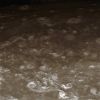
Saturn-PIA10416.jpgSaturnian "Twirling Vortices" and "Cirrus-like" Clouds Formation (MULTISPECTRUM-2; credits: Lunexit)58 visiteCaption NASA:"Twirling vortices swim through a vast ocean of Hydrogen and Helium in Saturn's far North. This view looks toward a region at 70° North Latitude.
The image was taken with the Cassini spacecraft narrow-angle camera on May 23, 2008 using a spectral filter sensitive to wavelengths of infrared light centered at 750 nanometers. The view was obtained at a distance of approx. 1,2 MKM (such as about 776.000 miles) from Saturn.
Image scale is roughly 7 Km (about 4 miles) per pixel".MareKromiumLug 04, 2008
|
|
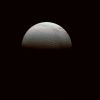
Enceladus-N00114741.jpgCrescent Enceladus (MULTISPECTRUM-2; credits: Lunexit)64 visitenessun commentoMareKromiumLug 04, 2008
|
|

Janus-N00114756.jpgRugged Janus and various image-artifacts (MULTISPECTRUM-2; credits: Lunexit)57 visiteCaption NASA:"N00114756.jpg was taken on June 30, 2008 and received on Earth July 01, 2008.
The camera was pointing toward JANUS that, at the time, was approx. 32.994 Km away and the image was taken using the CL1 and CL2 filters.
This image has not been validated or calibrated".MareKromiumLug 04, 2008
|
|

Janus-N00114757.jpgRugged Janus and various image-artifacts (MULTISPECTRUM-2; credits: Lunexit)59 visiteCaption NASA:"N00114757.jpg was taken on June 30, 2008 and received on Earth July 01, 2008.
The camera was pointing toward JANUS which, at the time, was approx. 33.205 Km away and the image was taken using the CL1 and MT2 filters.
This image has not been validated or calibrated".MareKromiumLug 04, 2008
|
|

Janus-PIA10417-1.JPGRugged Janus (Saturated Natural Colors; credits for the additional process. and color.: Dr Paolo C. Fienga - Lunexit Team)62 visiteCaption NASA:"Craters large and small cover the rugged surface of Saturn's moon Janus.
This view looks toward the Southern Hemisphere of Janus (about 179 Km, or approx. 111 miles across at its widest point). The moon's South Pole is at center.
The image was taken with the Cassini Spacecraft narrow-angle camera on May 26, 2008 using a spectral filter sensitive to wavelengths of IR light centered at 930 nanometers. The view was acquired at a distance of approx. 186.000 Km (such as about 115.000 miles) from Janus and at a Sun-Janus-Spacecraft, or Phase, angle of 83°.
Image scale is roughly 1 Km (about 0,6 miles) per pixel".MareKromiumLug 04, 2008
|
|
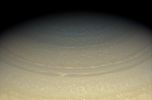
Saturn-PIA10414.jpgNorthern Blue (natural colors; credits: NASA/JPL/Space Science Institute)55 visiteCaption NASA:"Golden hues continue to creep Northward on Saturn, subduing the blues and grays the Cassini Spacecraft witnessed upon arrival in mid-2004. This view was acquired from about 27° above the Ring-Plane.
Images taken using red, green and blue spectral filters were combined to create this natural color view. The images were acquired with the Cassini Spacecraft wide-angle camera on May 23, 2008 at a distance of approx. 1,3 MKM (such as about 780.000 miles) from Saturn.
Image scale is roughly 71 Km (about 44 miles) per pixel".MareKromiumLug 01, 2008
|
|

Saturn-PIA10413.jpgSwirling Clouds (MULTISPECTRUM; credits: Lunexit)56 visiteCaption NASA:"Sinuous clouds and hurricane-sized vortices mingle in Saturn's Northern Skies. This view looks toward a Region located at 70° North Latitude on Saturn.
Despite the level of detail visible here, the Region shown is wide enough to contain the planet Mars comfortably.
The image was taken with Cassini's CB1 spectral filter, which is sensitive to wavelengths of visible red light centered at 619 nanometers. The view was acquired with the spacecraft's narrow-angle camera on May 23, 2008 at a distance of approx. 1,2 MKM (about 775.000 miles) from Saturn.
Image scale is roughly 7 Km (about 4 miles) per pixel".MareKromiumGiu 29, 2008
|
|
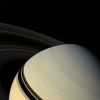
Saturn-PIA08414.jpgPerspectives... (natural colors; credits: NASA)58 visiteCaption NASA:"The Ringed Planet sits in repose, the center of its own macrocosm of many rings and moons and one artificial satellite named Cassini. Mimas (approx. 397 Km, or about 247 miles across) is visible at upper left. Although unseen in this view, Enceladus (approx. 504 Km, or about 313 miles across) casts its shadow upon the Planet. The Rings also block the Sun's light from the low Latitudes of the Northern Hemisphere.
During Cassini's extended mission, dubbed the Cassini Equinox Mission, which begins on July 1, 2008, the Ring shadows will slip past the Planet's Equator and into the Southern Hemisphere as Saturn passes through its Northern Vernal Equinox on August 11, 2009, and the Sun moves northward through the Ring-Plane.
This view looks down on the unilluminated side of the Rings, from about 22° above (such as North of) the Ring-Plane. Images taken using red, green and blue spectral filters were combined to create this natural color view. The images were obtained with the Cassini Spacecraft wide-angle camera on Dec. 16, 2007, at a distance of approx. 1,4 MKM (such as about 900,000 miles) from Saturn.
Image scale is roughly 86 Km (about 53 miles) per pixel".MareKromiumGiu 29, 2008
|
|

Saturn-PIA08415.jpgSpringtime's Hues - (natural colors; credits: NASA)56 visiteCaption NASA:"New hues are creeping into Saturn's Northern Cloud Bands as Winter gives way to Spring there.
During its first four years of exploration, Cassini has made the Saturn System a familiar place to us Earthlings. The intrepid craft has returned more than 150.000 images since arriving in orbit in mid-2004. In this natural color image, the blues and grays of Saturn's Northern Hemisphere, so striking in early Cassini images, are diminishing in intensity with the slow change of seasons on Saturn, and are almost imperceptibly being replaced by pale shades of the colors commonly seen by Cassini in the Planet's Southern Hemisphere.
This view looks toward the sunlit side of the Rings from about less than 1° below the Ring-Plane. Images taken using red, green and blue spectral filters were combined to create this natural color view. The images were acquired with the Cassini Spacecraft wide-angle camera on April 23, 2008, at a distance of approx. 1,2 MKM (such as about 740.000 miles) from Saturn.
Image scale is roughly 68 Km (about 42 miles) per pixel".MareKromiumGiu 29, 2008
|
|
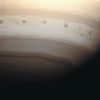
Saturn-PIA10411.jpgStorm Alley (MULTISPECTRUM-2; credits: Lunexit)57 visiteCaption NASA:"A line of dark vortices charge through Saturn's "Storm Alley" — such as a Region that has seen intensive storm activity since the Cassini Spacecraft began its observations of the Planet in early 2004.
The image was taken with the Cassini Spacecraft wide-angle camera on May 19, 2008 using a spectral filter sensitive to wavelengths of infrared light centered at 728 nanometers. The view was obtained at a distance of approx. 863.000 Km (about 536.000 miles) from Saturn.
Image scale is roughly 48 Km (about 30 miles) per pixel".MareKromiumGiu 26, 2008
|
|

Saturn-N00114462.jpgSaturnian "Cirrus-like" Clouds Formation (MULTISPECTRUM-2; credits: Lunexit)73 visitenessun commentoMareKromiumGiu 25, 2008
|
|
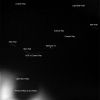
Methone-N00111976-1.jpgLook and Learn!59 visiteUn frame dedicato a tanti personaggi i quali, come è di recente accaduto su due diversi Forum Italiani (ahinoi!...), pensano che qui, su Lunar Explorer Italia, si "speculi sulla Credulità Popolare" e sulla "voglia di impressionare e di far scalpore".
NO. Qui non si specula su nulla. Qui si fa Divulgazione, nel senso più puro del termine.
Gli "speculatori" li trovate in altri Siti (USA e non) e, se volete, anche in edicole e librerie.
Ma NON qui.
Se poi quelli che blaterano a vanvera sono incapaci di riconoscere ciò che i "Frames from Space" mostrano, la colpa non è nostra. La colpa è loro, che parlano solo per fare i saccenti e per disfare e screditare il Lavoro altrui, pur avendo zero cultura e zero credenziali (anche perchè, se le avessero, non si nasconderebbero dietro patetici e tristissimi nick-names...).
In questo frame, un piccolo "a,b,c" (e non è il primo che pubblichiamo...) di Analisi dell'Immagine, in cui si vedono alcuni artefatti fotografici, un pò di raggi cosmici, svariate star-trails, un qualcosa di non identificabile ed una minuscola Luna Saturniana.
E per concludere, una nota: quando noi "sparliamo" della Scienza Convenzionale, lo facciamo - e scusate il gioco di parole - "ex informata scientia". Lo sappiamo benissimo che è la Scienza, oggi, ad aiutarci a vivere di più e meglio (si, certo, ma fino ad un certo punto...) e sappiamo benissimo che quello che abbiamo noi, oggi, è il Top-del-Top (si, certo, idem c.s. ... due volte), se ragguagliato a ciò che avevano i nostri Nonni (e forse anche i nostri Padri).
Ma noi sappiamo (in parte abbiamo imparato, diciamo così...) anche a distinguere fra una "Scienza che Insegna" ed una "(Pseudo)Scienza che Sforma e Disinforma".
Ed una parte essenziale del nostro Lavoro è proprio qui: nel tentativo di far vedere dove finisce l'una e dove comincia l'altra. Peccato che solo pochi (ma BUONI!) se ne sìano resi conto...MareKromiumGiu 20, 2008
|
|
| 2245 immagini su 188 pagina(e) |
 |
|
|
|
|
58 | |
|
|
|
|





