| Ultimi arrivi - Saturn: the "Ringed Beauty" and His Moons |
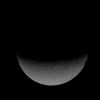
Enceladus-N00118330.jpgCrescent Enceladus (natural colors; credits: Lunexit)57 visiteCaption NASA:"N00118330.jpg was taken on August 11, 2008 and received on Earth August 12, 2008. The camera was pointing toward ENCELADUS that, at the time, was approximately 113.865 kilometers away.
The image was taken using the CL1 and CL2 filters and it has not been validated or calibrated".MareKromiumAgo 13, 2008
|
|
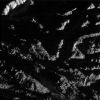
Enceladus-N00118361.jpgThe Unbelievable Surface of Enceladus, from ONLY 545 Km!58 visiteCaption NASA:"Caption NASA:"N00118365.jpg was taken on August 11, 2008 and received on Earth August 12, 2008. The camera was pointing toward ENCELADUS that, at the time, was approximately 545 Km away.
The image was taken using the CL1 and CL2 filters and it has not been validated or calibrated".
Note Lunexit: tutta la Regione ripresa pare essere - letteralmente - un "groviglio" di crepacci e di canali che si intersecano e che evidenziano, sulle loro estremità, l'esistenza di rilievi davvero singolari (alcuni a forma sferoidale, ed altri, molto irregolari, che ci ricordano i "rami contorti" di una sorta di foresta pietrificata). Comune a tutti i rilievi visibili è l'abedo: elevatissima (si tratta forse di grandi "blocchi di ghiaccio"? Probabilmente si).
Un numero elevato di boulders è chiaramente distinguibile sull'intera scena e, in particolare, sul versante illuminato del crepaccio situato nell'angolo superiore Sx del frame (un crepaccio che, a nostro parere, lascia altresì intuire - se si osserva con estrema attenzione - la presenza di "chiazzature" le quali possono ricordare i "seeps" Marziani).
Un grandissimo frame, reso ancora più straordinario dal fatto che il panorama ripreso giace a ridosso del Terminatore!MareKromiumAgo 13, 2008
|
|

Enceladus-N00118362.jpgThe Unbelievable Surface of Enceladus, from about 1500 Km! (the Monolith of Enceladus)55 visiteCaption NASA:"Caption NASA:"N00118365.jpg was taken on August 11, 2008 and received on Earth August 12, 2008. The camera was pointing toward ENCELADUS that, at the time, was approximately 1574 Km away.
The image was taken using the CL1 and CL2 filters and it has not been validated or calibrated".
Nota Lunexit: indicato dalla freccia, una probabile struttura colonnare - individuata grazie all'ombra straordinariamente lunga che proietta - che riteniamo simile (se non altro concettualmente) al Monolito di Phobos ed alle Cuspidi di Blair.MareKromiumAgo 13, 2008
|
|
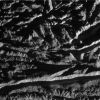
Enceladus-N00118363.jpgThe Unbelievable Surface of Enceladus, from about 1500 Km!61 visiteCaption NASA:"Caption NASA:"N00118365.jpg was taken on August 11, 2008 and received on Earth August 12, 2008. The camera was pointing toward ENCELADUS that, at the time, was approximately 1564 Km away.
The image was taken using the CL1 and CL2 filters and it has not been validated or calibrated".
Nota Lunexit: osservate come l'avvicinarsi alla Linea del Terminatore rende le immagini straordinariamente affilate e dense di profondità...MareKromiumAgo 13, 2008
|
|
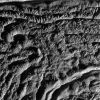
Enceladus-N00118364.jpgThe Unbelievable Surface of Enceladus, from about 2000 Km!72 visiteCaption NASA:"N00118365.jpg was taken on August 11, 2008 and received on Earth August 12, 2008. The camera was pointing toward ENCELADUS that, at the time, was approximately 2628 Km away.
The image was taken using the CL1 and CL2 filters and it has not been validated or calibrated".MareKromiumAgo 13, 2008
|
|
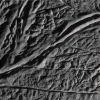
Enceladus-N00118365.jpgThe Unbelievable Surface of Enceladus, from about 2000 Km!56 visiteCaption NASA:"N00118365.jpg was taken on August 11, 2008 and received on Earth August 12, 2008. The camera was pointing toward ENCELADUS that, at the time, was approximately 2628 Km away.
The image was taken using the CL1 and CL2 filters and it has not been validated or calibrated".MareKromiumAgo 13, 2008
|
|
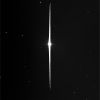
Enceladus-W00048456.jpgJust like a "Star"!55 visiteUno strabiliante "effetto goccia" (da over-saturation) per l'oggetto celeste la cui albedo è la più alta nell'intero Sistema Solare: Encelado, la "Luna di Neve".
Caption NASA:"W00048456.jpg was taken on August 11, 2008 and received on Earth August 11, 2008. The camera was pointing toward ENCELADUS that, at the time, was approx. 444.673 Km away.
The image was taken using the CL1 and CL2 filters and it has not been validated or calibrated".MareKromiumAgo 12, 2008
|
|

The_Rings-PIA10442.jpgModern Art? (natural colors; credits: Lunexit)60 visiteCaption NASA:"This bizarre scene shows the cloud-streaked limb of Saturn in front of the Planet's B-Ring. The Ring's image is warped near the limb by the diffuse gas in Saturn's Upper Atmosphere.
For additional examples of this effect, see PIA09810, PIA07521 and PIA06656.
This view looks toward the sunlit side of the Rings, from about 31° below the Ring-Plane. North on Saturn is up.
The image was taken with the Cassini spacecraft narrow-angle camera on June 24, 2008 using a spectral filter sensitive to wavelengths of infrared light centered at 750 nanometers. The view was acquired at a distance of approx. 657.000 Km (about 408,000 miles) from Saturn.
Image scale is roughly 4 Km (about 2,5 miles) per pixel".MareKromiumAgo 09, 2008
|
|
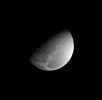
Dione-PIA10431.jpgDione59 visiteCaption NASA:"This Cassini Spacecraft view, taken from a vantage point 64° above Dione's Equator, looks down onto the bright fractures that cover the moon's Trailing Side. The fractures crisscross a region of terrain that is significantly darker than the rest of the moon's surface. Dione is approx. 1123 Km (about 698 miles) across.
The image was taken in visible light with the Cassini spacecraft narrow-angle camera on June 15, 2008. The view was obtained at a distance of approx. 601.000 Km (such as about 374.000 miles) from Dione and at a Sun-Dione-Spacecraft, or Phase, Angle of 76°. Image scale is roughly 4 Km (a little more than 2 miles) per pixel".MareKromiumLug 24, 2008
|
|

Rhea-PIA10429.jpgRhea (MULTISPECTRUM; credits: Lunexit)65 visiteCaption NASA:"The Cassini Spacecraft surveys the stark beauty of Saturn's moon Rhea.
Rhea's North Pole is up and tilted slightly away from Cassini in this view; the moon's south pole is in sunlight at bottom. Lit terrain seen here is on the Anti-Saturn Side of Rhea.
The image was taken in visible red light with the Cassini Spacecraft narrow-angle camera on June 10, 2008. The view was acquired at a distance of approx. 420.000 Km (approx. 261.000 miles) from Rhea and at a Sun-Rhea-Spacecraft, or Phase, Angle of 53°.
Image scale is roughly 3 Km (about 2 miles) per pixel".MareKromiumLug 22, 2008
|
|

The_Rings-PIA10426.jpgThe C-Ring and the Upper Atmosphere of Saturn (MULTISPECTRUM-2; credits: Lunexit)61 visiteCaption NASA:"Saturn's C-Ring emerges from behind the Planet's hazy limb. This view looks toward the sunlit side of the Rings from about 15° below the Ring-Plane.
The image was taken in visible light with the Cassini Spacecraft narrow-angle camera on June 17, 2008. The view was obtained at a distance of approx. 937.000 Km (such as about 582.000 miles) from Saturn.
Image scale is roughly 5 Km (a little more than 3 miles) per pixel".MareKromiumLug 18, 2008
|
|

The_Rings-PIA10423.jpgSpooky Spokes! (MULTISPECTRUM; credits: Lunexit)59 visiteCaption NASA:"As they wheel about the Planet, Saturn's sunlit Rings often exhibit dark, radial markings called "spokes". Spokes are seen only in the broad B-Ring, and can also appear bright in certain viewing geometries.
This view looks toward the sunlit side of the Rings from about 11° below the Ring-Plane.
Pandora (about 81 kilometers, or approx. 50 miles across) is a speck above the Rings at left. The Planet's shadow darkens the Ring-Plane at lower right.
The image was taken in visible light with the Cassini Spacecraft wide-angle camera on June 3, 2008. The view was acquired at a distance of approx. 1 MKM (about 636.000 miles) from Saturn and at a Sun-Saturn-Spacecraft, or Phase, Angle of 19°.
Image scale is roughly 61 Km (approx. 38 miles) per pixel".MareKromiumLug 13, 2008
|
|
| 2245 immagini su 188 pagina(e) |
 |
|
|
|
|
56 | |
|
|
|
|





