| Ultimi arrivi - Saturn: the "Ringed Beauty" and His Moons |

Prometheus-N00128992-a.gifPrometheus: the "Wave-Maker" (GIF-Movie; credits: Dr M. Faccin)71 visitenessun commentoMareKromiumApr 02, 2009
|
|

Prometheus-N00128992-b.gifPrometheus: the "Wave-Maker" (GIF-Movie; credits: Dr M. Faccin)69 visitenessun commentoMareKromiumApr 02, 2009
|
|
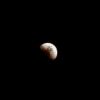
Japetus-PIA11460.jpgJapetus, from far away (Natural Colors; credits: Lunar Explorer Italia)58 visiteCaption NASA:"The Cassini Spacecraft casts its gaze across 4 MKM space for this snapshot of Japetus, Saturn's most distant Major Moon. Japetus — about 1471 Km (914 miles) across — is the 3rd largest moon, but its inclined orbit is much farther out from the other Major Moons, where Cassini spends most of its time. Nonetheless, the moon's distinctive two-tone surface is obvious.
This view looks toward the Leading Hemisphere of Japetus. North on Japetus is up and rotated 2° to the right. The image was taken in visible light with the Cassini Spacecraft narrow-angle camera on March 3, 2008.
The view was acquired at a distance of approx. 4 MKM (such as about 2,5 MMs) from Japetus and at a Sun-Japetus-Spacecraft, or Phase, Angle of 69°.
Image scale is roughly 24 Km (about 15 miles) per pixel".MareKromiumApr 01, 2009
|
|

Rhea-PIA11458.jpgRhea (Natural Colors; credits: Lunar Explorer Italia)59 visiteCaption NASA:"The Terminator between light and dark throws Rhea's cratered surface into stark relief while the Southern Hemisphere is scored by bright icy cliffs.
North on Rhea is up and rotated 42° to the right in this 2-tile mosaic. This view looks toward the Leading Hemisphere of Rhea (approx. 1528 Km, or about 949 miles across).
The image was taken in visible light with the Cassini spacecraft narrow-angle camera on Feb. 2, 2009. The view was acquired at a distance of approx. 181.000 Km (such as about 112.000 miles) from Rhea and at a Sun-Rhea-Spacecraft, or Phase, Angle of 91°.
Image scale is roughly 1 Km (about 3300 feet) per pixel".MareKromiumMar 29, 2009
|
|
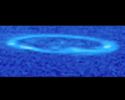
Saturn-PIA11832.jpgSaturnian Aurora60 visiteCaption NASA:"Glowing like a neon lasso, Saturn’s Aurora is seen spinning above Saturn’s North Pole over the course of most of a Saturn day in this image taken by the ultraviolet imaging spectrograph on NASA’s Cassini Spacecraft.
Saturn’s auroral lights are the result of a rain of electrically charged particles from the magnetic bubble, called the Magnetosphere, that surrounds the Planet.
When the particles strike gaseous Hydrogen in Saturn’s Atmosphere, the Hydrogen becomes excited and glows, creating Aurorae. Neon signs work in a similar way: electricity is used to excite a gas, usually Neon or Argon, in a tube.
Changes that occur in Saturn’s Magnetosphere can cause fluctuations in the Aurora. Undulations in the Aurora may be caused by waves moving along magnetic field lines.
A surge in auroral brightness is the result of a sudden injection of particles into the Magnetosphere. These charged particles come from a variety of sources, including the Sun, Saturn’s Rings, and the water ice plume of Saturn’s moon Enceladus.
This image was taken on May, 25th, 2007.
Saturn's Aurorae were discovered by NASA’s Pioneer 11 Spacecraft in 1979 and observed in the Saturn flybys by the NASA Voyager 1 and 2 Spacecrafts in the early '80s. NASA’s Hubble Space Telescope first obtained images of an Aurora in 1994. From Cassini’s always-changing orbit around Saturn, fresh observations in UltraViolet and InfraRed wavelengths are being combined with other data to help characterize similarities and differences among the Aurorae of Saturn, Jupiter and Earth". MareKromiumMar 25, 2009
|
|

PIA07966-112203-1.wavAudio Signals from the the Space of Saturn (by Dr M. Faccin)59 visitenessun commentoMareKromiumMar 24, 2009
|
|
PIA07966-112203.wavAudio Signals from the the Space of Saturn (by Dr M. Faccin)58 visitenessun commentoMareKromiumMar 24, 2009
|
|
PIA07966-112203xx.mp3Audio Signals from the the Space of Saturn (by Dr M. Faccin)59 visitenessun commentoMareKromiumMar 24, 2009
|
|
PIA07967-072504.wavAudio Signals from the the Space of Saturn (by Dr M. Faccin)57 visitenessun commentoMareKromiumMar 24, 2009
|
|

Pan-PIA11652-1.jpgPan and its Shadow (Natural Colors; credits: Lunar Explorer Italia)58 visiteCaption NASA:"Wendy Darling famously helped Peter Pan catch his shadow, and now Cassini captures the shadow of another Pan: Saturn's 30-kilometer (19-mile) wide moon inhabiting the Encke Gap.
In the center of this image, the shadow of Pan is a short streak thrown over the edge of the A-Ring where Pan travels its path through the Encke Gap. A second version of this image has been included to focus on Pan's shadow. The image has been scaled to three times its original size and cropped as shown in the inset.
One of the happy results of Saturn's 29-year revolution around the Sun is the changing elevation of the Sun seen from the Planet, and the changing elevation of the shadows of the Rings and moons that the Sun's apparent motion brings.
As Saturn approaches Equinox, the angle at which the ringplane is inclined away from the Sun will continue to decrease until August 2009, when Equinox will bring about an alignment of the plane containing the rings with the rays of the Sun. Only around the time of Equinox is a moon's shadow cast on the Rings rather than the Planet. Between now and Equinox in August, the shadows cast by the moons on the Rings will grow longer with time".MareKromiumMar 24, 2009
|
|
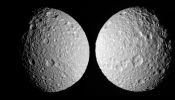
Mimas-Cs.jpgMimas, from Cassini59 visitenessun commentoMareKromiumMar 22, 2009
|
|
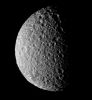
Mimas-V1.jpgMimas, from Voyager 156 visitenessun commentoMareKromiumMar 22, 2009
|
|
| 2245 immagini su 188 pagina(e) |
 |
|
|
|
|
39 | |
|
|
|
|





