| Ultimi arrivi - Saturn: the "Ringed Beauty" and His Moons |

Janus_Epimetheus-N00150026-45.gifSaturnian Runners (GIF-Movie; credits: Elisabetta Bonora)58 visitenessun commentoMareKromiumGen 17, 2010
|
|

The_Sky_of_Saturn-4256690919_1c0b492298_o.gifIn the Sky of Saturn (GIF-Movie; credits: Dr M. Faccin)65 visitenessun commentoMareKromiumGen 15, 2010
|
|

Pandora-091227-W00062229-31.jpgPandora perhaps? (an Image-Mosaic in False Colors, by Elisabetta Bonora - Lunexit Team)57 visitenessun commentoMareKromiumGen 15, 2010
|
|

The_Sky_of_Saturn.gifIn the Sky of Saturn (GIF-Movie; credits: Dr M. Faccin)58 visiteLegenda: punti gialli ---> Stelle Fisse; punti blu: Lune Saturniane
MareKromiumGen 15, 2010
|
|

Enceladus-PIA12517.jpgA "Pearl of Ice", in the Night of Saturn (possible Natural Colors; credits: Dr Paolo C. Fienga - Lunexit Team)57 visiteCaption NASA:"The Cassini Spacecraft looks toward the South Pole of Enceladus, with a glimpse of Saturns Rings in the distance, during the Spacecraft's close Fly-By of Nov. 2, 2009.
(see PIA08386 to learn more about the active South Pole of Enceladus)
This view looks toward the anti-Saturn side of Enceladus. The Rings have been brightened relative to Enceladus to increase visibility.
The image was taken in Visible Light with the Cassini Spacecraft wide-angle camera on Nov. 2, 2009. The view was acquired at a distance of approx. 10.400 Km (aout 6500 miles) from Enceladus and at a Sun-Enceladus-Spacecraft, or Phase, Angle of 6°.
Image scale is roughly 630 meters (2100 feet) per pixel".MareKromiumGen 15, 2010
|
|

Japetus-4230263249_738ebb224f_o.jpgIce Deposits on Japetus (Image-Mosaic - Possible Natural Colors; credits: Dr M. Faccin - Lunexit Team)85 visitenessun commentoMareKromiumGen 14, 2010
|
|
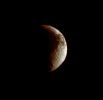
Japetus-PIA12521.jpgCrescent Japetus (possible Natural Colors; credits: Dr Paolo C. Fienga - Lunexit Team)62 visiteCaption NASA:"The Cassini Spacecraft examines the rough Dark-Light Dichotomy of the Terrain on Saturn's moon Japetus. Scientists continue to investigate the nature of this moon's Surface.
Lit Terrain seen here is on the Saturn-facing side of Japetus.
North on Japetus is up and rotated 8° to the left. Scale on Japetus was about 7 Km (about 4,3 miles) per pixel in the original image. The image was contrast enhanced and magnified by a factor of two to enhance the visibility of Surface Features.
The image was taken in Visible Green Light with the Cassini Spacecraft narrow-angle camera on Sept. 13, 2009. The view was acquired at a distance of approx. 1,2 MKM (about 746.000 miles) from Iapetus and at a Sun-Japetus-Spacecraft, or Phase, Angle of 103°".MareKromiumGen 14, 2010
|
|

The_Rings-PIA12518.jpgWithin the Rings (Natural Colors; credits: NASA/JPL/Space Science Institute)59 visiteCaption NASA:"Saturn's moon Epimetheus casts a shadow across the colourful Rings of Saturn, in this image taken before the Planet's August 2009 Equinox.
Epimetheus (approx. 113 Km, or about 70 miles across) is visible as a small dot at the center of the bottom of the image.
The novel illumination geometry that accompanies Equinox lowers the Sun's angle to the Ring-Plane, significantly darkens the Rings, and causes out-of-plane structures to look anomalously bright and cast shadows across the Rings. These scenes are possible only during the few months before and after Saturn's Equinox, which occurs only once in about 15 Earth years. Before and after Equinox, Cassini's cameras have spotted not only the predictable shadows of some of Saturn's moons (see PIA11657), but also the shadows of newly revealed Vertical Structures in the Rings themselves (see PIA11665).
Images taken using red, green and blue spectral filters were combined to create this Natural Color view. This view looks toward the southern, sunlit side of the Rings from about 39° below the Ring-Plane.
The images were obtained with the Cassini Spacecraft wide-angle camera on June 8, 2009 at a distance of approx. 725.000 Km (about 450.000 miles) from Saturn.
Image scale is roughly 40 Km (about 25 miles) per pixel".MareKromiumGen 12, 2010
|
|

Rhea-4229274308_c987cf73d9_o.jpgLarge Crater on Rhea (possible True Colors; credits: Dr M. Faccin - Lunexit Team)58 visitenessun commentoMareKromiumGen 09, 2010
|
|
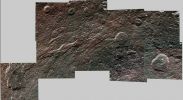
Rhea-Cracks-MF.jpgExtremely Long Tectonic Fracture on Rhea (possible True Colors; credits: Dr M. Faccin - Lunexit Team)58 visitenessun commentoMareKromiumGen 09, 2010
|
|

Prometheus-4220346220_c47de906a1_o.jpgPrometheus adrift... (possible True Colors; credits: Dr M. Faccin - Lunexit Team)56 visitenessun commentoMareKromiumGen 09, 2010
|
|

The_Rings-EB.jpgUp-Sun in the Space of Saturn (Natural Colors; credits: Elisabetta Bonora - Lunexit Team)57 visitenessun commentoMareKromiumGen 09, 2010
|
|
| 2245 immagini su 188 pagina(e) |
 |
|
|
|
|
26 | |
|
|
|
|





