| Ultimi arrivi - Saturn: the "Ringed Beauty" and His Moons |

Saturn-N00016134.jpgSaturn: clouds and rings from about 8.866.000 Km55 visitenessun commentoSet 08, 2004
|
|

Saturn-N00016178.jpgSaturn: clouds and rings from about 8.400.000 Km55 visitenessun commentoSet 08, 2004
|
|

Saturn-N00016277.jpgSaturn, Moons and Stars54 visitenessun commentoSet 08, 2004
|
|

Saturn_s F-Ring+Mimas-PIA06471_modest.jpgLonely Mimas...57 visiteCaption NASA originale:"Mimas swings around Saturn, seeming to gaze down at the planet's splendid rings. The outermost, narrow F ring is visible here and exhibits some clumpy structure near the bottom of the frame. The shadow of Saturn's southern hemisphere stretches almost entirely across the rings. Mimas is 398 Km (247 miles) wide.
The image was taken with the Cassini spacecraft narrow angle camera on August 15, 2004, at a distance of 8,8 MKM (5.5 million miles) from Saturn".Set 07, 2004
|
|

Phoebe (3D).jpgThree-dimensional Phoebe56 visiteCaption NASA originale:"The Sun is coming from the left, illuminating craters and bumps on the surface, along with a prominent ridge-like feature in the middle. Bright material, likely to be ice, is exposed atop this ridge-like feature as well as around small craters and down the slopes of large craters. There are also bright streaks on steep slopes, perhaps where loose material slid downhill during the seismic shaking of impact events". Set 07, 2004
|
|

Saturn + 4 Moons-PIA05435_modest.jpgSaturn and 4 Moons from 8.900.000 Km73 visitecaption NASA originale:"Saturn's Moons visible in this image are (clockwise from upper left): Tethys (1060 Km wide); Dione (1118 Km wide); Enceladus (499 Km wide) and Mimas (398 Km wide).
The image was taken in visible red light at a distance of 8,9 MKM (5.5 million miles) from Saturn". Set 06, 2004
|
|
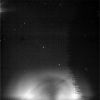
AV-Saturn-N00015958.jpgA "double glare" in the Space of Saturn77 visiteIl consueto riflesso che si accompagna alle rotazioni della Sonda quando essa si rivolge verso l'Anello "E", questa volta presenta una ulteriore curiosità. Guardate alla estrema Sn dell'immagine, in alto: potrete chiaramente vedere l'irraggiamento che proviene da un'altra sorgente luminosa, posizionata fuori obbiettivo. Dunque abbiamo un riflesso/irraggiamento in basso ed uno in alto a Sn. La domanda è ovvia: quali sono le cause di questi due fenomeni?Set 04, 2004
|
|
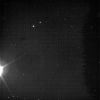
AH-Before the Streak-N00015684.jpgBefore the "Big Streak"67 visiteE, per completare il riassunto fotografico dell'ennesima (possibile) Anomalia che abbiamo incontrato, eccoVi il frame precedente alla Striscia. L'intera sequenza, per Vostra informazione, si svolge su uno spazio di 911 Km (infatti in questo frame la Sonda Cassini/Huygens si trova a 9.062.781 Km da Saturno; al momento del "contatto" è a 9.062.214 e nel frame dopo a 9.061.870 Km). Set 03, 2004
|
|

AG-After the Streak-N00015686.jpgAfter the "Big Streak"67 visitePer una questione di onestà intellettuale e di obbiettività, noi Vi proponiamo anche l'immagine successiva alla "striscia" che ha attratto la nostra attenzione. Adesso si può cogliere, con una certa chiarezza, un riflesso vero e proprio, in basso. Come vedete, l'effetto da esso provocato è diverso da quanto visto in precedenza. Certo, potremmo anche sbagliarci: ma immagini come quella di prima devono (almeno...) farci riflettere!Set 03, 2004
|
|

AF-A new Streak in the Sky-N00015685.jpgA new "Big Streak" in the Sky of Saturn121 visiteImmagine ripresa dalla Sonda Cassini/Huygens il giorno 30 Agosto 2004 e ricevuta dal Mission Control il giorno successivo. C'è qualcosa che è passato (o sta passando...) accanto alla Sonda, mentre questa riprende un'immagine dello Spazio di Saturno.
E' un semplice riflesso?
Forse no.
Vi abbiamo proposto delle immagini che riprendono "riflessi" (o qualcosa di simile ad essi) e l'effetto che si vede è molto diverso.Set 03, 2004
|
|

Saturn in the darkness-N00015836.jpgSaturn (and Titan?) in the darkness57 visiteA volte, quando invitiamo i nostri Lettori ad immaginare, mentre guardano le "istantanee dell'Universo", di "essere lì", sospesi in una sorta di abisso senza confini visibili, circondati da oggetti maestosi ed impenetrabili, pensiamo al film "2001 - Odissea nello Spazio", quando Dave Bowman esce nello Spazio di Giove a bordo della sua navetta, per andare a vedere il Monolito da vicino. Questo frame, in qualche modo, ci ricorda quella sequenza e noi ve lo proponiamo...Set 03, 2004
|
|

Japetus from 2.900.000 Km - PIA06466_modest.jpgTwo-faced Japetus55 visiteCaption NASA originale:"The dark material that coats one hemisphere of Saturn's moon Iapetus is very dark, as these two processed views of the same frame can demonstrate.
The image on the left has been cleaned of cosmic rays and magnified; in this otherwise un-enhanced view, only a small part of the moon's surface, at the bottom, is visible because it is part of the bright side of Iapetus. (Only the right hand side of Iapetus is illuminated by sunlight.) The same image, shown on the right, has been contrast-enhanced to make visible the part of the illuminated side of Iapetus that is coated with dark material". Set 01, 2004
|
|
| 2245 immagini su 188 pagina(e) |
 |
|
|
|
|
175 | |
|
|
|
|





