| Ultimi arrivi - Saturn: the "Ringed Beauty" and His Moons |

Enceladus-PIA06206_modest.jpgEnceladus (close-up)58 visiteCaption NASA originale:"Fractures are nearly ubiquitous in this terrain, cutting across each other and across impact craters. Scientists can use the relationships between different features to determine the order in which they formed, thereby unraveling the moon's past. For example, almost all the craters in this mosaic have fractures running through their rims and floors, indicating that the craters formed first. This means that Enceladus has been geologically active relatively recently, especially compared to some of its neighbors in the Saturn system. There is an impressive variety of fractures visible here--from the wide east-west rifts near the upper left of the mosaic to the very fine north-south fractures in the center (which are approximately 100 to 400 meters). Due to the complexity of this terrain, the task of unraveling Enceladus' history promises to be a worthy challenge for planetary scientists".Mar 17, 2005
|
|
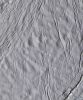
Enceladus~0.jpgEnceladus (close-up)56 visiteCaption NASA da "NASA - Picture of the Day" del 17 Marzo 2005:"The surface of Enceladus is as white as fresh snow. Still, an impressive variety of terrain is revealed in this contrast enhanced image. At a resolution of about 30 meters per pixel, the close-up view spans over 20 Km - recorded during the touring Cassini spacecraft's March flyby of the icy Saturnian moon. Enceladus is known to be the most reflective moon in the solar system and the recent Cassini encounters have also detected the presence of an atmosphere, making Enceladus the second moon of Saturn with such a distinction. In fact, Enceladus' fresh looking surface and significant atmosphere both indicate that the tiny, 500 Km diameter moon is active. Researchers suspect that ice volcanos or geysers coat the surface with fresh material and replenish the moon's atmosphere, ultimately providing the icy particles that compose Saturn's tenuous E-Ring".Mar 17, 2005
|
|

Epimetheus-PIA06605.jpgEpimetheus, from approx. 2,5 MKM59 visiteCaption NASA originale:"One of Saturn's strange co-orbital moons, Epimetheus, was captured by Cassini in this view. Irregularly shaped Epimetheus occasionally swaps orbits with nearby Janus and both moons play a role in maintaining the outer edge of Saturn's bright A-Ring. Epimetheus is 116 Km (approx. 72 miles) across.
The image was taken in visible light with the Cassini spacecraft narrow-angle camera on Jan. 22, 2005, at a distance of approximately 2,5 MKM (approx. 1,6 MMs) from Epimetheus and at a phase angle of 90°.
Resolution in the image is 15 Km (approx. 9 miles) per pixel.
The image has been contrast-enhanced to aid visibility".Mar 16, 2005
|
|

Saturn-PIA06604.jpgSaturn, Titan, Rhea and Enceladus61 visiteCaption NASA originale:"Saturn's biggest and brightest moons are visible in this portrait by Cassini.
Titan (5.150 Km, or 3,200 miles across) is Saturn's largest moon and appears at the lower left. Note that some details in the moon's smoggy atmosphere are visible here. Rhea (1.528 Km, or 949 miles across) is the planet's second largest moon and is seen above center. Enceladus (505 Km, or 314 miles across) has the brightest surface in the solar system, reflecting nearly all of the sunlight that falls upon it. Enceladus is just above the rings, left of center. Titan was on the far side of the planet at the time of this exposure, while the other moons were on the near side, much closer to Cassini.
Also seen here are details in the cloud bands of Saturn's mostly hydrogen atmosphere, variations in brightness across the dazzling rings and magnificent ring shadows cast upon the northern hemisphere. The image was taken with the Cassini spacecraft wide-angle camera on Feb. 5, 2005, at a distance of approximately 3.4 million kilometers (2.1 million miles) from Saturn through a filter sensitive to wavelengths of infrared light centered at 728 nanometers. The image scale is 200 kilometers (124 miles) per pixel".Mar 14, 2005
|
|

Janus-PIA06603.jpgJanus and Atlas97 visiteCaption NASA originale:"The irregularly-shaped moon Janus (181 Km across) and the small ring moon Atlas (32 Km across) had just emerged from the darkness of Saturn's shadow when Cassini caught this view of the two moons.
Saturn's bright A-Ring is largely overexposed in this view, but several other ring details are nicely visible. The image shows two bright regions within the B-Ring (at right), ringlets of material within the dark, narrow Encke Gap and kinks in the F-Ring.
North on Saturn is tilted toward upper left. This view is from Cassini's vantage point beneath the ring plane. It is notable that, as Saturn orbits the Sun, its shadow has been steadily creeping farther out along the ring plane and now extends beyond the F-Ring. The image was taken in visible light with the Cassini spacecraft narrow-angle camera on Jan. 26, 2005, at a distance of approximately 3,2 MKM from Janus and at a phase angle of 81°. The image scale is 19Km/pixel".Mar 12, 2005
|
|

Enceladus-N00030265.jpgEnceladus, from approx. 925.000 Km60 visitenessun commentoMar 11, 2005
|
|

Tethys-N00030191.jpgTethys from approx. 197.000 Km58 visiteDa una luna all'altra, viaggiando sulle "autostrade" che vengono disegnate dalle orbite della Sonda Cassini intorno a Saturno, così come si passa da una città all'altra, sulle autostrade del nostro Pianeta. Dopo Encelado, avvicinata, sfiorata e superata, adesso è la volta di Teti, le cui caratteristiche superficiali - come già potete vedere molto bene in questo frame - sono decisamente diverse: non vediamo canyons, gole e canali, infatti, ma solo un terreno butterato da migliaia e migliaia di crateri da impatto. Un mondo lontano ma, in fondo, piuttosto simile alla nostra Luna e, da questo punto di vista, forse, un mondo molto più familiare...Mar 11, 2005
|
|

Enceladus-N00030123.jpgEnceladus, from approx. 166.000 Km70 visiteIl Fly-By è finito e, purtroppo, le immagini di Encelado da distanza inferiore ai 1000 Km, la NASA non le ha (ancora?) rese disponibili. In attesa, quindi, di vedere i dettagli ravvicinati delle incredibili increspature che segnano la superficie di Encelado, contentiamoci di questa - comunque - bellissima immagine di "arrivederci": una falce bene illuminata (e stupendamente definita) della "Luna di Neve", ossìa il corpo celeste più brillante - sia pure solo di luce riflessa - di tutto quanto il Sistema Solare.Mar 11, 2005
|
|

Enceladus-N00030111.jpgEnceladus, from approx. 4.000 Km55 visiteTabella riassuntiva delle caratteristiche superficiali di Encelado:
1. esistenza di una diffusa e fittissima rete di canyons, crepacci e canali;
2. sostanziale scarsità di crateri da impatto (salvo alcune aree, di modeste dimensioni);
3. presenza, accanto alle "reti di canali e canyons", di alcuni crepacci molto grandi, profondi e, apparentemente, recenti (si potrebbe trattare, forse, di "fratture tettoniche");
4. mancanza di profili "aspri" (anche i bordi dei pochi crateri visibili sembrano essere 'smussati');
5. albedo altissima (molte immagini recano chiari segni di sovraesposizione);
6. possesso di una atmosfera.
Mar 10, 2005
|
|

Enceladus-N00030108.jpgEnceladus, from approx. 5.000 Km56 visitenessun commentoMar 10, 2005
|
|

Enceladus-N00030103.jpgEnceladus, from approx. 6.000 Km58 visitenessun commentoMar 10, 2005
|
|

Enceladus-N00030097.jpgEnceladus, from approx. 12.000 Km58 visiteAncora un grande e tortuoso crack della superficie di questa luna che, non più nè meno di Giapeto o Mimas, ci mostra, a mano a mano che ci avviciniamo, un volto capace di suscitare dei grandi interessi e che fa nascere infinite curiosità.
Perchè Encelado è così luminosa?
Che cosa è successo alla superficie di Encelado, e quando?
Proveremo un landing anche su Encelado, in futuro?!?...Mar 10, 2005
|
|
| 2245 immagini su 188 pagina(e) |
 |
|
|
|
|
155 | |
|
|
|
|





