| Ultimi arrivi - Saturn: the "Ringed Beauty" and His Moons |

Cosmic_WaterFall-N00160095-N00160115_logo.gifCosmic Waterfall (a GIF-Movie by Dr Gianluigi Barca - Lunexit Team)60 visitenessun commentoMareKromiumAgo 05, 2010
|
|

Tethys-PIA12686.jpgCrescent Tethys (Natural Colors; credits for the additional process. and color.: Dr Paolo C. Fienga - Lunexit Team)56 visiteCaption NASA:"Sunlight illuminates the deep cut of Ithaca Chasma on Saturn's moon Tethys. Ithaca Chasma runs roughly North-South for more than about 1000 Km (approx. 620 miles) on Tethys.
Lit Terrain seen here is on the Saturn-facing side of Tethys. North on Tethys is up and rotated 18° to the right.
The image was taken in visible light with the Cassini Spacecraft narrow-angle camera on June 2, 2010. The view was obtained from a distance of approx. 477.000 Km (about 296.000 miles) from Tethys and at a Sun-Tethys-Spacecraft, or Phase, Angle of 127°.
Image scale is roughly 3 Km (a little less than 2 miles) per pixel".MareKromiumAgo 01, 2010
|
|
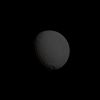
Tethys-PIA12676.jpgTethys (Natural Colors; credits for the additional process. and color.: Dr Paolo C. Fienga - Lunexit Team)56 visiteCaption NASA:"The Cassini Spacecraft looks toward an area between the Trailing Hemisphere and anti-Saturn side of Tethys and spies the large crater Melanthius near the moon's South Pole and, in this picture, near the Terminator.
Melanthius is about 250 Km (approx. 155 miles) wide on Tethys. North on Tethys is up and rotated 19° to the right.
The image was taken in Visible Light with the Cassini Spacecraft narrow-angle camera on April 29, 2010. The view was acquired at a distance of approx. 670.000 Km (such as about 416.000 miles) from Tethys and at a Sun-Tethys-Spacecraft, or Phase, Angle of 41°.
Image scale is roughly 4 Km (approx. 2,5 miles) per pixel".MareKromiumLug 21, 2010
|
|

Prometheus-PIA12787.jpgGravitational Waves94 visitenessun commentoMareKromiumLug 21, 2010
|
|

Saturn-W00064795-5-6-EB-LXTT.jpgFather and Son n. 2 (An Image-Mosaic in Natural Colors; credits for the additional process. and color.: Elisabetta Bonora - Lunexit Team)89 visitenessun commentoMareKromiumLug 21, 2010
|
|

Saturn-W00064807-6-9-EB-LXTT.jpgFather and Son n. 1 (An Image-Mosaic in Natural Colors; credits for the additional process. and color.: Elisabetta Bonora - Lunexit Team)56 visitenessun commentoMareKromiumLug 21, 2010
|
|

Saturn-N00157424-EB-LXTT.jpgTemporary Darkness... (An Image-Mosaic in Natural Colors; credits for the additional process. and color.: Elisabetta Bonora - Lunexit Team)65 visitenessun commentoMareKromiumLug 21, 2010
|
|

Propeller-PIA12790-1.jpgSaturnian "Propeller": Earhart54 visiteA propeller-shaped structure created by an unseen moon is brightly illuminated on the Sunlit Side of Saturn's Rings in this image obtained by NASA's Cassini Spacecraft.
The moon, which is too small to be seen, is at the center of the Propeller Structure visible in the upper left of the image, near the Encke Gap of the A-Ring. The A-Ring is the outermost of Saturn's Main Rings.
The moon is likely about 1 Km (a little moere than half a mile) across. Disturbed ring material to the upper left and lower right of the moon reflects Sunlight brightly and appears like a white airplane propeller.
Several density waves are also visible in the Ring. A spiral density wave is a spiral-shaped accumulation of particles that tightly winds many times around the Planet. It is the result of gravitational tugs by individual moons whose orbits are in resonance with the particles' orbits at a specific distance from Saturn.
A Propeller's appearance changes with viewing geometry, and this image shows the way a Propeller looks when viewed from the sunlit side of the Rings. Contrasts can reverse when the structure is observed on the dark side of the Rings: for example, the bright structure of this Propeller corresponds to the dark portion at the center of the propeller seen in PIA12791 which was imaged from the unilluminated side of the Rings.
This image is part of a growing catalogue of "Propeller Moons" that, despite being too small to be seen, enhance their visibility by creating larger disturbances in the surrounding fabric of Saturn's Rings. Cassini scientists now have tracked several of these individual Propeller Moons embedded in Saturn's disk over several years.
These images are important because they represent the first time scientists have been able to track the orbits of objects in space that are embedded in a disk of material. Continued monitoring of these objects may lead to direct observations of the interaction between a disk of material and embedded moons. Such interactions help scientists understand fundamental principles of how Solar Systems formed from disks of matter. Indeed, Cassini scientists have seen changes in the orbits of these moons, although they don't yet know exactly what causes these changes.
Imaging scientists nicknamed the Propeller shown here "Earhart" after the early American aviatrix Amelia Earhart. The Propeller Structure is about 5 Km (a little more than 3 miles) in the radial dimension (the dimension moving outward from Saturn which is far out of frame to the lower right of this image). It is about 60 Km (approx. 35 miles) in the azimuthal (longitudinal) dimension.
This same Propeller can be seen casting a shadow around the time of the Planet's Equinox in PIA11672. See PIA07791 and PIA07792 to learn more about Propeller shapes and to see smaller Propellers.
Scale in the original image was about 2 Km (about 1,3 miles) per pixel. The image has been rotated and contrast-enhanced to aid visibility.
This view looks toward the Southern, sunlit side of the Rings from about 81° below the Ring-Plane. The image was taken in Visible Light with the Cassini Spacecraft narrow-angle camera on April 11, 2008. The view was obtained at a distance of approx. 364.000 Km (such as about 226.000 miles) from Saturn and at a Sun-Saturn-Spacecraft, or Phase, Angle of 82°.MareKromiumLug 15, 2010
|
|

Propeller-PIA12790-2.jpgSaturnian "Propeller": Blériot57 visiteNASA's Cassini Spacecraft captured a Propeller-shaped Disturbance in one of Saturn's Rings created by a moon that is too small to be seen here.
The moon, likely about 1 Km (a little more than half a mile) across, is invisible at the center of the image. However, it is larger than many other "Propeller" moons and has cleared ring material from the dark wing-like structures to its left and right in the image. Disturbed ring material closer to the moon reflects Sunlight brightly and appears like a white airplane propeller. This Propeller appears in the A-Ring, which is the outermost of Saturn's Main Rings.
Taken in 2006, this image is part of a growing catalogue of "Propeller Moons" that, despite being too small to be seen, enhance their visibility by creating larger disturbances in the surrounding fabric of Saturn's Rings. Cassini scientists now have tracked several of these individual Propeller Moons embedded in Saturn's disk over several years.
These images are important because they represent the first time scientists have been able to track the orbits of objects in space that are embedded in a disk of material. Continued monitoring of these objects may lead to direct observations of the interaction between a disk of material and embedded moons. Such interactions help scientists understand fundamental principles of how Solar Systems formed from disks of matter. Indeed, Cassini scientists have seen changes in the orbits of these moons, although they don't yet know exactly what causes these changes.
Imaging scientists nicknamed the Propeller shown here "Bleriot" after a French aviator named Louis Bleriot.
The Propeller's structure is about 5 Km (approx. 3 miles) in the radial dimension -- the dimension moving directly outward from Saturn. The dark wings appear approx. 1100 Km (about 700 miles) in the azimuthal (longitudinal) dimension, while the central propeller structure is roughly 110 Km (about 70 miles) long.
See PIA12792 to watch a movie of "Bleriot." PIA11672 shows the giant propeller "Earhart" named after another aviator, Amelia Earhart. See PIA07791 and PIA07792 to learn more about propeller shapes and to see smaller propellers.
This image has been re-projected so that orbiting material moves to the right and Saturn is down. The Propeller was seen at the edge of the camera's field of view when the image was taken, so some data were missing; the blank space at the top of the image was filled in with a gray color. Scale in the original image was approx. 2 Km (about 1,3 miles) per pixel. Image scale in this re-projected view is about 1 Km (a little more than half a mile) per pixel.
This view looks toward the Southern, Sunlit side of the Rings from about 30° below the Ring-Plane. The image was taken in Visible Light with the Cassini Spacecraft narrow-angle camera on Dec. 15, 2006. The view was acquired at a distance of approx. 463.000 Km (about 288.000 miles) from Saturn and at a Sun-Saturn-Spacecraft, or Phase, Angle of 15°.MareKromiumLug 15, 2010
|
|
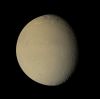
Enceladus-PIA12673.jpgEnceladus (possible Natural Colors; credits for the additional process. and color.: Dr Paolo C. Fienga - Lunexit Team)55 visiteCaption NASA:"The Cassini Spacecraft examines old and new terrain on Saturn's fascinating Enceladus, a moon where jets of water ice particles and vapor spew from the South Pole.
Newly created terrain is at the bottom, in the center and on the left of this view. Older, cratered terrain is on the right. See PIA11685 for another view of this area and more information about its geology. This image was captured during Cassini's Nov. 21, 2009, flyby of the moon. This view looks toward the Leading Hemisphere of Enceladus.
North on Enceladus is up and rotated 3° to the right.
The image was taken in Visible Light with the Cassini Spacecraft narrow-angle camera. The view was obtained at a distance of approx. 133.000 Km (such as about 83.000 miles) from Enceladus and at a Sun-Enceladus-Spacecraft, or Phase, Angle of 46°.
Image scale is roughly 796 meters (2612 feet) per pixel".MareKromiumLug 15, 2010
|
|
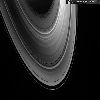
The_Rings-W00064666-W00064680-GB-LXTT.gifClosing-up on the Rings (a GIF-Movie by Dr Gianluigi Barca - Lunexit Team)57 visitenessun commentoMareKromiumLug 08, 2010
|
|

Daphnis-N00156646-48-EB-LXTT.jpgGravitational Pulls from Daphnis (an Image-Mosaic in Natural Colors by Elisabetta Bonora - Lunexit Team)57 visitenessun commentoMareKromiumLug 07, 2010
|
|
| 2245 immagini su 188 pagina(e) |
 |
|
|
|
|
15 | |
|
|
|
|





