| Ultimi arrivi - Curiosity and the Exploration of Gale Crater |

SOL0020-0020MR0057011000C0_DXXX.jpgWhite Edge - Sol 20 (RAW b/w Original NASA Frame; credits: NASA/JPL-Caltech - Research: Dr Gianluigi Barca/Lunar Explorer Italia/Italian Planetary Foundation)95 visitenessun commentoMareKromiumOtt 03, 2012
|
|

SOL0039-PIA16156.jpg"Hard" Mars... - Sol 39 (Credits: NASA/JPL-Caltech/MSSS)121 visite...Bisogna pure sorridere, in qualche modo ed in qualche misura...
Caption NASA:"NASA's Curiosity Rover found evidence for an ancient, flowing Stream on Mars at a few sites, including the Rock Outcrop pictured here, which the science team has named "Hottah" after Hottah Lake in Canada's Northwest Territories. It may look like a broken sidewalk, but this geological feature on Mars is actually exposed Bedrock made up of smaller fragments cemented together, or what geologists call a "Sedimentary Conglomerate". Scientists theorize that the Bedrock was disrupted in the past, giving it the titled angle, most likely via impacts from Meteorites.
The key evidence for the ancient Stream comes from the size and rounded shape of the Gravel in and around the Bedrock. Hottah has pieces of gravel embedded in it, called clasts, up to a couple inches (few centimeters) in size and located within a matrix of sand-sized material. Some of the clasts are round in shape, leading the Science Team to conclude they were transported by a vigorous flow of Water. The Grains are too large to have been moved by Wind. A close-up view of Hottah reveals more details of the Outcrop. Broken surfaces of the Outcrop have rounded, Gravel Clasts, such as the one circled in white, which is about 1,2" (3 centimeters) across. Erosion of the Outcrop results in Gravel Clasts that protrude from the Outcrop and ultimately fall onto the Ground, creating the Gravel Pile at left".MareKromiumSet 30, 2012
|
|
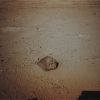
SOL0043-PIA16155.jpg'Jake Matijevic' - Sol 43 (Absolute Natural Colors; credits for the additional process. and color.: Dr Paolo C. Fienga/Lunar Explorer Italia/Italian Planetary Foundation)161 visiteCaption NASA:"The drive by NASA's Mars Exploration Rover Curiosity during the Mission's 43rd Martian Day, or Sol, (such as September 19, 2012) ended with this Rock that lies at about 8 feet (such as 2,5 meters) from the Rover. The Rock is about 10" (inches, such as approx. 25 centimeters) tall and 16" (approx. 40 centimeters) wide. The Rover Team has assessed it as a suitable target for the first use of Curiosity's Contact Instruments on a Rock. The image was taken by the left Navigation Camera (or NavCam) at the end of the drive.
The rock has been named "Jake Matijevic", and this choice was made with the aim of commemorating Jacob Matijevic (1947-2012), who was the Surface Operations Systems Chief Engineer for the Mars Science Laboratory Project and the Project's Curiosity Rover. He was also a Leading Engineer for all of the previous NASA Mars Rovers, such as Sojourner, Spirit and Opportunity.
Curiosity's Contact Instruments are on a turret at the end of the Rover's Robotic Arm; they are the Alpha Particle X-Ray Spectrometer (for reading the target's elemental composition) and the Mars Hand Lens Imager (for close-up imaging).MareKromiumSet 25, 2012
|
|

SOL0020-MR0107005000C0_DXXX.jpg"Flower" and "White-Head" - Sol 20 (Original NASA - MER Curiosity b/w frame - Credits: NASA/JPL-Caltech; credits for the Research: Dr Gianluigi Barca/Lunar Explorer Italia/Italian Planetary Foundation)141 visiteCominciando dall'immagine di Dx (CTX ed EDM): gli Amici di pasadena non hanno (che si sappia) mai commentato questo "Rocky Outcrop". Noi, grazie all'ottimo Lavoro di Ricerca del Dr Gianluigi Barca, Vi proponiamo il Frame RAW Originale in b/n. Si tratta di un "Affioramento Roccioso" o di un "Fiore Marziano"? O forse di una sorta di "nido"? O forse è il residuo di una struttura più complessa e più grande di matrice non naturale? O è solo uno "scherzo" della Natura?!?
Come sapete bene, noi non abbiamo la Verità tra le mani, e quindi Vi offriamo questa "Stranezza Marziana" affinchè possiate fare le Vostre (e SOLO Vostre) valutazioni. Noi ci limitiamo a sottolineare un curioso dettaglio (più un modo di pensare ed agire che un fatto concreto, in realtà): quante immagini di rocce più o meno insignificanti vengono commentate dagli Amici di Pasadena e poi, alle volte, divengono oggetto di veri e prori "Abstracts"? Tantissime. Da "Humphrey" (un macigno ripreso dal MER Spirit), ad "N165", ripresa proprio dal MER Curiosity (e se questa roccia del tutto insignificante la volete vedere, andate sul NASA Planetary Photojournal, scegliete la Galleria dedicata a Marte e poi digitate, nella funzione "Go directly to image (PIxxxxxx)", posizionata in alto a destra, il codice "PIA16073").
E quante rocce in equilibrio impossibile o dalle forme assurde vengono, sempre dagli Amici di Pasadena, isolate e commentate? Nessuna. Mai. E allora, delle due l'una: o noi siamo degli "specialisti" nel focalizzare il nostro interesse su dettagli insignificanti (il che può anche essere...), oppure alla NASA soffrono di una forma quasi terminale di "strabismo selettivo". E come sempre, ora decidete Voi quello che volete credere e pensare...
Per quanto attiene, poi, la Roccia visibile alla Sx del Frame (anche qui in CTX ed EDM), appuntita e dalla punta "bianca", diremmo che si tratta di una ulteriore Stranezza, ancorchè di spiegazione più agevole. Quale? Probabilmente si tratta di una roccia che giaceva infossata (parzialmente) e che poi, per qualche ragione ignota (probabilmente per motivi accidentali), è stata "estratta", "rimossa" dal suolo, in maniera tale da finire con l'esporre quella che era la porzione sepolta. Se poi ci chiedeste come mai quel colorito "bianco-latte" (o bianco-ghiaccio"?!?)...Purtroppo non sapremmo risponderVi.MareKromiumSet 24, 2012
|
|

SOL0037MR0156001000E1_DXXX.jpgExtremely unusually-looking Rock: "Mid-Air" - Sol 37 (Credits: NASA/JPL-Caltech; Research: Dr Gianluigi Barca - Lunexit Team/Italian Planetary Foundation)121 visiteTanto affascinante, la "postura" di questo "sasso", quanto inusuale e, chissà..., "Anomalo". Un Grande abbraccio al Dr barca (Big "G") per la continua - e sempre proficua! - ricerca del "dettaglio impossibile". Si, impossibile. Perchè questo "sasso" poggia ESATTAMENTE su un impossibile equilibrio (a meno che quanto vediamo non sia altro che la porzione superiore di un macigno più grande ed infossato - ma, onestamente, questa ipotesi non ci pare molto valida). E comunque sia, pensiamoci sopra...MareKromiumSet 24, 2012
|
|

SOL0038MR0171000000E1_DXXX.jpgUnusually-looking Igneous Rock - Sol 38 (Absolute Natural Colors; credits for the research and the additional process.: Dr Gianluigi Barca/Lunar Explorer Italia/Italian Planetary Foundation)119 visitenessun commentoMareKromiumSet 24, 2012
|
|

SOL0034-MH0063001000E1_DXXX-2-GC-LXTT-IPF.jpgNOT a "Martian Fly"! - Sol 34116 visiteRisolto il "Mistero" della "Mosca Marziana": grazie all'attenzione prestata a tutti i dettagli (anche i più nascosti) del frame da parte del nostro Grande Amico e Senior Partner, Gianluca Caricchia (alias "Omomoto") abbiamo scoperto che il particolare controverso è un image-artifact, ossìa non si tratta di un oggetto reale, bensì di una aberrazione dell'immagine. A scopo di promemoria, Vi ricordiamo che questa "aberrazione" che chiamiamo "artifact" può avere diverse origini e caratterizzazioni. Ad esempio, essa può essere causata da un vizio nella trasmissione del frame a Terra (ex.: "dead pixel"), altre volte da un gioco di luci ingannevole o da un contrasto eccessivo luce/ombra o anche da riflessi (ex.: "lens flares" e "strutture effimere") ed altre volte ancora da un vizio "fisico" della fotocamera (ex.: scheggiature e/o graffiature della lente o di un filtro/colore oppure presenza di uno o più corpi estranei - polvere o particolato - all'interno della fotocamera).
In questo caso specifico, la nostra ipotesi è che ci si trovi davanti ad un vizio fisico della fotocamera (probabilmente una microscopica serie di tre corpi estranei, due minori ed una maggiore - la "Mosca", appunto). Che altro dire? Complimenti a TUTTI, poichè è così che si fa vera Ricerca e Divulgazione: guardando, scoprendo e poi verificando, con ognuno di noi che agisce in piena indipendenza e con TUTTI noi che agiamo sempre in piena Onestà Intellettuale. Più di così...MareKromiumSet 14, 2012
|
|

SOL0003-0003ML0000010000E1_DXXX-PCF-LXTT.jpgExtremely Foggy Horizon at Gale Crater - Sol 3 (Absolute Natural Colors; credits for the additional process. and color.: Dr Paolo C. Fienga/Lunar Explorer Italia/Italian Planetary Foundation)119 visitenessun commentoMareKromiumSet 12, 2012
|
|

SOL0034-MH0063001000E1_DXXX-2-GB-LXTT-IPF.jpgThe First "Martian Fly" of Gale Crater? - Sol 34 (RAW Natural Colors; credits for the additional process. and color.: Dr Gianluigi Barca/Lunar Explorer Italia/Italian Planetary Foundation) 145 visiteQuante ne abbiamo viste di queste "mosche" nei frames Spirit ed Opportunity? Innumerevoli. Si tratta di un image-artifact ripetitivo? Forse. Ma va comunque detto che gli image-artifacts ripetitivi "autentici" (ossìa quelli derivanti da un vizio fisico di una delle lenti - o dei filtri/colore - delle fotocamere presenti sui Rover) si ripetono su ogni frame, nello stesso punto, e sono SEMPRE ASSOLUTAMENTE (ed ovviamente) UGUALI! Questo "vizio" lo vediamo anche in altri frames del MER Curiosity e sempre nel medesimo punto? No. Allora potrebbe anche non trattarsi di un image-artifact e SICURAMENTE non di un image-artifact derivante da vizio (lesione) della lente. Di che cosa si tratta? Non ne abbiamo idea.
Complimenti al Dr Barca per il suo solito "Occhio", davvero eccezionale (anche dopo anni di ricerche e di sforzi visivi davvero non indifferenti)!MareKromiumSet 12, 2012
|
|

SOL0034-PIA16134.jpgWheels... - Sol 34 (Natural Colors; credits: NASA/JPL-Caltech/Malin Space Science Systems)176 visiteCaption NASA:"This view of the 3 (three) Left Wheels of NASA's Mars Rover Curiosity combines two images that were taken by the Rover's Mars Hand Lens Imager (MAHLI) during the 34th Martian Day, or Sol, of Curiosity's work on Mars (such as September 9, 2012). In the distance is the lower Slope of Mount Sharp. The camera is located in the turret of tools at the end of Curiosity's Robotic Arm. The Sol 34 imaging by MAHLI was part of a week-long set of activities for characterizing the movement of the Arm in the Mars (Environmental) conditions.
The main purpose of Curiosity's MAHLI camera is to acquire close-up, high-resolution views of Rocks and Soil at the Rover's Gale Crater Field Site. The camera is capable of focusing on any target at distances of about 0,8" (inch), such as 2,1 centimeters, to infinity, providing versatility for other uses, such as views of the Rover itself from different angles".
Nota Lunexit: si poteva fare decisamente di meglio...MareKromiumSet 10, 2012
|
|

SOL0016-NRA_398919544EDR_F0030078NCAM00300M_.jpgRover Tracks - Sol 16 (Absolute Natural Colors; credits for the additional process. and color.: Dr Paolo C. Fienga - Lunar Explorer Italia/Italian Planetary Foundation)91 visitenessun commentoMareKromiumSet 03, 2012
|
|

SOL0003-MF-EB-LXTT-IPF.jpgSundial and Surface - Sol 3 (Natural Colors; credits for the additional process. and color.: Elisabetta Boniora and Marco Faccin/Lunar Explorer Italia/Italian Planetary Foundation)124 visitenessun commentoMareKromiumSet 03, 2012
|
|
| 261 immagini su 22 pagina(e) |
 |
|
|
|
|
|
|
19 | |
|
|








