| Ultimi arrivi - Curiosity and the Exploration of Gale Crater |

SOL0141-2-GB-LXTT-IPF.jpgFeatures of Yellowknife Bay - Sol 141 (an Image-Mosaic in Calibrated Natural Colors; credits for the additional process. and color.: Dr Gianluigi Barca/Lunar Explorer Italia/Italian Planetary Foundation)70 visitenessun commentoMareKromiumGen 11, 2013
|
|

SOL0132-EB-MF-LXTT-IPF-2.jpgYellowknife's Rocks... - Sol 132 (an Image-Mosaic in Calibrated Natural Colors; credits for the additional process. and color.: Elisabetta Bonora and Marco Faccin/Lunar Explorer Italia/Italian Planetary Foundation)83 visitenessun commentoMareKromiumGen 01, 2013
|
|

SOL0121-1-GB-LXTT-IPF.jpgProximities of Yellowknife Bay - Sol 121 (an Image-Mosaic in Calibrated Natural Colors; credits for the additional process. and color.: Dr Gianluigi Barca/Lunar Explorer Italia/Italian Planetary Foundation)83 visitenessun commentoMareKromiumGen 01, 2013
|
|

SOL0126-2-GB-LXTT-IPF.jpgFeatures of Yellowknife Bay - Sol 127 (an Image-Mosaic in RAW Natural Colors; credits for the additional process. and color.: Dr Gianluigi Barca/Lunar Explorer Italia/Italian Planetary Foundation)92 visitenessun commentoMareKromiumGen 01, 2013
|
|

SOL0126-1-GB-LXTT-IPF.jpgFeatures of Yellowknife Bay - Sol 127 (an Image-Mosaic in RAW Natural Colors; credits for the additional process. and color.: Dr Gianluigi Barca/Lunar Explorer Italia/Italian Planetary Foundation)80 visitenessun commentoMareKromiumGen 01, 2013
|
|

SOL0127-2-GB-LXTT-IPF.jpgFeatures of Yellowknife Bay - Sol 127 (an Image-Mosaic in Calibrated Natural Colors; credits for the additional process. and color.: Dr Gianluigi Barca/Lunar Explorer Italia/Italian Planetary Foundation)108 visitenessun commentoMareKromiumGen 01, 2013
|
|

SOL0127-1-GB-LXTT-IPF.jpgFeatures of Yellowknife Bay - Sol 127 (an Image-Mosaic in Calibrated Natural Colors; credits for the additional process. and color.: Dr Gianluigi Barca/Lunar Explorer Italia/Italian Planetary Foundation)91 visitenessun commentoMareKromiumGen 01, 2013
|
|

SOL0130-1-GB-LXTT-IPF.jpgFeatures of Yellowknife Bay - Sol 130 (an Image-Mosaic in Calibrated Natural Colors; credits for the additional process. and color.: Dr Gianluigi Barca/Lunar Explorer Italia/Italian Planetary Foundation)87 visitenessun commentoMareKromiumGen 01, 2013
|
|
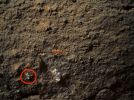
SOL0132-EB-MF-LXTT-IPF.jpgExtremely unusually-looking Surface Feature on the Surface of Gale Crater: the "Martian Flower" - Sol 132 (Credits: Research, additional process. and color.: Elisabetta Bonora and Marco Faccin/Lunar Explorer Italia/Italian Planetary Foundation)194 visiteDopo tantissimo tempo, ecco una nuova e, a nostro parere, assai intrigante Surface Feature individuata dal Rover "Curiosity" all'interno del Cratere Gale. Di che si può trattare? Beh, se rivolgessimo questa domanda ai Tecnici di Pasadena la risposta sarebbe ovvia: "...è un pezzo - l'ennesimo, aggiungeremmo noi... - di Curiosity. Probabilmente un frammento di plastica o il rivestimento di un cavetto...". Ma noi, proprio perchè già conosciamo la risposta degli Amici di Pasadena, questa domanda la rivolgiamo a Voi, Amici Lettori: che cosa stiamo guardando? Qualche piccolo aiuto: l'Albedo (o Riflettività della Luce Solare) dell'oggetto è elevata, la sua apparenza traslucida, la conformazione è irregolare ma, apparentemente, la texture delle sue aree più ampie è liscia. L'oggetto, se osservate attentamente il suo lato alla Vostra Dx, "SEMBRA" essere attaccato al suolo (o comunque pare costituirne parte, il che escluderebbe la sua provenienza da Curiosity) e, in alcuni suoi punti, la polvere giallastra che copre l'intera superficie fotografata, sembra che lo abbia parzialmente intaccato (porzioni superiori ed inferiori a Sx). Questo dato ulteriore ci spinge a ritenere che l'oggetto sia in quella posizione già da un pò di tempo (comunque non tantissimo). Infine (last but not least), Vi suggeriamo di notare l'apparente "sgranatura" ed "apertura secondo linee di frammentazione" delle sue componenti emergenti (una sorta di micro-pistilli - passateci il paragone, please...).
La nostra ipotesi "esotica"? E' un "fiore", oppure il residuo madreperlaceo di una qualche Forma Vitale Indigena. E Voi? Che ne pensate?MareKromiumDic 25, 2012
|
|

SOL0130-PIA16562-PCF-LXTT-IPF-2.jpgOn the Edge of "Yellowknife Bay" - Sol 130 (an Image-Mosaic in Absolute Natural Colors; credits for the additional process. and color. Dr Paolo C. Fienga/Lunar Explorer Italia/Italian Planetary Foundation)92 visitenessun commentoMareKromiumDic 25, 2012
|
|

SOL0120-PIA16550-PCF-LXTT-IPF.jpgFeatures of the Surface of Gale Crater - Sol 120 (Slightly Saturated Absolute Natural Colors; credits for the additional process. and color.: Dr Paolo C. Fienga/Lunar Explorer Italia/Italian Planetary Foundation) 88 visitenessun commentoMareKromiumDic 25, 2012
|
|

SOL0059-PIA16452-PCF-LXTT-IPF.jpgRocknest 3 - Sol 59 (Absolute Natural Colors; credits for the additional process. and color.: Dr Paolo C. Fienga/Lunar Explorer Italia/Italian Planetary Foundation)96 visiteThis view of a Martian Rock nicknamed "Rocknest 3" combines 4 (four) images taken by the right-eye camera of the Mast Camera (MastCam) Instrument located onboard the NASA - Mars Exploration Rover - Mars Laboratory "Curiosity", which has a telephoto, 100-millimeter-focal-length lens. The component images were taken a few minutes after Martian noon (---> 12:00 Mars Local Solar Time) on the 59th Martian Day, or Sol, of Curiosity's operations at Gale Crater, Mars.
Rocknest 3 is a Sedimentary Rock approximately 15" (such as about 40 centimeters) long and about 4" (approx. 10 centimeters) tall; next to "Rocknest 3" there is a patch of windblown Dust and Sand where Curiosity scooped and analyzed several Soil Samples. The MastCam was about 13 feet (approx. 4 meters) from Rocknest 3 when the component images were taken, thus providing an image scale of about 0,01" (approx. 0,3 millimeter) per pixel.
This picture (which is an Original NASA - Mars Exploration Rover - Mars Laboratory "Curiosity" white-balanced color frame published on the NASA - Planetary Photojournal with the ID n. PIA 16452) has been additionally processed and then re-colorized in Absolute Natural Colors (such as the colors that a human eye would actually perceive if someone were near the NASA - Mars Exploration Rover (MER) - Mars Laboratory "Curiosity" and then looked down, towards the Rock known as Rocknest 3), by using an original technique created - and, in time, dramatically improved - by the Lunar Explorer Italia Team. Different colors, as well as different shades of the same color, mean, among other things, the existence of different Elements (Minerals) present on the Surface of Gale Crater, each having a different Albedo (---> Reflectivity) and Chemical Composition.MareKromiumDic 25, 2012
|
|
| 261 immagini su 22 pagina(e) |
 |
|
|
|
|
14 | |
|
|
|
|








