| Ultimi arrivi - Mars from Orbit (from July 2009) |

Craters-Unnamed_Crater_with_Gullies-PCF-LXTT.jpgSouthern Crater with Gullies and Dunes (Enhanced and Saturated Natural Colors; credits for the additional process. and color.: Dr Paolo C. Fienga - Lunar Explorer Italia)57 visiteGullies dissect the Crater Rim and Dunes cover part of the floor of the Unnamed Crater located East of Russell Crater.MareKromiumFeb 09, 2009
|
|

Craters-Unnamed_Crater-PIA11793-PCF-LXTT.jpgLobate and Chevron Flows (possible Natural Colors; credits: Dr Paolo C. Fienga - Lunar Explorer Italia)57 visiteCaption NASA:"The lower portion of this image from the Thermal Emission Imaging System camera (THEMIS) on NASA's Mars Odyssey Orbiter shows a Crater about 16 Km (approx. 10 miles) in diameter with features studied as evidence of deposition or erosion.
The Crater is centered at 40,32° South Lat. and 132,5° East Long., in the eastern portion of the Hellas basin on Mars. It has Gullies and Arcuate Ridges on its North, pole-facing interior wall.
This Crater is in the center of a larger (60-Km or aaprox. 37-mile diameter) crater with lobate flows on its North, interior wall. The image, number V07798008 in the THEMIS catalog, covers a swath of ground of about 17,4 Km (such as approx. 10,8 miles) wide".
Nota Lunexit: c'è un'indicazione NASA che abbiamo barrato con un "NO" poichè essa indica (e quindi definisce) come "Lobate" un rilievo che è invece - a nostro parere - caratterizzato da una configurazione superficiale a "Chevron".
Verificate Voi stessi.
A titolo di annotazione personale, ci sembra davvero strano che un Addetto NASA (sulla cui competenza non discutiamo) possa incorrere in una simile svista.
Inoltre, sempre con riguardo a questo rilievo a "Chevron", siamo anche dubbiosi sul fatto che esso possa essere definito come "Flow" (ossìa "flusso", evidenza di una "colata").
Più che altro, il rilievo in questione ci SEMBRA una sorta di doppia-cresta del terreno la quale è stata - parzialmente - sepolta a seguito di un fenomeno alluvionale (per i più "Immaginosi" fra i nostri Lettori, poi, vi è anche la possibilità che si possa trattare di una struttura più complessa e "meno naturale" di una semplice increspatura del suolo la quale, sempre a seguito di un evendo alluvionale, è stata quasi completamente sepolta da fango e detriti, poi solidificatisi).MareKromiumFeb 06, 2009
|
|

Craters-Unnamed_Crater_with_Dunefield-UP-20090204a-PCF-LXTT.jpgUnnamed Crater with Dunefield in Utopia Planitia (Enhanced Natural Colors; credits for the additional process. and color.: Dr Paolo C . Fienga - Lunar Explorer Italia)55 visiteCaption NASA:"The floor of this Unnamed Crater in Utopia Planitia has the typical pattern of Northern Craters: a pattern that suggests volatiles are part of the material filling the Crater.
In this crater, sand dunes are also located on the Crater Floor".MareKromiumFeb 04, 2009
|
|
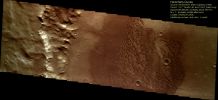
Craters-Herschel_Crater-Dunefield-20080505a-PCF-LXTT.jpgDunefield inside Herschel Crater (Extremely Enhanced Natural Colors; credits for the additional process. and color.: Dr Paolo C. Fienga - Lunexit Team)56 visitenessun commentoMareKromiumFeb 03, 2009
|
|

Landslides-Terra_Sabaea-20090202a-PCF-LXTT.jpgLandslides in Terra Sabaea (Enhanced Natural Colors; credits: Dr Paolo C. Fienga - Lunar Explorer Italia)56 visiteCaption NASA:"Failure of the rim of this Unnamed Crater in Terra Sabaea has formed two small Landslide Deposits. Note the scalloped shape of the rim left by the removal of material".MareKromiumFeb 03, 2009
|
|
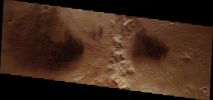
Craters-Du_Martheray_Crater-Dunefield-20090128a-PCF-LXTT.jpgDunes within Du Martheray Crater (Natural Colors; credits for the additional process. and color.: Dr Paolo C. Fienga - Lunar Explorer Italia)56 visiteCaption NASA:"This VIS image shows the Northern part of Du Martheray Crater and the smaller crater on its Rim. Both craters have floor features showing evidence of both wind erosion and wind deposition. The small, dark sand dunes are easily seen against the brighter eroded background".
Coord.: 5,8° North Lat. and 94,0° East Long.
MareKromiumGen 30, 2009
|
|

Volcanic_Features-Paterae-Peneus_Patera-PCF-LXTT.jpgClouds over Peneus Patera (Extremely Enhanced and Saturated Natural Colors; credits for the additional process. and color.: Dr Paolo C. Fienga - Lunar Explorer Italia)58 visiteCaption NASA:"Spring is the "Storm Season" in the Southern Hemisphere of Mars. This image shows several bands of Clouds over the Plains to the West of Peneus Patera".
MareKromiumGen 25, 2009
|
|
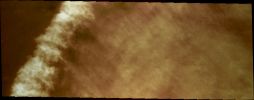
Clouds-Vastitas_Borealis_Region-PCF-LXTT-2.jpgClouds over Vastitas Borealis (Enhanced Natural Colors; credits for the additional process. and color.: Dr Paolo C. Fienga - Lunar Explorer Italia)57 visiteCaption NASA:"Dust Clouds often can obscure the Surface of Mars. When an image captures the edge of a Dust Storm Front, the loss of surface information is more than compensated for by the information that can be gleaned from analysis of the image.
As Dust Storm formation and location are unpredictable, any images of such features are priceless".
Coord.: 66,2° North. Lat. and 248,7° East Long.MareKromiumGen 23, 2009
|
|
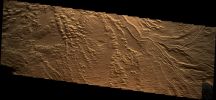
Aeolian_Features-Inverted_Channels-ER-MO.jpgInverted Topography (Natural Colors; credits for the additional process. and color.: Dr Paolo C. Fienga - Lunexit Team)57 visiteCaption NASA:"The system of sinuous ridges seen at the top of the image is the remnants of a channel system. In this case the channel has been filled by a material more resistant to erosion than the surroundings.
As the surround material was eroded away the resistant channel fill was left behind, forming a ridge where the channel had once been. This reversal of topography - from a channel to a ridge - is termed Inversion or Inverted Topography".MareKromiumGen 21, 2009
|
|
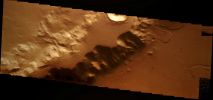
Landslides-Tiu_Valles-PCF-LXTT.jpgLandslides in Tiu Valles (Enhanced Natural Colors; credits: Dr Paolo C. Fienga - Lunar Explorer Italia)60 visiteCoord.: 10,4° North Lat. and 326,6° East Long.MareKromiumGen 16, 2009
|
|
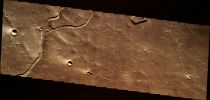
Channels-Hebrus_Vallis-PCF-LXTT.jpgHebrus Vallis (Enhanced Natural Colors; credits for the additional process. and color.: Dr Paolo C. Fienga - Lunar Explorer Italia)57 visiteCoord.: 20,0° North Lat. and 127,2° East Long.MareKromiumGen 14, 2009
|
|
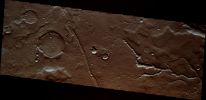
Channels-Unnamed_Channel_in_Tempe_Fossae-MO.jpgUnnamed Channel in Tempe Fossae (Natural Colors/Tri-Chromatic Version; credits: Dr Paolo C. Fienga - Lunexit Team)59 visiteCaption NASA:"The Channel in this VIS image is in the Tempe Fossae Region, just West of Sytinskaya Crater".MareKromiumGen 06, 2009
|
|
| 1003 immagini su 84 pagina(e) |
 |
|
|
|
|
67 | |
|
|
|
|





