| Ultimi arrivi - Mars from Orbit (from July 2009) |

Candor_Chasma-MO-20090309a.jpgCandor Chasma (Natural Colors; credits: Lunar Explorer Italia)57 visiteCoord.: 8,0° South Lat. and 295,0° East Long.MareKromiumMar 09, 2009
|
|
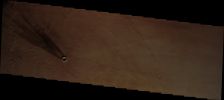
Aeolian_Features-Windstreaks-Pavonis_Mons-20090306a.jpgBeautiful Windstreak, East of Pavonis Mons (Enhanced and Darkened Natural Colors; credits for the additional process. and color.: Dr Paolo C. Fienga - Lunar Explorer Italia)57 visiteCaption NASA:"This Windstreak is located on the Volcanic Flows located East of Pavonis Mons. The multiple tail ends indicate the direction of the wind has changed over time. The darkest tail is the most recent".
Coord.: 0,8° South Lat. and 256,5° East Long.MareKromiumMar 06, 2009
|
|

Candor_Chasma-20090305a.jpgCandor Chasma (Natural Colors; credits: Lunar Explorer Italia)57 visiteCaption NASA:"This VIS image shows a small portion of the floor of Candor Chasma, just East of the North-South trending Baetis Mensa".
Coord.: 5,6° South Lat. and 287,8° East Long.MareKromiumMar 05, 2009
|
|
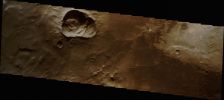
Craters-Herschel_Crater-Dunefield-20090303a-PCF-LXTT.jpgDunefield inside Herschel Crater (Extremely Enhanced Natural Colors; credits for the additional process. and color.: Dr Paolo C. Fienga - Lunexit Team)57 visiteCoord.: 15,5° South Lat. and 131,7° East Long.MareKromiumMar 04, 2009
|
|
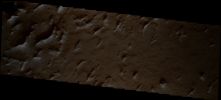
Dunes-Gigas_Sulci-20090304a-PCF-LXTT.jpgHard and Old Dunes in Gigas Sulci (Darkened Natural Colors; credits for the additional process. and color.: Dr Paolo C. Fienga - Lunar Explorer Italia)57 visiteCoord.: 8,0° North Lat. and 230,3° East Long.MareKromiumMar 04, 2009
|
|
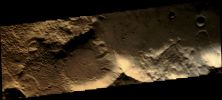
Landslide-Terra_Sirenum-20090302a-PCF-LXTT.jpgLandslide in Terra Sirenum (Enhanced Natural Colors; credits: Dr Paolo C. Fienga - Lunar Explorer Italia)65 visiteCoord.: 11,6° South Lat. and 186,9° East Long.MareKromiumMar 04, 2009
|
|
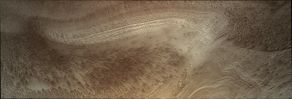
South_Polar_features-Fans-SP-MO-20090224a.jpgSouth Polar Spring: Fans (Natural Colors; credits for the additional process. and color.: Dr Paolo C. Fienga - Lunar Explorer Italia)57 visiteCaption NASA:"As the Sun continues to warm the South Polar Region, spots appear on the ice. The dark material of the spots is apparently mobile, with the wind able to lengthen the spots into streaks".
Coord.: 86,6° South Lat. and 99,1° East Long.MareKromiumFeb 24, 2009
|
|

South_Polar_Feartures-Layers-20090223a-PCF-LXTT.jpgSouth Polar Spring (Darkened Absolute Natural Colors; credits for the additional process. and color.: Dr Paolo C. Fienga - Lunar Explorer Italia)57 visiteCoord. 84,4° South Lat. and 313,9° East Long.MareKromiumFeb 23, 2009
|
|
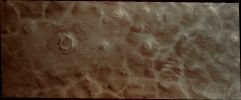
Vastitas_Borealis-NP-MO-20090219a.jpgVastitas' Texture (Natural Colors; credits for the additional process. and color.: Dr Paolo C. Finega - Lunar Explorer Italia)58 visiteCaption NASA:"The Northern Plains of Mars contain an abundance of different textures and appearances. This Region contains mounds separated by channels with an unusual floor pattern. Just how this texture formed is unknown".
Coord.: 70,0° North Lat. and 55,9° East Long.MareKromiumFeb 19, 2009
|
|
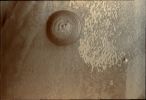
South_Polar_regions-Unnamed_Crater-20090218a-PCF-LXTT.jpgExhumed South Polar Crater (Natural Colors; credits for the additional process. and color.: Dr Paolo C. Fienga - Lunar Explorer Italia)57 visiteCaption NASA:"The Sun has risen over the South Pole of Mars as Southern Spring gets underway. The Surface of the Polar Cap and its surroundings will undergo extensive change as frost and ice sublimate in the Sun".
Coord.: 86,8° South Lat. and 248,3° East Long.MareKromiumFeb 18, 2009
|
|
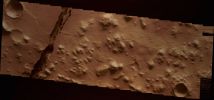
Volcanic_and_Tectonic_Features-Fissures-Cerberus_Fossae-20090213a-PCF-LXTT.jpgFeatures of Cerberus Fossae: Fissures (Saturated Natural Colors; credits for the additional process. and color.: Dr Paolo C. Fienga - Lunar Explorer Italia)56 visiteCaption NASA:"The depression seen in this image is part of the fracture system called Cerberus Fossae. The Fossae cut through hills as well as plains materials".
Coord.: 10,4° North Lat. and 159,9° East Long.MareKromiumFeb 13, 2009
|
|
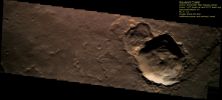
Craters-Unnamed_Crater-20080218a-PCF-LXTT.jpgNot Round... (Enhanced Natural Colors; credits for the additional process. and color.: Dr Paolo C. Fienga - Lunexit Team)58 visiteCaption NASA:"There are several reasons that an impact crater may end up not being round. Preexisting faults and fractures in the ground can control how the impact energy is distributed, resulting in corners or straight walls along the fracture trends. Very low angle impacts (from 5 up to 12°) can 'skip' along the surface, creating an elongated crater".
MareKromiumFeb 09, 2009
|
|
| 1003 immagini su 84 pagina(e) |
 |
|
|
|
|
66 | |
|
|
|
|





