| Ultimi arrivi - Mars from Orbit (from July 2009) |

DustDevilTracks-TerraCimmeria-MO-20090723a.jpgDust Devil Tracks in Terra Cimmeria (Natural Colors; credits: Lunexit)57 visiteCoord.: 55,8° South Lat. and 179,5° East Long.MareKromiumLug 24, 2009
|
|

DustDevilTracks-TerraCimmeria-MO-20090722a.jpgDust Devil Tracks in Terra Cimmeria (Natural Colors; credits: Lunar Explorer Italia)57 visiteCoord.: 66,5° South Lat. and 162,3° East Long.MareKromiumLug 22, 2009
|
|
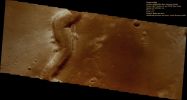
Channels-Nirgal_Vallis-MO-20090720a.jpgNirgal Vallis (Enhanced Natural Colors; credits: Lunar Explorer Italia)57 visitenessun commentoMareKromiumLug 21, 2009
|
|
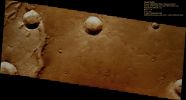
Channels-Nirgal_Vallis-MO-20090721a.jpgNirgal Vallis (Enhanced Natural Colors; credits: Lunar Explorer Italia)60 visitenessun commentoMareKromiumLug 21, 2009
|
|
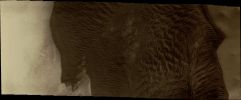
Craters-Charlier_Crater-20090717a-PCF-LXTT.jpgLarge Dunefield inside Charlier Crater (Absolute Natural Colors; credits for the additional process. and color.: Dr Paolo C. Fienga - Lunar Explorer Italia)58 visiteCoord.: 68,2° South Lat. and 191,2° East Long.MareKromiumLug 19, 2009
|
|

Craters-Charlier_Crater-MO-20090716a.jpgThe "Warm Sands" of Charlier Crater (IR Image)57 visiteCaption NASA:"This daytime IR image shows the large sand sheet on the Floor of Charlier Crater. The brightness is due to the warmth of the sand during the day".
Coord.: 68,9° South Lat. and 190,6° East Long.MareKromiumLug 16, 2009
|
|

Craters-RabeCrater-MO-20090710a.jpgFeatures of Rabe Crater (IR daytime - Natural Colors; credits for the additional process. and color.: Dr Paolo C. Fienga - Lunexit Team)58 visiteCaption NASA:"This Daytime InfraRed image of Rabe Crater illustrates the warming effect of the Sun on sand.
The extensive sand sheet and dunes of Rabe Crater appear bright in the InfraRed indicating they are warmer than the surrounding floor and plains materials".MareKromiumLug 10, 2009
|
|
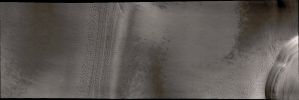
South_Polar_Features-SPLD-20090708a-PCF-LXTT.jpgSouth Polar Layered Deposits (Natural Colors; credits for the additional process. and color.: Dr Paolo C. Fienga - Lunar Explorer Italia)59 visitenessun commentoMareKromiumLug 09, 2009
|
|
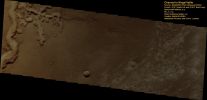
Channels-Unnamed_Channel_in_Nirgal_Vallis-MO-20090706a.jpgTributary Channel in Nirgal Vallis (Natural Colors; credits for the additional process. and color.: Dr Paolo C. Fienga - Lunexit Team)70 visitenessun commentoMareKromiumLug 09, 2009
|
|

Meridiani_Planum-Dunes-20090702a-PCF-LXTT.jpgDust and small Dark Dunes near Meridiani Planum (Saturated Natural Colors; credits for the additional process. and color.: Dr Paolo C. Fienga - Lunar Explorer Italia)57 visiteNota Lunexit: l'immagine in oggetto appare offuscata e curiosamente monocromatica a causa - riteniamo - di una spessa coltre di polveri in sospensione sulla zona ripresa (l'elevata Opacità Atmosferica, specie allorchè è presente sulle Regioni Equatoriali e peri-Equatoriali - ne sono prova svariati frames relativi alle surface features della Vallis Marineris -, è spesso responsabile dell'effetto "ovattato" dei frames Odyssey - la cui qualità intrinseca, comunque, oltre ad essere enormemente inferiore a quella degli Orbiter MGS ed MRO, è pure in caduta libera da almeno sei mesi).MareKromiumLug 02, 2009
|
|
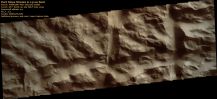
Lycus_Sulci-20090629a-PCF-LXTT.jpgFeatures of Lycus Sulci (Enhanced Absolute Natural Colors; credits for the additional process. and color: Dr Paolo C. Fienga - Lunexit Team)58 visiteCoord.: 26,1° North Lat. and 228,5° East Long.MareKromiumLug 01, 2009
|
|

Craters-Lipik_Crater-20090630a-PCF-LXTT.jpgFeatures of Lipik Crater (Natural Colors; credits for the additional process. and color.: Dr Paolo C. Fienga - Lunexit Team)67 visiteCaption NASA:"This daytime InfraRed image clearly shows the multitude of channels dissecting the Rim of Lipik Crater".
Coord.: 39,9° South Lat. and 112,4° East Long.MareKromiumLug 01, 2009
|
|
| 1003 immagini su 84 pagina(e) |
 |
|
|
|
|
62 | |
|
|
|
|





