| |

| Ultimi arrivi - Mars from Orbit (from July 2009) |

Craters-Unnamed_Crater-NT-PIA17420-PCF-LXTT-IPF.jpgUnnamed Crater with Dunefield (Absolute Natural Colors; credits for the additional process. and color.: Dr Paolo C. Fienga/Lunar Explorer Italia/Italian Planetary Foundation)59 visiteIn this VIS image, taken by the NASA - Mars Odyssey Orbiter on July 2nd, 2013, and during its 51.232nd orbit around the Red Planet, we can see a relatively large, dark and, probably, "Migrating" Dunefield that is found on the Floor of an old and Unnamed Impact Crater located in the Martian Southern Region known as Noachis Terra.
Even this Dunefield (just like the one found on the Floor of Proctor Crater - please, refer to yesterday's APOD if you want to know more -, as well as many others, located on both Martian Hemispheres) is being monitored by several Spacecrafts now orbiting the Red Planet (including the NASA- Mars Reconnaissance Orbiter) with the aim of identifying the movements (---> shifting, if any) of the Dunefield and the changes (again, if any) which might have occurred - over time - in the shape of the Dunefield itself.
Latitude (centered): 52,1373° South
Longitude (centered): 30,6046° East
Instrument: VIS
This frame (taken from an Original Mars Odyssey Orbiter b/w and Map-Projected frame published on the NASA - Planetary Photojournal with the ID n. PIA 17420) has been additionally processed, magnified, contrast enhanced, Gamma corrected and then colorized in Absolute Natural Colors (such as the colors that a human eye would actually perceive if someone were onboard the NASA - Mars Odyssey Orbiter and then looked down, towards the Surface of Mars), by using an original technique created - and, in time, dramatically improved - by the Lunar Explorer Italia Team.MareKromiumOtt 20, 2013
|
|

Chasmas-Coprates_Chasma-PIA17224-PCF-LXTT-IPF.jpgFeatures of Coprates Chasma (Absolute Natural Colors; credits for the additional process. and color.: Dr Paolo C. Fienga/Lunar Explorer Italia/Italian Planetary Foundation)67 visiteIn this VIS image, taken by the NASA - Mars Odyssey Orbiter on March, 11, 2013 and during its 49.862nd orbit around the Red Planet, we can see that a large Landslide Deposit fills a portion of the Floor of Coprates Chasma: a huge and extremely long Canyon located the Coprates Quadrangle of Mars, at 13,4° South Latitude and 61,4° West Longitude. Coprates Chasma (---> the Abyss of Coprates) is part of the enormous Valles Marineris Canyon System and its length is of approx. 966 Km (such as about 599,88 miles).
Latitude (centered): 12,850° South
Longitude (centered): 293,254° East
Instrument: VIS
This frame (which is an Original Mars Odyssey Orbiter b/w frame published on the NASA - Planetary Photojournal with the ID n. PIA 17224) has been additionally processed, magnified, contrast enhanced and then colorized in Absolute Natural Colors (such as the colors that a human eye would actually perceive if someone were onboard the NASA - Mars Odyssey Orbiter and then looked down, towards the Surface of Mars), by using an original technique created - and, in time, dramatically improved - by the Lunar Explorer Italia Team.MareKromiumGiu 16, 2013
|
|

Craters-Gale_Crater-PIA16289-PCF-LXTT-IPF.jpgGale Crater (Absolute Natural Colors; credits for the additional process. and color.: Dr Paolo C. Fienga/Lunar Explorer Italia/Italian Planetary Foundation)108 visiteDuring the month of April, of the AD 2013, Mars will be in a so-called "Conjunction" relative to the Planet Earth. This means that the Sun is exactly in the line-of-(direct) sight between the two aforementioned Celestial Bodies, such as our Home Planet Earth and the Red Planet. In this Spatial Configuration, as you can easily understand, the communications between the two Planets are - in fact - almost impossible; however, during the Conjunction Period, the Rovers operating on the Surface of Mars and the Spacecrafts orbiting around it, will continue to operate, but without sending all the collected data to Earth. This data, which are all recorded and stored, will be sent to Earth when the Conjunction is over, Mars shall have moved away from behind the Sun (of course, only from our Terrestrial point of view) and therefore the line-of-(direct) sight between Earth and Mars is re-established.
During the Conjunction Period, the "NASA - THEMIS Image of the Day" will be a visual tour of Gale Crater, such as the location of the newest Mars Exploration Rover (and Laboratory) Curiosity. The first image of Gale Crater that we propose you on today's APOD (image that was taken more than 6 years ago, by the NASA - Mars Odyssey Orbiter, during its 23.897th orbit around the Red Planet) shows, among other Features, the Landing Site of the Mars Exploration Rover (and Laboratory) Curiosity (which is located approximately near the center of the image). On the other hand, the Dark Material that is visible towards the South (the lower portion of the frame), is just (Basaltic, most likely) Sand that is set on the Floor of Gale Crater in the form of Dunes; Dunes that the Curiosity Rover, in a way or another, will have to navigate through in order to get to the Layered Central Deposit (also partially visible in the frame), whose official name, as you should know by now, is "Mount Sharp".
Latitude (centered): 4,47891° South
Longitude (centered): 137,46500° East
Instrument: VIS
Captured: April, 5th, 2007
This frame (which is an Original Mars Odyssey Orbiter b/w frame published on the NASA - Planetary Photojournal with the ID n. PIA 16289) has been additionally processed and then colorized in Absolute Natural Colors (such as the colors that a human eye would actually perceive if someone were onboard the NASA - Mars Odyssey Orbiter and then looked down, towards the Surface of Mars), by using an original technique created - and, in time, dramatically improved - by the Lunar Explorer Italia Team.MareKromiumApr 14, 2013
|
|
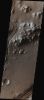
Craters-Gale_Crater-PIA16240-PCF-LXTT-IPF.jpgGale Crater (Absolute Natural Colors; credits for the additional process. and color.: Dr Paolo C. Fienga/Lunar Explorer Italia/Italian Planetary Foundation)102 visiteThis is a 9 years' old frame taken by the NASA - MArs Odyssey Orbiter during its 11330th orbit around the Red Planet; it shows us, again (but, this time, from a slightly different position as to the one where the picture that we published yesterday was obtained), some more Features of the Floor of Gale Crater, including - once again - the Landing Site of the Mars Exploration Rover (and Laboratory) "Curiosity" (bottom right portion of the image, near the Dark Dunes), and a medium-sized Channel that cuts through the Crater's Rim (on the left side of the frame).
Latitude (centered): 4,2574° South
Longitude (centered): 137,3510° East
Instrument: VIS
Captured: July, 4th, 2004
This frame (which is an Original Mars Odyssey Orbiter b/w frame published on the NASA - Planetary Photojournal with the ID n. PIA 16240) has been additionally processed and then colorized in Absolute Natural Colors (such as the colors that a human eye would actually perceive if someone were onboard the NASA - Mars Odyssey Orbiter and then looked down, towards the Surface of Mars), by using an original technique created - and, in time, dramatically improved - by the Lunar Explorer Italia Team.MareKromiumApr 14, 2013
|
|

Channels-Arda_Valles-PIA16286-PCF-LXTT-IPF.jpgFeatures of Arda Valles (Absolute Natural Colors; credits for the additional process. and color.: Dr Paolo C. Fienga/Lunar Explorer Italia/Italian Planetary Foundation)71 visiteThis is a frame taken by the NASA - MArs Odyssey Orbiter during its 49661st orbit, and it shows us a few Drainage Channels which are part of the Channel Network that comprises Arda Valles.
Latitude (centered): 20,3688° South
Longitude (centered): 327,2160° East
Instrument: VIS
Captured: February, 23rd, 2013
This frame (which is an Original Mars Odyssey Orbiter b/w frame published on the NASA - Planetary Photojournal with the ID n. PIA 16286) has been additionally processed and then colorized in Absolute Natural Colors (such as the colors that a human eye would actually perceive if someone were onboard the NASA - Mars Odyssey Orbiter and then looked down, towards the Surface of Mars), by using an original technique created - and, in time, dramatically improved - by the Lunar Explorer Italia Team.MareKromiumApr 07, 2013
|
|

North_Polar_Regions-North_Polar_Erg-PIA15943-PCF-LXTT-IPF.jpgFeatures of the North Polar Erg (Absolute Natural Colors; credits for the additional process. and color.: Dr Paolo C. Fienga/Lunar Explorer Italia/Italian Planetary Foundation)69 visiteThe highly suggestive Dunefield visible in this VIS image taken by the NASA - Mars Odyssey Orbiter during its 46719th orbit around the Red Planet is just a small portion of the gigantic Dunefield (or "Erg" ---> Sea of Sand) that encircles most part of the North Pole of Mars. The bright round spot visible on the lower left (Sx) side of the frame should be just a patch of permanent ice which is located (and therefore, somehow, protected) inside a relatively shallow depression of the Surface - possibly (but we have no way to be sure), an almost rimless and very old Impact Crater.
Latitude (centered): 80,0896° North
Longitude (centered): 194,1910° East
Instrument: VIS
Captured: June, 26th, 2012
This frame (which is an Original Mars Odyssey Orbiter b/w frame published on the NASA - Planetary Photojournal with the ID n. PIA 15943) has been additionally processed and then colorized in Absolute Natural Colors (such as the colors that a human eye would actually perceive if someone were onboard the NASA - Mars Odyssey Orbiter and then looked down, towards the Surface of Mars), by using an original technique created - and, in time, dramatically improved - by the Lunar Explorer Italia Team.MareKromiumApr 07, 2013
|
|

Channels-Terra_Cimmeria-PIA16274-PCF-LXTT-IPF-2.jpgChannels in Terra Cimmeria (Absolute Natural Colors; credits for the additional process. and color.: Dr Paolo C. Fienga/Lunar Explorer Italia/Italian Planetary Foundation)63 visiteThis VIS frame shows us a network of large and small Channels dissecting the Surface of an Highland Region located in Terra Cimmeria. The frame was acquired by the NASA - Mars Odyssey Orbiter during its 49.492nd orbit around the Red Planet.
Latitude (centered): 34,904° South
Longitude (centered): 157,710° East
Instrument: VIS
Captured: February, 9th, 2013
This frame (which is an Original Mars Odyssey Orbiter b/w frame published on the NASA - Planetary Photojournal with the ID n. PIA 16274) has been additionally processed and then colorized in Absolute Natural Colors (such as the colors that a human eye would actually perceive if someone were onboard the NASA - Mars Odyssey Orbiter and then looked down, towards the Surface of Mars), by using an original technique created - and, in time, dramatically improved - by the Lunar Explorer Italia Team.MareKromiumMar 22, 2013
|
|

Craters-Martz_Crater-PIA16273-PCF-LXTT-IPF.jpgFeatures of Martz Crater (Absolute Natural Colors; credits for the additional process. and color.: Dr Paolo C. Fienga/Lunar Explorer Italia/Italian Planetary Foundation)77 visiteThis picture, taken by the NASA - Mars Odyssey Orbiter during its 49.480th orbit around the Red Planet, shows us a small portion of the Inner Rim of the ancient Martz Crater, heavily dissected by a great number of small Channels.
Martz Crater is located in the Southern Hemisphere of Mars, in a Region known as Terra Cimmeria; it is almost 100 Km (such as a little more than 62 miles) wide and approximately 1,5 Km (such as about 0,9 miles) deep. Martz Crater is well known among Planetary Scientists because of its very prominent and steep Complex Central Peak (which is approx. 1500 meters - or 5000 feet - tall): a Central Peak that formed, like you know, at the same time of the Crater (and as a consequence of a phenomenon known as "Rebound Effect"), right after a medium-sized Celestial Object (probably something in between 0,5 to 1 Km - such as from 0,31 to 0,62 miles - across) impacted the Surface of Mars.
Latitude (centered): 34,614° South
Longitude (centered): 143,722° East
Instrument: VIS
Captured: February, 8th, 2013
This frame (which is an Original Mars Odyssey Orbiter b/w frame published on the NASA - Planetary Photojournal with the ID n. PIA 16273) has been additionally processed and then colorized in Absolute Natural Colors (such as the colors that a human eye would actually perceive if someone were onboard the NASA - Mars Odyssey Orbiter and then looked down, towards the Surface of Mars), by using an original technique created - and, in time, dramatically improved - by the Lunar Explorer Italia Team.MareKromiumMar 22, 2013
|
|

Craters-Unnamed_Crater-Terra_Cimmeria-PIA16266-PCF-LXTT-IPF.jpgUnnamed Crater with Gullies and Dunefield in Terra Cimmeria (Absolute Natural Colors; credits for the additional process. and color.: Dr Paolo C. Fienga/Lunar Explorer Italia/Italian Planetary Foundation)65 visiteIn this frame, taken by the NASA - Mars Odyssey Orbiter during its 49.393rd orbit around the Red Planet, several Gullies of different shapes, depths and sizes located on the Southern Rim of an Unnamed Impact Crater in Terra Cimmeria can be seen. As you may easily notice, there are way more Gullies on the North-facing Inner Rim (such as the Southern Inner Rim) of this Unnamed Crater, and the reason of such a remarkable difference is found, most likely, in the circumstance that the Southern Region of the Crater itself gets more Sun-related warming than the other one, which is corresponding to the South-facing Inner Rim (such as the Northern Inner Rim).
Also well visible towards the top of the picture, right at the base of the Northern Inner Slopes (Wall) of this Unnamed Cimmerian Impact Crater, there is a small and Dark Dunefield (probably formed - once you take into duly consideration the peculiar-looking shapes and surroundings of the Dunes forming it - by "Migrating Dunes". Dunes which may contain, among Dust, Rocky Sands and Volcanic Ashes, also a significant amount of Iron Oxide). It must be said, however, that a Surface Feature like this last one (---> the Dark Dunefield), is really very common, specifically at these Middle (Southern) Latitudes.
Latitude: 48,25° South
Longitude: 129,612° East
Instrument: VIS
Captured: February, 1st, 2013
This frame (which is an Original Mars Odyssey Orbiter b/w frame published on the NASA - Planetary Photojournal with the ID n. PIA 16266) has been additionally processed and then colorized in Absolute Natural Colors (such as the colors that a human eye would actually perceive if someone were onboard the NASA - Mars Odyssey Orbiter and then looked down, towards the Surface of Mars), by using an original technique created - and, in time, dramatically improved - by the Lunar Explorer Italia Team.MareKromiumMar 11, 2013
|
|

Coprates_Labes-PIA16271-PCF-LXTT-IPF.jpgCoprates Labes (Absolute Natural Colors; credits for the additional process. and color.: Dr Paolo C. Fienga/Lunar Explorer Italia/Italian Planetary Foundation)62 visiteThe finely ridged Materials visible in the upper portion of this NASA - Mars Odyssey Orbiter image - taken by the Spacecraft during its 49.450th orbit around the Red Planet - are huge Landslide (associated, most likely, with Mudslide) Deposits called Coprates Labes. These Deposits are found on the Floor of Coprates Chasma: a huge Canyon characterized by very steep Walls which is located in the Coprates Quadrangle of Mars, at 13,4° South Latitude and 61,4° West Longitude. Coprates Chasma is just a portion of the Valles Marineris Canyon System; it is approx. 966 Km (such as a little less than 600 miles) long and it got its name after a so-called "Classical Albedo Feature".
Latitude (centered): 11,7442° South
Longitude (centered): 292,003° East
Instrument: VIS
Captured: February, 5th, 2013
This frame (which is an Original Mars Odyssey Orbiter b/w frame published on the NASA - Planetary Photojournal with the ID n. PIA 16271) has been additionally processed and then colorized in Absolute Natural Colors (such as the colors that a human eye would actually perceive if someone were onboard the NASA - Mars Odyssey Orbiter and then looked down, towards the Surface of Mars), by using an original technique created - and, in time, dramatically improved - by the Lunar Explorer Italia Team.MareKromiumMar 11, 2013
|
|
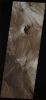
Volcanoes-Nili_Patera-PIA16653-PCF-LXTT-IPF.jpgFeatures of Nili Patera (Absolute Natural Colors; credits for the additional process. and color.: Dr Paolo C. Fienga/Lunar Explorer Italia/Italian Planetary Foundation)71 visiteThis frame, taken by the NASA - Mars Odyssey Orbiter during its 48021st orbit around the Red Planet shows us a portion of the very large Dunefield that covers most of the Floor of Nili Patera. This ancient Volcano, located in the Martian Region of Syrtis Major, spans about 50 Km (about. 31,5 miles) wide, 2 Km (such as a little more than 1 mile) deep, and forms part of a bigger Caldera Complex that stretches some 400 Km (a little less than 250 miles) along a North-to-South direction. What gives Nili Patera special interest for Planetary Geologists is that it contains two kinds of Lava: Basalt and Dacite. This is an unusual circumstance for Mars, where most Lavas are Basalt, and this discovery showed that the Red Planet is, even from a Volcainc point of view, an extremely complex world.
Furthermore, the execution of a series of Gravity Field Measurements which covered the whole Region, showed evidence of a Positive Gravity Anomaly, centered on the Caldera Complex, and suggesting the presence, deep under the Surface, of an approx. 600-by-300 Km (such as about 373-by-186 miles), North-to-South oriented and elongated (now extinct) Magma Chamber, probably containing some very dense Minerals (like, for instance and mainly, Pyroxene, with Olivine also possible).
Latitude: 8,95193° North
Longitude: 67,3367° East
Instrument: VIS
Captured: October, 11th, 2012
This frame (which is an Original Mars Odyssey Orbiter b/w frame published on the NASA - Planetary Photojournal with the ID n. PIA 16653) has been additionally processed and then colorized in Absolute Natural Colors (such as the colors that a human eye would actually perceive if someone were onboard the NASA - Mars Odyssey Orbiter and then looked down, towards the Surface of Mars), by using an original technique created - and, in time, dramatically improved - by the Lunar Explorer Italia Team.MareKromiumGen 11, 2013
|
|
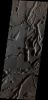
Volcanic_Features-Collapse_Pits_and_Chains-AM-PIA16647-PCF-LXTT-IPF.jpgCollapse Features on the Northern Flank of Ascraeus Mons (Absolute Natural Colors; credits for the additional process. and color.: Dr Paolo C. Fienga/Lunar Explorer Italia/Italian Planetary Foundation)63 visiteThis image was taken by the NASA - Mars Odyssey Orbiter, this time during its 47952nd Orbit, and it shows us a small fraction of the unbelievably compllicated Network of Collapse Features (Pits, Pit-Chains, Channels and Fissures) which are located on the Northern Flank of the Martian Volcano known as Ascreaus Mons (a large Shield Volcano located in the Tharsis Region of the Red Planet). Ascraeus Mons is the Northernmost and tallest of the 3 (three) Shield Volcanoes collectively known as the Tharsis Montes,being the other two huge Volcanoes known as Pavonis and Arsia Mons (if you wish to have an orbital vision of all these three fascinating Volcanoes, as well as a portion of the Noctis Labyrinthus Region of Mars, please go to Archive and refer to the APOD of February, 14th, 2012). Out of curiosity, Ascraeus Mons' location corresponds to the so-called "Classical Albedo Feature" which was known as Ascraeus Lacus.
Ascraeus Mons was actually discovered by the NASA - Mariner 9 Spacecraft in 1971. This enormous Volcano, however, was originally just called "North Spot", since it was the Northernmost of the only 4 (four) "Spots" (---> Reliefs) visible on the whole Surface of Mars which, at that time (and due to a Global Dust Storm), looked completely featureless from the orbit. As the Dust cleared, the abovementioned "Spots" were revealed to be extremely tall Shield Volcanoes whose Summits stood above the Dust-flooded, Lower Atmosphere. The Volcano's name officially became Ascraeus Mons in 1973.
Latitude: 13,6538° North
Longitude: 257,429° East
Instrument: VIS
Captured: October, 5th, 2012
This frame (which is an Original Mars Odyssey Orbiter b/w frame published on the NASA - Planetary Photojournal with the ID n. PIA 16647) has been additionally processed and then colorized in Absolute Natural Colors (such as the colors that a human eye would actually perceive if someone were onboard the NASA - Mars Odyssey Orbiter and then looked down, towards the Surface of Mars), by using an original technique created - and, in time, dramatically improved - by the Lunar Explorer Italia Team.MareKromiumGen 11, 2013
|
|
| 1003 immagini su 84 pagina(e) |
2 | |
|
|
|
|
|
|
|
|
|
|
|





