| Ultimi arrivi - Mars from Orbit (from July 2009) |
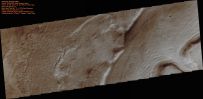
Channels-Reull_Vallis-PIA14481-PCF-LXTT.jpgFeatures of Reull Vallis (Natural Colors; credits for the additional process. and color.: Dr Paolo C. Fienga - Lunexit Team)121 visitenessun commentoMareKromiumLug 30, 2011
|
|
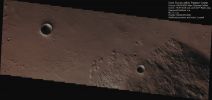
Craters-Pasteur_Crater-PCF-LXTT.jpgFeatures of Pasteur Crater (Absolute Natural Colors; credits for the additional process. and color: Dr Paolo C. Fienga - Lunexit Team)111 visitenessun commentoMareKromiumLug 25, 2011
|
|

Craters-Unnamed_Craters_in_Mareotis_Fossae-PCF-LXTT.jpgPossible Evidence of Cometary Impact in Mareotis Fossae (Absolute Natural Colors; credits for the additional process. and color.: Dr Paolo C. Fienga - Lunexit Team)106 visitenessun commentoMareKromiumLug 25, 2011
|
|

Landslides-Capri_Chasma-20090616a-PCF-LXTT.jpgLarge Landslide in Capri Chasma (Darkened Absolute Natural Colors; credits for the additional process. and color.: Dr Paolo C. Fienga - Lunexit Team)109 visitenessun commentoMareKromiumLug 25, 2011
|
|
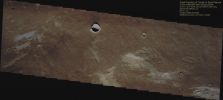
Syria_Planum-PCF-LXTT.jpgUnusually-looking terrain with "White Patches" in Syria Planum (Natural Colors; credits for the additional process. and color.: Dr Paolo C. Fienga - Lunexit Team)122 visitenessun commentoMareKromiumLug 25, 2011
|
|
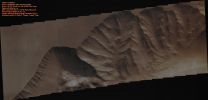
Ophir_Chasma-PIA14469-PCF-LXTT.jpgFeatures of Ophir Chasma (Absolute Natural Colors; credits for the additional process. and color: Dr Paolo C. Fienga - Lunexit Team)125 visitenessun commentoMareKromiumLug 24, 2011
|
|

Channels-Shalbatana_Vallis-PIA08083-PCF-LXTT.jpgLandslide in Shalbatana Vallis (Natural Colors; credits for the additional process. and color.: Dr Paolo C. Fienga - Lunexit Team)128 visitenessun commentoMareKromiumLug 24, 2011
|
|
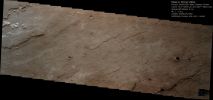
Channels-Simud_Valles-20080716a-PCF-LXTT~0.jpgFeatures of Simud Valles (Natural Colors; credits for the additional process. and color.: Dr Paolo C. Fienga - Lunar Explorer Italia)135 visitenessun commentoMareKromiumLug 24, 2011
|
|

Craters-Unnamed_Crater_with_Small_Dunefield-PCF-LXTT.jpgUnnamed Crater with Dunefield (Absolute Natural Colors; credits for the additional process. and color.: Dr Paolo C . Fienga - Lunar Explorer Italia)133 visiteCaption NASA:"The Floor of this Unnamed Crater, located to the East of Proctor Crater, contains two types of Dunes. To the North (Sx), there are coalescing small Individual Dunes. At the Southern end of the group of small Dunes, then, there is a large Linear Dune that is becoming a Sand-Sheet".MareKromiumLug 24, 2011
|
|
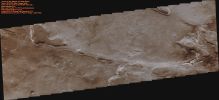
Layers-PIA14365-PCF-LXTT.jpgLayered Ridge (Natural Colors; credits for the additional process. and color.: Dr Paolo C. Fienga - Lunexit Team)133 visiteCaption NASA:The Layered Ridge and Mesas visible in this VIS image are located on the Northern Margin of the Hellas Basin".
MareKromiumLug 23, 2011
|
|

Craters-Gale_Crater-PIA14290-PCF-LXTT.jpgGale Crater (Enhanced Natural Colors; credits for the additional process. and color.: Dr Paolo C. Fienga - Lunexit Team)193 visiteNASA has selected Gale cCrater as the Landing Site for the Mars Science Laboratory Mission. The Rover will be placed on the ground in a Northern portion of the Crater in August 2012. This view of Gale is a mosaic of observations made in the Visible-Light portion of the Spectrum by the Thermal Emission Imaging System camera on NASA's Mars Odyssey orbiter.
Gale crater is roughly 96 miles (about 154 Km) in diameter and holds a layered mountain rising about 3 miles (approx. 5 Km) above the Crater Floor. The ellipse superimposed in this image indicates the intended Landing Area, which is 12,4 miles (about 20 Km) by 15,5 miles (about 25 Km). The portion of the Crater within the Landing Area has an Alluvial Fan likely formed by water-carried sediments. The lower layers of the nearby mountain -- within driving distance for Curiosity -- contain minerals indicating a wet history.
The intended landing site is at 4,5° South Latitude and 137,4° East Longitude.
The Mars Science Laboratory Spacecraft is being prepared for launch during the period Nov. 25 to Dec. 18, 2011. In a prime mission lasting one Martian year -- nearly two Earth years -- after landing, researchers will use the Rover's tools to study whether the landing region has had environmental conditions favorable for supporting microbial life and for preserving clues about whether life existed.MareKromiumLug 23, 2011
|
|

Beatis_Mensa-PIA14467-PCF-LXTT.jpgBeatis Mensa (Natural Colors; credits for the additional process. and color.: Dr Paolo C. Fienga - Lunexit Team)119 visitenessun commentoMareKromiumLug 23, 2011
|
|
| 1003 immagini su 84 pagina(e) |
 |
|
|
|
|
19 | |
|
|
|
|





