| Ultimi arrivi - Titan: The "Foggy" Moon |

Titan-PIA08167-PCF-LXTT.jpgTitan's foggy Northern "Cap" (Absolute Natural Colors; credits for the additional process. and color.: Dr Paolo C. Fienga - Lunexit Team)121 visiteCaption NASA:"The complex and dynamic Atmosphere of Titan displays multiple Haze Layers near the North Pole in this view, which also provides an excellent look at the detached Stratospheric Haze Layer that surrounds the moon at lower Latitudes.
North on Titan is up and rotated 20° to the left.
The image was taken with the Cassini Spacecraft narrow-angle camera on March 16, 2006, using a filter sensitive to wavelengths of UltraViolet Light centered at 338 nanometers. The image was obtained at a distance of approx. 1,2 MKM (about 800.000 miles) from Titan and at a Sun-Titan-Spacecraft, or Phase, Angle of 68°. Image scale is approx. 7 Km (such as about 5 miles) per pixel". MareKromiumFeb 01, 2012
|
|

Titan_and_Saturn-PIA14909.jpgTitan and Saturn (Natural Colors; credits: NASA/JPL-Caltech/Space Science Institute)94 visiteCaption NASA:"The colorful globe of Saturn's largest moon, Titan, passes in front of the Planet and its Rings in this True Color snapshot from NASA's Cassini Spacecraft.
The North Polar "Hood" can be seen on Titan and appears as a detached layer at its top. This view looks toward the Northern, sunlit side of the Rings from just above the Ring-Plane.
Images taken using red, green and blue spectral filters were combined to create this Natural Color view. The image was obtained with the Cassini Spacecraft narrow-angle camera on May 21, 2011, at a distance of approx. 1,4 MMs (about 2,3 MKM) from Titan. Image scale is roughly 9 miles (apèprox. 14 Km) per pixel on Titan".MareKromiumGen 01, 2012
|
|

Titan_and_Dione-PIA14910.jpgTitan and Dione (Natural Colors; credits: NASA/JPL-Caltech/Space Science Institute)100 visiteCaption NASA:"Saturn's third-largest moon, Dione, can be seen through the Haze of the Ringed-Planet's largest moon, Titan, in this Cassini Spacecraft's view of the two, just posing before Saturn and its Rings. The North Polar "Hood" of Titan can be seen appearing as a detached layer at its top
This view looks toward the sides of Titan and Dione that are facing away from Saturn. North is up on both moons. This view looks toward the Northern, sunlit side of the Rings from just above the Ring-Plane.
Images taken using red, green and blue spectral filters were combined to create this Natural Color view. The images were obtained with the Cassini Spacecraft narrow-angle camera on May 21, 2011, at a distance of approx. 1,4 MMs (such as about 2,3 MKM) from Titan and approx. 2 MMs (such as about 3,2 MKM) from Dione. Image scale is roughly 9 miles (about 14 Km) per pixel on Titan and roughly 12 miles (approx. 19 Km) on Dione".MareKromiumGen 01, 2012
|
|

Titan_and_Tethys-PIA14911.jpgTitan and Tethys (Natural Colors; credits: NASA/JPL-Caltech/Space Science Institute)98 visiteCaption NASA:"Saturn's moon Tethys, with its stark white Icy Surface, peeps out from behind the larger, hazy, colorful Titan in this view of the two moons obtained by NASA's Cassini Spacecraft. Saturn's Rings lie between the two Celestial Bodies.
Ithaca Chasma, a long series of Scarps or Cliffs on Tethys, can be seen faintly running North-South.
This view looks toward the side of Titan that is facing away from Saturn and the side of Tethys that is facing Saturn. This view looks toward the Northern, sunlit side of the Rings from just above the Ring-Plane. Images taken using red, green and blue spectral filters were combined to create this Natural Color view. The images were acquired with the Cassini Spacecraft narrow-angle camera on May 21, 2011, at a distance of approx. 1,4 MMs (about 2,3 MKM) from Titan and approx. 2,4 MMs (such as about 3,8 MKM) from Tethys. Image scale is roughly 9 miles (approx. 14 Km) per pixel on Titan and roughly 18 miles (approx. 27 Km) per pixel on Tethys".MareKromiumGen 01, 2012
|
|

Titan_and_Dione-PIA14912.jpgTitan and Dione (Natural Colors; credits: NASA/JPL-Caltech/Space Science Institute)138 visiteCaption NASA:"Saturn's largest moon, Titan, appears deceptively small paired here with Dione, Saturn's third-largest moon, in this view from NASA's Cassini Spacecraft. Titan (which is approx. 3200 miles or about 5150 Km across) is much farther from the Spacecraft than Dione (that, on its side, is approx. 698 miles or about 1123 KM across) is in this view. The view was captured at a distance of approx. 684.000 miles (such as about 1,1 MKM) from Titan but only about 85.000 miles (such as approx. 136.000 Km) from Dione.
Titan appears in its True Colors, but it has been brightened by a factor of about 1,6 relative to Dione. This view looks toward the Saturn-facing side of Titan and the area between the Saturn-facing side and Leading Hemisphere of Dione. North is up on both moons.
Images taken using red, green and blue spectral filters were combined to create this Natural Color view. The images were obtained with the Cassini Spacecraft wide-angle camera on Nov. 6, 2011. Scale in the original image was roughly 5 miles (such as approx. 8 Km) per pixel on Dione and roughly 41 miles (about 66 Km) per pixel on Titan. The image has been magnified by a factor of 1,5 and contrast-enhanced to aid visibility".MareKromiumGen 01, 2012
|
|

Titan-PIA14913-1.jpgThe South Polar Atmosphere of Titan (EDM - Natural Colors; credits: NASA/JPL-Caltech/Space Science Institute)146 visitenessun commentoMareKromiumDic 30, 2011
|
|

Titan-PIA14913-0.jpgThe South Polar Atmosphere of Titan (CTX Frame - Natural Colors; credits: NASA/JPL-Caltech/Space Science Institute)128 visiteCaption NASA:"These views from NASA's Cassini Spacecraft look toward the South Polar Regions of Saturn's largest moon, Titan, and show a "Depression" within the moon's Orange and Blue Haze Layers visible near the South Pole. The EDM (close-up) view of these features was captured with the narrow-angle camera.
Titan's High Altitude Haze Layer appears Blue here whereas the Main Atmospheric Haze is orange. The difference in color could be due to particle size of the Haze. The Blue Haze likely consists of smaller particles than the ones forming the Orange Haze. The "Depressed" or "Attenuated" Layer appears in the Transition Area between the Orange and Blue Hazes.
Images taken using red, green and blue spectral filters were combined to create this Natural Color view. The images were obtained on Sept. 11, 2011 at a distance of approximately 83.000 miles (about 134.000 Km) from Titan. Image scale is 2581 feet (787 meters) per pixel".MareKromiumDic 30, 2011
|
|
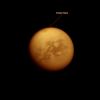
Titan-Seas-Kraken_Mare-PIA14584-PCF-LXTT.jpgKraken Mare (Enhanced Absolute Natural Colors; credits for the additional process. and color.: Dr Paolo C. Fienga - Lunexit Team)206 visiteCaption NASA:"The Cassini Spacecraft looks toward Saturn's largest moon, Titan, and spies the huge, Northern Kraken Mare. Kraken Mare, a large sea of liquid hydrocarbons and is visible as a dark area near the top of the image. This view looks toward the Saturn-facing Side of Titan. North on Titan is up and rotated 29° to the left.
The image was taken with the Cassini Spacecraft narrow-angle camera on Sept. 14, 2011 using a spectral filter sensitive to wavelengths of Near-InfraRed Light centered at 938 nanometers. The view was acquired at a distance of approx. 1,2 MMs (such as about 1,9 MKM) from Titan and at a Sun-Titan-Spacecraft, or Phase, Angle of 26°.
Image scale is roughly 7 miles (approx. 12 Km) per pixel".MareKromiumNov 30, 2011
|
|
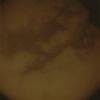
Titan-IMG001935-PCF-LXTT.jpgTitan during Fly-By n. 9 (Absolute Natural Colors; credits for the additional process. and color.: Dr Paolo C. Fienga - Lunexit Team)173 visiteOriginal NASA caption:"This image was taken on December 26, 2005 and received on Earth December 27, 2005. The camera was pointing toward TITAN that, at the time, was approximately 57.509 Km (about 35.734 miles) away.
This image was taken using the CB3 and CL2 filters and has not been validated or calibrated".MareKromiumNov 27, 2011
|
|

Titan-PIA07542-PCF-LXTT.jpgTitan (Absolute Natural Colors; credits for the additional process. and color.: Dr Paolo C. Fienga - Lunexit Team)163 visitenessun commentoMareKromiumNov 21, 2011
|
|

Titan-Clouds-PIA06157.jpgTitanian Clouds (Absolute Natural Colors; credits for the additional process. and color.: Dr Paolo C. Fienga - Lunexit Team)176 visiteCaption NASA originale:"The Clouds seen here are at about 38° South Latitude on Titan. The Clouds across the middle of the frame extend about 250 Km (approx. 155 miles). The image scale is about 0,6 Km (approx. 0,4 miles) per pixel". MareKromiumNov 13, 2011
|
|

Titan-Regions-Belet_Region-PIA14571-PCF-LXTT.jpgBelet Region (Enhanced Absolute Natural Colors; credits for the additional process. and color.: Dr Paolo C. Fienga - Lunexit Team)120 visiteCaption NASA:"The Cassini Spacecraft peers down through the hazy Atmosphere of Titan to view the Dark Region called "Belet". This image was captured using a spectral filter sensitive to wavelengths of Near-InfraRed Light centered at 938 nanometers. The large Region called Belet has a low albedo, meaning it reflects little light. This view looks toward the Trailing Hemisphere of Titan. North is up.
The image was taken with the Cassini Spacecraft narrow-angle camera on June 23, 2011. The view was obtained at a distance of approx. 1,6 MKM (such as about 990.000 miles) from Titan and at a Phase Angle of 14°. Image scale is roughly 9 Km (approx. 5,589 miles) per pixel".MareKromiumAgo 30, 2011
|
|
| 426 immagini su 36 pagina(e) |
 |
|
4 | |
|
|
|
|
|
|
|





