| Ultimi arrivi - Phobos: the "Doomed" Moon |
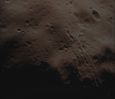
vo1_246a05-PCF-LXTT-2.jpgPhobos' "Surface Striations" - frame Viking Orbiter 1, n. 246a05 (Absolute Natural Colors; credits for the additional process. and color: Dr Paolo C. Fienga - Lunexit Team)247 visitenessun commentoMareKromiumGiu 12, 2011
|
|

Phobos-Limb-Mars_Express-00.jpgPhobos, the "Doomed Moon", from Mars Express (Absolute Natural Colors; credits for the additional process. and color.: Dr Paolo C. Fienga - Lunexit Team)205 visitenessun commentoMareKromiumDic 06, 2010
|
|

Phobos-Limb-Mars_Express-01.jpgPhobos, the "Doomed Moon", from Mars Express (Absolute Natural Colors; credits for the additional process. and color.: Dr Paolo C. Fienga - Lunexit Team)201 visitenessun commentoMareKromiumDic 06, 2010
|
|
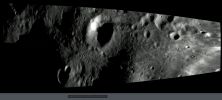
Phobos-MF.jpgPhobos, from MGS (an Image-Mosaic by Dr M. Faccin - Lunexit Team)115 visitenessun commentoMareKromiumMar 13, 2010
|
|
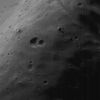
Phobos-PIA01336.jpgHigh-Resolution MOC Image of Phobos' Face75 visiteThis image of Phobos, the inner and larger of the two moons of Mars, was taken by the Mars Global Surveyor on August 19, 1998. The minimum distance between the Spacecraft and Phobos was 1080 Km (about 671 miles).
Phobos was observed by both the Mars Orbiter Camera (MOC) and Thermal Emission Spectrometer (TES). This image is one of the highest resolution images (4 meters or 13 feet per picture element or pixel) ever obtained of the Martian satellite.
The image shows several new features of this lumpy moon -- features that are associated with the prominent crater seen in the upper left quarter of the image. This is the largest crater on Phobos, Stickney, 10 Km (about 6 miles) in diameter. Individual boulders are visible on the near rim of the crater (D), and are presumed to be ejecta blocks from the impact that formed Stickney. Some of these boulders are enormous - more than 50 meters (160 feet) across.
Also crossing at and near the rim of Stickney are shallow, elongated depressions called grooves. This crater is nearly half the size of Phobos and these grooves may be fractures caused by its formation. The far wall of the crater shows lighter and darker streaks going down the slopes (C). The presence of material of different brightness on the far crater slopes and in some of the grooves shows that the satellite is heterogeneous (that is, it is made of a mixture of different types of materials). The motion of debris down slopes is guided by gravity, which is only about 1/1000th that of the Earth -- e.g., a 68-Kg (150- pound) person would weigh only about 57 gr (2 ounces) on Phobos.
Previous images from the Viking Spacecraft in the 1970's were not of sufficient resolution to show the effectiveness of gravity on Phobos in moving material down slopes.MareKromiumGiu 12, 2009
|
|

PHOBOS-Image022-417-20081008-5889-6-src-01-PhobosSeries_H1.jpgStaring at Phobos' Limb69 visiteThis image of Phobos’s was obtained by the Super Resolution Channel (or SRC, a part of the High Resolution Stereo Camera experiment) on board ESA’s Mars Express on 3 August 2008 (orbit 5889).
The distance from the moon’s centre was approx. 656 Km, and the image resolution is 6 mt/pixel. The original image has been corrected for mirror distortion.MareKromiumNov 23, 2008
|
|
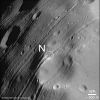
PHOBOS-Image023-417-20081008-5889-6-src-02-PhobosSeries_H1.jpgPhobos' North Polar Regions70 visiteThis image of Phobos’s surface was obtained by the Super Resolution Channel (or SRC, a part of the High Resolution Stereo Camera experiment) on board ESA’s Mars Express on 8 August 2008 (orbit 5908).
The distance from the moon’s centre was approx. 1024 Km, and the image resolution is 9 mt/pixel. The original image has been corrected for mirror distortion.MareKromiumNov 23, 2008
|
|
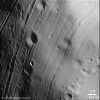
PHOBOS-Image024-417-20081008-5889-6-src-03-PhobosSeries_H1.jpgThe Surface of Phobos: the "Striations"76 visiteThis image of Phobos’s surface was obtained by the Super Resolution Channel (or SRC, a part of the High Resolution Stereo Camera experiment) on board ESA’s Mars Express on 3 August 2008 (orbit 5889).
The distance from the moon’s centre was approx. 656 Km, and the image resolution is 6 mt/pixel. The original image has been corrected for mirror distortion.MareKromiumNov 23, 2008
|
|
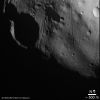
PHOBOS-Image025-417-20081008-5889-6-src-04-PhobosSeries_H1.jpgPhobos' Terminator71 visiteThis image of Phobos’s surface was obtained by the Super Resolution Channel (or SRC, a part of the High Resolution Stereo Camera experiment) on board ESA’s Mars Express on 3 August 2008 (orbit 5889).
The distance from the moon’s centre was approx. 656 Km, and the image resolution is 6 mt/pixel. The original image has been corrected for mirror distortion.MareKromiumNov 23, 2008
|
|
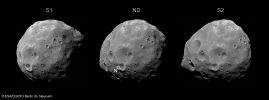
PHOBOS-Image013-411-20081008-5870-6-s12_nd-01-PhobosSeries_H1.jpgViews of Phobos71 visiteThis sequence of images was obtained by the High Resolution Stereo Camera (HRSC) on board ESA’s Mars Express on 26 July 2008 (orbit 5861), at a distance of about 2295 Km from the moon’s centre, and provides a striking impression of the encounter.
These imagee was taken using all 9 imaging channels of the camera. The resolution shown here is 92 mt/pixel for each image.
HRSC is a so-called push-broom camera, building up images in a ‘scanning’ mode while the spacecraft passes over the surface. Its nine channels, or scanning lines, are oriented in different directions that spread from 18,9° behind the nadir viewpoint (corresponding to a vertical line of sight), to 18,9° ahead of the nadir. This gives the camera its stereo-viewing capacity.MareKromiumNov 23, 2008
|
|

PHOBOS-Image014-412-20081008-5861-6-all_row-PhobosSeries_H1.jpgPhobos' Sequence72 visitenessun commentoMareKromiumNov 23, 2008
|
|
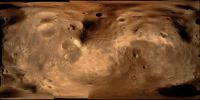
000-Phobos-Global_Map-ESA.jpgPhobos: Global Map (False Colors)71 visiteCaption ESA:"This mosaic image is composed by 53 pictures obtained by the Super Resolution Channel (or SRC, a part of the High Resolution Stereo Camera experiment) on board ESA’s Mars Express.
The SRC images covered 70% of the moon's surface. The remaining area is filled with 16 images previously obtained by NASA’s Viking mission.
The mean resolution is 12 mt/pixel". MareKromiumNov 21, 2008
|
|
| 53 immagini su 5 pagina(e) |
 |
3 | |
|








