| Ultimi arrivi - From Ashes to Eternity: the Phoenix Mars Mission |
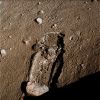
PHOE-SOL128-lg37797-37798-37799_copia2.jpgThe Surface of Vastitas Borealis - Sol 128 (Superdefinition and possible True Colors; credits: Dr G. Barca)65 visiteUn altro fantastico Lavoro del Dr Barca: incommentabile.MareKromiumOtt 06, 2008
|
|
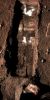
PHOE-SOL121-lg35670-35671-35672-2.jpgIcy Trench... - Sol 121 (Superdefinition and natural colors; credits: Dr G. Barca)68 visitenessun commentoMareKromiumOtt 05, 2008
|
|
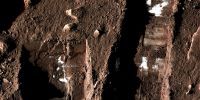
PHOE-SOL121-lg35721-35722-35735-2.jpgIcy Trenches... - Sol 121 (Superdefinition and natural colors; credits: Dr G. Barca)64 visitenessun commentoMareKromiumOtt 05, 2008
|
|
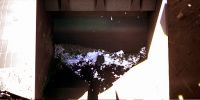
PHOE-SOL125-MF.jpgA lot of Ice in the "Scoop"! - Sol 125 (True Colors; credits: Dr M. Faccin)64 visitenessun commentoMareKromiumOtt 04, 2008
|
|

PHOE-SOL116-PIA11222.jpgSurface Stereo Imager on Mars, Side View - Sol 116 (MULTISPECTRUM; credits: Lunexit)74 visiteCaption NASA:"This image is a view of NASA's Phoenix Mars Lander's Surface Stereo Imager (SSI) as seen by the Lander's Robotic Arm Camera.
This image was taken on the afternoon of the 116th Martian Day, or Sol, of the Mission (September 22, 2008).
The mast-mounted SSI, which provided the images used in the 360° panoramic view of Phoenix's Landing Site, is about 4" tall and 8" long".MareKromiumOtt 04, 2008
|
|

PHOE-SOL116-PIA11223.jpgSurface Stereo Imager on Mars, Face-On - Sol 116 (MULTISPECTRUM; credits: Lunexit)73 visiteCaption NASA:"This image is a view of NASA's Phoenix Mars Lander's Surface Stereo Imager (SSI) as seen by the Lander's Robotic Arm Camera. This image was taken on the afternoon of the 116th Martian Day, or Sol, of the Mission (September 22, 2008).
The mast-mounted SSI, which provided the images used in the 360 degree panoramic view of Phoenix's Landing Site, is about 4" tall and 8 inches long.
The two "eyes" of the SSI seen in this image can take photos to create 3-dimensional views of the landing site".MareKromiumOtt 04, 2008
|
|
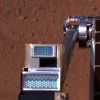
PHOE-SOL116-PIA11224.jpgLights OFF - Sol 116 (approximate colors; credits: NASA)70 visiteCAption NASA:"This approximate color image is a view of NASA's Phoenix Mars Lander's Robotic Arm Camera (RAC) as seen by the Lander's Surface Stereo Imager (SSI). This image was taken on the afternoon of the 116th Martian day, or Sol, of the mission (such as September 22, 2008). The RAC is about 8 cm (3" - inches) tall.
The SSI took images of the RAC to test both the light-emitting diodes (LEDs) and cover function. Individual images were taken in three SSI filters that correspond to the red, green, and blue LEDs one at a time.
This yields proper coloring when imaging Phoenix's surrounding Martian Environment".MareKromiumOtt 03, 2008
|
|
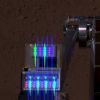
PHOE-SOL116-PIA11225.jpgLights ON - Sol 116 (extra-saturated colors; credits: NASA)70 visiteCaption NASA:"This image is a composite view of NASA's Phoenix Mars Lander's Robotic Arm Camera (RAC) with its lights on, as seen by the Lander's Surface Stereo Imager (SSI). This image combines images taken on the afternoon of Phoenix's 116th Martian day, or Sol (such as September 22, 2008). The RAC is about 8 cm (3" - inches) tall.
The SSI took images of the RAC to test both the light-emitting diodes (LEDs) and cover function. Individual images were taken in three SSI filters that correspond to the red, green, and blue LEDs one at a time. When combined, it appears that all three sets of LEDs are on at the same time.
This composite image is not true color. The streaks of color extending from the LEDs are an artifact from saturated exposure".MareKromiumOtt 03, 2008
|
|
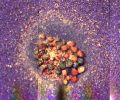
PHOE-SOL058-PIA11204.jpgUnbelievable!!!72 visiteEnnesima SCOPIAZZATURA NASA di un frame processato dal nostro Dr Faccin, addirittura 2 mesi e mezzo fa!!!
Che dire? Non hanno davvero ritegno...
Caption NASA:"This image from NASA's Phoenix Mars Lander's Optical Microscope shows a strongly magnetic surface which has scavenged particles from within the microscope enclosure before a sample delivery from the lander's Robotic Arm. The particles correspond to the larger grains seen in fine orange material that makes up most of the soil at the Phoenix site. They vary in color, but are of similar size, about one-tenth of a millimeter.
As the microscope's sample wheel moved during operation, these particles also shifted, clearing a thin layer of the finer orange particles that have also been collected. Together with the previous image, this shows that the larger grains are much more magnetic than the fine orange particles with a much larger volume of the grains being collected by the magnet. The image is 2 milimeters across.
It is speculated that the orange material particles are a weathering product from the larger grains, with the weathering process both causing a color change and a loss of magnetism".
Nota Lunexit: l'Imperial College di Londra, dopo aver esaminato (usando le nostre Funzioni Statistiche) la lista delle Università che si collegano con Lunar Explorer Italia, risulta essere un "aficionado" della nostra Fondazione!
Ok, è un onore. Ma dire "Grazie" al Dr Faccin ed a Lunexit sarebbe stato MOLTO EDUCATO ed APPREZZATO.
Che altro aggiungere? Anche gli Inglesi, a quanto pare, hanno imparato che "rubacchiare" è più facile che creare...MareKromiumOtt 01, 2008
|
|

PHOE-SOL122-lg35921-35922-35923-2.jpgMicroscopic Vastitas - Sol 122 (Superdefinition and possible True Colors; credits: Dr G. Barca & Lunexit)80 visitenessun commentoMareKromiumOtt 01, 2008
|
|

PHOE-SOL122-lg35987-35988-35989-2.jpgDisturbed Terrain - Sol 122 (Superdefinition and possible True Colors; credits: Dr G. Barca)64 visitenessun commentoMareKromiumOtt 01, 2008
|
|

PHOE-SOL122-lg36292-36293-36294-2.jpgMicroscopic Vastitas - Sol 122 (Superdefinition and possible True Colors; credits: Dr G. Barca & Lunexit)77 visitenessun commentoMareKromiumOtt 01, 2008
|
|
| 399 immagini su 34 pagina(e) |
 |
|
|
|
6 | |
|
|
|
|
|








