| Ultimi arrivi - From Ashes to Eternity: the Phoenix Mars Mission |

PHOE-SOL002-lg_533.jpgPhoenix in True Colors! - Sol 2 (credits: Dr Marco Faccin)67 visitenessun commentoMareKromiumMag 27, 2008
|
|

PHOE-SOL002-lg_509.jpgBack-Shell or Heat-Shield? - Sol 2 (MULTISPECTRUM; credits: Lunexit)68 visiteMareKromiumMag 27, 2008
|
|
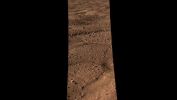
PHOE-SOL001-PIA10693.jpgMartian Surface (Approximate Colors; credits: NASA/JPL-Caltech/University of Arizona/Texas A&M )64 visitenessun commentoMareKromiumMag 27, 2008
|
|

PHOE-SOL002-lg_458.jpgShadows on an orange-greenish soil - Sol 2 (MULTISPECTRUM; credits: Lunexit)66 visitenessun commentoMareKromiumMag 27, 2008
|
|
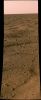
PHOE-SOL001-N-P-Pstcd.jpgVastitas Borealis - Sol 1 (RAW Color Data; credits: Dr Gianluigi Barca)68 visiteAnche questa splendida elaborazione in colori RAW, realizzata dall'ottimo Dr Gianluigi Barca finirà con l'assomigliare molto - a nostro parere - alle elaborazioni NASA in "false" ed "approximate true colors".
Staremo a vedere... MareKromiumMag 26, 2008
|
|
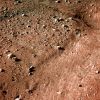
PHOE-SOL001-PIA10682.jpgThe soil of Vastitas Borealis - Sol 1 (Approximate Colors; credits: NASA/JPL-Caltech/University of Arizona )65 visiteCaption NASA:"This image shows a polygonal pattern in the ground near NASA's Phoenix Mars Lander, similar in appearance to icy ground in the arctic regions of Earth.
Phoenix touched down on the Red Planet at 4:53 p.m. Pacific Time (7:53 p.m. Eastern Time), May 25, 2008, in an arctic region called Vastitas Borealis, at 68° North Latitude and 234° East Longitude.
This is an approximate-color image taken shortly after landing by the spacecraft's Surface Stereo Imager, inferred from two color filters, a violet, 450-nanometer filter and an infrared, 750-nanometer filter".
Nota Lunexit: una nuova "dizione" NASA. Ora questi (semi-assurdi) colori non sono più Approximate True o Approximate Natural: adesso sono SOLO "Approximate".
Beh, visti i quattrini, i mezzi, le tecnologie, le menti ed il tempo che si ritrovano a disposizione i nostri Amici di Pasadena, scusateci se, dopo aver visto questa (a nostro parere "quasi inguardabile") elaborazione, non ci sentiamo di fargli i complimenti...MareKromiumMag 26, 2008
|
|
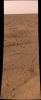
PHOE-SOL001-PIA10690.jpgVastitas Borealis - Sol 1 (Approximate True Colors; credits: NASA/JPL-Caltech/University of Arizona )65 visiteVisto?!?...Le "colorizzazioni" NASA? Prevedibili. Sempre prevedibili.
Prevedibili in maniera quasi sconcertante: dai cieli "rosati" (che abbiamo già visto sopra Gusev Crater e, sebbene più raramente, sopra Meridiani Planum) al terreno pallidamente arancio-giallo. E questa è la prima immagine "colorata"! Chissà le altre...
Caption NASA:"This image, one of the first captured by NASA's Phoenix Mars Lander, shows the vast plains of the northern polar region of Mars. The flat landscape is strewn with tiny pebbles and shows polygonal cracking, a pattern seen widely in Martian high latitudes and also observed in permafrost terrains on Earth. The polygonal cracking is believed to have resulted from seasonal freezing and thawing of surface ice.
Phoenix touched down on the Red Planet at 4:53 p.m. Pacific Time (7:53 p.m. Eastern Time), May 25, 2008, in an arctic region called Vastitas Borealis, at 68° North Latitude and 234° East Longitude.
This is an approximate-color image taken shortly after landing by the spacecraft's Surface Stereo Imager, inferred from two color filters, a violet, 450-nanometer filter and an infrared, 750-nanometer filter".MareKromiumMag 26, 2008
|
|
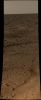
PHOE-SOL001-N-230118-false_color_postcard-001.jpgVastitas Borealis - Sol 1 (Natural Colors + MULTISPECTRUM; credits: Dr Gianluigi Barca & Lunexit)65 visitenessun commentoMareKromiumMag 26, 2008
|
|

PHOE-SOL001-P-lg_431.jpgOne "Leg" and "Landing Pad" of Phoenix - Sol 1 (Natural Colors + MULTISPECTRUM; credits: Dr M. Faccin & Lunexit)67 visitenessun commentoMareKromiumMag 26, 2008
|
|
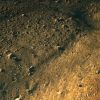
PHOE-SOL001-N-Photocomposite.jpgThe soil of Vastitas Borealis - Sol 1 (Natural Colors + MULTISPECTRUM; credits: Dr M. Faccin & Lunexit)72 visitenessun commentoMareKromiumMag 26, 2008
|
|
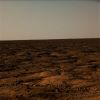
PHOE-SOL001-O-Photocomposite-lg_434-001.jpgVastitas Borealis - Sol 1 (Natural Colors + MULTISPECTRUM; credits: Dr Marco Faccin & Lunexit)89 visitenessun commentoMareKromiumMag 26, 2008
|
|
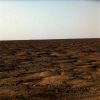
PHOE-SOL001-O-Photocomposite-lg_434-000.jpgVastitas Borealis - Sol 1 (Natural Colors; credits: Dr Marco Faccin)68 visitenessun commentoMareKromiumMag 26, 2008
|
|
| 399 immagini su 34 pagina(e) |
 |
|
|
|
|
|
|
31 | |
|
|








