| Ultimi arrivi - From Ashes to Eternity: the Phoenix Mars Mission |

PHOE-SOL098-lg26940-26951-26953-2.jpgVastitas' Horizon - Sol 98 (Superdefinition and natural colors; credits: Dr G. Barca & Lunexit)65 visitenessun commentoMareKromiumSet 05, 2008
|
|

PHOE-SOL097-ICEUNDER-MF.jpgUnder the Lander - Sol 97 (True Colors; credits: Dr M. Faccin)66 visitenessun commentoMareKromiumSet 03, 2008
|
|
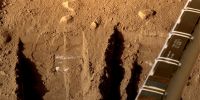
PHOE-SOL097-RC-MF.jpgMelting or Sublimating? - Sol 97 (natural colors; credits: Dr M. Faccin)93 visitenessun commentoMareKromiumSet 03, 2008
|
|

PHOE-SOL088-PIA11058.jpgMartian "Caterpillar" - Sol 88 (natural colors; credits: Lunexit)64 visiteAs NASA's Phoenix Mars Lander excavates trenches, it also builds piles with most of the material scooped from the holes. The piles, like this one called "Caterpillar", provide researchers some information about the soil.
On Aug. 24, 2008, during the late afternoon of the 88th Martian day after landing, Phoenix's Surface Stereo Imager took separate exposures through red, green and blue filters that have been combined into this approximately true-color image. This conical pile of soil is about 10 cm (4") tall.
The sources of material that the Robotic Arm has dropped onto the Caterpillar pile have included the "Dodo" and ""Upper Cupboard" trenches and, more recently, the deeper "Stone Soup" trench.
Observations of the pile provide information, such as the slope of the cone and the textures of the soil, that helps scientists understand properties of material excavated from the trenches.
For the Stone Soup trench in particular, which is about 18 cm (7") deep, the bottom of the trench is in shadow and more difficult to observe than other trenches that Phoenix has dug. The Phoenix team obtained spectral clues about the composition of material from the bottom of Stone Soup by photographing Caterpillar through 15 different filters of the Surface Stereo Imager when the pile was covered in freshly excavated material from the trench.
The spectral observation did not produce any sign of water-ice, just typical soil for the site. However, the bigger clumps do show a platy texture that could be consistent with elevated concentration of salts in the soil from deep in Stone Soup. The team chose that location as the source for a soil sample to be analyzed in the lander's wet chemistry laboratory, which can identify soluble salts in the soil.MareKromiumSet 02, 2008
|
|

PHOE-SOL096-GIF.gifSunset over Vastitas (GIF-Movie; credits: Dr G. Barca)83 visitenessun commentoMareKromiumSet 02, 2008
|
|
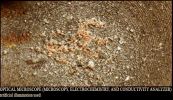
PHOE-SOL095-MF1.jpgMicroscopic Vastitas - Sol 95 (True Colors; credits: Dr M. Faccin)67 visitenessun commentoMareKromiumSet 01, 2008
|
|

PHOE-SOL095-MF.jpgThrough the Clouds... - Sol 95 (natural colors; credits: Dr M. Faccin)66 visitenessun commentoMareKromiumSet 01, 2008
|
|
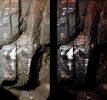
PHOE-SOL094-MF.jpgThe "Trench" - Sol 94 (True Colors; credits: Dr M. Faccin)65 visitenessun commentoMareKromiumAgo 31, 2008
|
|
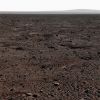
PHOE-SOL091-lg25384-25452-25674-2.jpgVastitas' Horizon - Sol 91 (Superdefinition and natural colors; credits: Dr G. Barca & Lunexit)66 visitenessun commentoMareKromiumAgo 29, 2008
|
|

PHOE-SOL090-PIA11055.jpgVastitas' Surface, according to NASA - Sol 90 (natural colors; credits: NASA)65 visiteDuring the first 90 Martian Days, or Soles, after its May 25, 2008, landing on an Arctic Plain of Mars, NASA's Phoenix Mars Lander dug several trenches in the workspace reachable with the Lander's Robotic Arm (LRA).
The Lander's Surface Stereo Imager camera recorded this view of the workspace on Sol 90, early afternoon Local Mars time (overnight Aug. 25 to Aug. 26, 2008). The shadow of the the camera itself, atop its mast, is just left of the center of the image and roughly a third of a meter (one foot) wide.
The workspace is on the north side of the lander. The trench just to the right of center is called "Neverland".MareKromiumAgo 28, 2008
|
|

PHOE-SOL090-PIA11054-1.jpgStar-like Objects in the Morning Lights - Sol 9065 visitenessun commentoMareKromiumAgo 28, 2008
|
|
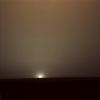
PHOE-SOL090-PIA11054-2.jpgIce Cold Sunrise on Mars - Sol 90 (natural colors; credits: Lunexit)65 visiteFrom the location of NASA's Phoenix Mars Lander, above the Martian Arctic Circle, the Sun does not set during the peak of the Martian Summer.
This period of maximum solar energy is past — on Sol 86, the 86th Martian Day after the Phoenix landing, the Sun fully set behind a slight rise to the North for about half an hour.
This red-filter image taken by the lander's Surface Stereo Imager, shows the Sun rising on the morning of Sol 90, Aug. 25, 2008, the last day of the Phoenix nominal mission.
The image was taken at 51 minutes past Midnight (Local Solar Time) during the slow sunrise that followed a 75 minute "night". The skylight in the image is light scattered off atmospheric dust particles and ice crystals.
The setting Sun does not mean the end of the Mission. In late July, the Phoenix Mission was extended through September, rather than the 90-Sol duration originally planned as the Prime Mission.MareKromiumAgo 28, 2008
|
|
| 399 immagini su 34 pagina(e) |
 |
|
|
|
|
11 | |
|
|
|
|








