| |

| Ultimi arrivi - Mars in JPEG2000 |
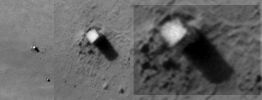
PSP_006737_1265-Square06~0.jpg121 visiteGewidmet Lyk2, von der deutschen Seite Allmystery (https://www.allmystery.de/themen/uf55655#id2962022).
Zitat: „Gibt es ein Denkmal auf dem Mars? - 05.08.2009 um 13:16 Uhr
@Prometheus
Diese italienische Seite (i.e.: Lunar Explorer Italia) scheint sich selbst auf die Schippe zu nehmen (ahahah).“
Nun, das ist der Kommentar des Genies.
Ich denke, eine kurze Antwort ist notwendig.
Ich ziehe meinen Hut vor dem Idioten, der über den Ernst dieser Seite lacht, ohne ihn zu kennen und offensichtlich ohne auch nur das Geringste über ihren Zweck und die Opfer zu verstehen, die gebracht wurden, um sie 22 Jahre lang online zu halten.
Danke! Bravo! Dann mach es besser, du armer Idiot…MareKromiumMag 28, 2026
|
|

ESP_023024_1010-GB-PCF-LXTT-IPF-Possible_Paleo-Lake-02.jpgPossible Paleo-Lake near the South Pole of Mars (an Image-Mosaic in Absolute Natural Colors; credits for the Research, additional process. and color.: Drr Gianluigi Barca and Paolo C. Fienga/Lunar Explorer Italia/Italian Planetary Foundation)128 visiteIn this image-mosaic showing the "Smooth South Polar Region", as NASA defined this Surface Feature, we wish to draw to your attention the extremely linear and, in a way, unusually-looking Chain of "oblong-shaped" Impact Craters that can easily be seen on the East Side (better yet: East Wall) of the Feature, from its upper right (Dx) corner and then down, for about 1/4 (one fourth) of its full length. This Chain of Craters litterally "follows" the Eastern Margin of the Lake-like Feature, then it suddenly stops (or, perhaps, quite a few of the Craters forming the Chain were simply "erased" by the occurrence of some Geological and/or Atmospherical - or both, probably - Events, still unknown at this point), and then it starts again, still remaining sharp and linear, but with a lesser Craters' Density.
Furthermore, on the left (Sx) side of the Craters forming the Chain, the Surface appears to be characterized by the presence of Gullies (---> remember that a so-called "Gully" is a landform created by running water, eroding sharply into the Soil. Gullies may resemble to large ditches or small valleys, but they can be a few meters, to tens of meters, deep and wide. When the Gully Formation is in process, the Water Flow Rate can be substantial, and this fact causes a significant deep cutting action into the Soil). So, one - perhaps remote, but, in any case, extremely intriguing - possibility, is that the Chain of Craters (or whatever those "oblong-shaped holes in the ground" may be) was the actual "passageway" through which a more than significant amount of running water once flew and, in the end (an end that occurred, very likely, in a distant past), filled up the whole Surface Depression and formed a true South Polar Lake. Then the water froze, and the Surface of this Martian Lake got slowly covered by Dust and Ashes but, in any case, it remained very smooth, like the still waters that once must have been there and that, in our opinion, froze very quickly.
All that said, we humbly believe, as IPF, that this whole Surface Feature has too quickly (and superficially) been called "Smooth South Polar Region", and then (at least as far as we know) forgotten by the many Spacecrafts that we still have orbiting around the Red Planet. In other words, if we had the chance, we would strongly suggest NASA (and ESA) to send the Mars Reconnaissance Orbiter and the Mars Express Spacecraft over this Region, and then take a new and better look at was lies down below, on the Surface. And this because, as they should know very well, "Science is always full of surprises"!...
Your opinions and insights about this topic are and shall always be appreciated.
Mars Local Time: 14:56 (Early Afternoon)
Coord. (centered): 78,638° South Lat. and 68,111° East Long.
Spacecraft altitude: 248,0 Km (such as about 154,008 miles)
Original image scale range: 49,6 cm/pixel (with 2 x 2 binning) so objects ~ 1 mt and 49 cm across are resolved
Map projected scale: 50 cm/pixel
Map projection: POLAR STEREOGRAPHIC
Emission Angle: 4,5°
Sun-Martian Surface-MRO Spacecraft (or Phase) Angle: 67,9°
Solar Incidence Angle: 65° (meaning that the Sun was about 25° above the Local Horizon at the time the picture was taken)
Solar Longitude: 317,2° (Northern Winter - Southern Summer)
Credits: NASA/JPL/University of Arizona
Additional process. and coloring: Lunar Explorer Italia
This picture (which is a cropped and NON-Map Projected NASA - Original Mars Reconnaissance Orbiter CTX b/w frame, identified by the serial n. ESP_023024_1010) has been additionally processed and then colorized in Absolute Natural Colors (such as the colors that a human eye would actually perceive if someone were onboard the NASA - Mars Reconnaissance Orbiter and then looked down, towards the Surface of Mars), by using an original technique created - and, in time, dramatically improved - by the Lunar Explorer Italia Team.MareKromiumFeb 24, 2013
|
|

ESP_023024_1010-GB-PCF-LXTT-IPF-Possible_Paleo-Lake-01.jpgPossible Paleo-Lake near the South Pole of Mars (EDM; Absolute Natural Colors - credits for the Research, additional process. and color.: Drr Gianluigi Barca and Paolo C. Fienga/Lunar Explorer Italia/Italian Planetary Foundation)138 visiteThis Surface Feature, now pictured by the NASA - Mars Reconnaissance Orbiter, but already known to Planetary Researchers (since it had already been photographed by the NASA - Mars Global Surveyor Orbiter a few years ago - see the MGS-MOC Image identified by the serial n. M09-01354), it is certainly very intriguing and highly suggestive. The NASA People, however, called this Surface Feature (that, in our humble opinion, as IPF, looks like a frozen Lake and it is also well characterized by the presence, on its Eastern Side, of a long line of almost perfectly lined-up and unusually-looking - "oblong" - Impact Craters) "Smooth South Polar Region".
This Surface Feature (as you will better see in the next few days, when we shall show you its smallest details) is (or "looks", if you prefer) very peculiar, and that is a fact that can hardly be disputed. Said that, we, as IPF, expected that NASA told us something more about this Smooth South Polar Region. We honestly thought that NASA would (and should) have showed us soon enough this intriguing Surface Feature from other visual angles, maybe (if possible) from a lower altitude, certainly during other seasons/periods of the Martian Year and, last but not least, under different Illumination Geometries, but...Nothing happened. Not a word of explanation was ever said or written (as far as we know) and not an "official" comment whatsoever was ever released.
Now, in the light of the aformentioned considerations, we decided to draw to your attention - through our Daily APOD - this "Smooth South Polar Region" and ask you a couple of simple questions: what do you really think or believe that this Surface Feature could be representing? Do you think that it could actually be the frozen remnant of an ancient (and once much bigger) Martian Lake or it is just a flat area surrounded by the typical Polar Terrain? If you wish to express your opinion, please write us at Alphacentauri@intercom.it . The most interesting and well substantiated ideas and theories that we hope to receive, shall be published here (giving to the Writer/s all the due credits), as additional comments to other (VERY detailed) orbital views of this very same Smooth South Polar Region. Thanks, as usual, for you interest and support!
Dr Paolo C. Fienga/LXTT/IPF
Mars Local Time: 14:56 (Early Afternoon)
Coord. (centered): 78,638° South Lat. and 68,111° East Long.
Spacecraft altitude: 248,0 Km (such as about 154,008 miles)
Original image scale range: 49,6 cm/pixel (with 2 x 2 binning) so objects ~ 1 mt and 49 cm across are resolved
Map projected scale: 50 cm/pixel
Map projection: POLAR STEREOGRAPHIC
Emission Angle: 4,5°
Sun-Martian Surface-MRO Spacecraft (or Phase) Angle: 67,9°
Solar Incidence Angle: 65° (meaning that the Sun was about 25° above the Local Horizon at the time the picture was taken)
Solar Longitude: 317,2° (Northern Winter - Southern Summer)
Credits: NASA/JPL/University of Arizona
Additional process. and coloring: Lunar Explorer Italia
This picture (which is a cropped and NON-Map Projected NASA - Original Mars Reconnaissance Orbiter CTX b/w frame, identified by the serial n. ESP_023024_1010) has been additionally processed and then colorized in Absolute Natural Colors (such as the colors that a human eye would actually perceive if someone were onboard the NASA - Mars Reconnaissance Orbiter and then looked down, towards the Surface of Mars), by using an original technique created - and, in time, dramatically improved - by the Lunar Explorer Italia Team.MareKromiumFeb 24, 2013
|
|

Northern_Regions-Utopia_Planitia-Dust_Storm_and_Clouds-PIA15959.jpgDust Storm over Utopia Planitia164 visiteThis close-up image of a Dust Storm on Mars was acquired by the Mars Color Imager instrument onboard NASA's Mars Reconnaissance Orbiter on Nov. 7, 2007, around 15:00 Local Time on Mars. Scientists working with NASA's Curiosity Rover, which is set to land on Mars on Aug. 5 PDT (Aug. 6 EDT), are monitoring Mars each day for similar small Storms that could either drift over the Landing Site or stir up dust that moves as haze over the Site.
This image is centered on Utopia Planitia (53,6° North Latitude and 147,9° East Longitude), along the North Seasonal Polar Cap Edge as it is in late Northern Winter.
When NASA's Curiosity Rover lands on Mars, it will be late Southern Winter. Scientists are looking at similar small storms that form near the South Seasonal Polar Cap Edge. The Dust Storm pictured here was short-lived, lasting less than 24 hours. The image also shows the Seasonal North Polar Cap (at the top of the frame) and gravity-wave Water-Ice Clouds coming off of Mie Crater, just South of the Storm.
Gravity-Wave Clouds, also called "Lee-Wave Clouds", are Clouds that result from changes in Atmospheric Pressure, Temperature and height because of "Vertical Displacement", such as when Wind blows over a Mountain or a (huge) Crater Wall.
The projection of the image is Polar Stereographic and the image has a resolution of about 0,6 miles (1 Km) per pixel. North is indicated with an arrow in this image. The white scale bar is 93 miles (approx. 150 kilometers).MareKromiumAgo 06, 2012
|
|

Dunes-PIA14876.gifMoving Rippled Patch of Sand in Becquerel Crater (a GIF-Movie by NASA/JPL-Caltech/Univ. of Ariz./JHUAPL)214 visitenessun commentoMareKromiumNov 19, 2011
|
|

Dunes-PIA14880.gifDegrading North Polar Barchan-type Dune (a GIF-Movie by NASA/JPL-Caltech/Univ. of Ariz./JHUAPL)213 visitenessun commentoMareKromiumNov 19, 2011
|
|

Dunes-PIA14879.gifMoving Rippled Dune-Front in Hershel Crater (a GIF-Movie by NASA/JPL-Caltech/Univ. of Ariz./JHUAPL)202 visitenessun commentoMareKromiumNov 19, 2011
|
|

Dunes-PIA14877-PCF-LXTT.jpgRippled Dune-Front in Hershel Crater (Enhanced Absolute Natural Colors; credits for the additional process. and color.: Dr Paolo C. Fienga - Lunexit Team)216 visiteThe Eastern Margin of a Rippled Dune located inside Herschel Crater moved an average distance of 3 meters (such as about 3 yards) between March 3rd, 2007 and December 1st, 2010MareKromiumNov 19, 2011
|
|

Dunes-PIA14880-PCF-LXTT-1.jpgDegrading North Polar Barchan-type Dune (Absolute Natural Colors; credits for the additional process. and color.: Dr Paolo C. Fienga - Lunexit Team)219 visiteThis Dune, located in the North Polar Region of Mars, showed significant changes between two images taken on June 25th, 2008 and May 21st, 2010 and revealed Landslides and Sand advancing at the Dune-Front (upper left); changes in the position of the rest of the Dune Boundary relative to the fixed, underlying Terrain and changes in the position of the Ripples located on the Dune Surface.
MareKromiumNov 19, 2011
|
|

Dunes-PIA14876-PCF-LXTT.jpgRippled Patch of Sand in Becquerel Crater (Enhanced Absolute Natural Colors; credits for the additional process. and color.: Dr Paolo C. Fienga - Lunexit Team)199 visiteA Rippled Patch of Sand in Becquerel Crater on Mars moved about 2 meters (such as about 2 yards) between November 24th, 2006 and September 5th, 2010. Becquerel Crater is located just north of the equator in the Arabia Terra region.
MareKromiumNov 19, 2011
|
|

Dunes-PIA14879-PCF-LXTT.jpgMoving Rippled Dune-Front in Hershel Crater (Enhanced Absolute Natural Colors; credits for the additional process. and color.: Dr Paolo C. Fienga - Lunexit Team)206 visiteA Rippled Dune-Front in Herschel Crater on Mars moved an average of about 1 meter (such as about o1 yard) between March 3rd, 2007 and December 1st, 2010. Herschel Crater is located just South of the Equator, in the Cratered Highlands.
This is one of several sites where the MRO has observed shifting Sand Dunes and Ripples. Previously, scientists thought sand on Mars was mostly immobile. It took the mission's High Resolution Imaging Science Experiment (HiRISE) to take sharp enough images to finally see the movement. While Dust is easily blown around the Red Planet, its thin Atmosphere means that strong Winds are required to move Grains of Sand.MareKromiumNov 19, 2011
|
|

Dunes-PIA14878-PCF-LXTT.jpgMoving Rippled Dune-Front in Hershel Crater (Enhanced Absolute Natural Colors; credits for the additional process. and color.: Dr Paolo C. Fienga - Lunexit Team)204 visiteA Rippled Dune-Front in Herschel Crater on Mars moved about 2 meters (such as about 2 yards) between March 3rd, 2007 and December 1st, 2010. Herschel Crater is located just South of the Equator in the Cratered Highlands.
This is one of several sites where the orbiter has observed shifting Sand Dunes and Ripples. Previously, scientists thought sand on Mars was mostly immobile. It took the mission's High Resolution Imaging Science Experiment (HiRISE) to take sharp enough images to finally see the movement. While Dust is easily blown around the Red Planet, its thin Atmosphere means that strong Winds are required to move Grains of Sand.MareKromiumNov 19, 2011
|
|
| 199 immagini su 17 pagina(e) |
1 |
|
|
|
|
|
|
|
|
|
|
|
|








