| Ultimi arrivi - Mars through Mars Express (ESA - Original Raw Frames & Orbital Panoramas) |

Volcanoes-Arsia_Mons_and_the_Tharsis_Montes-December_2012-PCF-LXTT-IPF-2.jpgOnce again...368 visiteE' divertente. Sempre lo stesso tipo di "nuvola", sempre lo stesso tipo di conformazione ed orientazione della stessa, sempre "in partenza" dal fianco superiore Sx del gigantesco Vulcano Arsia Mons e sempre interpretata come il frutto di semplici ed ovvi eventi atmosferici. Dalle immagini NASA - Viking - ottenute poco prima dell'inserzione orbitale, negli Anni '80 - ad un'altra serie di immagini ottenute ancora dalla Sonda ESA Mars Express nel 2008.
Questo il commentino ufficiale: "It's not a plume of smoke, but rather water ice clouds condensing out over the Summit of the Arsia Mons Volcano. We see them quite often over this particular volcano" - nota: la Scienziata è una tale Tanya Harrison - Planetary Scientist - NASA - Opportunity Rover Team).
Vi suggerisco, in un Mondo che va sempre più verso il "Pensiero Unico", di guardare questa immagine in correlazione agli altri (citati) eventi similari ed eclatanti occorsi, negli anni, sempre allo stesso posto. Non dubito (o forse si...) della competenza della Dott.ssa Harrison. Dubito della Sua (e non solo) perenne esternazione di certezze. Ecco. E questo atteggiamento, oltre ad irritarmi non poco, mi fa anche paura. Pensateci su. Magari guardando gli altri frames che possediamo e ragionando.
Nota: se doveste chiederVi come mai, di questo evento, parla una Scienziata Planetaria dell'Opportunity Rover Team e non chi se ne intende (davvero) di Vulcanologia e di Scienze Atmosferiche mentre l'ESA - come sempre o quasi fa - non ha detto un tubo, apprezzerei il quesito. Ma Vi dico subito che non saprei rispondere. O meglio: potrei! Ma rischierei la querela...MareKromiumGen 22, 2022
|
|
Volcanoes-Arsia_Mons_and_the_Tharsis_Montes-December_2012-PCF-LXTT-IPF-1.jpgNew "Smoke Emission" from Arsia Mons (Absolute Natural Colors; credits for the additional process. and color.: Dr Paolo C. Fienga/Lunar Explorer Italia/Italian Planetary Foundation)138 visiteIn questo interessantissimo (ed ovviamente sconosciuto ai più) frame ESA - Mars Express, ottenuto nel Dicembre 2012, una nuova (e possente, direi) Emissione di Fumi appare essersi formata nella (e caratterizzare la) Regione dove sorge il più "irrequieto" dei tre Tharsis' Montes: Arsia Mons.
Si tratta, ancora una volta, di complessi nuvolosi stratiformi che, "casualmente", si sono formati (o transitavano) nei pressi della Caldera di Arsia - come sostengono ESA e NASA -, oppure siamo realmente davanti ad una (forse l'ennesima) prova che Marte è ancora geologicamemte attivo?
Io la risposta non posso darvela, ma le immagini ci sono ed a me sembrano eloquenti. Poi, come sempre, la "Parola" passa a Voi Lettori...
Dr Paolo C. Fienga (PhD)MareKromiumMar 24, 2013
|
|

Aeolian_Features-Yardangs-Eumenides_Dorsum-ESA-ME-424-20081105-5114-6-co-01-H1-PCF-LXTT-IPF.jpgFeatures of Eumenides Dorsum (Absolute Natural Colors; credits for the additional process. and color.: Dr Paolo C. Fienga - Lunexit Team)116 visiteThis frame, which is a mosaic of several orbital images obtained by the High Resolution Stereo Camera onboard the ESA - Mars Express Orbiter, shows us a number of Surface Features; in particular, and in addition to the presence of Plains, Buttes and just a few ancient and semi-buried Impact Craters, we suggest you to pay some special attention to the unbelievable complex of Sinuous Erosional Surface Striations, known as "Yardangs" (which are the most common Aeolian - meaning "sculpted by Wind" - Features that can be found on the Red Planet), that covers a huge portion of the central part of the picture.
All the abovementioned Surface Features are located in the Eumenides Dorsum Region of Mars, which lies to the West of the Tharsis Volcanic Province and forms part of the Region known as Medusae Fossae, at approx. 2° South Latitude and 206° East Longitude. The images here were taken on the date of December, 26, of the AD 2007; they have a ground resolution of about 13 meters per pixel and cover an area (in total) of about 12.000 square Km.
This frame (which is the Original ESA - Mars Express HRST b/w mosaic n. 424-20081105-5114-6-co-01-H1) has been additionally processed and then colorized in Absolute Natural Colors (such as the colors that a human eye would actually perceive if someone were onboard the ESA - Mars Express Orbiter and then looked down, towards the Surface of Mars), by using an original technique created - and, in time, dramatically improved - by the Lunar Explorer Italia Team. Different colors, as well as different shades of the same color, mean, among others, the existence of different Elements present on the Surface of Mars, each having a different Albedo (---> Reflectivity) and Chemical Composition.MareKromiumSet 24, 2012
|
|

Craters-Pollack_Crater-H1201_0001_ND3_crop_wide-PCF-LXTT-3.jpgPollack Crater and "White Rock" (Absolute Natural Colors; credits for the additional process. and color.: Dr Paolo C. Fienga - Lunexit Team)258 visitePollack Crater is located in the "Sinus Sabaeus Quadrangle! of Mars, at approx. 7,9° South Lat. and 334,8° West Long. Pollack Crater is about 96 Km in diameter and it was named after Dr James B. Pollack, an American physicist (1938 –1994).
Pollack Crater contains a large Light-toned Deposit (known as "White Rock" or "Pollack's White Fingers") that was once thought to be a Salt Deposit. Truth is that nobody knows, so far, the real nature of White Rock and the reason of its bright color - even though some people - Scientists and Professional Researchers - say that White Rock "only APPEARS white, but it is not", and the reason why of this appearence is in the fact that its surroundings are exceptionally dark.
On the other hand, we believe, as Lunar Explorer Italia Team, that such a "theory" is incredibly lame and does not deserve to ba called and known as a "theory" at all.
MareKromiumOtt 30, 2011
|
|

Aeolian_features-Yardangs-2-s_015_050504_0143_4_3d_01_Yardangs_FAZ-PCF-LXTT.jpgWind-Lanes (Absolute Natural Colors; credits for the additional process. and color.: Dr Paolo C. Fienga - Lunexit Team)229 visiteCaption ESA originale:"Loose sand fragments were transported by wind, and impacted on the Bedrock, slowly removing parts of the Surface, like a sand-blaster. If the winds blow in the same direction for a long enough period, ‘Wind-Lanes’, as shown in the picture, can occur. On Earth, the remnants of these features which have not been eroded away are called ‘Yardangs’. Where the Surface consists of more resistant material, the force of the wind may not be strong enough to cause this sand-blasting. This might be the reason for the three flat regions (the first in the foreground on the left, and the other two on the top right), which measure about 17 by 9 Km".MareKromiumSet 22, 2011
|
|
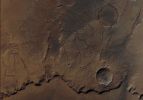
Craters-Huygens_Crater-Rim-ESA-PCF-LXTT.jpgDrainage Channels on the Rim of Huygens Crater (Absolute Natural Colors; credits for the additional process. and color.: Dr Paolo C. Fienga - Lunexit Team)197 visitenessun commentoMareKromiumSet 16, 2011
|
|

Volcanoes-Olympus_Mons_Caldera-1-015-090204_1-0037_01-6v-PCF-LXTT.jpgOlympus Mons' Caldera (Absolute Natural Colors; credits for the additional process. and color: Dr Paolo C. Fienga - Lunexit Team)233 visitenessun commentoMareKromiumAgo 27, 2011
|
|

Volcanoes-Olympus_Mons_Caldera-2-015-090204_1-0037_01-6v-PCF-LXTT.jpgOlympus Mons' Caldera (Absolute Natural Colors; credits for the additional process. and color: Dr Paolo C. Fienga - Lunexit Team)240 visitenessun commentoMareKromiumAgo 27, 2011
|
|
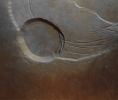
Volcanoes-Olympus_Mons_Caldera-4-015-090204_1-0037_01-6v-PCF-LXTT.jpgOlympus Mons' Caldera (Absolute Natural Colors; credits for the additional process. and color: Dr Paolo C. Fienga - Lunexit Team)235 visitenessun commentoMareKromiumAgo 27, 2011
|
|
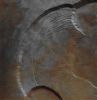
Volcanoes-Olympus_Mons_Caldera-3-015-090204_1-0037_01-6v-PCF-LXTT.jpgOlympus Mons' Caldera (Absolute Natural Colors; credits for the additional process. and color: Dr Paolo C. Fienga - Lunexit Team)240 visitenessun commentoMareKromiumAgo 27, 2011
|
|

A-h0061_0000_re2-00.jpgFrame h0061_0000_re2 - South Polar Vision (Absolute Natural Colors; credits for the additional process. and color.: Dr Paolo C. Fienga - Lunexit Team)251 visitenessun commentoMareKromiumApr 04, 2011
|
|
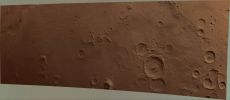
Hellas_Planitia-H0572_0000_ND2_H-PCF-LXTT.jpgFrame H0572_0000_ND2: Hellas Planitia Region220 visiteCaption ESA:"The HRSC on board ESA's Mars Express Spacecraft obtained this image on July, 1st, 2004 during orbit 572 with a ground resolution of approx. 45,1 mt per pixel.
The scene shows a portion of Hellas Planitia, a Region which is about 234 Km wide in the North, 345 Km in the South, about 898 Km in length, and centred at approx. 89° East Long. and 29° South Lat.
This image represents an area on the Northern Eastern Rim of Hellas Planitia, also known as the Hellas Impact Basin in Mars's Southern Hemispere. The Basin is thought to have formed around 3900 Million Years ago in a single massive impact".MareKromiumApr 04, 2011
|
|
| 106 immagini su 9 pagina(e) |
1 |
 |
|
|
|
|
|
|








