| Ultimi arrivi - After One-Thousand Soles... |

OPP-SOL3325-PIA17078-PCF-LXTT-IPF.jpgHigh TAU at "Solander Point" - Sol 3325 (Absolute Natural Colors; credits for the additional process. and color.: Dr Paolo C. Fienga/Lunar Explorer Italia/Italian Planetary Foundation)115 visiteThe NASA - Mars Exploration Rover (MER) Opportunity used its Panoramic Camera (or "PancCam") to acquire this view of "Solander Point", during the 3325th Martian Day, or Sol (such as June 1st, 2013, on Earth) of its Mission in the Region of Meridiani Planum. This Southward-looking scene shows "Solander Point" on the center horizon, "Botany Bay" in the foreground, and "Cape Tribulation" in the far background at left.
Botany Bay is a so-called Topographic "Saddle" exposing Sedimentary Rocks that are part of the Burns Formation, such as a Geological Unit that Opportunity examined during earlier years of the Mission. At Botany Bay, the Burns Formation is exposed between isolated remnants of Endeavour Crater's Rim. Solander Point and Cape Tribulation are just Rim Segments located to the South of Botany Bay. Opportunity is on the way to Solander Point to spend the upcoming Winter Season on a Northerly tilted Surface (so to be able to get more Sunlight on its Solar Panels). Extensive Rock Strata can be spotted on the Northern Side of Solander Point, and these ancient Rocks and surrounding Bench Materials will be investigated in detail by Opportunity as part of the Winter Science Campaign.
This frame (which is an Original NASA - Mars Exploration Rover (MER) "Opportunity" Original Natural Color image published on the NASA - Planetary Photojournal and identified by the ID n. PIA 17078) has been additionally processed, magnified and then re-colorized in Absolute Natural Colors (such as the colors that a normal - meaning "in the average" - human eye would actually perceive if someone were on the Surface of Mars, near the NASA - Mars Exploration Rover (MER) Opportunity, and then looked ahead, towards the Horizon and Sky over Endeavour Crater), by using an original technique created - and, in time, dramatically improved - by the Lunar Explorer Italia Team.MareKromiumGiu 16, 2013
|
|

OPP-SOL3020-PIA16923-PCF-LXTT-IPF.jpgLow Sun over Endeavour Crater (Absolute Natural Colors; credits for the additional process. and color.: Dr Paolo C. Fienga/Lunar Explorer Italia/Italian Planetary Foundation)80 visiteThe NASA - Mars Exploration Rover (MER) Opportunity used its Navigation Camera (NavCam) to record this vista looking Eastward across Endeavour Crater, with the Rover's own shadow in the foreground. The NASA - Mars Exploration Rover (MER) Opportunity has been studying the Western Rim of Endeavour Crater since arriving there, in August 2011. Endeavour Crater, which spans approx. 14 miles (such as about 22,53 Km) in diameter, is, by far, the largest Impact Crater that Opportunity has visited since it landed on Mars, Region of Meridiani Planum, in January 2004. The images that have been used to create this mosaic were taken during the 3020th Martian Day, or Sol, of Opportunity's work on the Red Planet (such as July 22, 2012, on Earth)
This frame (which is an Original NASA - Mars Exploration Rover "Opportunity" Original b/w image-mosaic published on the NASA - Planetary Photojournal and identified by the ID n. PIA 16923) has been additionally processed and then colorized in Absolute Natural Colors (such as the colors that a normal - meaning "in the average" - human eye would actually perceive if someone were on the Surface of Mars, near the NASA - Mars Exploration Rover (MER) Opportunity, and then looked ahead, towards the Horizon and Sky over Endeavour Crater), by using an original technique created - and, in time, dramatically improved - by the Lunar Explorer Italia Team.MareKromiumApr 14, 2013
|
|

OPP-SOL3153-1N408092012EFFBW__P1854R0M1_v1_(2)-IT-LXTT-IPF-01.jpgPossible Indigenous Lifeform - Sol 3153 (EDM; credits for the Research: Ivana Tognoloni/Lunar Explorer Italia/Italian Planetary Foundation)108 visiteNelle Cerchiature Gialle: le due "Bocche" con "Raggiature" (Sx) e l'evidenza che una porzione dell'oggetto/Creatura è effettivamente SOLLEVATA rispetto al macigno sul quale poggia (Dx).MareKromiumGen 18, 2013
|
|

OPP-SOL3153-1N408092012EFFBW__P1854R0M1_v1_(2)-IT-LXTT-IPF-00.jpgPossible Indigenous Lifeform - Sol 3153 (CTX Frame and EDM; credits for the Research: Ivana Tognoloni/Lunar Explorer Italia/Italian Planetary Foundation)112 visiteDopo un'infinità di Soles trascorsi da Opportunity a vagare nei paraggi del Margine Interno del Grande Cratere Endeavour, e dopo un lungo Silenzio, ecco che la nostra Grande Amica e Senior Partner, Ivana Tognoloni, ci riporta nella Regione di Meridiani Planum per sottoporci un dettaglio - come minimo - inquietante: proprio a ridosso di Opportunity, già visibile (sapendo dove guardare) nel CTX Frame e davvero MOLTO chiaro nell'EDM, posta al di sopra di un macigno dalla superficie relativamente piatta, sembra trovarsi - ben mimetizzato con l'Ambiente - una curiosa "Creatura", con due fori - contornati da una sorta di "raggiatura" - situati nella sua porzione (diciamo così...) "frontale" ed un "corpo" in qualche modo simile a quello di una "Manta", con l'estremità di Sx (quella più vicina al bordo inferiore dell'EDM, tanto per capirci) che appare leggermente sollevata dal macigno, quasi che la "Creatura" fosse stata colta in movimento.
Si tratta di un'llusione ottica? Di una roccia incredibilmente bizzarra nella sua forma? O forse siamo davanti (anzi: sopra!) ad una reale Creatura Indigena? Ovviamente una risposta definitiva non è possibile darla, ma è la stessa Ivana Tognoloni che ci dà un indizio su cui riflettere: dopo aver esaminato TUTTI gli altri frames che riprendono la stessa zona (più di un centinaio), della Creatura non vi è più traccia. Ergo...
Ed ora cediamo la parola alla stessa Ivana:"...Io l'ho guardato a lungo questo frame e ora, per descriverlo, parto dal presupposto che si tratti davvero di un essere vivente. Inizialmente mi sembrava una creatura, una specie di iguana, stesa sulla pavimentazione rocciosa, le cui parti chiaramente identificabili erano la testa e una zampa. Poi, osservando meglio, ed ingrandendo bene, ho notato che sia la testa sia la zampa emergono da sotto il paving in modo che parrebbe indipendente. La testa sale su dritta dalla superficie e, guardando bene, si vede anche un pezzetto di collo. La zampetta emerge da sotto una pietra piatta e piccola (o da una sorta di ala?) e, a guardarla attentamente, a me pare, in tutto e per tutto, una vera zampa, quella di un rettile, o qualcosa di simile.
La mia opinione è che, se si trattasse davvero di un essere vivente, allora potrebbe essere una creatura che vive principalmente sotto terra. La testa è rivolta verso il Rover, l'oggetto dell'attenzione, ed è pronta a ritrarsi in caso di pericolo. La "zampa" appartiene - presumibilmente - alla Creatura, anche se, vista in questa prospettiva, essa appare in una posizione totalmente innaturale, ma innaturale SOLO per il mio modo (terrestre) di vedere! Ma su Marte...Chissà...
Potrebbe anche essere una Creatura con delle estremità molto lunghe e flessuose. E comunque, se io fossi una Creatura Marziana che vive soprattutto nel sottosuolo, non avrei timore nell'avvicinarmi tanto ad un intruso così grande e alieno (il rover) se avessi modo di ritrarmi rapidamente e poi fuggire, in tutta fretta, nel mio habitat naturale...".
Che altro aggiungere? Aspettiamo i Vostri commenti...MareKromiumGen 18, 2013
|
|

OPP-SOL3163-PIA16555-PCF-LXTT-IPF.jpgOnaping - Sol 3163 (Absolute Natural Colors; credits for the additional process. and color. Dr Paolo C. Fienga/Lunar Explorer Italia/Italian Planetary Foundation)81 visiteCaption NASA:"This image from the Front Hazard-Avoidance Camera (HazCam) located on the NASA - Mars Exploration Rover (MER) Opportunity, shows the Rover's Robotic Arm (RA) extended for examination of a target called "Onaping", at the base of a Rocky Outcrop called "Copper Cliff", in the Matijevic Hill area of the West Rim of Endeavour Crater".MareKromiumDic 20, 2012
|
|

OPP-SOL3074-EB-MF-LXTT-IPF.jpg"Rocky Matrioska" - Sol 3074 (Natural Colors; credits for the additional process. and color.: Elisabetta Bonora and Marco Faccin/Lunar Explorer Italia/Italian Planetary Foundation)84 visitenessun commentoMareKromiumOtt 10, 2012
|
|

OPP-SOL3064-Spherules-PCF-LXTT-IPF.jpgCompacted Spherules at "Kirkwood" - Sol 3046 (Absolute Natural Colors; credits for the additional process. and color.: Dr Paolo C. Fienga/Lunar Explorer Italia/Italian Planetary Foundation)90 visiteCaption NASA:"Small Spherical Objects fill the field in this mosaic combining 4 (four) images from the Microscopic Imager onboard the NASA - Mars Exploration Rover (MER) Opportunity. The view covers an area about 2,4" (inches, such as about 6 centimeters) across, at a Rocky Outcrop known as "Kirkwood" and located in the Cape York Segment of the Western Rim of Endeavour Crater. The individual Spherules are up to about one-eighth of one inch (such as approx. 3 millimeters) in diameter. The Microscopic Imager took the component images during the 3064th Martian Day, or Sol, of Opportunity's work on Mars (such as September 6, 2012).
It has to be remembered that the MER Opportunity already discovered Martian Spherules at its Landing Site, more than eight-and-a-half years ago and those Spherules were nicknamed "Blueberries". They provided important evidence about long gone "Wet Environmental Conditions" on Mars because researchers using Opportunity's science instruments identified them as "Rocky Concretions" rich in the Mineral Hematite deposited by Water saturating the Bedrock.
However, the Spherules at Kirkwood do not have the Iron-rich composition of the Blueberries and they also differ in concentration, distribution and structure. Some of the Spherules in this image have been partially eroded away, revealing a "Concentric Internal Structure". Opportunity's Science Team plans to use Opportunity for further investigation of these Spherules in order to determine what evidence they can provide about the (VERY) ancient Martian Environmental Conditions.MareKromiumSet 25, 2012
|
|

OPP-SOL3058-PIA16127-PCF-LXTT-IPF-00.jpgRocky "Fins" on Cape York - Sol 3058 (Absolute Natural Colors; credits for the additional process. and color.: Dr Paolo C. Fienga/Lunar Explorer Italia/Italian Planetary Foundation)110 visitenessun commentoMareKromiumSet 10, 2012
|
|

OPP-SOL1019-1P218648789EFF7700P2436L2M1-PCF-LXTT.jpgFeatures of Victoria Crater's Inner Rim (Absolute Natural Colors; credits for the additional process. and color.: Dr Paolo C. Fienga - Lunar Explorer Italia/Italian Planetary Foundation)134 visitenessun commentoMareKromiumSet 03, 2012
|
|
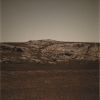
OPP-SOL3043-GB-LXTT.jpgStill on the Edge of Endeavour - Sol 3043 (Absolute Natural Colors; credits for the additional process. and color.: Dr Gianluigi Barca/Lunar Explorer Italia/Italian Planetary Foundation)96 visitenessun commentoMareKromiumSet 03, 2012
|
|
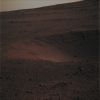
OPP-SOL3019-GB-PCF-LXTT-IPF-2.jpgLooking Around... - Sol 3019 (Absolute Natural Colors; credits for the additional process. and color.: Drr Gianluigi Barca and Paolo C. Fienga - Lunexit Team)114 visitenessun commentoMareKromiumLug 29, 2012
|
|
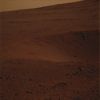
OPP-SOL3019-GB-PCF-LXTT-IPF-1.jpgLooking Around... - Sol 3019 (RAW Absolute Natural Colors; credits for the additional process. and color.: Drr Gianluigi Barca and Paolo C. Fienga - Lunexit Team)94 visitenessun commentoMareKromiumLug 29, 2012
|
|
| 2387 immagini su 199 pagina(e) |
 |
3 | |
|
|
|
|
|
|
|
|





