| |

| Ultimi arrivi - After One-Thousand Soles... |
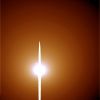
OPP-SOL1224-1P236858280EFF85R9P2682L5M1.jpgThe Sun through the dust - Sol 122465 visiteBoth MERs take daily measurements estimating the amount of dust in the atmosphere. The less dust the better, because it means more sunlight reaches the MERs' Solar Panels, which power the vehicles. In the last week, Opportunity has broken its dust record, with the Opacity level rising from 1.0 to 3.3.
Solar array energy on Opportunity dropped from 765 watt-hours to 402 watt-hours over the same period of time.
"While this only represents enough dust to coat the Planet to about the thickness of a human hair, it is enough to decrease the brightness of the noon sun by 96% compared to a completely clear atmosphere" said Steve Squyres, Principal Investigator, Cornell University, Ithaca, N.Y.
"Of course, the solar arrays also receive light that is scattered from the dust, so the decrease in power is not nearly that great".MareKromiumLug 06, 2007
|
|

OPP-SOL1220-1P236485422EFF85R9P2629L4M1.jpgMorning Mist over Victoria (1) - Sol 122056 visitenessun commentoMareKromiumLug 05, 2007
|
|

OPP-SOL1220-1P236485480EFF85R9P2629L6M1.jpgMorning Mist over Victoria (2) - Sol 122056 visitenessun commentoMareKromiumLug 05, 2007
|
|
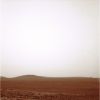
SOL1238-2P236266234EFFAUATP2629L6M1.jpgMartian Morning Mist... - Sol 123854 visitenessun commentoMareKromiumLug 05, 2007
|
|
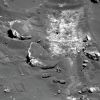
SOL1239-2P236353641ESFAUATP2568L7M1.jpgFlat-Rock, after Spirit rolled over it (1)59 visiteUn frame davvero curioso: la roccia piatta (Flat-Rock) che potete vedere accanto all'area bianca è stata "rotta", a nostro avviso, dal MER Spirit il quale - passateci la battuta... - ci è allegramente "passato sopra", fratturandola.
Questo fatto, come ovvio, non prova nulla se non che la roccia Marziana che abbiamo battezzato "Flat-Rock" è fragile.
E come mai è fragile?
Forse perchè, internamente, è porosa. Ed è davvero un peccato che la definizione di questo frame sia tutt'altro che ottimale però, se operate un leggero ingrandimento del dettaglio e poi guardate bene, forse potreste scorgere alcuni particolari davvero MOLTO interessanti...MareKromiumLug 02, 2007
|
|
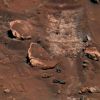
SOL1239-2P236353741ESFAUATP2568R4M1-01.jpgFlat-Rock, after Spirit rolled over it (2)54 visitenessun commentoMareKromiumLug 02, 2007
|
|
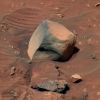
SOL1239-00.jpgUnusual stone near Spirit (1) - Sol 123954 visiteMentre ci congratuliamo con gli Autori di questa splendida interpretazione in "Possibili Colori Naturali" di un frammento di terreno prossimo al MER Spirit (il quale continua a "girellare", come ama dire il nostro Amico e Collega, Dr Alessio Feltri, nei pressi di Home Plate), ci sembra doveroso spendere qualche parola sulla roccia che domina l'inquadratura.
Ebbene, come potete facilmente notare, siamo davanti ad un rilievo che appartiene alla grande Famiglia dei cd. "Macigni Erratici" (Erratic Boulders), ossìa dei macigni i quali, per caratteristiche esteriori (forma, colore, texture etc.) ed interiori (composizione e proprietà chimico/fisiche) non dovrebbero - almeno in teoria - trovarsi dove invece si trovano.
Come avrete notato attraverso l'osservazione dei frames che abbiamo pubblicato negli ultimi mesi, tutta l'area di Home Plate appare ricoperta, oltre che da sabbie e polveri sottili/sottilissime, anche da rocce "porose" e/o "laminari" che noi abbiamo battezzato "Reef-like Rocks" e che la NASA ha più volte ribadito trattarsi di rocce vulcaniche. Le rocce ignee che Spirit ha fotografato in quasi un anno di permanenza in questa zona di Gusev Crater sono tutte caratterizzate, tra l'altro, dal fatto di avere una forma piuttosto irregolare, un colore (tendenzialmente) scuro ed una texture (almeno in apparenza) ruvida, porosa e - spesso - spigolosa (e cioè ricca di angoli vivi, di punte, di lati forse taglienti) o comunque articolata e variegata.
Ora, se quanto sopra detto è vero, il masso che si trova davanti a noi in questo (bellissimo) frame decisamente NON appartiene alla classe delle rocce ignee che abbiamo sommariamente descritto. La sua texture, infatti, è liscia (gli angoli appaiono addirittura smussati); il colore è decisamente chiaro (bianco e grigio/azzurro) e la forma, sostanzialmente regolare.
Anzi: se osservate attentamente il lato Dx del macigno (a Sx dell'Osservatore) non potrete non notare che esso pare come "tagliato di netto": una feature, questa, decisamente rara e curiosa.
Una feature che, ai Ricercatori di Scuola Hoaglandiana - che sono decine di migliaia - farebbe subito scattare l'idea del "possibile artifact" (e, come ormai saprete bene, di pseudo-artifacts, i Colleghi Troy, Bara & C. ne hanno visti in casi MOLTO MENO ECLATANTI di questo).
Ed invece, a quanto pare, niente da dire. Non si discute sul "taglio" che pare aver interessato - in un tempo forse neppure tanto remoto - questo macigno.
Adesso si discute sul "colore" del macigno (e del paesaggio al quale esso accede).
Si discute...Parolona! Diciamo che "si specula", che è più giusto e più corretto.MareKromiumLug 02, 2007
|
|
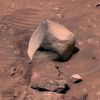
SOL1239-01.jpgUnusual stone near Spirit (2) - Sol 123953 visiteOra, Vi domanderete, perchè spendere tutte queste (in fondo inutili) parole per svolgere delle riflessioni che qualsiasi Lettore potrebbe fare allorchè osservasse con attenzione e per 5 minuti di fila questo frame? Semplice: perchè, sulla base della nostra esperienza, quasi nessuno osserva per 5 minuti di fila un frame come questo e, quindi (ed alla fine), nessun Lettore poi svolge, nel suo foro interno, delle riflessioni simili o analoghe a quelle che noi abbiamo esplicitato. La maggior parte dei Lettori, recentemente, sembra essere molto più coinvolta da altre "problematiche"; su tutte, quella (ormai annosa e noiosa) dei "Colori di Marte".
Ci stiamo sbagliando? Secondo noi no.
In effetti (ed ormai sempre più spesso, come in questo caso), anche i Ricercatori e gli Appassionati, anzichè focalizzare la propria attenzione su dettagli MOLTO interessanti (ivi: una roccia che sta dove non dovrebbe essere), si mettono a discutere su una questione di lana caprina quale è la querelle sui True Colors of Mars al solo ed unico scopo, in fondo (come dice il buon Dr Barca), di poter dire, oggi o domani (o fra 100 anni...):"Vedete? Avevo ragione io! Sono stato io il primo a capire quali fossero i True Colors of Mars!".
Forse lo avevamo già detto ma, a nostro parere, repetita juvant: il vero ed unico Mistero dei "True Colors of Mars" è nella domanda che recita "Come mai i True Colors of Mars sono diventati un Mistero"?
In altre parole: mentre continuiamo a scherzare ed a beccarci sulle "pagliuzze", un sempre più ingente quantitativo di "travi" ci sta passando davanti agli occhi...senza che nessuno apra bocca al riguardo. Questo Erratic Boulder è solo una minuzia, ovviamente, ma serve a rendere l'idea di come sia facile concentrarsi sulle sciocchezze e perdere di vista le cose essenziali. Che ne è stato, ad esempio, della Silver Sphere? E del "tubo argenteo" fotografato da Spirit nei suoi primi Soles? E delle "pseudo-rocce" che cambiavano forma e posizione fra uno scatto e l'altro? E che ci dite del Totem? E delle flares che, di quando in quando, venivano riprese mentre si "accendevano" sulla superficie di Gusev, a non troppa distanza dal Rover?...
Niente. Tutti dettagli dimenticati, passati via.
Tutte questioni (ovviamente) "irrilevanti". Ciò che conta, alla fine, sembra essere solo il "Colore di Marte".
E allora, alla fine della chiacchierata, per capire quanto sia assurda - in fondo - questa pseudo-problematica, provata rispondere ad una domandina semplice-semplice (e tanto ingannevole quanto lo è la domanda sui "Colori del Pianeta Rosso): quali sono i "True Colors" della Terra che Vi circonda?
Sapreste individuarli e descriverli su basi OGGETTIVE?
Provateci, e buon lavoro...MareKromiumLug 02, 2007
|
|
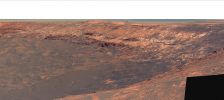
OPP-SOL1196-PIA09693.jpgDuck Bay - Sol 119656 visiteCaption NASA:"This image shows "Duck Bay", an alcove in the rim of Victoria Crater. NASA's MER Opportunity will roll down the slopes of Duck Bay in early July 2007 and investigate the rocks inside the Crater. One of its first targets will be the bright band of bedrock seen here lining the upper portion of the crater walls.
This band appears to be unlike anything encountered before at Opportunity's Landing Site.
Scientists say it marks the spot where the ground surface used to lie just before an impace formed Victoria Crater.
Future investigations with Opportunity might help determine whether the band's brighter appearance is the result of ancient interactions with the Martian atmosphere".MareKromiumGiu 29, 2007
|
|
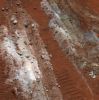
SOL1198-Sol1198A_P2539_L257F.jpgIn the trench... - Sol 1198 (natural colors; elab. NASA)54 visiteCaption NASA:"A shallow trench made by Spirit's dragging right front wheel uncovered some of the best evidence Spirit has found for ancient water-rich environments in Gusev Crater -- bright patches of almost pure, fine-grained silica (SiO2).
On ancient Earth, warm, evaporating coastal waters deposited fine silica in shallow sediments.
In Yellowstone National Park, hot, mineral-laden waters deposit fine-grained silica around geysers and hot springs. The discovery of silica-rich deposits on Mars adds compelling new evidence of ancient environments that might have been favorable for life".MareKromiumGiu 29, 2007
|
|
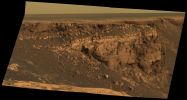
OPP-SOL1167-PIA09694.jpgCape St Vincent (approx. true colors - elab. NASA)55 visiteCaption NASA:"This image captured by NASA's MER Opportunity shows "Cape St. Vincent" one of the many promontories that jut out from the walls of Victoria Crater, Mars. The material at the top of the promontory consists of loose, jumbled rock, then a bit further down into the crater, abruptly transitions to solid bedrock.
This transition point is marked by a bright band of rock, visible around the entire crater.
Scientists say this bright band represents what used to be the surface of Mars before it was impacted to form Victoria Crater. As Opportunity begins to descend into the crater in early July 2007, it will examine the band carefully at an accessible location with a gentle slope.
These investigations might help determine if the band's brighter appearance is the result of ancient interactions with the Martian atmosphere.
This image was taken by Opportunity's PanCam on Sol 1167 (May 6, 2007).
It is presented in approximately true color".MareKromiumGiu 29, 2007
|
|
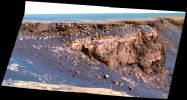
OPP-SOL1167-PIA09695.jpgCape St Vincent - Sol 1167 (False Colors; credits: NASA/JPL/Cornell)55 visiteCaption NASA:"This image captured by NASA's MER Opportunity shows "Cape St. Vincent" one of the many promontories that jut out from the walls of Victoria Crater. The material at the top of the promontory consists of loose, jumbled rock, then a bit further down into the crater, abruptly transitions to solid bedrock.
This transition point is marked by a bright band of rock, visible around the entire crater.
Scientists say this bright band represents what used to be the surface of Mars just before an impact formed Victoria Crater. After Opportunity begins to descend into the crater in early July 2007, it will examine the band carefully at an accessible location with a gentle slope. These investigations might help determine if the band's brighter appearance is the result of ancient interactions with the Martian atmosphere.
This image was taken by Opportunity's PanCam on Sol 1167 (May 6, 2007).
It is presented in false color to accentuate differences in surface materials". MareKromiumGiu 29, 2007
|
|
| 2388 immagini su 199 pagina(e) |
|
|
|
|
|
185 | |
|
|
|
|
|
|





