| Ultimi arrivi - After One-Thousand Soles... |
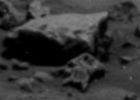
SOL1306-2P242310597EFFAUIDP2386R1M1-1.jpgIs this a "rock"?!? - Sol 1306 (extra-detail mgnf)53 visiteNulla da dire se non "Bravo!" al Dr Barca per aver individuato ed isolato un simile (e completamente enigmatico) rilievo.MareKromiumSet 09, 2007
|
|

OPP-SOL1274-1P241281469ESF8600P2143L5M1-2.jpgThe "Breathing Lungs" of Mars - Sol 127454 visitePer il commento relativo a questo frame Vi suggeriamo di leggere l'ultimo articolo del Dr Paolo C. Fienga pubblicato su TruePlanets e dal titolo "I Polmoni di Marte".
Buona lettura!MareKromiumSet 07, 2007
|
|
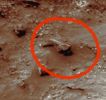
SOL1300-2N241768740EFFAUGLP1950R0M1~0.jpgThe "Lobster Tail" - Sol 130076 visiteSu segnalazione del nostro Amico e Socio "Idari", abbiamo provveduto ad isolare il dettaglio che ora vedete cerchiato in rosso e quindi abbiamo tentato un'analisi.
A nostro parere, pur risultando abbastanza palese la somiglianza del rilievo con la coda del noto crostaceo, non è possibile dire - agendo pragmaticamente ed in Buona Fede - "che cosa" esattamente stiamo guardando.
Si tratta effettivamente di un fossile? Oppure è soltanto un ingannevole gioco (uno dei tanti) di luci ed ombre?
Il particolare scuro che si vede all'altezza della parte posteriore del dettaglio, è un'ombra: un'ombra creata dal rilievo stesso il quale, se guardate attentamente, forma una sorta di arco che si stacca nettamente dalla superficie.
La porzione anteriore del dettaglio, invece, è indefinibile; essa presenta una decisa simmetria (con una forma circolare, ben definita, sul suo lato illuminato (Sx), ma è impossibile dire se questa "simmetria" è reale oppure se dipende solo dall'angolo di ripresa adottato dal Rover.
Da notare, infine, la presenza di un "punto luminoso" (un Cristallo Marziano, forse) poco oltre la fine del dettaglio segnalatoci da Idari, a Sx.
Se aveste delle opinioni in merito a quanto sopra, scriveteci e/o commentate on-line: le Vostre idee saranno sempre tenute in considerazione.
Grazie ancora ad Idari e complimenti per "l'occhio"!MareKromiumSet 05, 2007
|
|
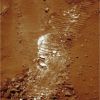
SOL1300-2P241768613EFFAUGLP2584L7M1.jpgWhite Dust and Cristals under the Sand - Sol 130054 visitenessun commentoMareKromiumSet 03, 2007
|
|
SOL1294-2N241239429EDNAUCTP1550L0M1.jpgStill dusty (and reddish) skies over Gusev - Sol 1294 (natural colors; elab. Lunexit)63 visitenessun commentoMareKromiumAgo 29, 2007
|
|

OPP-SOL1266-1N240572984EDN85W0P1585L0M1.jpgThe sky over Opportunity - Sol 1266 (natural colors; elab. Lunexit)55 visitenessun commentoMareKromiumAgo 18, 2007
|
|

OPP-SOL1266-1R240573239EFF85W0P1369L0M1.jpgA still dusty sky and horizon... - Sol 1266 (natural colors; elab. Lunexit)55 visitenessun commentoMareKromiumAgo 18, 2007
|
|
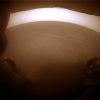
OPP-SOL1259-1R239952419EFF85W0P1369L0M1.jpgDusty Days over Opportunity... - Sol 125954 visitenessun commentoMareKromiumAgo 15, 2007
|
|
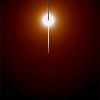
OPP-SOL1261-1N240130679EDN85W0P1550L0M1.jpgDark Sun, Dark Sky - Sol 126154 visitenessun commentoMareKromiumAgo 13, 2007
|
|
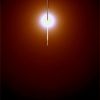
OPP-SOL1255-1N239597006EDN85W0P1550L0M1.jpgThere's still a "dark reddish sky" over Opportunity... - Sol 125555 visiteElaborazione in colori naturali del Cielo di Marte così come potrebbe e dovrebbe apparire ai nostri occhi durante questi giorni di "oscurità" (rectius: di elevatissima Opacità Atmosferica).
MareKromiumAgo 07, 2007
|
|

OPP-SOL1254-1P239512176EFF85W0P2351L7M1.jpgRover Tracks and bright "berries" all over... - Sol 1254 (False Colors; credits: Lunexit)55 visiteUna splendida immagine dei Berries che circondano Opportunity ci arriva (diremmo finalmente!) da Meridiani Planum, Sol 1254. Forse la tempesta di sabbia che aveva messo in pericolo la sopravvivenza dei MER si sta esaurendo e, forse, è ancora presto per dichiarare il cessato allarme.
Comunque sia, questa immagine (assieme a molte altre appena pervenute e da poco processate e colorizzate) ci dimostra che Opportunity è ancora in eccellente salute e riesce a fare il proprio lavoro egregiamente.
Noi - in tutta sincerità - non ne abbiamo mai dubitato.MareKromiumAgo 07, 2007
|
|
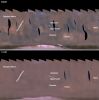
OPP-SOL1235-PIA-00936.jpgSeries of Storms Shrouds Mars in Dust (1) - NASA/JPL/Malin Space Science Systems55 visiteSince late June 2007, Mars has been having a series of regional dust storms. The dust raised by these individual storms has obscured most of the planet over the past few weeks. The two maps shown here are mosaics of images acquired by the Mars Reconnaissance Orbiter (MRO) Mars Color Imager (MARCI) on two days separated by about 3 and a half weeks. The first, on 22 June, shows that there was a dust storm occurring near the east end of the Valles Marineris trough system (left of the label for "Opportunity" in the map). This was the first in the series of storms. The second mosaic shows how Mars appeared on 17 July, after dust was lofted high into the atmosphere by several regional storms and countless smaller, local dust storms.
Each map was constructed from 13 pole-to-pole image swaths at red, green, and blue wavelengths acquired by the MRO MARCI. The maps are simple cylindrical projections, with north at the top and south at the bottom. Each image swath was acquired at about 3 p.m. local time on Mars over the course of 13 orbits. The black gaps occur in the MARCI data at places where the MRO spacecraft was slewed east or west to point its instruments at a specific target of scientific interest. The north polar region is not shown because winter began on 4 July and the north polar region is in wintertime darkness. Key features labeled on the maps include the Tharsis Montes and Olympus Mons volcanoes, the Hellas impact basin, Noachis Terra, Sinus Meridiani, and the two Mars Exploration Rover (MER) landing sites, Opportunity and Spirit. The dust storms, and the planet-encircling dust veil they generated, has greatly reduced the amount of sunlight available to run the two solar-powered rovers.
MareKromiumLug 28, 2007
|
|
| 2388 immagini su 199 pagina(e) |
 |
|
|
|
|
182 | |
|
|
|
|





