| |

| Ultimi commenti - MARS |

SOL3423-PIA25176-8192x2276.jpg"(Alli)Gator Back" Rocks on "Greenheugh" - Sol 3423176 visiteNASA’s Curiosity Mars rover used its Mast Camera, or MastCam, to take this 360° panorama on March 23, 2022, the 3.423th Martian Day, or Sol, of the Mission. The team has informally described the wind-sharpened rocks seen here as “gator-back” rocks because of their scaly appearance.
Wind-sharpened rocks like these are called ventifacts, and are responsible for chewing up Curiosity’s wheels earlier in the mission. Since then, rover engineers have found ways to slow wheel wear, including a traction control algorithm. They also plan rover routes that avoid driving over such rocks, including these latest ventifacts, which are made of sandstone – the hardest type of rock Curiosity has encountered on Mars.
These rocks form the Surface of the “Greenheugh Pediment,” a broad, sloping plain in the foothills of Mount Sharp. The floor of Gale Crater is visible along the edges of the mosaic. When Curiosity’s team saw the gator-back rocks, they ultimately decided to turn the rover around and take an alternative path to continue climbing Mount Sharp, a 3,4-mile-tall (approx. 5,5-Km-tall) mountain that Curiosity has been ascending since 2014. As it climbs, Curiosity is able to study different sedimentary layers shaped by water billions of years ago. These layers help scientists understand whether microscopic life could have survived in the ancient Martian Environment.MareKromium02/06/23 at 11:11Paolo C. Fienga: Il Rasoio di Occam (dentro o fuori) ? un processo ...
|
|
SOL3423-PIA25176-8192x2276.jpg"(Alli)Gator Back" Rocks on "Greenheugh" - Sol 3423176 visiteNASA’s Curiosity Mars rover used its Mast Camera, or MastCam, to take this 360° panorama on March 23, 2022, the 3.423th Martian Day, or Sol, of the Mission. The team has informally described the wind-sharpened rocks seen here as “gator-back” rocks because of their scaly appearance.
Wind-sharpened rocks like these are called ventifacts, and are responsible for chewing up Curiosity’s wheels earlier in the mission. Since then, rover engineers have found ways to slow wheel wear, including a traction control algorithm. They also plan rover routes that avoid driving over such rocks, including these latest ventifacts, which are made of sandstone – the hardest type of rock Curiosity has encountered on Mars.
These rocks form the Surface of the “Greenheugh Pediment,” a broad, sloping plain in the foothills of Mount Sharp. The floor of Gale Crater is visible along the edges of the mosaic. When Curiosity’s team saw the gator-back rocks, they ultimately decided to turn the rover around and take an alternative path to continue climbing Mount Sharp, a 3,4-mile-tall (approx. 5,5-Km-tall) mountain that Curiosity has been ascending since 2014. As it climbs, Curiosity is able to study different sedimentary layers shaped by water billions of years ago. These layers help scientists understand whether microscopic life could have survived in the ancient Martian Environment.MareKromium02/06/23 at 10:59Ufologo: Scusa, dove le vedi queste zampette .........
|
|
SOL3423-PIA25176-8192x2276.jpg"(Alli)Gator Back" Rocks on "Greenheugh" - Sol 3423176 visiteNASA’s Curiosity Mars rover used its Mast Camera, or MastCam, to take this 360° panorama on March 23, 2022, the 3.423th Martian Day, or Sol, of the Mission. The team has informally described the wind-sharpened rocks seen here as “gator-back” rocks because of their scaly appearance.
Wind-sharpened rocks like these are called ventifacts, and are responsible for chewing up Curiosity’s wheels earlier in the mission. Since then, rover engineers have found ways to slow wheel wear, including a traction control algorithm. They also plan rover routes that avoid driving over such rocks, including these latest ventifacts, which are made of sandstone – the hardest type of rock Curiosity has encountered on Mars.
These rocks form the Surface of the “Greenheugh Pediment,” a broad, sloping plain in the foothills of Mount Sharp. The floor of Gale Crater is visible along the edges of the mosaic. When Curiosity’s team saw the gator-back rocks, they ultimately decided to turn the rover around and take an alternative path to continue climbing Mount Sharp, a 3,4-mile-tall (approx. 5,5-Km-tall) mountain that Curiosity has been ascending since 2014. As it climbs, Curiosity is able to study different sedimentary layers shaped by water billions of years ago. These layers help scientists understand whether microscopic life could have survived in the ancient Martian Environment.MareKromium02/06/23 at 07:44Anakin: L'articolo seguente presenta quanto segue
...
|
|
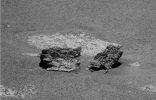
OPP-SOL2452-1P345858029ESFB0IEP2558L4M1.jpgExtremely fresh Crack - Sol 2452124 visitenessun commentoMareKromium01/24/23 at 15:03walthari: non sbagli Paolo. L'acqua con i suoi passaggi ...
|
|

SOL3048-1050_E-PIA24662-LXTT-IPF.jpgIridescent Clouds over Gale Crater - Sol 3048146 visiteCaption NASA Originale:"NASA’s Curiosity Mars Rover spotted these Iridescent, or “Mother of Pearl,” Clouds on March 5, 2021, the 3.048th Martian Day, or Sol, of the Mission. Seen here are five images stitched together from a much wider panorama taken by the rover’s Mast Camera, or Mastcam". MareKromium01/18/23 at 10:43Paolo C. Fienga: Ed anche per me! :-)
|
|
OPP-SOL2452-1P345858029ESFB0IEP2558L4M1.jpgExtremely fresh Crack - Sol 2452124 visitenessun commentoMareKromium01/18/23 at 10:35Paolo C. Fienga: O, forse, ? una roccia che ha ceduto, poich? fragi...
|
|
OPP-SOL2452-1P345858029ESFB0IEP2558L4M1.jpgExtremely fresh Crack - Sol 2452124 visitenessun commentoMareKromium01/16/23 at 17:30walthari: si Anakin una fratturazione pi? violenta, magari d...
|
|
SOL3048-1050_E-PIA24662-LXTT-IPF.jpgIridescent Clouds over Gale Crater - Sol 3048146 visiteCaption NASA Originale:"NASA’s Curiosity Mars Rover spotted these Iridescent, or “Mother of Pearl,” Clouds on March 5, 2021, the 3.048th Martian Day, or Sol, of the Mission. Seen here are five images stitched together from a much wider panorama taken by the rover’s Mast Camera, or Mastcam". MareKromium01/16/23 at 17:28walthari: me lo auguro veramente tanto, per me sarebbe un pi...
|
|

SOL086-MF-1.jpgBizarre... - Sol 86 (3D; credits: Dr M. Faccin)5706 visiteUna pseudo-roccia dalla forma straordinariamente curiosa (e posizionata, diremmo come di consuetudine, in modo da assecondare un equilibrio improbabile), evidenziata e tradotta in un High-def-3D da parte del nostro eccezionale Dr Faccin.
Che cosa vedete?MareKromium01/15/23 at 15:32Paolo C. Fienga: ...Io vedo una sorta di "gorilla" od un ...
|
|
SOL3048-1050_E-PIA24662-LXTT-IPF.jpgIridescent Clouds over Gale Crater - Sol 3048146 visiteCaption NASA Originale:"NASA’s Curiosity Mars Rover spotted these Iridescent, or “Mother of Pearl,” Clouds on March 5, 2021, the 3.048th Martian Day, or Sol, of the Mission. Seen here are five images stitched together from a much wider panorama taken by the rover’s Mast Camera, or Mastcam". MareKromium01/15/23 at 15:19Paolo C. Fienga: Walt, la Tua "provocazione" ? tanto affa...
|
|

X-Martian_Rocky_Circle.jpgIs this "thing" a Grave, a fruit of the Nature (pseudo and small Impact Crater), a Symbol or just nothing?111 visiteYou tell me!MareKromium01/15/23 at 15:14Paolo C. Fienga: Non posso ingrandire senza sgranare l'immagine...
|
|

SOL549-2N175099890EFFACI7P1765R0M1.jpgUnusual Surface Feature - Sol 549 (by Carlo Contu)220 visiteLa segnalazione, questa volta, ci arriva dal nostro Carissimo Amico e Partner, Carlo Contu, e l'oggetto che mostra delle fattezze controverse è (rectius: dovrebbe essere) una roccia a forma di mattone che, curiosamente, poggia sul suo lato più lungo e più stretto.
Dov'è la "stranezza"? Nella texture (la roccia sembra vetrosa, trasparente) e, ovviamente, nella sua forma (completamente avulsa dal contesto a cui essa accede).
Le diverse riprese effettuate dal Rover mostrano che un interesse per il dettaglio, a Pasadena, deve esserci stato, ma - come al solito - nulla poi è stato detto.
E noi, onestamente (come sempre), non possiamo aggiungere molto a quello che già si è scritto e che ben si vede nel mosaico che Vi proponiamo.
Probabilmente la surface feature in questione (lo sapete: noi dobbiamo restare sempre pragmatici e, nel dubbio, privilegiare l'ipotesi più razionale) è solo una roccia dalla forma curiosa la quale, a causa dei filtri-colore usati ed in ragione del rapporto (angolazione) esistente fra essa, il Rover ed il Sole, ci appare particolarmente intrigante e dotata di caratteristiche del tutto peculiari.
Forse.
O forse si tratta realmente di una roccia a matrice vetrosa, appena ricoperta da un sottile strato di polvere.
Nel dubbio, noi Vi offriamo il Lavoro preparato dall'ottimo Carlo, e Vi lasciamo decidere da soli l'ipotesi che preferite...MareKromium01/15/23 at 15:12Paolo C. Fienga: ..."Fascisti su Marte": lo vidi una quin...
|
|
| 13176 immagini su 1098 pagina(e) |
|
|
|
|
|
16 | |
|
|
|
|
|
|





