| |

| Ultimi commenti - The Best Frames from Viking Orbiter 1 and 2 |
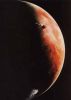
MarsColors01-Viking.jpgVolcanic Outgassing from Arsia Mons? (CTX Frame)124 visiteDURING THE FINAL APPROACH to Mars, just before going into orbit, the Viking Orbiters took a series of pictures of the Planet with different color filters. As the Planet rotated, different parts were photographed until almost the entire surface was covered.
The pictures taken with the various filters were then compared, and the color at each point on the surface was determined by means of a variety of sophisticated computer processing techniques. The results are displayed in frame (2) as Mercator Maps of the Equatorial Regions (the approach trajectory prevented good visibility of the Polar Regions, and they are not shown).
Although Mars has very distinct light and dark areas, differences in color are quite subtle. The appearance of the Planet is dominated by variations in brightness or albedo that cause the classical markings known from telescopic observations.
The color of the surface is a fairly uniform rusty brown and differences are so small that they can barely be seen.
NOTA Lunexit: nel frame in questione si vede BENISSIMO (anche se nessuno - neppure noi, sino a circa 5 minuti fa (ore 18:00 dell'AD 2011, Novembre, 6 - sembra averci MAI fatto caso) una "fumata vulcanica" di notevolissime dimensioni che potrebbe provenire sempre da Arsia Mons (diciamo che SEMBRA Arsia, ma non possiamo esserne sicuri al 100%). A questo punto, la recente "fumata" di Arsia (ripresa dalla Sonda ESA Mars Express) a noi non pare più il solo e semplice prodotto di una svista o di una interpretazione eccessivamente immaginifica dei dati. Molto probabilmente, anche se potrebbe trattarsi di mero vulcanismo residuale (ossìa di fenomenologie, si, vulcaniche, ma del tutto estemporanee e di entità minima), i Grandi Vulcani di Tharsis non sono ancora - e comunque non del tutto... - morti. E su questga riflessione, ci si dovrebbe fermare per un pò...02/17/12 at 11:11paolocf1963: Grazie di Cuore Walt! Ma guarda che io aspetto sem...
|
|
MarsColors01-Viking.jpgVolcanic Outgassing from Arsia Mons? (CTX Frame)124 visiteDURING THE FINAL APPROACH to Mars, just before going into orbit, the Viking Orbiters took a series of pictures of the Planet with different color filters. As the Planet rotated, different parts were photographed until almost the entire surface was covered.
The pictures taken with the various filters were then compared, and the color at each point on the surface was determined by means of a variety of sophisticated computer processing techniques. The results are displayed in frame (2) as Mercator Maps of the Equatorial Regions (the approach trajectory prevented good visibility of the Polar Regions, and they are not shown).
Although Mars has very distinct light and dark areas, differences in color are quite subtle. The appearance of the Planet is dominated by variations in brightness or albedo that cause the classical markings known from telescopic observations.
The color of the surface is a fairly uniform rusty brown and differences are so small that they can barely be seen.
NOTA Lunexit: nel frame in questione si vede BENISSIMO (anche se nessuno - neppure noi, sino a circa 5 minuti fa (ore 18:00 dell'AD 2011, Novembre, 6 - sembra averci MAI fatto caso) una "fumata vulcanica" di notevolissime dimensioni che potrebbe provenire sempre da Arsia Mons (diciamo che SEMBRA Arsia, ma non possiamo esserne sicuri al 100%). A questo punto, la recente "fumata" di Arsia (ripresa dalla Sonda ESA Mars Express) a noi non pare più il solo e semplice prodotto di una svista o di una interpretazione eccessivamente immaginifica dei dati. Molto probabilmente, anche se potrebbe trattarsi di mero vulcanismo residuale (ossìa di fenomenologie, si, vulcaniche, ma del tutto estemporanee e di entità minima), i Grandi Vulcani di Tharsis non sono ancora - e comunque non del tutto... - morti. E su questga riflessione, ci si dovrebbe fermare per un pò...02/17/12 at 06:16walthari: quoto il tuo ragionamento Paolo...
|
|
MarsColors01-Viking.jpgVolcanic Outgassing from Arsia Mons? (CTX Frame)124 visiteDURING THE FINAL APPROACH to Mars, just before going into orbit, the Viking Orbiters took a series of pictures of the Planet with different color filters. As the Planet rotated, different parts were photographed until almost the entire surface was covered.
The pictures taken with the various filters were then compared, and the color at each point on the surface was determined by means of a variety of sophisticated computer processing techniques. The results are displayed in frame (2) as Mercator Maps of the Equatorial Regions (the approach trajectory prevented good visibility of the Polar Regions, and they are not shown).
Although Mars has very distinct light and dark areas, differences in color are quite subtle. The appearance of the Planet is dominated by variations in brightness or albedo that cause the classical markings known from telescopic observations.
The color of the surface is a fairly uniform rusty brown and differences are so small that they can barely be seen.
NOTA Lunexit: nel frame in questione si vede BENISSIMO (anche se nessuno - neppure noi, sino a circa 5 minuti fa (ore 18:00 dell'AD 2011, Novembre, 6 - sembra averci MAI fatto caso) una "fumata vulcanica" di notevolissime dimensioni che potrebbe provenire sempre da Arsia Mons (diciamo che SEMBRA Arsia, ma non possiamo esserne sicuri al 100%). A questo punto, la recente "fumata" di Arsia (ripresa dalla Sonda ESA Mars Express) a noi non pare più il solo e semplice prodotto di una svista o di una interpretazione eccessivamente immaginifica dei dati. Molto probabilmente, anche se potrebbe trattarsi di mero vulcanismo residuale (ossìa di fenomenologie, si, vulcaniche, ma del tutto estemporanee e di entità minima), i Grandi Vulcani di Tharsis non sono ancora - e comunque non del tutto... - morti. E su questga riflessione, ci si dovrebbe fermare per un pò...02/12/12 at 20:03paolocf1963: In teoria, tanto per essere precisi e "pignol...
|
|
MarsColors01-Viking.jpgVolcanic Outgassing from Arsia Mons? (CTX Frame)124 visiteDURING THE FINAL APPROACH to Mars, just before going into orbit, the Viking Orbiters took a series of pictures of the Planet with different color filters. As the Planet rotated, different parts were photographed until almost the entire surface was covered.
The pictures taken with the various filters were then compared, and the color at each point on the surface was determined by means of a variety of sophisticated computer processing techniques. The results are displayed in frame (2) as Mercator Maps of the Equatorial Regions (the approach trajectory prevented good visibility of the Polar Regions, and they are not shown).
Although Mars has very distinct light and dark areas, differences in color are quite subtle. The appearance of the Planet is dominated by variations in brightness or albedo that cause the classical markings known from telescopic observations.
The color of the surface is a fairly uniform rusty brown and differences are so small that they can barely be seen.
NOTA Lunexit: nel frame in questione si vede BENISSIMO (anche se nessuno - neppure noi, sino a circa 5 minuti fa (ore 18:00 dell'AD 2011, Novembre, 6 - sembra averci MAI fatto caso) una "fumata vulcanica" di notevolissime dimensioni che potrebbe provenire sempre da Arsia Mons (diciamo che SEMBRA Arsia, ma non possiamo esserne sicuri al 100%). A questo punto, la recente "fumata" di Arsia (ripresa dalla Sonda ESA Mars Express) a noi non pare più il solo e semplice prodotto di una svista o di una interpretazione eccessivamente immaginifica dei dati. Molto probabilmente, anche se potrebbe trattarsi di mero vulcanismo residuale (ossìa di fenomenologie, si, vulcaniche, ma del tutto estemporanee e di entità minima), i Grandi Vulcani di Tharsis non sono ancora - e comunque non del tutto... - morti. E su questga riflessione, ci si dovrebbe fermare per un pò...02/12/12 at 19:31AndreaGG: eh già... non ci avevo pensato. Grazie ;)
|
|
MarsColors01-Viking.jpgVolcanic Outgassing from Arsia Mons? (CTX Frame)124 visiteDURING THE FINAL APPROACH to Mars, just before going into orbit, the Viking Orbiters took a series of pictures of the Planet with different color filters. As the Planet rotated, different parts were photographed until almost the entire surface was covered.
The pictures taken with the various filters were then compared, and the color at each point on the surface was determined by means of a variety of sophisticated computer processing techniques. The results are displayed in frame (2) as Mercator Maps of the Equatorial Regions (the approach trajectory prevented good visibility of the Polar Regions, and they are not shown).
Although Mars has very distinct light and dark areas, differences in color are quite subtle. The appearance of the Planet is dominated by variations in brightness or albedo that cause the classical markings known from telescopic observations.
The color of the surface is a fairly uniform rusty brown and differences are so small that they can barely be seen.
NOTA Lunexit: nel frame in questione si vede BENISSIMO (anche se nessuno - neppure noi, sino a circa 5 minuti fa (ore 18:00 dell'AD 2011, Novembre, 6 - sembra averci MAI fatto caso) una "fumata vulcanica" di notevolissime dimensioni che potrebbe provenire sempre da Arsia Mons (diciamo che SEMBRA Arsia, ma non possiamo esserne sicuri al 100%). A questo punto, la recente "fumata" di Arsia (ripresa dalla Sonda ESA Mars Express) a noi non pare più il solo e semplice prodotto di una svista o di una interpretazione eccessivamente immaginifica dei dati. Molto probabilmente, anche se potrebbe trattarsi di mero vulcanismo residuale (ossìa di fenomenologie, si, vulcaniche, ma del tutto estemporanee e di entità minima), i Grandi Vulcani di Tharsis non sono ancora - e comunque non del tutto... - morti. E su questga riflessione, ci si dovrebbe fermare per un pò...02/12/12 at 19:15paolocf1963: No, Carissimo Andrea: nel caso da te prefigurato, ...
|
|
MarsColors01-Viking.jpgVolcanic Outgassing from Arsia Mons? (CTX Frame)124 visiteDURING THE FINAL APPROACH to Mars, just before going into orbit, the Viking Orbiters took a series of pictures of the Planet with different color filters. As the Planet rotated, different parts were photographed until almost the entire surface was covered.
The pictures taken with the various filters were then compared, and the color at each point on the surface was determined by means of a variety of sophisticated computer processing techniques. The results are displayed in frame (2) as Mercator Maps of the Equatorial Regions (the approach trajectory prevented good visibility of the Polar Regions, and they are not shown).
Although Mars has very distinct light and dark areas, differences in color are quite subtle. The appearance of the Planet is dominated by variations in brightness or albedo that cause the classical markings known from telescopic observations.
The color of the surface is a fairly uniform rusty brown and differences are so small that they can barely be seen.
NOTA Lunexit: nel frame in questione si vede BENISSIMO (anche se nessuno - neppure noi, sino a circa 5 minuti fa (ore 18:00 dell'AD 2011, Novembre, 6 - sembra averci MAI fatto caso) una "fumata vulcanica" di notevolissime dimensioni che potrebbe provenire sempre da Arsia Mons (diciamo che SEMBRA Arsia, ma non possiamo esserne sicuri al 100%). A questo punto, la recente "fumata" di Arsia (ripresa dalla Sonda ESA Mars Express) a noi non pare più il solo e semplice prodotto di una svista o di una interpretazione eccessivamente immaginifica dei dati. Molto probabilmente, anche se potrebbe trattarsi di mero vulcanismo residuale (ossìa di fenomenologie, si, vulcaniche, ma del tutto estemporanee e di entità minima), i Grandi Vulcani di Tharsis non sono ancora - e comunque non del tutto... - morti. E su questga riflessione, ci si dovrebbe fermare per un pò...02/12/12 at 18:58AndreaGG: solita domanda da incompetente: e se fosse il risu...
|
|

MarsColors02-Viking.jpgVolcanic Outgassing from Arsia Mons? (EDM)2467 visitenessun commentoMareKromium02/12/12 at 13:25george_p: Beh Tu, riesci a fornire spiegazioni decisamente p...
|
|
MarsColors02-Viking.jpgVolcanic Outgassing from Arsia Mons? (EDM)2467 visitenessun commentoMareKromium02/12/12 at 12:21paolocf1963: Secondo me ? una nuvola di elementi pesanti (cener...
|
|
MarsColors02-Viking.jpgVolcanic Outgassing from Arsia Mons? (EDM)2467 visitenessun commentoMareKromium02/12/12 at 10:25george_p: sar?, ma non mi pare, per quanto sfocato sia, un a...
|
|
MarsColors01-Viking.jpgVolcanic Outgassing from Arsia Mons? (CTX Frame)124 visiteDURING THE FINAL APPROACH to Mars, just before going into orbit, the Viking Orbiters took a series of pictures of the Planet with different color filters. As the Planet rotated, different parts were photographed until almost the entire surface was covered.
The pictures taken with the various filters were then compared, and the color at each point on the surface was determined by means of a variety of sophisticated computer processing techniques. The results are displayed in frame (2) as Mercator Maps of the Equatorial Regions (the approach trajectory prevented good visibility of the Polar Regions, and they are not shown).
Although Mars has very distinct light and dark areas, differences in color are quite subtle. The appearance of the Planet is dominated by variations in brightness or albedo that cause the classical markings known from telescopic observations.
The color of the surface is a fairly uniform rusty brown and differences are so small that they can barely be seen.
NOTA Lunexit: nel frame in questione si vede BENISSIMO (anche se nessuno - neppure noi, sino a circa 5 minuti fa (ore 18:00 dell'AD 2011, Novembre, 6 - sembra averci MAI fatto caso) una "fumata vulcanica" di notevolissime dimensioni che potrebbe provenire sempre da Arsia Mons (diciamo che SEMBRA Arsia, ma non possiamo esserne sicuri al 100%). A questo punto, la recente "fumata" di Arsia (ripresa dalla Sonda ESA Mars Express) a noi non pare più il solo e semplice prodotto di una svista o di una interpretazione eccessivamente immaginifica dei dati. Molto probabilmente, anche se potrebbe trattarsi di mero vulcanismo residuale (ossìa di fenomenologie, si, vulcaniche, ma del tutto estemporanee e di entità minima), i Grandi Vulcani di Tharsis non sono ancora - e comunque non del tutto... - morti. E su questga riflessione, ci si dovrebbe fermare per un pò...01/28/12 at 17:23paolocf1963: Sono oltre il Terminatore, ancora immersi nella no...
|
|
MarsColors01-Viking.jpgVolcanic Outgassing from Arsia Mons? (CTX Frame)124 visiteDURING THE FINAL APPROACH to Mars, just before going into orbit, the Viking Orbiters took a series of pictures of the Planet with different color filters. As the Planet rotated, different parts were photographed until almost the entire surface was covered.
The pictures taken with the various filters were then compared, and the color at each point on the surface was determined by means of a variety of sophisticated computer processing techniques. The results are displayed in frame (2) as Mercator Maps of the Equatorial Regions (the approach trajectory prevented good visibility of the Polar Regions, and they are not shown).
Although Mars has very distinct light and dark areas, differences in color are quite subtle. The appearance of the Planet is dominated by variations in brightness or albedo that cause the classical markings known from telescopic observations.
The color of the surface is a fairly uniform rusty brown and differences are so small that they can barely be seen.
NOTA Lunexit: nel frame in questione si vede BENISSIMO (anche se nessuno - neppure noi, sino a circa 5 minuti fa (ore 18:00 dell'AD 2011, Novembre, 6 - sembra averci MAI fatto caso) una "fumata vulcanica" di notevolissime dimensioni che potrebbe provenire sempre da Arsia Mons (diciamo che SEMBRA Arsia, ma non possiamo esserne sicuri al 100%). A questo punto, la recente "fumata" di Arsia (ripresa dalla Sonda ESA Mars Express) a noi non pare più il solo e semplice prodotto di una svista o di una interpretazione eccessivamente immaginifica dei dati. Molto probabilmente, anche se potrebbe trattarsi di mero vulcanismo residuale (ossìa di fenomenologie, si, vulcaniche, ma del tutto estemporanee e di entità minima), i Grandi Vulcani di Tharsis non sono ancora - e comunque non del tutto... - morti. E su questga riflessione, ci si dovrebbe fermare per un pò...01/28/12 at 17:22ubatuba: ciao paolo,in effetti E' una bellissima notizi...
|
|
MarsColors01-Viking.jpgVolcanic Outgassing from Arsia Mons? (CTX Frame)124 visiteDURING THE FINAL APPROACH to Mars, just before going into orbit, the Viking Orbiters took a series of pictures of the Planet with different color filters. As the Planet rotated, different parts were photographed until almost the entire surface was covered.
The pictures taken with the various filters were then compared, and the color at each point on the surface was determined by means of a variety of sophisticated computer processing techniques. The results are displayed in frame (2) as Mercator Maps of the Equatorial Regions (the approach trajectory prevented good visibility of the Polar Regions, and they are not shown).
Although Mars has very distinct light and dark areas, differences in color are quite subtle. The appearance of the Planet is dominated by variations in brightness or albedo that cause the classical markings known from telescopic observations.
The color of the surface is a fairly uniform rusty brown and differences are so small that they can barely be seen.
NOTA Lunexit: nel frame in questione si vede BENISSIMO (anche se nessuno - neppure noi, sino a circa 5 minuti fa (ore 18:00 dell'AD 2011, Novembre, 6 - sembra averci MAI fatto caso) una "fumata vulcanica" di notevolissime dimensioni che potrebbe provenire sempre da Arsia Mons (diciamo che SEMBRA Arsia, ma non possiamo esserne sicuri al 100%). A questo punto, la recente "fumata" di Arsia (ripresa dalla Sonda ESA Mars Express) a noi non pare più il solo e semplice prodotto di una svista o di una interpretazione eccessivamente immaginifica dei dati. Molto probabilmente, anche se potrebbe trattarsi di mero vulcanismo residuale (ossìa di fenomenologie, si, vulcaniche, ma del tutto estemporanee e di entità minima), i Grandi Vulcani di Tharsis non sono ancora - e comunque non del tutto... - morti. E su questga riflessione, ci si dovrebbe fermare per un pò...01/28/12 at 17:16Anakin: Ma se questo fosse Arsia mons, dove sono gli altri...
|
|
| 70 immagini su 6 pagina(e) |
|
3 | |
|
|
|
|





