| |

| Ultimi commenti - Mars Reconnaissance Orbiter (MRO) |
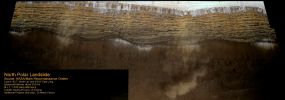
PSP_007338_2640.jpgNorth Polar Landslide (Special Processing by Dr M. Faccin)55 visitenessun commentoMareKromium05/23/08 at 21:33titanio44: x MK in direzione della scritta orbiter sopra alla...
|
|
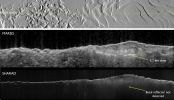
SHARAD-2.jpgUnder the Ice... (2)78 visiteTwo complementary Radar Sounder Instruments work together to discover hidden Martian secrets. They are the Mars Advanced Radar for Subsurface and Ionospheric Sounding (MARSIS) on the European Space Agency's Mars Express orbiter and the Shallow Subsurface Radar (SHARAD) on NASA's Mars Reconnaissance Orbiter.
MARSIS was designed to penetrate deep and it has delivered on its promise. This figure shows the base of Mars' South Polar Layered Deposits at the deepest recorded point of 3,7 Km (2,3 miles).
In contrast, SHARAD was designed as a High-Resolution Radar for a maximum penetration of 1 Km (0,6 mile) has difficulty detecting the base of these layered deposits.
MARSIS was funded by NASA and the Italian Space Agency and developed by the University of Rome, Italy, in partnership with NASA's Jet Propulsion Laboratory, Pasadena, Calif. Italy provided the instrument's digital processing system and integrated the parts. The University of Iowa, Iowa City, built the transmitter for the instrument, JPL built the receiver and Astro Aerospace, Carpinteria, Calif., built the antenna. JPL is a division of the California Institute of Technology in Pasadena. Additional information about Mars Express is at www.esa.int/marsexpress.
SHARAD was provided by the Italian Space Agency (ASI). Its operations are led by the University of Rome and its data are analyzed by a joint U.S.-Italian science team. JPL, a division of the California Institute of Technology, Pasadena, manages the Mars Reconnaissance Orbiter for the NASA Science Mission Directorate, Washington.MareKromium04/21/08 at 09:07MareKromium: Tranquillo Anakin: le immagini sono genuine! Titan...
|
|
SHARAD-2.jpgUnder the Ice... (2)78 visiteTwo complementary Radar Sounder Instruments work together to discover hidden Martian secrets. They are the Mars Advanced Radar for Subsurface and Ionospheric Sounding (MARSIS) on the European Space Agency's Mars Express orbiter and the Shallow Subsurface Radar (SHARAD) on NASA's Mars Reconnaissance Orbiter.
MARSIS was designed to penetrate deep and it has delivered on its promise. This figure shows the base of Mars' South Polar Layered Deposits at the deepest recorded point of 3,7 Km (2,3 miles).
In contrast, SHARAD was designed as a High-Resolution Radar for a maximum penetration of 1 Km (0,6 mile) has difficulty detecting the base of these layered deposits.
MARSIS was funded by NASA and the Italian Space Agency and developed by the University of Rome, Italy, in partnership with NASA's Jet Propulsion Laboratory, Pasadena, Calif. Italy provided the instrument's digital processing system and integrated the parts. The University of Iowa, Iowa City, built the transmitter for the instrument, JPL built the receiver and Astro Aerospace, Carpinteria, Calif., built the antenna. JPL is a division of the California Institute of Technology in Pasadena. Additional information about Mars Express is at www.esa.int/marsexpress.
SHARAD was provided by the Italian Space Agency (ASI). Its operations are led by the University of Rome and its data are analyzed by a joint U.S.-Italian science team. JPL, a division of the California Institute of Technology, Pasadena, manages the Mars Reconnaissance Orbiter for the NASA Science Mission Directorate, Washington.MareKromium04/21/08 at 08:17Anakin: Se fate capire anche me meglio, perch? io sono tre...
|
|
SHARAD-2.jpgUnder the Ice... (2)78 visiteTwo complementary Radar Sounder Instruments work together to discover hidden Martian secrets. They are the Mars Advanced Radar for Subsurface and Ionospheric Sounding (MARSIS) on the European Space Agency's Mars Express orbiter and the Shallow Subsurface Radar (SHARAD) on NASA's Mars Reconnaissance Orbiter.
MARSIS was designed to penetrate deep and it has delivered on its promise. This figure shows the base of Mars' South Polar Layered Deposits at the deepest recorded point of 3,7 Km (2,3 miles).
In contrast, SHARAD was designed as a High-Resolution Radar for a maximum penetration of 1 Km (0,6 mile) has difficulty detecting the base of these layered deposits.
MARSIS was funded by NASA and the Italian Space Agency and developed by the University of Rome, Italy, in partnership with NASA's Jet Propulsion Laboratory, Pasadena, Calif. Italy provided the instrument's digital processing system and integrated the parts. The University of Iowa, Iowa City, built the transmitter for the instrument, JPL built the receiver and Astro Aerospace, Carpinteria, Calif., built the antenna. JPL is a division of the California Institute of Technology in Pasadena. Additional information about Mars Express is at www.esa.int/marsexpress.
SHARAD was provided by the Italian Space Agency (ASI). Its operations are led by the University of Rome and its data are analyzed by a joint U.S.-Italian science team. JPL, a division of the California Institute of Technology, Pasadena, manages the Mars Reconnaissance Orbiter for the NASA Science Mission Directorate, Washington.MareKromium04/19/08 at 20:05MareKromium: A dire il vero, Carissimo Titanio44, io alla "...
|
|
SHARAD-2.jpgUnder the Ice... (2)78 visiteTwo complementary Radar Sounder Instruments work together to discover hidden Martian secrets. They are the Mars Advanced Radar for Subsurface and Ionospheric Sounding (MARSIS) on the European Space Agency's Mars Express orbiter and the Shallow Subsurface Radar (SHARAD) on NASA's Mars Reconnaissance Orbiter.
MARSIS was designed to penetrate deep and it has delivered on its promise. This figure shows the base of Mars' South Polar Layered Deposits at the deepest recorded point of 3,7 Km (2,3 miles).
In contrast, SHARAD was designed as a High-Resolution Radar for a maximum penetration of 1 Km (0,6 mile) has difficulty detecting the base of these layered deposits.
MARSIS was funded by NASA and the Italian Space Agency and developed by the University of Rome, Italy, in partnership with NASA's Jet Propulsion Laboratory, Pasadena, Calif. Italy provided the instrument's digital processing system and integrated the parts. The University of Iowa, Iowa City, built the transmitter for the instrument, JPL built the receiver and Astro Aerospace, Carpinteria, Calif., built the antenna. JPL is a division of the California Institute of Technology in Pasadena. Additional information about Mars Express is at www.esa.int/marsexpress.
SHARAD was provided by the Italian Space Agency (ASI). Its operations are led by the University of Rome and its data are analyzed by a joint U.S.-Italian science team. JPL, a division of the California Institute of Technology, Pasadena, manages the Mars Reconnaissance Orbiter for the NASA Science Mission Directorate, Washington.MareKromium04/19/08 at 19:43titanio44: scusi dr MK ma lei lo f? apposta?.......mi capisc...
|
|
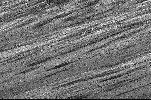
PSP_004313_1760_RED_abrowse-02.gifWinslow Crater's Changing (GIF-Movie; credits: NASA)68 visitenessun commentoMareKromium01/12/08 at 11:18MareKromium: Buon week-end a Te & Family & to All Lunex...
|
|
PSP_004313_1760_RED_abrowse-02.gifWinslow Crater's Changing (GIF-Movie; credits: NASA)68 visitenessun commentoMareKromium01/12/08 at 11:15titanio44: interessante questa gif anche perch? nel preview h...
|
|

PSP_003234_2210_red.jpgThe "Face" on Mars... (False Colors; credits: NASA/JPL)90 visiteImage PSP_003234_2210 was taken by the High Resolution Imaging Science Experiment (HiRISE) camera onboard the Mars Reconnaissance Orbiter spacecraft on 05-Apr-2007.
The complete image is centered at 40,7° latitude, 350,5° East Longitude. The range to the target site was 299,4 Km (187,1 miles). At this distance the image scale is 29,9 cm/pixel (with 1 x 1 binning) so objects ~90 cm across are resolved.
The image shown here has been map-projected to 25 cm/pixel and north is up.
The image was taken at a local Mars time of 03:28 PM and the scene is illuminated from the West with a solar incidence angle of 73°, thus the Sun was about 17° above the horizon.
At a Solar Longitude of 213,4°, the season on Mars is Northern Autumn. 12/09/07 at 09:00ufologo: Grazie anche a Walthari per le sue chiarissime spi...
|
|
PSP_003234_2210_red.jpgThe "Face" on Mars... (False Colors; credits: NASA/JPL)90 visiteImage PSP_003234_2210 was taken by the High Resolution Imaging Science Experiment (HiRISE) camera onboard the Mars Reconnaissance Orbiter spacecraft on 05-Apr-2007.
The complete image is centered at 40,7° latitude, 350,5° East Longitude. The range to the target site was 299,4 Km (187,1 miles). At this distance the image scale is 29,9 cm/pixel (with 1 x 1 binning) so objects ~90 cm across are resolved.
The image shown here has been map-projected to 25 cm/pixel and north is up.
The image was taken at a local Mars time of 03:28 PM and the scene is illuminated from the West with a solar incidence angle of 73°, thus the Sun was about 17° above the horizon.
At a Solar Longitude of 213,4°, the season on Mars is Northern Autumn. 12/08/07 at 20:41walthari: calza perfettamente!!!
|
|
PSP_003234_2210_red.jpgThe "Face" on Mars... (False Colors; credits: NASA/JPL)90 visiteImage PSP_003234_2210 was taken by the High Resolution Imaging Science Experiment (HiRISE) camera onboard the Mars Reconnaissance Orbiter spacecraft on 05-Apr-2007.
The complete image is centered at 40,7° latitude, 350,5° East Longitude. The range to the target site was 299,4 Km (187,1 miles). At this distance the image scale is 29,9 cm/pixel (with 1 x 1 binning) so objects ~90 cm across are resolved.
The image shown here has been map-projected to 25 cm/pixel and north is up.
The image was taken at a local Mars time of 03:28 PM and the scene is illuminated from the West with a solar incidence angle of 73°, thus the Sun was about 17° above the horizon.
At a Solar Longitude of 213,4°, the season on Mars is Northern Autumn. 12/08/07 at 20:18MareKromium: Carissimo Walthari, ricordo un concetto piuttosto ...
|
|
PSP_003234_2210_red.jpgThe "Face" on Mars... (False Colors; credits: NASA/JPL)90 visiteImage PSP_003234_2210 was taken by the High Resolution Imaging Science Experiment (HiRISE) camera onboard the Mars Reconnaissance Orbiter spacecraft on 05-Apr-2007.
The complete image is centered at 40,7° latitude, 350,5° East Longitude. The range to the target site was 299,4 Km (187,1 miles). At this distance the image scale is 29,9 cm/pixel (with 1 x 1 binning) so objects ~90 cm across are resolved.
The image shown here has been map-projected to 25 cm/pixel and north is up.
The image was taken at a local Mars time of 03:28 PM and the scene is illuminated from the West with a solar incidence angle of 73°, thus the Sun was about 17° above the horizon.
At a Solar Longitude of 213,4°, the season on Mars is Northern Autumn. 12/08/07 at 19:42walthari: Sotto il punto di vista geologico-geomorfologico i...
|
|
PSP_003234_2210_red.jpgThe "Face" on Mars... (False Colors; credits: NASA/JPL)90 visiteImage PSP_003234_2210 was taken by the High Resolution Imaging Science Experiment (HiRISE) camera onboard the Mars Reconnaissance Orbiter spacecraft on 05-Apr-2007.
The complete image is centered at 40,7° latitude, 350,5° East Longitude. The range to the target site was 299,4 Km (187,1 miles). At this distance the image scale is 29,9 cm/pixel (with 1 x 1 binning) so objects ~90 cm across are resolved.
The image shown here has been map-projected to 25 cm/pixel and north is up.
The image was taken at a local Mars time of 03:28 PM and the scene is illuminated from the West with a solar incidence angle of 73°, thus the Sun was about 17° above the horizon.
At a Solar Longitude of 213,4°, the season on Mars is Northern Autumn. 12/08/07 at 16:33ufologo: Grazie ancora di tutto.
|
|
| 1160 immagini su 97 pagina(e) |
|
|
|
|
|
|
|
|
95 | |
|
|
|





