| Ultimi commenti - Mars Reconnaissance Orbiter (MRO) |
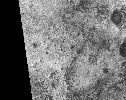
PSP_007612_2045-GIF.gifProposed MSL Landing Site in Mawrth Vallis - Ellipse 2 (GIF-Movie; credits: Carlo Contu)71 visiteSiamo nella Regione di Mawrth Vallis: una Regione di grandissimo interesse geologico (o forse sarebbe meglio dire "Mineralogico", vista la apparente varietà di minerali esposti e già individuati) la quale, forse, in un prossimo futuro, potrebbe costituire la "Casa" del Mars Science Laboratory Rover (anche se noi dubitiamo che il MSL Rover scenda effettivamente in questa zona del Pianeta Rosso...). +
Il dettaglio intrigante che ci viene proposto in questo suggestivo filmato GIF realizzato dal nostro Carissimo Amico e Partner, Carlo Contu, attiene un rilievo tanto piccolo, quanto bizzarro: una modesta collinetta con due lati "piallati".
Si tratterà di una frana o di qualcosa di più - diciamo così... - "esotico" (tipo uno scavo a cielo aperto)?
La Verità, anche in questo caso - e come sempre - non la conosciamo: noi possiamo solo invitarVi a guardare questo filmato ed a riflettere sui suoi particolari (uno su tutti, ma che NON Vi suggeriremo, in attesa che qualcuno di Voi se ne accorga e ne parli, in sede di commento).
Che altro dire? Complimenti a Carlo Contu e...Buona Esplorazione!MareKromium07/18/08 at 14:16walthari: ....che dire dei "disegni" sul fianco tr...
|
|
PSP_007612_2045-GIF.gifProposed MSL Landing Site in Mawrth Vallis - Ellipse 2 (GIF-Movie; credits: Carlo Contu)71 visiteSiamo nella Regione di Mawrth Vallis: una Regione di grandissimo interesse geologico (o forse sarebbe meglio dire "Mineralogico", vista la apparente varietà di minerali esposti e già individuati) la quale, forse, in un prossimo futuro, potrebbe costituire la "Casa" del Mars Science Laboratory Rover (anche se noi dubitiamo che il MSL Rover scenda effettivamente in questa zona del Pianeta Rosso...). +
Il dettaglio intrigante che ci viene proposto in questo suggestivo filmato GIF realizzato dal nostro Carissimo Amico e Partner, Carlo Contu, attiene un rilievo tanto piccolo, quanto bizzarro: una modesta collinetta con due lati "piallati".
Si tratterà di una frana o di qualcosa di più - diciamo così... - "esotico" (tipo uno scavo a cielo aperto)?
La Verità, anche in questo caso - e come sempre - non la conosciamo: noi possiamo solo invitarVi a guardare questo filmato ed a riflettere sui suoi particolari (uno su tutti, ma che NON Vi suggeriremo, in attesa che qualcuno di Voi se ne accorga e ne parli, in sede di commento).
Che altro dire? Complimenti a Carlo Contu e...Buona Esplorazione!MareKromium07/18/08 at 11:18charlie64: Ciao Mare e grazie. A me, tra le varie cose, ha co...
|
|
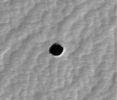
PSP_008130_1745_RED_abrowse-01.jpgSmall but deep Collapse Pit, North of Arsia Mons (extra-detail mgnf n. 1; credits: Dr G. Barca)72 visitenessun commentoMareKromium06/25/08 at 14:47MareKromium: Carissimo Cano00, io ho pensato, recentemente, che...
|
|
PSP_008130_1745_RED_abrowse-01.jpgSmall but deep Collapse Pit, North of Arsia Mons (extra-detail mgnf n. 1; credits: Dr G. Barca)72 visitenessun commentoMareKromium06/25/08 at 14:28cano00: non sembra anche a voi che dal segno lasciato sull...
|
|

PSP_008591_2485_cut_a.jpgPhoenix Lander "Hardware" (Day-Time Frame)56 visiteCaption NASA:"MRO’s HiRISE camera acquired this image of the Phoenix Landing Site 22 hours after landing. The image shows three unusual features which were not present in a pre-landing HiRISE image.
We expect to find three main pieces of hardware: the parachute attached to the backshell, the heat shield, and the lander itself.
The Parachute (bottom) is easy to identify because it is especially bright, and this image also clearly shows the Back-Shell. We can even see the stripes on the Parachute.
The dark marking (middle right) appears most consistent with disturbance of the ground from impact and bouncing of the Heat-Shield, which fell from a height of about 13 kilometers.
The last object (top) is the Lander, and we can clearly see the solar arrays on each side. The solar arrays were relatively dark in the image acquired 11 hours after landing, but are brighter than the Mars surface in this daytime image acquired with the HiRISE blue-green filter.
There are dark halos around all three locations, perhaps due to disturbing a thin dust coating.
North is about 7°to the right of straight up in this image and illumination is from the lower left".MareKromium06/22/08 at 22:01MareKromium: Carissimo Charlie, vale SEMPRE la pena di indagare...
|
|
PSP_008591_2485_cut_a.jpgPhoenix Lander "Hardware" (Day-Time Frame)56 visiteCaption NASA:"MRO’s HiRISE camera acquired this image of the Phoenix Landing Site 22 hours after landing. The image shows three unusual features which were not present in a pre-landing HiRISE image.
We expect to find three main pieces of hardware: the parachute attached to the backshell, the heat shield, and the lander itself.
The Parachute (bottom) is easy to identify because it is especially bright, and this image also clearly shows the Back-Shell. We can even see the stripes on the Parachute.
The dark marking (middle right) appears most consistent with disturbance of the ground from impact and bouncing of the Heat-Shield, which fell from a height of about 13 kilometers.
The last object (top) is the Lander, and we can clearly see the solar arrays on each side. The solar arrays were relatively dark in the image acquired 11 hours after landing, but are brighter than the Mars surface in this daytime image acquired with the HiRISE blue-green filter.
There are dark halos around all three locations, perhaps due to disturbing a thin dust coating.
North is about 7°to the right of straight up in this image and illumination is from the lower left".MareKromium06/22/08 at 16:40charlie64: Grazie MareKromium per le tue spiegazioni. Quindi ...
|
|

PSP_006268_1995_RED_abrowse.jpgThe alleged "Bridges" of Chrise Planitia (MULTISPECTRUM; credits: Lunexit)74 visiteThis image shows part of the surface of Chryse Planitia, near the mouth of several of the giant outflow channels carved by massive floods. At this location the channel is much too large to be seen within a HiRISE image, and this shows an area of level plains near the mouth.
Two geologic units are visible at this site: a relatively dark expanse in the southern part of the image (Dx) and a light, slightly higher-standing area along the northern edge. The light unit may be material that has flowed out from below the surface in a process called mud volcanism. However, many aspects of the history of the Northern Plains of Mars remain uncertain.
A few other prominent features are present. A long trough with aeolian ripples runs through the eastern part of the image. This feature likely formed by contraction of the surface layer. This must have occurred after the formation of the light material since it cuts through the light unit in the northwest part of the image.
There is also a large mound which appears to bury part of the trough, and thus is even younger. Alternatively, two troughs could both terminate at the hill.
Despite the resolution of HiRISE, the nature of this mound is still unclear. It has a rugged surface, which might mean that it has been eroded enough to remove indications of its origin.
MareKromium06/22/08 at 10:41MareKromium: Le panzane di Hoagland & C. ...
|
|
PSP_006268_1995_RED_abrowse.jpgThe alleged "Bridges" of Chrise Planitia (MULTISPECTRUM; credits: Lunexit)74 visiteThis image shows part of the surface of Chryse Planitia, near the mouth of several of the giant outflow channels carved by massive floods. At this location the channel is much too large to be seen within a HiRISE image, and this shows an area of level plains near the mouth.
Two geologic units are visible at this site: a relatively dark expanse in the southern part of the image (Dx) and a light, slightly higher-standing area along the northern edge. The light unit may be material that has flowed out from below the surface in a process called mud volcanism. However, many aspects of the history of the Northern Plains of Mars remain uncertain.
A few other prominent features are present. A long trough with aeolian ripples runs through the eastern part of the image. This feature likely formed by contraction of the surface layer. This must have occurred after the formation of the light material since it cuts through the light unit in the northwest part of the image.
There is also a large mound which appears to bury part of the trough, and thus is even younger. Alternatively, two troughs could both terminate at the hill.
Despite the resolution of HiRISE, the nature of this mound is still unclear. It has a rugged surface, which might mean that it has been eroded enough to remove indications of its origin.
MareKromium06/21/08 at 17:49Ufologo: I "Tremors"...
|
|
PSP_006268_1995_RED_abrowse.jpgThe alleged "Bridges" of Chrise Planitia (MULTISPECTRUM; credits: Lunexit)74 visiteThis image shows part of the surface of Chryse Planitia, near the mouth of several of the giant outflow channels carved by massive floods. At this location the channel is much too large to be seen within a HiRISE image, and this shows an area of level plains near the mouth.
Two geologic units are visible at this site: a relatively dark expanse in the southern part of the image (Dx) and a light, slightly higher-standing area along the northern edge. The light unit may be material that has flowed out from below the surface in a process called mud volcanism. However, many aspects of the history of the Northern Plains of Mars remain uncertain.
A few other prominent features are present. A long trough with aeolian ripples runs through the eastern part of the image. This feature likely formed by contraction of the surface layer. This must have occurred after the formation of the light material since it cuts through the light unit in the northwest part of the image.
There is also a large mound which appears to bury part of the trough, and thus is even younger. Alternatively, two troughs could both terminate at the hill.
Despite the resolution of HiRISE, the nature of this mound is still unclear. It has a rugged surface, which might mean that it has been eroded enough to remove indications of its origin.
MareKromium06/21/08 at 17:09cicas65: I famosi condotti marziani...
|
|
PSP_008591_2485_cut_a.jpgPhoenix Lander "Hardware" (Day-Time Frame)56 visiteCaption NASA:"MRO’s HiRISE camera acquired this image of the Phoenix Landing Site 22 hours after landing. The image shows three unusual features which were not present in a pre-landing HiRISE image.
We expect to find three main pieces of hardware: the parachute attached to the backshell, the heat shield, and the lander itself.
The Parachute (bottom) is easy to identify because it is especially bright, and this image also clearly shows the Back-Shell. We can even see the stripes on the Parachute.
The dark marking (middle right) appears most consistent with disturbance of the ground from impact and bouncing of the Heat-Shield, which fell from a height of about 13 kilometers.
The last object (top) is the Lander, and we can clearly see the solar arrays on each side. The solar arrays were relatively dark in the image acquired 11 hours after landing, but are brighter than the Mars surface in this daytime image acquired with the HiRISE blue-green filter.
There are dark halos around all three locations, perhaps due to disturbing a thin dust coating.
North is about 7°to the right of straight up in this image and illumination is from the lower left".MareKromium06/20/08 at 14:39MareKromium: Buonasera Charlie!
Allora: innanzitutto, la Cap...
|
|
PSP_008591_2485_cut_a.jpgPhoenix Lander "Hardware" (Day-Time Frame)56 visiteCaption NASA:"MRO’s HiRISE camera acquired this image of the Phoenix Landing Site 22 hours after landing. The image shows three unusual features which were not present in a pre-landing HiRISE image.
We expect to find three main pieces of hardware: the parachute attached to the backshell, the heat shield, and the lander itself.
The Parachute (bottom) is easy to identify because it is especially bright, and this image also clearly shows the Back-Shell. We can even see the stripes on the Parachute.
The dark marking (middle right) appears most consistent with disturbance of the ground from impact and bouncing of the Heat-Shield, which fell from a height of about 13 kilometers.
The last object (top) is the Lander, and we can clearly see the solar arrays on each side. The solar arrays were relatively dark in the image acquired 11 hours after landing, but are brighter than the Mars surface in this daytime image acquired with the HiRISE blue-green filter.
There are dark halos around all three locations, perhaps due to disturbing a thin dust coating.
North is about 7°to the right of straight up in this image and illumination is from the lower left".MareKromium06/20/08 at 14:29charlie64: Grazie Mare che mi (ci) vieni sempre in soccorso!!...
|
|
PSP_008591_2485_cut_a.jpgPhoenix Lander "Hardware" (Day-Time Frame)56 visiteCaption NASA:"MRO’s HiRISE camera acquired this image of the Phoenix Landing Site 22 hours after landing. The image shows three unusual features which were not present in a pre-landing HiRISE image.
We expect to find three main pieces of hardware: the parachute attached to the backshell, the heat shield, and the lander itself.
The Parachute (bottom) is easy to identify because it is especially bright, and this image also clearly shows the Back-Shell. We can even see the stripes on the Parachute.
The dark marking (middle right) appears most consistent with disturbance of the ground from impact and bouncing of the Heat-Shield, which fell from a height of about 13 kilometers.
The last object (top) is the Lander, and we can clearly see the solar arrays on each side. The solar arrays were relatively dark in the image acquired 11 hours after landing, but are brighter than the Mars surface in this daytime image acquired with the HiRISE blue-green filter.
There are dark halos around all three locations, perhaps due to disturbing a thin dust coating.
North is about 7°to the right of straight up in this image and illumination is from the lower left".MareKromium06/20/08 at 12:37MareKromium: Il Lander ? a Nord; la Back-Shell (ovviamente) ? a...
|
|
| 1160 immagini su 97 pagina(e) |
 |
|
|
|
|
|
93 | |
|
|
|





