| Ultimi commenti - Mars Reconnaissance Orbiter (MRO) |
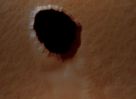
PSP_009488_1745_RED_abrowse-02.jpgMartian Caves (edm n. 2 - possible natural colors; credits: Lunexit)65 visiteThe ability to detect and explore Martian caves is of intense interest to many disciplines in Planetary Science. Caves, in fact, may expose entire sets of stratigraphic layers, providing windows into Mars’ Geologic and Atmospheric histories.
MareKromium10/23/08 at 17:52Paolo C. Fienga: Grande Titanio44, ho avuto anch'io i miei dubb...
|
|
PSP_009488_1745_RED_abrowse-02.jpgMartian Caves (edm n. 2 - possible natural colors; credits: Lunexit)65 visiteThe ability to detect and explore Martian caves is of intense interest to many disciplines in Planetary Science. Caves, in fact, may expose entire sets of stratigraphic layers, providing windows into Mars’ Geologic and Atmospheric histories.
MareKromium10/23/08 at 17:05titanio44: ho dei seri dubbi che sia un buco,i bordi e tutto ...
|
|
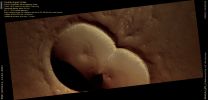
Psp_009619_1630_red.jpgDouble Impact Crater (natural colors; credits: Lunexit)94 visiteThis image shows a double impact crater in Syria Planum, and probably formed when a binary asteroid pair (two asteroids closely orbiting each other, while also orbiting the Sun) struck the Surface. The asteroids must have been about the same size, on the order of a few hundred meters across, to produce these craters.
How is it possible to say that the double crater is due to a binary asteroid, instead of two independent impacts? Neither crater shows signs of burial by ejecta from the other. More importantly, the ejecta (material thrown out of the craters) shows signs of interacting; the ridges extending to the southeast of the crater probably formed when ejecta from the craters collided in midair, causing more debris to pile up at certain points.
This means that the impacts occurred within moments of each other.
Ejecta interaction features like this can also form in association with “secondary” craters (craters made by debris from other impacts, rather than by asteroids), since many secondary craters form at once. In this case, however, a binary asteroid is the likely cause. The very large size is one indicator (secondary craters are generally much smaller than the “primary” crater), and there is not an obvious nearby source crater. While secondary craters are common, binary impacts are expected to occur as well, since binary asteroid pairs are observed.
This crater pair is also of geologic interest since it exposes a cross-section of the local rocks. Thin, flat layers are visible in the upper walls. Since this region has seen extensive volcanic activity, these may be a mix of old lava flows and other volcanic debris. Exposures like this provide evidence for the extent and thickness of these deposits. MareKromium10/13/08 at 20:02Paolo C. Fienga: Ti voglio bene Max!
|
|
Psp_009619_1630_red.jpgDouble Impact Crater (natural colors; credits: Lunexit)94 visiteThis image shows a double impact crater in Syria Planum, and probably formed when a binary asteroid pair (two asteroids closely orbiting each other, while also orbiting the Sun) struck the Surface. The asteroids must have been about the same size, on the order of a few hundred meters across, to produce these craters.
How is it possible to say that the double crater is due to a binary asteroid, instead of two independent impacts? Neither crater shows signs of burial by ejecta from the other. More importantly, the ejecta (material thrown out of the craters) shows signs of interacting; the ridges extending to the southeast of the crater probably formed when ejecta from the craters collided in midair, causing more debris to pile up at certain points.
This means that the impacts occurred within moments of each other.
Ejecta interaction features like this can also form in association with “secondary” craters (craters made by debris from other impacts, rather than by asteroids), since many secondary craters form at once. In this case, however, a binary asteroid is the likely cause. The very large size is one indicator (secondary craters are generally much smaller than the “primary” crater), and there is not an obvious nearby source crater. While secondary craters are common, binary impacts are expected to occur as well, since binary asteroid pairs are observed.
This crater pair is also of geologic interest since it exposes a cross-section of the local rocks. Thin, flat layers are visible in the upper walls. Since this region has seen extensive volcanic activity, these may be a mix of old lava flows and other volcanic debris. Exposures like this provide evidence for the extent and thickness of these deposits. MareKromium10/13/08 at 18:04Ufologo: Sonospiacente di aver fatto la figura (pi? che del...
|
|
Psp_009619_1630_red.jpgDouble Impact Crater (natural colors; credits: Lunexit)94 visiteThis image shows a double impact crater in Syria Planum, and probably formed when a binary asteroid pair (two asteroids closely orbiting each other, while also orbiting the Sun) struck the Surface. The asteroids must have been about the same size, on the order of a few hundred meters across, to produce these craters.
How is it possible to say that the double crater is due to a binary asteroid, instead of two independent impacts? Neither crater shows signs of burial by ejecta from the other. More importantly, the ejecta (material thrown out of the craters) shows signs of interacting; the ridges extending to the southeast of the crater probably formed when ejecta from the craters collided in midair, causing more debris to pile up at certain points.
This means that the impacts occurred within moments of each other.
Ejecta interaction features like this can also form in association with “secondary” craters (craters made by debris from other impacts, rather than by asteroids), since many secondary craters form at once. In this case, however, a binary asteroid is the likely cause. The very large size is one indicator (secondary craters are generally much smaller than the “primary” crater), and there is not an obvious nearby source crater. While secondary craters are common, binary impacts are expected to occur as well, since binary asteroid pairs are observed.
This crater pair is also of geologic interest since it exposes a cross-section of the local rocks. Thin, flat layers are visible in the upper walls. Since this region has seen extensive volcanic activity, these may be a mix of old lava flows and other volcanic debris. Exposures like this provide evidence for the extent and thickness of these deposits. MareKromium10/13/08 at 15:37MareKromium: Nessuna ignoranza, Grande Max!
Questo, a mio a...
|
|
Psp_009619_1630_red.jpgDouble Impact Crater (natural colors; credits: Lunexit)94 visiteThis image shows a double impact crater in Syria Planum, and probably formed when a binary asteroid pair (two asteroids closely orbiting each other, while also orbiting the Sun) struck the Surface. The asteroids must have been about the same size, on the order of a few hundred meters across, to produce these craters.
How is it possible to say that the double crater is due to a binary asteroid, instead of two independent impacts? Neither crater shows signs of burial by ejecta from the other. More importantly, the ejecta (material thrown out of the craters) shows signs of interacting; the ridges extending to the southeast of the crater probably formed when ejecta from the craters collided in midair, causing more debris to pile up at certain points.
This means that the impacts occurred within moments of each other.
Ejecta interaction features like this can also form in association with “secondary” craters (craters made by debris from other impacts, rather than by asteroids), since many secondary craters form at once. In this case, however, a binary asteroid is the likely cause. The very large size is one indicator (secondary craters are generally much smaller than the “primary” crater), and there is not an obvious nearby source crater. While secondary craters are common, binary impacts are expected to occur as well, since binary asteroid pairs are observed.
This crater pair is also of geologic interest since it exposes a cross-section of the local rocks. Thin, flat layers are visible in the upper walls. Since this region has seen extensive volcanic activity, these may be a mix of old lava flows and other volcanic debris. Exposures like this provide evidence for the extent and thickness of these deposits. MareKromium10/13/08 at 10:34Ufologo: ...Pi? leggo pi? divento ignorante! Ma come fa ad ...
|
|
Psp_008210_2415_red~0.jpgKnobs and Small Craters with Ice in Northern Arcadia Planitia (natural colors; credits: Lunexit)67 visitenessun commentoMareKromium09/30/08 at 07:25Anakin: Beh per un malizioso come me (nonch? "ignoran...
|
|
Psp_008210_2415_red~0.jpgKnobs and Small Craters with Ice in Northern Arcadia Planitia (natural colors; credits: Lunexit)67 visitenessun commentoMareKromium09/29/08 at 19:29MareKromium: Indovinello: come mai le colline di Ares Vallis as...
|
|
Psp_008210_2415_red~0.jpgKnobs and Small Craters with Ice in Northern Arcadia Planitia (natural colors; credits: Lunexit)67 visitenessun commentoMareKromium09/29/08 at 12:33Anakin: Beh! se fossimo a terra, oooops! a marte, da lonta...
|
|
Psp_008210_2415_red~0.jpgKnobs and Small Craters with Ice in Northern Arcadia Planitia (natural colors; credits: Lunexit)67 visitenessun commentoMareKromium09/29/08 at 11:12MareKromium: Esatto: le stesse geometrie della Collina di Cydon...
|
|
Psp_008210_2415_red~0.jpgKnobs and Small Craters with Ice in Northern Arcadia Planitia (natural colors; credits: Lunexit)67 visitenessun commentoMareKromium09/29/08 at 07:36enzomancuso: Due rilievi con delle geometrie particolari...
|
|

PSP_008982_1965.jpgLayered Deposits in Arabia Terra Region (True Colors; credits: Dr M. Faccin & Lunexit)56 visiteThis image shows the floor of an Unnamed Impact Crater in Arabia Terra that has Layered Deposits. There are many craters in this Region where layering is observed.
These layers are often exposed along the sides of large isolated mounds, small knobs and mesas, and other positive relief features. In some cases, the layering is expressed as narrow sinuous ridge-like structures along crater floors.
The presence of Layered Deposits is of particular interest because these materials are not likely to be related to the impact event, but rather post-impact infill of the crater. Modification of the deposits has now revealed layers of material.
HiRISE and other instruments onboard the Mars Reconnaissance Orbiter may provide more clues to the origin of the these deposits.MareKromium08/11/08 at 16:49John Koenig: Lo so. Infatti ? una rogna che non sar? facile da ...
|
|
| 1160 immagini su 97 pagina(e) |
 |
|
|
|
|
88 | |
|
|
|
|





