| |

| Ultimi commenti - Mars Reconnaissance Orbiter (MRO) |
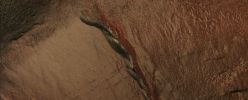
ESP_019060_1330-LXTT1.jpgSouthern Gullies (EDM n.1 - Enhanced True Colors; credits for the additional process. and color.: Elisabetta Bonora - Lunexit Team)106 visitenessun commentoMareKromium10/15/10 at 20:102di7: MK ma che palco NASA! Sono onorata di essere sul p...
|
|
ESP_019060_1330-LXTT1.jpgSouthern Gullies (EDM n.1 - Enhanced True Colors; credits for the additional process. and color.: Elisabetta Bonora - Lunexit Team)106 visitenessun commentoMareKromium10/15/10 at 16:47walthari: UN CAPOLAVORO!!
|
|
ESP_019060_1330-LXTT1.jpgSouthern Gullies (EDM n.1 - Enhanced True Colors; credits for the additional process. and color.: Elisabetta Bonora - Lunexit Team)106 visitenessun commentoMareKromium10/15/10 at 16:27MareKromium: Questo Lavoro di Elisabetta (2di7) ? di una talmen...
|
|

PSP_001784_001454___2030_anaglyph-MF-LXTT1.jpgMartian Crossway (Hi-Def-3D; credits for the additional process.: Dr Marco Faccin - Lunexit Team)134 visitenessun commentoMareKromium10/14/10 at 16:48jojope: Caro MK non sono propiamente caxxate le tue ipotes...
|
|
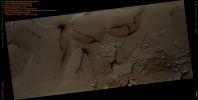
PSP_003597_1765_RED_abrowse-PCF-LXTT2.jpgPossible Smoke Emissions in Elysium Planitia (Natural Colors; credits for the additional process. and color.: Dr Paolo C. Fienga - Lunexit Team)124 visiteCaption NASA:"This observation shows fractured Mounds on the Southern Edge of Elysium Planitia. The Mounds are typically a few Km in diameter and about 200 feet tall. The fractures that crisscross their Surfaces are dilational (extensional) in nature, suggesting that the Mounds formed by localized uplift (i.e., they were pushed up from below).
The Mounds are probably composed of solidified Lava. They are contiguous with, and texturally similar to, the flood Lavas that blanket much of Elysium Planitia, and, where dilation cracks provide cross-sectional exposure, the uplifted material is rocky.
Patches of mechanically weak and disrupted material overlie the rocky mound material. This is particularly conspicuous in the Northeast corner of the HiRISE image. These patches may be remnants of a layer that was once more continuous but has been extensively eroded. Smooth Lava Plains fill the low-lying areas between the Mounds. They are riddled with sinuous pressure ridges.
The entire area is covered by a relatively thin layer of Dust and Sand".
Nota Lunexit: l'elemento più suggestivo dell'intero frame, completamente tralasciato dal commento NASA "Ufficiale", attiene quelle che a noi sembrano delle (evidenti e, riteniamo, anche piuttosto recenti) "emissioni di fumi", ben visibili in corrispondenza di quasi tutti i maggiori punti di fratturazione. E' proprio il dato, confermato dalla NASA stessa, per cui l'intera area ripresa è coperta da un sottile strato di sabbia e polvere (la quale dovrebbe conferire un colore denso e, soprattutto, uniforme a tutto il paesaggio) che ci fa ritenere recenti (se non recentissime) le summenzionate zone più scure ("macchiate", di fatto) e, dunque, molto probabilmente interessate da eventuali e persistenti emissioni di fumi, vapori (sulfurei?) e ceneri vulcaniche.MareKromium10/13/10 at 21:27MareKromium: Carissimo Jojope, parafrasi per parafrasi, ai temp...
|
|
PSP_003597_1765_RED_abrowse-PCF-LXTT2.jpgPossible Smoke Emissions in Elysium Planitia (Natural Colors; credits for the additional process. and color.: Dr Paolo C. Fienga - Lunexit Team)124 visiteCaption NASA:"This observation shows fractured Mounds on the Southern Edge of Elysium Planitia. The Mounds are typically a few Km in diameter and about 200 feet tall. The fractures that crisscross their Surfaces are dilational (extensional) in nature, suggesting that the Mounds formed by localized uplift (i.e., they were pushed up from below).
The Mounds are probably composed of solidified Lava. They are contiguous with, and texturally similar to, the flood Lavas that blanket much of Elysium Planitia, and, where dilation cracks provide cross-sectional exposure, the uplifted material is rocky.
Patches of mechanically weak and disrupted material overlie the rocky mound material. This is particularly conspicuous in the Northeast corner of the HiRISE image. These patches may be remnants of a layer that was once more continuous but has been extensively eroded. Smooth Lava Plains fill the low-lying areas between the Mounds. They are riddled with sinuous pressure ridges.
The entire area is covered by a relatively thin layer of Dust and Sand".
Nota Lunexit: l'elemento più suggestivo dell'intero frame, completamente tralasciato dal commento NASA "Ufficiale", attiene quelle che a noi sembrano delle (evidenti e, riteniamo, anche piuttosto recenti) "emissioni di fumi", ben visibili in corrispondenza di quasi tutti i maggiori punti di fratturazione. E' proprio il dato, confermato dalla NASA stessa, per cui l'intera area ripresa è coperta da un sottile strato di sabbia e polvere (la quale dovrebbe conferire un colore denso e, soprattutto, uniforme a tutto il paesaggio) che ci fa ritenere recenti (se non recentissime) le summenzionate zone più scure ("macchiate", di fatto) e, dunque, molto probabilmente interessate da eventuali e persistenti emissioni di fumi, vapori (sulfurei?) e ceneri vulcaniche.MareKromium10/13/10 at 20:57jojope: E' mia personalissima convinzione che fino a q...
|
|
PSP_003597_1765_RED_abrowse-PCF-LXTT2.jpgPossible Smoke Emissions in Elysium Planitia (Natural Colors; credits for the additional process. and color.: Dr Paolo C. Fienga - Lunexit Team)124 visiteCaption NASA:"This observation shows fractured Mounds on the Southern Edge of Elysium Planitia. The Mounds are typically a few Km in diameter and about 200 feet tall. The fractures that crisscross their Surfaces are dilational (extensional) in nature, suggesting that the Mounds formed by localized uplift (i.e., they were pushed up from below).
The Mounds are probably composed of solidified Lava. They are contiguous with, and texturally similar to, the flood Lavas that blanket much of Elysium Planitia, and, where dilation cracks provide cross-sectional exposure, the uplifted material is rocky.
Patches of mechanically weak and disrupted material overlie the rocky mound material. This is particularly conspicuous in the Northeast corner of the HiRISE image. These patches may be remnants of a layer that was once more continuous but has been extensively eroded. Smooth Lava Plains fill the low-lying areas between the Mounds. They are riddled with sinuous pressure ridges.
The entire area is covered by a relatively thin layer of Dust and Sand".
Nota Lunexit: l'elemento più suggestivo dell'intero frame, completamente tralasciato dal commento NASA "Ufficiale", attiene quelle che a noi sembrano delle (evidenti e, riteniamo, anche piuttosto recenti) "emissioni di fumi", ben visibili in corrispondenza di quasi tutti i maggiori punti di fratturazione. E' proprio il dato, confermato dalla NASA stessa, per cui l'intera area ripresa è coperta da un sottile strato di sabbia e polvere (la quale dovrebbe conferire un colore denso e, soprattutto, uniforme a tutto il paesaggio) che ci fa ritenere recenti (se non recentissime) le summenzionate zone più scure ("macchiate", di fatto) e, dunque, molto probabilmente interessate da eventuali e persistenti emissioni di fumi, vapori (sulfurei?) e ceneri vulcaniche.MareKromium10/13/10 at 18:11MareKromium: ...moltissimi "magnati" SONO (culturalme...
|
|
PSP_003597_1765_RED_abrowse-PCF-LXTT2.jpgPossible Smoke Emissions in Elysium Planitia (Natural Colors; credits for the additional process. and color.: Dr Paolo C. Fienga - Lunexit Team)124 visiteCaption NASA:"This observation shows fractured Mounds on the Southern Edge of Elysium Planitia. The Mounds are typically a few Km in diameter and about 200 feet tall. The fractures that crisscross their Surfaces are dilational (extensional) in nature, suggesting that the Mounds formed by localized uplift (i.e., they were pushed up from below).
The Mounds are probably composed of solidified Lava. They are contiguous with, and texturally similar to, the flood Lavas that blanket much of Elysium Planitia, and, where dilation cracks provide cross-sectional exposure, the uplifted material is rocky.
Patches of mechanically weak and disrupted material overlie the rocky mound material. This is particularly conspicuous in the Northeast corner of the HiRISE image. These patches may be remnants of a layer that was once more continuous but has been extensively eroded. Smooth Lava Plains fill the low-lying areas between the Mounds. They are riddled with sinuous pressure ridges.
The entire area is covered by a relatively thin layer of Dust and Sand".
Nota Lunexit: l'elemento più suggestivo dell'intero frame, completamente tralasciato dal commento NASA "Ufficiale", attiene quelle che a noi sembrano delle (evidenti e, riteniamo, anche piuttosto recenti) "emissioni di fumi", ben visibili in corrispondenza di quasi tutti i maggiori punti di fratturazione. E' proprio il dato, confermato dalla NASA stessa, per cui l'intera area ripresa è coperta da un sottile strato di sabbia e polvere (la quale dovrebbe conferire un colore denso e, soprattutto, uniforme a tutto il paesaggio) che ci fa ritenere recenti (se non recentissime) le summenzionate zone più scure ("macchiate", di fatto) e, dunque, molto probabilmente interessate da eventuali e persistenti emissioni di fumi, vapori (sulfurei?) e ceneri vulcaniche.MareKromium10/13/10 at 16:57John Koenig: Funzionano pure con i magnati dell'industria.....
|
|
PSP_003597_1765_RED_abrowse-PCF-LXTT2.jpgPossible Smoke Emissions in Elysium Planitia (Natural Colors; credits for the additional process. and color.: Dr Paolo C. Fienga - Lunexit Team)124 visiteCaption NASA:"This observation shows fractured Mounds on the Southern Edge of Elysium Planitia. The Mounds are typically a few Km in diameter and about 200 feet tall. The fractures that crisscross their Surfaces are dilational (extensional) in nature, suggesting that the Mounds formed by localized uplift (i.e., they were pushed up from below).
The Mounds are probably composed of solidified Lava. They are contiguous with, and texturally similar to, the flood Lavas that blanket much of Elysium Planitia, and, where dilation cracks provide cross-sectional exposure, the uplifted material is rocky.
Patches of mechanically weak and disrupted material overlie the rocky mound material. This is particularly conspicuous in the Northeast corner of the HiRISE image. These patches may be remnants of a layer that was once more continuous but has been extensively eroded. Smooth Lava Plains fill the low-lying areas between the Mounds. They are riddled with sinuous pressure ridges.
The entire area is covered by a relatively thin layer of Dust and Sand".
Nota Lunexit: l'elemento più suggestivo dell'intero frame, completamente tralasciato dal commento NASA "Ufficiale", attiene quelle che a noi sembrano delle (evidenti e, riteniamo, anche piuttosto recenti) "emissioni di fumi", ben visibili in corrispondenza di quasi tutti i maggiori punti di fratturazione. E' proprio il dato, confermato dalla NASA stessa, per cui l'intera area ripresa è coperta da un sottile strato di sabbia e polvere (la quale dovrebbe conferire un colore denso e, soprattutto, uniforme a tutto il paesaggio) che ci fa ritenere recenti (se non recentissime) le summenzionate zone più scure ("macchiate", di fatto) e, dunque, molto probabilmente interessate da eventuali e persistenti emissioni di fumi, vapori (sulfurei?) e ceneri vulcaniche.MareKromium10/13/10 at 16:07jojope: Si John Koenig ma l'idea del sito Alpha lo av...
|
|

ESP_012584_1265_RED_abrowse-01.jpg"Hot Surprise" in Nia Vallis (EDM - credits: Dr M. Faccin)117 visiteUn inconfondibile "segno di calore" è apparso in quelle che, a nostro parere, sono le immediate vicinanze della Superficie: una piccola "fiamma" che, se non altro nella sua forma (a "Fiaccola", o "Flare"), nelle sue dimensioni (siamo nell'ordine del metro o poco più) e colore (la Fiaccola, guarda caso, è "Blu"...), ci ricorda la fantomatica Blue Flare che tanto ha intrigato ed intriga i Ricercatori di Anomalìe Lunari.
In questo frame, la nostra piccola "Blue Flare" aleggia/emerge sulla/dalla Superficie di Nia Vallis o nelle sue immediatissime vicinanze (ossìa potrebbe librarsi a pochi metri dal suolo).
La configurazione del dettaglio - una volta escluso l'image-artifact - ci suggerisce l'eventualità per cui si possa trattare di un fenomeno equiparabile ai cosiddetti "fuochi fatui", di terrestre (e, spesso, "lugubre") memoria, ossìa combustione di modesti quantitativi di gas derivanti da decomposizione di elementi organici (usualmente si tratta di Metano o Fosfano).
I luoghi "preferiti" per la verificazione di questo tipo di fenomeni sono i cimiteri, le aree ricche di acque stagnanti o semi-stagnanti (paludi e stagni) e le brughiere.
In questo caso...siamo su Marte e quindi, tutto sommato, i cimiteri ci sentiamo di escluderli come possibile causa della Flare.
Ed anche la brughiera non sembra un luogo attinente, vista la regione sorvolata dalla Sonda.
Ma come escludere la presenza di acque stagnanti sub-superficiali, magari ricchissime di elementi organici?
Cosa c'è - REALMENTE - nel sottosuolo di Marte?MareKromium10/13/10 at 15:57jojope: Grazie la tua risposta e' semplicemente perfet...
|
|
PSP_003597_1765_RED_abrowse-PCF-LXTT2.jpgPossible Smoke Emissions in Elysium Planitia (Natural Colors; credits for the additional process. and color.: Dr Paolo C. Fienga - Lunexit Team)124 visiteCaption NASA:"This observation shows fractured Mounds on the Southern Edge of Elysium Planitia. The Mounds are typically a few Km in diameter and about 200 feet tall. The fractures that crisscross their Surfaces are dilational (extensional) in nature, suggesting that the Mounds formed by localized uplift (i.e., they were pushed up from below).
The Mounds are probably composed of solidified Lava. They are contiguous with, and texturally similar to, the flood Lavas that blanket much of Elysium Planitia, and, where dilation cracks provide cross-sectional exposure, the uplifted material is rocky.
Patches of mechanically weak and disrupted material overlie the rocky mound material. This is particularly conspicuous in the Northeast corner of the HiRISE image. These patches may be remnants of a layer that was once more continuous but has been extensively eroded. Smooth Lava Plains fill the low-lying areas between the Mounds. They are riddled with sinuous pressure ridges.
The entire area is covered by a relatively thin layer of Dust and Sand".
Nota Lunexit: l'elemento più suggestivo dell'intero frame, completamente tralasciato dal commento NASA "Ufficiale", attiene quelle che a noi sembrano delle (evidenti e, riteniamo, anche piuttosto recenti) "emissioni di fumi", ben visibili in corrispondenza di quasi tutti i maggiori punti di fratturazione. E' proprio il dato, confermato dalla NASA stessa, per cui l'intera area ripresa è coperta da un sottile strato di sabbia e polvere (la quale dovrebbe conferire un colore denso e, soprattutto, uniforme a tutto il paesaggio) che ci fa ritenere recenti (se non recentissime) le summenzionate zone più scure ("macchiate", di fatto) e, dunque, molto probabilmente interessate da eventuali e persistenti emissioni di fumi, vapori (sulfurei?) e ceneri vulcaniche.MareKromium10/12/10 at 21:20John Koenig: mmmh... patito di Stargate SG1? come me?
|
|
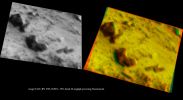
ESP_018075_1955_RED_abrowse-01.jpgUnusually-looking Surface Feature in Cerberus Fossae (credits for the additional process.: Dr Marco Faccin - Lunexit Team)74 visitenessun commentoMareKromium10/12/10 at 17:04jojope: La superficie insolita sarebbero quelle 2 a forma ...
|
|
| 1160 immagini su 97 pagina(e) |
|
|
|
|
|
43 | |
|
|
|
|
|
|





