| Ultimi commenti - Mars Reconnaissance Orbiter (MRO) |
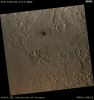
ESP_019195_2175_RED_abrowse.jpgRecent Impact (Natural Colors; credits for the additional process. and color.: Dr Paolo C. Fienga - Lunexit Team)134 visiteAcquisition Date: 31 August 2010
Mars Local Time (MLT): 15:22 (Early Afternoon)
Latitude (centered): 37,3° North
Longitude (East): 182,2°
Range to Target Site: 298,4 Km (such as about 186,5 miles)
Original image scale range: 29,8 cm/pixel (with 1 x 1 binning) so objects ~90 cm across are resolved
Map projected scale: 25 cm/pixel
Map projection: EQUIRECTANGULAR
Emission angle: 2,5°
Sun-Mars-Spacecraft (or Phase) Angle: 52,0°
Solar Incidence Angle: 49° (with the Sun about 41° above the Local Horizon)
Solar Longitude: 141,1° - Northern SummerMareKromium02/12/11 at 17:46cicas65: Se qualcosa fosse atterrata o decollata il terreno...
|
|
ESP_019195_2175_RED_abrowse.jpgRecent Impact (Natural Colors; credits for the additional process. and color.: Dr Paolo C. Fienga - Lunexit Team)134 visiteAcquisition Date: 31 August 2010
Mars Local Time (MLT): 15:22 (Early Afternoon)
Latitude (centered): 37,3° North
Longitude (East): 182,2°
Range to Target Site: 298,4 Km (such as about 186,5 miles)
Original image scale range: 29,8 cm/pixel (with 1 x 1 binning) so objects ~90 cm across are resolved
Map projected scale: 25 cm/pixel
Map projection: EQUIRECTANGULAR
Emission angle: 2,5°
Sun-Mars-Spacecraft (or Phase) Angle: 52,0°
Solar Incidence Angle: 49° (with the Sun about 41° above the Local Horizon)
Solar Longitude: 141,1° - Northern SummerMareKromium02/12/11 at 17:41george_p: @ Matteo:
Quindi essendoci ossigeno, che siano ra...
|
|
ESP_019195_2175_RED_abrowse.jpgRecent Impact (Natural Colors; credits for the additional process. and color.: Dr Paolo C. Fienga - Lunexit Team)134 visiteAcquisition Date: 31 August 2010
Mars Local Time (MLT): 15:22 (Early Afternoon)
Latitude (centered): 37,3° North
Longitude (East): 182,2°
Range to Target Site: 298,4 Km (such as about 186,5 miles)
Original image scale range: 29,8 cm/pixel (with 1 x 1 binning) so objects ~90 cm across are resolved
Map projected scale: 25 cm/pixel
Map projection: EQUIRECTANGULAR
Emission angle: 2,5°
Sun-Mars-Spacecraft (or Phase) Angle: 52,0°
Solar Incidence Angle: 49° (with the Sun about 41° above the Local Horizon)
Solar Longitude: 141,1° - Northern SummerMareKromium02/12/11 at 17:16Ufologo: Effettivamente sembra la "spolverata" di...
|
|
ESP_019195_2175_RED_abrowse.jpgRecent Impact (Natural Colors; credits for the additional process. and color.: Dr Paolo C. Fienga - Lunexit Team)134 visiteAcquisition Date: 31 August 2010
Mars Local Time (MLT): 15:22 (Early Afternoon)
Latitude (centered): 37,3° North
Longitude (East): 182,2°
Range to Target Site: 298,4 Km (such as about 186,5 miles)
Original image scale range: 29,8 cm/pixel (with 1 x 1 binning) so objects ~90 cm across are resolved
Map projected scale: 25 cm/pixel
Map projection: EQUIRECTANGULAR
Emission angle: 2,5°
Sun-Mars-Spacecraft (or Phase) Angle: 52,0°
Solar Incidence Angle: 49° (with the Sun about 41° above the Local Horizon)
Solar Longitude: 141,1° - Northern SummerMareKromium02/12/11 at 16:42Matteo Fagone: atterraggio o decollo, chiss?. Ma il punto ? che i...
|
|
ESP_019195_2175_RED_abrowse.jpgRecent Impact (Natural Colors; credits for the additional process. and color.: Dr Paolo C. Fienga - Lunexit Team)134 visiteAcquisition Date: 31 August 2010
Mars Local Time (MLT): 15:22 (Early Afternoon)
Latitude (centered): 37,3° North
Longitude (East): 182,2°
Range to Target Site: 298,4 Km (such as about 186,5 miles)
Original image scale range: 29,8 cm/pixel (with 1 x 1 binning) so objects ~90 cm across are resolved
Map projected scale: 25 cm/pixel
Map projection: EQUIRECTANGULAR
Emission angle: 2,5°
Sun-Mars-Spacecraft (or Phase) Angle: 52,0°
Solar Incidence Angle: 49° (with the Sun about 41° above the Local Horizon)
Solar Longitude: 141,1° - Northern SummerMareKromium02/12/11 at 14:48george_p: Anche io l'ho pensato, utilizzando il termine ...
|
|
ESP_019195_2175_RED_abrowse.jpgRecent Impact (Natural Colors; credits for the additional process. and color.: Dr Paolo C. Fienga - Lunexit Team)134 visiteAcquisition Date: 31 August 2010
Mars Local Time (MLT): 15:22 (Early Afternoon)
Latitude (centered): 37,3° North
Longitude (East): 182,2°
Range to Target Site: 298,4 Km (such as about 186,5 miles)
Original image scale range: 29,8 cm/pixel (with 1 x 1 binning) so objects ~90 cm across are resolved
Map projected scale: 25 cm/pixel
Map projection: EQUIRECTANGULAR
Emission angle: 2,5°
Sun-Mars-Spacecraft (or Phase) Angle: 52,0°
Solar Incidence Angle: 49° (with the Sun about 41° above the Local Horizon)
Solar Longitude: 141,1° - Northern SummerMareKromium02/12/11 at 13:51Matteo Fagone: A casa mia quello che sto osservando si chiama &qu...
|
|
ESP_019195_2175_RED_abrowse.jpgRecent Impact (Natural Colors; credits for the additional process. and color.: Dr Paolo C. Fienga - Lunexit Team)134 visiteAcquisition Date: 31 August 2010
Mars Local Time (MLT): 15:22 (Early Afternoon)
Latitude (centered): 37,3° North
Longitude (East): 182,2°
Range to Target Site: 298,4 Km (such as about 186,5 miles)
Original image scale range: 29,8 cm/pixel (with 1 x 1 binning) so objects ~90 cm across are resolved
Map projected scale: 25 cm/pixel
Map projection: EQUIRECTANGULAR
Emission angle: 2,5°
Sun-Mars-Spacecraft (or Phase) Angle: 52,0°
Solar Incidence Angle: 49° (with the Sun about 41° above the Local Horizon)
Solar Longitude: 141,1° - Northern SummerMareKromium02/11/11 at 19:28george_p: Qualcosa di curioso lo noto, almeno per i miei occ...
|
|

ESP_019482_2135_RED_abrowse-03.jpgEverything fades... (Absolute Natural Colors; credits for the additional process. and color.: Dr Paolo C. Fienga - Lunexit Team)94 visiteThis young impact site was discovered by the MRO CTX Science Team. A new "Dark Spot" appeared in a CTX image from July 2008 that was not seen when the region was previously imaged by the Mars Odyssey THEMIS VIS instrument in November 2004. High resolution imaging by HiRISE in November 2008 (left panel of the inset) confirmed that the Dark Spot was Ejecta from a Cluster of Craters.
Three large craters ranging from about 3 to 5 meters diameter and at least 5 smaller craters make up the Cluster. A smaller outlier (approximately 2 meters in diameter, not pictured in the inset) landed 300 meters away to the North/West. These craters were likely produced by a single Impactor that broke into pieces as it fell through the Martian Atmosphere.
The Impactor probably approached from the North/West, judging from the shape of the Ejecta Pattern and the location of the small outlier.
The impacts sprayed the site with Dark Ejecta excavated from beneath the bright Surface. The conspicuous, newly formed feature, will now provide an ideal location to monitor the effects of Winds on the (relatively) modern Martian Surface.
HiRISE imaged the site again in September 2010, after the passage of a full Martian year, when the illumination was similar to the previous HiRISE image. By luck, the SIA (Solar Incidence Angle, such as the Zenith Angle of the Sun) of the later image was only 0,2° different from that of the earlier image.
However, the Phase Angle (such as the angle between the Sun, the Target, and the Spacecraft Camera) was smaller by about 14° as the Spacecraft rolled in the opposite direction.
The new picture shows the Ejecta Pattern apparently faded in comparison to the previous image. The contrast of other features in the scene (such as the Hills and Boulders) is similar, but the Ejecta from the Crater Cluster are noticeably brighter in the HiRISE image from 2010. One possibility is that the Dark Ejecta reflects Sunlight differently than the bright surrounding Terrain - becoming darker more rapidly as Phase Angle increases.
Another possibility is that the Ejecta Pattern was mantled by a thin Layer of bright Dust that settled out of the Atmosphere during the 20 month interval between the two images.
Further monitoring of this site by HiRISE will help choose between these hypotheses.
This target illustrates how the various instruments on MRO work together. The spatial coverage of HiRISE is too limited to search for new impact craters across the Martian globe. Yet the spatial resolution of HiRISE can be used to verify and study details in sites identified as suspicious by CTX.
The complimentary capabilities of the MRO instruments provide a fuller understanding of Mars together than their insights taken separately.MareKromium02/11/11 at 18:46MareKromium: ...ed anche quest'altro Recent Impact andrebbe...
|
|
ESP_019195_2175_RED_abrowse.jpgRecent Impact (Natural Colors; credits for the additional process. and color.: Dr Paolo C. Fienga - Lunexit Team)134 visiteAcquisition Date: 31 August 2010
Mars Local Time (MLT): 15:22 (Early Afternoon)
Latitude (centered): 37,3° North
Longitude (East): 182,2°
Range to Target Site: 298,4 Km (such as about 186,5 miles)
Original image scale range: 29,8 cm/pixel (with 1 x 1 binning) so objects ~90 cm across are resolved
Map projected scale: 25 cm/pixel
Map projection: EQUIRECTANGULAR
Emission angle: 2,5°
Sun-Mars-Spacecraft (or Phase) Angle: 52,0°
Solar Incidence Angle: 49° (with the Sun about 41° above the Local Horizon)
Solar Longitude: 141,1° - Northern SummerMareKromium02/11/11 at 18:44MareKromium: Guardate CON ATTENZIONE questo "recent impact...
|
|

ESP_019186_1955_RED_abrowse-PCF-LXTT.jpgTrough in Syris Major (Natural Colors; credits for the additional process. and color.: Dr Paolo C. Fienga - Lunexit Team)94 visitenessun commentoMareKromium02/11/11 at 18:42MareKromium: ...questa rappresentazione dei Colori Naturali di ...
|
|

ESP_013557_1245_RED_abrowse-01.jpgThe "Argyre Lineae" and the "Lineae" seen on the Jovian moon "Europa": a comparison (CTX-Frame - image-mosaic by Lunexit)64 visitePer il momento, il nostro parallelo è solo un azzardo, giustificato - si fa per dire... - dalla notevole somiglianza esistente fra le linee che caratterizzano la Superficie della Luna Gioviana "Europa" (pensate, ad esempio, alla "Minos Linea" - in basso a Dx - che la NASA stessa ritiene essere la "Prova Geologica" dell'esistenza di un Oceano Sotterraneo - liquido! - situato ad un centinaio di Km di profondità) e queste "linee" che caratterizzano il Terreno Marziano intorno alla Latitudine 55° Sud. e 32° Est - Regione della Pianura di Argyre, a circa 2° di Lat. di distanza dal Distretto Montuoso di Charitum (il quale costituisce, nella sua interezza, il margine - Rim - Sud del Bacino di Argyre).
Certo, la NASA dice che queste "Linee Marziane" sono i soliti segni lasciati dal transito dei Dust Devils ma, se osservate con attenzione, potreste notare che esistono - invece - delle nette ed indubitabili differenze fra queste "Linee di Argyre" ed i DD-Tracks.
(nota: la definizione di questi segni della Superficie Marziana come "Argyre Lineae" è stata operata da Lunexit e non dalla NASA)MareKromium02/11/11 at 06:29walthari: sulla pianura di Argyre sembrerebbero insistere al...
|
|
ESP_013557_1245_RED_abrowse-01.jpgThe "Argyre Lineae" and the "Lineae" seen on the Jovian moon "Europa": a comparison (CTX-Frame - image-mosaic by Lunexit)64 visitePer il momento, il nostro parallelo è solo un azzardo, giustificato - si fa per dire... - dalla notevole somiglianza esistente fra le linee che caratterizzano la Superficie della Luna Gioviana "Europa" (pensate, ad esempio, alla "Minos Linea" - in basso a Dx - che la NASA stessa ritiene essere la "Prova Geologica" dell'esistenza di un Oceano Sotterraneo - liquido! - situato ad un centinaio di Km di profondità) e queste "linee" che caratterizzano il Terreno Marziano intorno alla Latitudine 55° Sud. e 32° Est - Regione della Pianura di Argyre, a circa 2° di Lat. di distanza dal Distretto Montuoso di Charitum (il quale costituisce, nella sua interezza, il margine - Rim - Sud del Bacino di Argyre).
Certo, la NASA dice che queste "Linee Marziane" sono i soliti segni lasciati dal transito dei Dust Devils ma, se osservate con attenzione, potreste notare che esistono - invece - delle nette ed indubitabili differenze fra queste "Linee di Argyre" ed i DD-Tracks.
(nota: la definizione di questi segni della Superficie Marziana come "Argyre Lineae" è stata operata da Lunexit e non dalla NASA)MareKromium02/10/11 at 20:06TunaSalad: Le lineae di Europa sono/sembrano pi? marcate di q...
|
|
| 1160 immagini su 97 pagina(e) |
 |
|
|
|
|
25 | |
|
|
|
|





