| Ultimi commenti - Mars Reconnaissance Orbiter (MRO) |
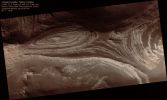
PSP_001596_1525_RED_browse-01-PCF-LXTT.jpgLayering inside Terby Crater (Absolute Natural Colors; credits: Dr Paolo C. Fienga - Lunexit Team)251 visiteImage PSP_001596_1525 shows a sequence of predominantly light-toned, layered, sedimentary rocks exposed by erosion on the floor of Terby Crater. Terby Crater is ~165 Km (~100 miles) in diameter. It's located on the northern rim of the Hellas impact basin in the Southern Hemisphere of Mars.
The layered sequence is ~2 Km (~1,2 miles) thick and consists of many repetitive, relatively horizontal beds. The beds appear to be laterally continuous, which means you can identify a given layer in many locations across the area.
Details in the layering seen in this HiRISE image reveal variations in the brightness of the layers and may indicate differing mineralogies. Based on the ease with which wind appears to erode these layers, they are believed to be composed mostly of fine-grained sediments.
However, one or more of the beds is weathering to form meter(yard)-scale boulders that have accumulated downslope in fans of debris.
These larger boulders indicate the material in the layers may be stronger than just fine-grained sediments.
It's not clear how these layers formed, but it may have involved deposition by wind or volcanic activity. Another theory involves all or part of the Hellas basin being filled with ice-covered lakes at one time in the past. The layers we see may have formed as material that was suspended in the water dropped down to the bottom of the lake. MareKromium04/04/11 at 16:07TunaSalad: E' sacrosanto Paolo, per? non capisco: ESA e N...
|
|
PSP_001596_1525_RED_browse-01-PCF-LXTT.jpgLayering inside Terby Crater (Absolute Natural Colors; credits: Dr Paolo C. Fienga - Lunexit Team)251 visiteImage PSP_001596_1525 shows a sequence of predominantly light-toned, layered, sedimentary rocks exposed by erosion on the floor of Terby Crater. Terby Crater is ~165 Km (~100 miles) in diameter. It's located on the northern rim of the Hellas impact basin in the Southern Hemisphere of Mars.
The layered sequence is ~2 Km (~1,2 miles) thick and consists of many repetitive, relatively horizontal beds. The beds appear to be laterally continuous, which means you can identify a given layer in many locations across the area.
Details in the layering seen in this HiRISE image reveal variations in the brightness of the layers and may indicate differing mineralogies. Based on the ease with which wind appears to erode these layers, they are believed to be composed mostly of fine-grained sediments.
However, one or more of the beds is weathering to form meter(yard)-scale boulders that have accumulated downslope in fans of debris.
These larger boulders indicate the material in the layers may be stronger than just fine-grained sediments.
It's not clear how these layers formed, but it may have involved deposition by wind or volcanic activity. Another theory involves all or part of the Hellas basin being filled with ice-covered lakes at one time in the past. The layers we see may have formed as material that was suspended in the water dropped down to the bottom of the lake. MareKromium04/04/11 at 14:51walthari: verissimo!
|
|
PSP_001596_1525_RED_browse-01-PCF-LXTT.jpgLayering inside Terby Crater (Absolute Natural Colors; credits: Dr Paolo C. Fienga - Lunexit Team)251 visiteImage PSP_001596_1525 shows a sequence of predominantly light-toned, layered, sedimentary rocks exposed by erosion on the floor of Terby Crater. Terby Crater is ~165 Km (~100 miles) in diameter. It's located on the northern rim of the Hellas impact basin in the Southern Hemisphere of Mars.
The layered sequence is ~2 Km (~1,2 miles) thick and consists of many repetitive, relatively horizontal beds. The beds appear to be laterally continuous, which means you can identify a given layer in many locations across the area.
Details in the layering seen in this HiRISE image reveal variations in the brightness of the layers and may indicate differing mineralogies. Based on the ease with which wind appears to erode these layers, they are believed to be composed mostly of fine-grained sediments.
However, one or more of the beds is weathering to form meter(yard)-scale boulders that have accumulated downslope in fans of debris.
These larger boulders indicate the material in the layers may be stronger than just fine-grained sediments.
It's not clear how these layers formed, but it may have involved deposition by wind or volcanic activity. Another theory involves all or part of the Hellas basin being filled with ice-covered lakes at one time in the past. The layers we see may have formed as material that was suspended in the water dropped down to the bottom of the lake. MareKromium04/04/11 at 14:28MareKromium: Non esiste comunque paragone fra la Qualit? dei fr...
|
|

ESP_020959_0985_RED_abrowse.jpgEarly Spring in Inca City (Absolute Natural Colors; credits for the additional process. and color.: Dr Paolo C. Fienga - Lunexit Team)309 visitenessun commentoMareKromium03/14/11 at 14:03george_p: L'immagine ? bellissima sia per la sua coloraz...
|
|
ESP_020959_0985_RED_abrowse.jpgEarly Spring in Inca City (Absolute Natural Colors; credits for the additional process. and color.: Dr Paolo C. Fienga - Lunexit Team)309 visitenessun commentoMareKromium03/14/11 at 08:46cano00: sulla collinetta centrale verso margine destro,fr?...
|
|
ESP_020959_0985_RED_abrowse.jpgEarly Spring in Inca City (Absolute Natural Colors; credits for the additional process. and color.: Dr Paolo C. Fienga - Lunexit Team)309 visitenessun commentoMareKromium03/13/11 at 19:41Matteo Fagone: si vedono i tulipani che cominciano a fiorire... ^...
|
|

ESP_020876_1330_RED_abrowse-PCF-LXTT.jpgDune-Gullies in Kaiser Crater (Absolute Natural Colors; credits for the additional process. and color.: Dr Paolo C. Fienga - Lunexit Team)296 visitenessun commentoMareKromium03/13/11 at 17:13MareKromium: Non ho elementi sufficienti per calcolare l'al...
|
|
ESP_020876_1330_RED_abrowse-PCF-LXTT.jpgDune-Gullies in Kaiser Crater (Absolute Natural Colors; credits for the additional process. and color.: Dr Paolo C. Fienga - Lunexit Team)296 visitenessun commentoMareKromium03/13/11 at 16:54TunaSalad: ...provo a rispondere io Andrea: le dune di Kaiser...
|
|
ESP_020876_1330_RED_abrowse-PCF-LXTT.jpgDune-Gullies in Kaiser Crater (Absolute Natural Colors; credits for the additional process. and color.: Dr Paolo C. Fienga - Lunexit Team)296 visitenessun commentoMareKromium03/13/11 at 16:49andreagg: si... vorrei cercare di capire il comportamento de...
|
|

ESP_021536_1780_00-PCF-LXTT.jpgSanta Maria Crater and "Oppy" (Absolute Natural Colors; credits: Dr Paolo C. Fienga - Lunexit Team)251 visitenessun commentoMareKromium03/13/11 at 16:39MareKromium: Grazie Andrea. E credo (CREDO!) che sia parecchio ...
|
|
ESP_020876_1330_RED_abrowse-PCF-LXTT.jpgDune-Gullies in Kaiser Crater (Absolute Natural Colors; credits for the additional process. and color.: Dr Paolo C. Fienga - Lunexit Team)296 visitenessun commentoMareKromium03/13/11 at 16:37MareKromium: ...intendi l'altezza della duna?
|
|
ESP_021536_1780_00-PCF-LXTT.jpgSanta Maria Crater and "Oppy" (Absolute Natural Colors; credits: Dr Paolo C. Fienga - Lunexit Team)251 visitenessun commentoMareKromium03/13/11 at 16:23andreagg: Bellissima colorazione
|
|
| 1160 immagini su 97 pagina(e) |
 |
|
|
|
|
21 | |
|
|
|
|





