| Ultimi commenti - Mars Reconnaissance Orbiter (MRO) |

PSP_002345_1095_red-PCF-LXTT.jpgSouthern Dunes (Absolute Natural Colors; credits for the additional process. and color.: Dr Paolo C. Fienga - Lunexit Team)316 visitenessun commentoMareKromium05/21/11 at 17:03Ufologo: E perciò li ... flagelliamo ...! ^_^
|
|
PSP_002345_1095_red-PCF-LXTT.jpgSouthern Dunes (Absolute Natural Colors; credits for the additional process. and color.: Dr Paolo C. Fienga - Lunexit Team)316 visitenessun commentoMareKromium05/21/11 at 09:53MareKromium: Carissimo Andrea,
per quanto ne so, tutto il &q...
|
|
PSP_002345_1095_red-PCF-LXTT.jpgSouthern Dunes (Absolute Natural Colors; credits for the additional process. and color.: Dr Paolo C. Fienga - Lunexit Team)316 visitenessun commentoMareKromium05/21/11 at 07:50andreagg: Ma certo MK! Comunque mi veniva da pensare una cos...
|
|
PSP_002345_1095_red-PCF-LXTT.jpgSouthern Dunes (Absolute Natural Colors; credits for the additional process. and color.: Dr Paolo C. Fienga - Lunexit Team)316 visitenessun commentoMareKromium05/20/11 at 16:12MareKromium: Eheheheheheheh...Bella Andrea, bella! Ma non credo...
|
|
PSP_002345_1095_red-PCF-LXTT.jpgSouthern Dunes (Absolute Natural Colors; credits for the additional process. and color.: Dr Paolo C. Fienga - Lunexit Team)316 visitenessun commentoMareKromium05/20/11 at 15:41andreagg: Vuoi vedere che con la scusa della pianificazione ...
|
|
PSP_002345_1095_red-PCF-LXTT.jpgSouthern Dunes (Absolute Natural Colors; credits for the additional process. and color.: Dr Paolo C. Fienga - Lunexit Team)316 visitenessun commentoMareKromium05/20/11 at 10:21MareKromium: Gentili Amici,
come avrete certamente capito, q...
|
|

ESP_021892_1775_RED_abrowse-PCF-LXTT-2.jpgFeatures of the N/W Rim of Endeavour Crater (EDM - Absolute Natural Colors; credits for the additional process. and color.: Dr Paolo C. Fienga - Lunexit Team)513 visitenessun commentoMareKromium04/24/11 at 10:18MareKromium: ...La Natura ? "Artista"! E tutta l'...
|
|
ESP_021892_1775_RED_abrowse-PCF-LXTT-2.jpgFeatures of the N/W Rim of Endeavour Crater (EDM - Absolute Natural Colors; credits for the additional process. and color.: Dr Paolo C. Fienga - Lunexit Team)513 visitenessun commentoMareKromium04/21/11 at 06:03walthari: le lineazioni a formare angoli retti o poligoni re...
|
|

PSP_003368_1755_RED_browse.jpgProposed MSL Site in Juventae Chasma (detail of the so-called "Martian Handwriting")109 visiteForse qualche Lettore avrà già riconosciuto il luogo e l'oggetto di questa ripresa e forse no.
Nel dubbio, Vi diciamo che si dovrebbe trattare (il condizionale è d'obbligo, poichè non abbiamo le coordinate esatte al centesimo di grado e quindi potremmo anche sbagliarci - ma di poco...) di una porzione della famosa - si fa per dire, naturalmente - "Scritta Marziana" di cui si è parlato sia nel Forum di SpazioUfo.com, sia nella nostra Rubrica TruePlanets.
Nostra opinione?
Se si tratta effettivamente di una porzione della "Scritta", allora pensiamo che adesso risulterà evidente a tutti come il parlare di artificialità del rilievo sia stato non solo azzardato e fuori luogo, ma addirittura ridicolo.
In caso contrario (e cioè qualora questo dettaglio fosse semplicemente relativo ad una zona promiscua alla "Scritta"), un simile e spettacolare frame MRO ci deve comunque essere di aiuto per capire, una volta che esso sia stato posto a confronto con il frame ESA-Mars Express relativo alla medesima zona, che l'operare congetture usando le orrende ed extra-piallate pseudo-immagini ESA è più che periglioso: è - semplicemente - assurdo.
E con questo, almeno per noi, la querelle sulla "Calligrafia Marziana"...è chiusa.MareKromium04/20/11 at 19:39TunaSalad: ...lo leggo adesso per la prima volta... "scr...
|
|
ESP_021892_1775_RED_abrowse-PCF-LXTT-2.jpgFeatures of the N/W Rim of Endeavour Crater (EDM - Absolute Natural Colors; credits for the additional process. and color.: Dr Paolo C. Fienga - Lunexit Team)513 visitenessun commentoMareKromium04/20/11 at 16:32cano00: alcune curiosit? su quella che parrebbe un'iso...
|
|
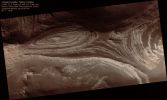
PSP_001596_1525_RED_browse-01-PCF-LXTT.jpgLayering inside Terby Crater (Absolute Natural Colors; credits: Dr Paolo C. Fienga - Lunexit Team)251 visiteImage PSP_001596_1525 shows a sequence of predominantly light-toned, layered, sedimentary rocks exposed by erosion on the floor of Terby Crater. Terby Crater is ~165 Km (~100 miles) in diameter. It's located on the northern rim of the Hellas impact basin in the Southern Hemisphere of Mars.
The layered sequence is ~2 Km (~1,2 miles) thick and consists of many repetitive, relatively horizontal beds. The beds appear to be laterally continuous, which means you can identify a given layer in many locations across the area.
Details in the layering seen in this HiRISE image reveal variations in the brightness of the layers and may indicate differing mineralogies. Based on the ease with which wind appears to erode these layers, they are believed to be composed mostly of fine-grained sediments.
However, one or more of the beds is weathering to form meter(yard)-scale boulders that have accumulated downslope in fans of debris.
These larger boulders indicate the material in the layers may be stronger than just fine-grained sediments.
It's not clear how these layers formed, but it may have involved deposition by wind or volcanic activity. Another theory involves all or part of the Hellas basin being filled with ice-covered lakes at one time in the past. The layers we see may have formed as material that was suspended in the water dropped down to the bottom of the lake. MareKromium04/04/11 at 22:28andreagg: Penso che anche se la tecnologia ? la stessa, son ...
|
|
PSP_001596_1525_RED_browse-01-PCF-LXTT.jpgLayering inside Terby Crater (Absolute Natural Colors; credits: Dr Paolo C. Fienga - Lunexit Team)251 visiteImage PSP_001596_1525 shows a sequence of predominantly light-toned, layered, sedimentary rocks exposed by erosion on the floor of Terby Crater. Terby Crater is ~165 Km (~100 miles) in diameter. It's located on the northern rim of the Hellas impact basin in the Southern Hemisphere of Mars.
The layered sequence is ~2 Km (~1,2 miles) thick and consists of many repetitive, relatively horizontal beds. The beds appear to be laterally continuous, which means you can identify a given layer in many locations across the area.
Details in the layering seen in this HiRISE image reveal variations in the brightness of the layers and may indicate differing mineralogies. Based on the ease with which wind appears to erode these layers, they are believed to be composed mostly of fine-grained sediments.
However, one or more of the beds is weathering to form meter(yard)-scale boulders that have accumulated downslope in fans of debris.
These larger boulders indicate the material in the layers may be stronger than just fine-grained sediments.
It's not clear how these layers formed, but it may have involved deposition by wind or volcanic activity. Another theory involves all or part of the Hellas basin being filled with ice-covered lakes at one time in the past. The layers we see may have formed as material that was suspended in the water dropped down to the bottom of the lake. MareKromium04/04/11 at 17:46MareKromium: ...la risposta, Carissimo M, non la so. Ma posso d...
|
|
| 1160 immagini su 97 pagina(e) |
 |
|
|
|
|
20 | |
|
|
|
|





