| |

| Ultimi commenti - Mercury |

ZZ-Mercury-Craters-Basho_Crater-PIA16625-PCF-LXTT-IPF.jpgBasho Crater (Absolute Natural Colors; credts for the additional process. and color.: Dr Paolo C. Fienga/Lunar Explorer Italia/Italian Planetary Foundation)147 visiteToday's APOD (obtained by the NASA - MESSENGER Spacecraft during the past month of November) provides us with the best look yet at Basho Crater (approximately 75 Km - such as about 47 miles - in diameter): a (relatively) young Impact Crater located in the Southern Hemisphere of the Planet Mercury. Basho Crater features some of the most striking Albedo (---> Reflectivity) contrasts that can be found on the whole Surface of the Innermost Planet of the Solar System, with both Low-Reflectance Ejecta and High-Reflectance Deposits (probably the most "famous", common and yet highly controversial - as far as its origin is concerned -Mercurian Surface Feature ever discovered: the so-called Hollows).
Date acquired: November, 6th, 2012
Image Mission Elapsed Time (MET): 260649832
Image ID: 2901613
Instrument: Narrow Angle Camera (NAC) of the Mercury Dual Imaging System (MDIS)
Center Latitude: 32,47° South
Center Longitude: 189,2° East
Resolution: 103 meters/pixel
Solar Incidence Angle: 32,4° (meaning that the Sun, at the time that the pictures were taken, was about 57,6° above the imaged Local Mercurian Horizon)
Emission Angle: 4,9°
Sun-Mercury-Messenger (or "Phase") Angle: 32,6°
This picture (which is an Original NASA - MESSENGER Spacecraft color frame published on the NASA - Planetary Photojournal with the ID n. PIA 16625) has been additionally processed and then re-colorized in Absolute Natural Colors (such as the colors that a human eye would actually perceive if someone were onboard the NASA - MESSENGER Spacecraft and then looked down, towards the Surface of Mercury), by using an original technique created - and, in time, dramatically improved - by the Lunar Explorer Italia Team. Different colors, as well as different shades of the same color, mean, among other things, the existence of different Elements (Minerals) present on the Surface of Mercury, each having a different Albedo (---> Reflectivity) and Chemical Composition.MareKromium12/21/12 at 08:20AndreaGG: Approfittando dell'immagine di questo cratere ...
|
|

ZZ-Mercury-Craters-Praxiteles_Crater-PIA12052.jpgPraxiteles Crater (enhanced Natural Colors; credits: Lunar Explorer Italia)68 visiteMESSENGER's high-resolution images obtained during the mission's second Mercury flyby have revealed a number of irregularly shaped depressions on the floor of Praxiteles Crater. These depressions are intriguing indications of possible past volcanic activity within this Crater. View the previously released NAC image of Praxiteles for additional discussion.
The image shown here is similar to one recently published in the 1st of May issue of the "Science" magazine. This image was created by first mosaicking together the highest-resolution NAC images available of Praxiteles (one of which is shown in the previous web release), to produce complete coverage of the Crater. Independently, an enhanced-color image of Praxiteles was created by using images from all 11 WAC narrow-band color filters. (Visit last week's web release for more examples of enhanced-color images see PIA12051).
The WAC images provide important color information, but the WAC resolution is considerably less than that of the mosaicked NAC images. Thus, by overlaying a slightly transparent version of the WAC enhanced-color image on the high-resolution NAC mosaic, the high-resolution color view of Praxiteles crater shown here was produced. This overlay-color view helps associate the color features with the morphologic surface features. The fact that the irregularly shaped depressions on the floor of Praxiteles are associated with bright orange and yellow color features provides evidence that the depressions may be related to past volcanic activity in this area of Mercury.
Date Acquired: October 6, 2008
Instrument: Wide Angle Camera (WAC) and Narrow Angle Camera (NAC) of the Mercury Dual Imaging System (MDIS)
Resolution: 210 meters/pixel (0,13 miles/pixel)
Scale: Praxiteles Crater has a diameter of about 182 Km (approx. 113 miles) MareKromium12/08/12 at 20:21paolocf1963: Cari Amici,
ad un nostro Amico e Partner "...
|
|

ZZ-Mercury-Craters-Geddes_Crater-PIA16302-PCF-LXTT-IPF-2.jpgCollapse Pit inside Geddes Crater (Absolute Natural Colors; credits for the additional process. and color.: Dr Paolo C. Fienga/Lunar Explorer Italia/Italian Planetary Foundation)88 visiteGeddes Crater (so named, in March 2010, in honor of Wilhelmina Geddes (1887 - 1955), an Irish stained glass and graphic artist) is well known to be a Mercurian extremely geologically interesting Impact Feature. As you know, the Ridge of Antoniadi Dorsum bisects the Crater, and in the center of the Crater's Floor there is a large Depression with a distinctive orangish hue: a color similar to the one seen in other areas (still on Mercury and elsewhere in the Solar System, such as, for instance, on our Moon) which are (better yet: were) associated with Explosive Volcanism or other phenomena of (perhaps Sulphurous-rich) Outgassing. This recently acquired image reveals new, High-Resolution detail of such a potentially Volcanic Depression (---> a Volcanic - in origin - Collapse Pit, to be more specific, which might have formed as a consequenc of the progressive withdrawal of Subsurface Magma), including the presence of many Hollows (a Surface Feature that, as we know now, is extremely common and that can be found all over the Surface of Mercury and which do not seem to be only related, in our opinion, as IPF, to the verification of Impact Events).
Date acquired: October, 11th, 2012
Image Mission Elapsed Time (MET): 258458455
Image ID: 2745982
Instrument: Narrow Angle Camera (NAC) of the Mercury Dual Imaging System (MDIS)
Center Latitude: 27,15° North
Center Longitude: 330,4° East
Resolution: 28 meters/pixel
Solar Incidence Angle: 74,1° (meaning that the Sun, at the time that the picture was taken, was about 15,9° above the imaged Local Mercurian Horizon)
Emission Angle: 33,2°
Sun-Mercury-Messenger (or "Phase") Angle: 107,3°
This picture (which is an Original NASA - MESSENGER Spacecraft b/w frame published on the NASA - Planetary Photojournal with the ID n. PIA 16302) has been additionally processed and then colorized in Absolute Natural Colors (such as the colors that a human eye would actually perceive if someone were onboard the NASA - MESSENGER Spacecraft and then looked down, towards the Surface of Mercury), by using an original technique created - and, in time, dramatically improved - by the Lunar Explorer Italia Team. Different colors, as well as different shades of the same color, mean, among other things, the existence of different Elements (Minerals) present on the Surface of Mercury, each having a different Albedo (---> Reflectivity) and Chemical Composition.MareKromium11/20/12 at 15:26paolocf1963: Siamo sempre nel range di poche decine al giorno e...
|
|
ZZ-Mercury-Craters-Geddes_Crater-PIA16302-PCF-LXTT-IPF-2.jpgCollapse Pit inside Geddes Crater (Absolute Natural Colors; credits for the additional process. and color.: Dr Paolo C. Fienga/Lunar Explorer Italia/Italian Planetary Foundation)88 visiteGeddes Crater (so named, in March 2010, in honor of Wilhelmina Geddes (1887 - 1955), an Irish stained glass and graphic artist) is well known to be a Mercurian extremely geologically interesting Impact Feature. As you know, the Ridge of Antoniadi Dorsum bisects the Crater, and in the center of the Crater's Floor there is a large Depression with a distinctive orangish hue: a color similar to the one seen in other areas (still on Mercury and elsewhere in the Solar System, such as, for instance, on our Moon) which are (better yet: were) associated with Explosive Volcanism or other phenomena of (perhaps Sulphurous-rich) Outgassing. This recently acquired image reveals new, High-Resolution detail of such a potentially Volcanic Depression (---> a Volcanic - in origin - Collapse Pit, to be more specific, which might have formed as a consequenc of the progressive withdrawal of Subsurface Magma), including the presence of many Hollows (a Surface Feature that, as we know now, is extremely common and that can be found all over the Surface of Mercury and which do not seem to be only related, in our opinion, as IPF, to the verification of Impact Events).
Date acquired: October, 11th, 2012
Image Mission Elapsed Time (MET): 258458455
Image ID: 2745982
Instrument: Narrow Angle Camera (NAC) of the Mercury Dual Imaging System (MDIS)
Center Latitude: 27,15° North
Center Longitude: 330,4° East
Resolution: 28 meters/pixel
Solar Incidence Angle: 74,1° (meaning that the Sun, at the time that the picture was taken, was about 15,9° above the imaged Local Mercurian Horizon)
Emission Angle: 33,2°
Sun-Mercury-Messenger (or "Phase") Angle: 107,3°
This picture (which is an Original NASA - MESSENGER Spacecraft b/w frame published on the NASA - Planetary Photojournal with the ID n. PIA 16302) has been additionally processed and then colorized in Absolute Natural Colors (such as the colors that a human eye would actually perceive if someone were onboard the NASA - MESSENGER Spacecraft and then looked down, towards the Surface of Mercury), by using an original technique created - and, in time, dramatically improved - by the Lunar Explorer Italia Team. Different colors, as well as different shades of the same color, mean, among other things, the existence of different Elements (Minerals) present on the Surface of Mercury, each having a different Albedo (---> Reflectivity) and Chemical Composition.MareKromium11/20/12 at 14:44Anakin: Fantastico!!!
|
|
ZZ-Mercury-Craters-Geddes_Crater-PIA16302-PCF-LXTT-IPF-2.jpgCollapse Pit inside Geddes Crater (Absolute Natural Colors; credits for the additional process. and color.: Dr Paolo C. Fienga/Lunar Explorer Italia/Italian Planetary Foundation)88 visiteGeddes Crater (so named, in March 2010, in honor of Wilhelmina Geddes (1887 - 1955), an Irish stained glass and graphic artist) is well known to be a Mercurian extremely geologically interesting Impact Feature. As you know, the Ridge of Antoniadi Dorsum bisects the Crater, and in the center of the Crater's Floor there is a large Depression with a distinctive orangish hue: a color similar to the one seen in other areas (still on Mercury and elsewhere in the Solar System, such as, for instance, on our Moon) which are (better yet: were) associated with Explosive Volcanism or other phenomena of (perhaps Sulphurous-rich) Outgassing. This recently acquired image reveals new, High-Resolution detail of such a potentially Volcanic Depression (---> a Volcanic - in origin - Collapse Pit, to be more specific, which might have formed as a consequenc of the progressive withdrawal of Subsurface Magma), including the presence of many Hollows (a Surface Feature that, as we know now, is extremely common and that can be found all over the Surface of Mercury and which do not seem to be only related, in our opinion, as IPF, to the verification of Impact Events).
Date acquired: October, 11th, 2012
Image Mission Elapsed Time (MET): 258458455
Image ID: 2745982
Instrument: Narrow Angle Camera (NAC) of the Mercury Dual Imaging System (MDIS)
Center Latitude: 27,15° North
Center Longitude: 330,4° East
Resolution: 28 meters/pixel
Solar Incidence Angle: 74,1° (meaning that the Sun, at the time that the picture was taken, was about 15,9° above the imaged Local Mercurian Horizon)
Emission Angle: 33,2°
Sun-Mercury-Messenger (or "Phase") Angle: 107,3°
This picture (which is an Original NASA - MESSENGER Spacecraft b/w frame published on the NASA - Planetary Photojournal with the ID n. PIA 16302) has been additionally processed and then colorized in Absolute Natural Colors (such as the colors that a human eye would actually perceive if someone were onboard the NASA - MESSENGER Spacecraft and then looked down, towards the Surface of Mercury), by using an original technique created - and, in time, dramatically improved - by the Lunar Explorer Italia Team. Different colors, as well as different shades of the same color, mean, among other things, the existence of different Elements (Minerals) present on the Surface of Mercury, each having a different Albedo (---> Reflectivity) and Chemical Composition.MareKromium11/20/12 at 09:07MareKromium: Grazie al nostro APOD, i Lettori d'Oltre Ocean...
|
|

ZZ-Mercury-Craters-Unnamed_Crater-PIA16392-PCF-LXTT-IPF.jpgUnnamed Mercurian Crater (Absolute Natural Colors; credits for the research and the additional process.: Dr Paolo C. Fienga/Lunar Explorer Italia/Italian Planetary Foundation)112 visiteThis dramatic image, where North is to the right, shows a Simple Impact Crater some 11 Km in diameter, located within the 290-Km-diameter Mendelssohn Basin. Its sharp Rim indicates that this Crater is a comparatively young Feature, though some parts of the Crater Walls have slumped (---> slowly fallen down) onto the Floor. The High Resolution of this image allows us to see quite a few distinctive textures along the Crater Walls.
Date acquired: July 21, 2012
Image Mission Elapsed Time (MET): 251400686
Image ID: 2244179
Instrument: Narrow Angle Camera (NAC) of the Mercury Dual Imaging System (MDIS)
Center Latitude: 70,28° North
Center Longitude: 105,38° East
Resolution: 19 meters/pixel
Scale: the field of view in this image is approx. 9,7 Km (such as about 2,3 miles) across
Solar Incidence Angle: 76,9° (menaing that the Sun was about 13,1° above the imaged Local Horizon at the time that the picture was taken)
Emission Angle: 11,0°
Sun-Mercury-MESSENGER (or "Phase") Angle: 87,9°MareKromium10/29/12 at 19:58paolocf1963: Si Anakin, la mia era solo una curiosit?. La Luna ...
|
|
ZZ-Mercury-Craters-Unnamed_Crater-PIA16392-PCF-LXTT-IPF.jpgUnnamed Mercurian Crater (Absolute Natural Colors; credits for the research and the additional process.: Dr Paolo C. Fienga/Lunar Explorer Italia/Italian Planetary Foundation)112 visiteThis dramatic image, where North is to the right, shows a Simple Impact Crater some 11 Km in diameter, located within the 290-Km-diameter Mendelssohn Basin. Its sharp Rim indicates that this Crater is a comparatively young Feature, though some parts of the Crater Walls have slumped (---> slowly fallen down) onto the Floor. The High Resolution of this image allows us to see quite a few distinctive textures along the Crater Walls.
Date acquired: July 21, 2012
Image Mission Elapsed Time (MET): 251400686
Image ID: 2244179
Instrument: Narrow Angle Camera (NAC) of the Mercury Dual Imaging System (MDIS)
Center Latitude: 70,28° North
Center Longitude: 105,38° East
Resolution: 19 meters/pixel
Scale: the field of view in this image is approx. 9,7 Km (such as about 2,3 miles) across
Solar Incidence Angle: 76,9° (menaing that the Sun was about 13,1° above the imaged Local Horizon at the time that the picture was taken)
Emission Angle: 11,0°
Sun-Mercury-MESSENGER (or "Phase") Angle: 87,9°MareKromium10/29/12 at 09:01Anakin: Sono molto simili. Si potrebbe pensare allo stesso...
|
|
ZZ-Mercury-Craters-Unnamed_Crater-PIA16392-PCF-LXTT-IPF.jpgUnnamed Mercurian Crater (Absolute Natural Colors; credits for the research and the additional process.: Dr Paolo C. Fienga/Lunar Explorer Italia/Italian Planetary Foundation)112 visiteThis dramatic image, where North is to the right, shows a Simple Impact Crater some 11 Km in diameter, located within the 290-Km-diameter Mendelssohn Basin. Its sharp Rim indicates that this Crater is a comparatively young Feature, though some parts of the Crater Walls have slumped (---> slowly fallen down) onto the Floor. The High Resolution of this image allows us to see quite a few distinctive textures along the Crater Walls.
Date acquired: July 21, 2012
Image Mission Elapsed Time (MET): 251400686
Image ID: 2244179
Instrument: Narrow Angle Camera (NAC) of the Mercury Dual Imaging System (MDIS)
Center Latitude: 70,28° North
Center Longitude: 105,38° East
Resolution: 19 meters/pixel
Scale: the field of view in this image is approx. 9,7 Km (such as about 2,3 miles) across
Solar Incidence Angle: 76,9° (menaing that the Sun was about 13,1° above the imaged Local Horizon at the time that the picture was taken)
Emission Angle: 11,0°
Sun-Mercury-MESSENGER (or "Phase") Angle: 87,9°MareKromium10/28/12 at 10:26MareKromium: Una curiosit?: molti dicono che, in fondo, tutti i...
|
|
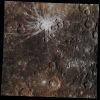
ZZ-Mercury-Craters-Mena_and_Cezanne_Crater-PIA16341-PCF-LXTT-IPF.jpgMena and Cezanne Crater (Absolute Natural Colors; credits for the additional process. and color.: Dr Paolo C. Fienga/Lunar Explorer Italia/Italian Planetary Foundation)87 visiteIn this Image-Mosaic, the Bright Rays of Mena Crater and the distinctive color difference of Cezanne Crater (with the surrounding area) are well highlighted. These two distinctive Impact Features provide beautiful contrast to this Absolute Natural Color image, giving the viewer more insight into reflectance variations (---> Albedoes) on Mercury's Surface. Also note the extremely old, degraded and larger, infilled Unnamed Crater visible on the center right of the frame, which is crossed by at least three major Crater Chains.
Date acquired: June 04, 2012
Image Mission Elapsed Time (MET): 247336883, 247336875, 247336879
Image ID: 1955368, 1955366, 1955367
Instrument: Wide Angle Camera (WAC) of the Mercury Dual Imaging System (MDIS)
WAC filters: 9, 7, 6 (996, 748, 433 nanometers) in red, green, and blue
Center Latitude: 3,78° South
Center Longitude: 235,8° East
Resolution: 552 meters/pixel
Scale: Cezanne Crater, such as the Crater in the bottom center, is about 67 km (approx. 41 miles) in diameter.
Solar Incidence Angle: 55,6° (meaning that the Sun was about 34,4° above the imaged Local Horizon at the time the pictures were taken)
Emission Angle: 0,0° (meaning that the MESSENGER Spacecraft, at the time that the pictures were taken, was absolutely perpendicular to the Mercurian Surface visible in the center of the frame)
Sun-Mercury-MESSENGER (or "Phase") Angle: 55,6°MareKromium10/16/12 at 14:30paolocf1963: Grazie Anakin, hai centrato il punto: per me, &quo...
|
|
ZZ-Mercury-Craters-Mena_and_Cezanne_Crater-PIA16341-PCF-LXTT-IPF.jpgMena and Cezanne Crater (Absolute Natural Colors; credits for the additional process. and color.: Dr Paolo C. Fienga/Lunar Explorer Italia/Italian Planetary Foundation)87 visiteIn this Image-Mosaic, the Bright Rays of Mena Crater and the distinctive color difference of Cezanne Crater (with the surrounding area) are well highlighted. These two distinctive Impact Features provide beautiful contrast to this Absolute Natural Color image, giving the viewer more insight into reflectance variations (---> Albedoes) on Mercury's Surface. Also note the extremely old, degraded and larger, infilled Unnamed Crater visible on the center right of the frame, which is crossed by at least three major Crater Chains.
Date acquired: June 04, 2012
Image Mission Elapsed Time (MET): 247336883, 247336875, 247336879
Image ID: 1955368, 1955366, 1955367
Instrument: Wide Angle Camera (WAC) of the Mercury Dual Imaging System (MDIS)
WAC filters: 9, 7, 6 (996, 748, 433 nanometers) in red, green, and blue
Center Latitude: 3,78° South
Center Longitude: 235,8° East
Resolution: 552 meters/pixel
Scale: Cezanne Crater, such as the Crater in the bottom center, is about 67 km (approx. 41 miles) in diameter.
Solar Incidence Angle: 55,6° (meaning that the Sun was about 34,4° above the imaged Local Horizon at the time the pictures were taken)
Emission Angle: 0,0° (meaning that the MESSENGER Spacecraft, at the time that the pictures were taken, was absolutely perpendicular to the Mercurian Surface visible in the center of the frame)
Sun-Mercury-MESSENGER (or "Phase") Angle: 55,6°MareKromium10/16/12 at 13:15Anakin: sono pienamente d'accordo. Fai benissimo a far...
|
|
ZZ-Mercury-Craters-Mena_and_Cezanne_Crater-PIA16341-PCF-LXTT-IPF.jpgMena and Cezanne Crater (Absolute Natural Colors; credits for the additional process. and color.: Dr Paolo C. Fienga/Lunar Explorer Italia/Italian Planetary Foundation)87 visiteIn this Image-Mosaic, the Bright Rays of Mena Crater and the distinctive color difference of Cezanne Crater (with the surrounding area) are well highlighted. These two distinctive Impact Features provide beautiful contrast to this Absolute Natural Color image, giving the viewer more insight into reflectance variations (---> Albedoes) on Mercury's Surface. Also note the extremely old, degraded and larger, infilled Unnamed Crater visible on the center right of the frame, which is crossed by at least three major Crater Chains.
Date acquired: June 04, 2012
Image Mission Elapsed Time (MET): 247336883, 247336875, 247336879
Image ID: 1955368, 1955366, 1955367
Instrument: Wide Angle Camera (WAC) of the Mercury Dual Imaging System (MDIS)
WAC filters: 9, 7, 6 (996, 748, 433 nanometers) in red, green, and blue
Center Latitude: 3,78° South
Center Longitude: 235,8° East
Resolution: 552 meters/pixel
Scale: Cezanne Crater, such as the Crater in the bottom center, is about 67 km (approx. 41 miles) in diameter.
Solar Incidence Angle: 55,6° (meaning that the Sun was about 34,4° above the imaged Local Horizon at the time the pictures were taken)
Emission Angle: 0,0° (meaning that the MESSENGER Spacecraft, at the time that the pictures were taken, was absolutely perpendicular to the Mercurian Surface visible in the center of the frame)
Sun-Mercury-MESSENGER (or "Phase") Angle: 55,6°MareKromium10/16/12 at 08:20paolocf1963: E lo ?! Per? ? anche bello da guardare, e tutt'...
|
|
ZZ-Mercury-Craters-Mena_and_Cezanne_Crater-PIA16341-PCF-LXTT-IPF.jpgMena and Cezanne Crater (Absolute Natural Colors; credits for the additional process. and color.: Dr Paolo C. Fienga/Lunar Explorer Italia/Italian Planetary Foundation)87 visiteIn this Image-Mosaic, the Bright Rays of Mena Crater and the distinctive color difference of Cezanne Crater (with the surrounding area) are well highlighted. These two distinctive Impact Features provide beautiful contrast to this Absolute Natural Color image, giving the viewer more insight into reflectance variations (---> Albedoes) on Mercury's Surface. Also note the extremely old, degraded and larger, infilled Unnamed Crater visible on the center right of the frame, which is crossed by at least three major Crater Chains.
Date acquired: June 04, 2012
Image Mission Elapsed Time (MET): 247336883, 247336875, 247336879
Image ID: 1955368, 1955366, 1955367
Instrument: Wide Angle Camera (WAC) of the Mercury Dual Imaging System (MDIS)
WAC filters: 9, 7, 6 (996, 748, 433 nanometers) in red, green, and blue
Center Latitude: 3,78° South
Center Longitude: 235,8° East
Resolution: 552 meters/pixel
Scale: Cezanne Crater, such as the Crater in the bottom center, is about 67 km (approx. 41 miles) in diameter.
Solar Incidence Angle: 55,6° (meaning that the Sun was about 34,4° above the imaged Local Horizon at the time the pictures were taken)
Emission Angle: 0,0° (meaning that the MESSENGER Spacecraft, at the time that the pictures were taken, was absolutely perpendicular to the Mercurian Surface visible in the center of the frame)
Sun-Mercury-MESSENGER (or "Phase") Angle: 55,6°MareKromium10/16/12 at 07:22Anakin: Effettivamente stando vicino al Sole dovrebbe risu...
|
|
| 149 immagini su 13 pagina(e) |
|
|
|
|
|
|
|
10 | |
|
|
|
|





