| |

| Ultimi commenti - Venus |

6-Venus.jpgVenus from Galileo141 visiteCaption NASA originale:"This colorized picture of Venus was taken February 14, 1990, from a distance of almost 1,7 MMs, about 6 days after Galileo's closest approach to the planet. It has been colorized to a bluish hue to emphasize subtle contrasts in the cloud markings and to indicate that it was taken through a violet filter. Features in the sulfuric acid clouds near the top of the planet's atmosphere are most prominent in violet and ultraviolet light". 04/29/13 at 10:02AndreaGG: Anakin... ma perch? dubiti dell'idiozia della ...
|
|
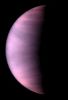
5-Venus.jpgVenus from 70.600.000 Km130 visiteUna splendida fotografia di Venere (crescente) ripresa dall'Hubble Space Telescope nel 1995. Diciamo che questa immagine, seppur bellissima, fa comunque parte di quella che noi chiamiamo "La Galleria Fotografica Nascosta", ossia quel complesso (smisurato) di immagini dello Spazio che, se non si sa esattamente dove mettere le mani (o se non si è fortunati), si rischia di non trovare mai.
Questa foto, comunque, se volete andare a vederla alla "fonte", proviene dal "Planetary Photojournal - Images of Venus"04/29/13 at 09:57AndreaGG: Dipende sempre da quali filtri passa-banda si usa ...
|
|

8-Venus.jpgVenus from 2.700.000 Km (Galileo Probe)171 visiteUna meravigliosa visione di Venere, davvero simile alla Terra vista dalla Luna, mentre la fitta coltre di nuvole che la ricopre riflette i raggi del Sole. Come avevamo detto in sede di commento alle prime foto, Venere suggerisce un'idea di "tranquillità e benessere".
Un Mondo bianco e azzurro apparentemente simile al nostro ma, come avete visto insieme a noi, in realtà violento ed assolutamente inospitale.
Un Mondo comunque bellissimo da guardare, ammirare e studiare, ma ... Restando lontan!
...Molto lontani...04/29/13 at 09:35Anakin: ok taroccatissima. Nel senso di non reale nei suoi...
|
|
6-Venus.jpgVenus from Galileo141 visiteCaption NASA originale:"This colorized picture of Venus was taken February 14, 1990, from a distance of almost 1,7 MMs, about 6 days after Galileo's closest approach to the planet. It has been colorized to a bluish hue to emphasize subtle contrasts in the cloud markings and to indicate that it was taken through a violet filter. Features in the sulfuric acid clouds near the top of the planet's atmosphere are most prominent in violet and ultraviolet light". 04/29/13 at 09:33Anakin: Beh credo che nessuno scambi questa immagine per r...
|
|
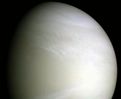
1-Venus_Galileo_Visible.jpgVenus140 visiteUna magnifica ricostruzione di Venere - ad opera dello "Space Artist" Don P. Mitchell - nei colori in cui un umano che fosse nello spazio la vedrebbe.
Queste le annotazioni originali dell'Artista:
Full spectral data is rarely available, and instead we must use views through color filters. Above, the Galileo probe captured Venus through a clear filter (left) and through a 410 nm violet filter, which reveals the subtle yellow and white clouds. Unfortunately, many different color images could result in the same two clear and violet signals above. Even when so-called red, green and blue filters are used, the problem is just as difficult, because the filters are not really the right red, green and blue to just plug into the channels of a color display. Theoretically, information from the two images above and from the Cassini spectrum could be combined using Bayesian decision theory, to compute the most probable color image. If colors are estimated correctly, there is a final issue of tone mapping. How bright does the image appear to the eye in a given context. The image above is the best color image of Venus I've found, showing the planet as it would likely appear to a human observer in space. It was made by Turkish astronomer A. Tayfun Oner, using the two color channels from the Galileo camera, and a third interpolated channel. 04/29/13 at 09:29paolocf1963: Molto, ma solo quando il Pianeta ? prossimo all�...
|
|
1-Venus_Galileo_Visible.jpgVenus140 visiteUna magnifica ricostruzione di Venere - ad opera dello "Space Artist" Don P. Mitchell - nei colori in cui un umano che fosse nello spazio la vedrebbe.
Queste le annotazioni originali dell'Artista:
Full spectral data is rarely available, and instead we must use views through color filters. Above, the Galileo probe captured Venus through a clear filter (left) and through a 410 nm violet filter, which reveals the subtle yellow and white clouds. Unfortunately, many different color images could result in the same two clear and violet signals above. Even when so-called red, green and blue filters are used, the problem is just as difficult, because the filters are not really the right red, green and blue to just plug into the channels of a color display. Theoretically, information from the two images above and from the Cassini spectrum could be combined using Bayesian decision theory, to compute the most probable color image. If colors are estimated correctly, there is a final issue of tone mapping. How bright does the image appear to the eye in a given context. The image above is the best color image of Venus I've found, showing the planet as it would likely appear to a human observer in space. It was made by Turkish astronomer A. Tayfun Oner, using the two color channels from the Galileo camera, and a third interpolated channel. 04/29/13 at 09:14Anakin: Ah ecco! il tuo punto di riferimento ? la tua visi...
|
|

8-Venus_from_Venus_Express-VIRTIS_COB05_vis_397_b.jpgVenus, from Venus Express (natural colors)79 visiteCaption ESA originale:"Views of the Southern Hemisphere of Venus in visible and ultraviolet light show interesting atmospheric stripe-like structures.
Spotted for the first time by Mariner 10 in the 1970s, they may be due to the presence of dust and aerosols in the atmosphere, but their true nature is still unexplained. "Venus Express has the tools to investigate these structures in detail. Studies have already begun to dig into the properties of the complex wind fields on Venus, to understand the atmospheric dynamics on local and global scales".
Venus Express also made use for the first time ever from orbit of the so-called 'infrared windows' present in the atmosphere of Venus – if observed at certain wavelengths, it is possible to detect thermal radiation leaking from the deepest atmospheric layers, revealing what lies beneath the dense cloud curtain situated at about 60 Km altitude". 04/29/13 at 09:13paolocf1963: Immagine bella, ma colori farlocchi, in perfetto &...
|
|
8-Venus.jpgVenus from 2.700.000 Km (Galileo Probe)171 visiteUna meravigliosa visione di Venere, davvero simile alla Terra vista dalla Luna, mentre la fitta coltre di nuvole che la ricopre riflette i raggi del Sole. Come avevamo detto in sede di commento alle prime foto, Venere suggerisce un'idea di "tranquillità e benessere".
Un Mondo bianco e azzurro apparentemente simile al nostro ma, come avete visto insieme a noi, in realtà violento ed assolutamente inospitale.
Un Mondo comunque bellissimo da guardare, ammirare e studiare, ma ... Restando lontan!
...Molto lontani...04/29/13 at 09:12paolocf1963: Qui il filtro blu ? stato tolto, il colore ? pi? r...
|
|
6-Venus.jpgVenus from Galileo141 visiteCaption NASA originale:"This colorized picture of Venus was taken February 14, 1990, from a distance of almost 1,7 MMs, about 6 days after Galileo's closest approach to the planet. It has been colorized to a bluish hue to emphasize subtle contrasts in the cloud markings and to indicate that it was taken through a violet filter. Features in the sulfuric acid clouds near the top of the planet's atmosphere are most prominent in violet and ultraviolet light". 04/29/13 at 09:11paolocf1963: Questa immagine ? stata scattata usando un filtro ...
|
|
5-Venus.jpgVenus from 70.600.000 Km130 visiteUna splendida fotografia di Venere (crescente) ripresa dall'Hubble Space Telescope nel 1995. Diciamo che questa immagine, seppur bellissima, fa comunque parte di quella che noi chiamiamo "La Galleria Fotografica Nascosta", ossia quel complesso (smisurato) di immagini dello Spazio che, se non si sa esattamente dove mettere le mani (o se non si è fortunati), si rischia di non trovare mai.
Questa foto, comunque, se volete andare a vederla alla "fonte", proviene dal "Planetary Photojournal - Images of Venus"04/29/13 at 09:10paolocf1963: Ecco: questa immagine, per bella che sia, ha color...
|
|
1-Venus_Galileo_Visible.jpgVenus140 visiteUna magnifica ricostruzione di Venere - ad opera dello "Space Artist" Don P. Mitchell - nei colori in cui un umano che fosse nello spazio la vedrebbe.
Queste le annotazioni originali dell'Artista:
Full spectral data is rarely available, and instead we must use views through color filters. Above, the Galileo probe captured Venus through a clear filter (left) and through a 410 nm violet filter, which reveals the subtle yellow and white clouds. Unfortunately, many different color images could result in the same two clear and violet signals above. Even when so-called red, green and blue filters are used, the problem is just as difficult, because the filters are not really the right red, green and blue to just plug into the channels of a color display. Theoretically, information from the two images above and from the Cassini spectrum could be combined using Bayesian decision theory, to compute the most probable color image. If colors are estimated correctly, there is a final issue of tone mapping. How bright does the image appear to the eye in a given context. The image above is the best color image of Venus I've found, showing the planet as it would likely appear to a human observer in space. It was made by Turkish astronomer A. Tayfun Oner, using the two color channels from the Galileo camera, and a third interpolated channel. 04/29/13 at 09:09paolocf1963: Questa, secondo me, anche se "colorizzata a m...
|
|

0-Venus.jpgVenus from Mariner 10176 visiteVenus Data and Statistics
Mass (kg) = 4.869e+24
Mass (Earth = 1) = 81476
Equatorial radius = 6.051,8 Km
Equatorial radius (Earth = 1) = 0,94886
Mean density (gm/cm^3) = 5,25
Mean distance from the Sun = 108.200.000 Km
Mean distance from the Sun (Earth = 1) = 0,7233
Rotational period (days) = 243,0187
Orbital period (days) = 224,701
Mean orbital velocity = 35,02 Km per second
Tilt of axis = 177,36°
Orbital inclination = 3,394°
Equatorial surface gravity (m/sec^2) = 8,87
Equatorial escape velocity = 10,36 Km per second
Magnitude (Vo) = - 4,4
Mean surface temperature = + 482°C
Atmospheric pressure (bars) = 92
Atmospheric composition: Carbon dioxide 96%, Nitrogen 3% and trace amounts of: Sulfur dioxide, water vapor, carbon monoxide, argon, helium, neon, hydrogen chloride and hydrogen fluoride.04/29/13 at 09:08paolocf1963: Esatto Anakin: falsi. D'altrone questo ? un co...
|
|
| 129 immagini su 11 pagina(e) |
|
|
|
|
|
7 | |
|
|
|
|
|





