| |

| Ultimi commenti - Venus |
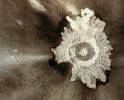
Craters-Adivar_Crater-1.jpgAdivar Crater (Natural Colors; credits: Lunar Explorer Italia)81 visitenessun commentoMareKromium10/15/20 at 20:20walthari: vero
|
|
Craters-Adivar_Crater-1.jpgAdivar Crater (Natural Colors; credits: Lunar Explorer Italia)81 visitenessun commentoMareKromium10/13/20 at 17:41MareKromium: Forse nell'Atmosfera Alta di Venere c'? Vi...
|
|
Craters-Adivar_Crater-1.jpgAdivar Crater (Natural Colors; credits: Lunar Explorer Italia)81 visitenessun commentoMareKromium10/13/20 at 10:01Anakin: Non vi sto seguendo. Tornare per vedere cosa in pa...
|
|
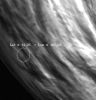
Venusian_Atmosphere-VI410_01_23_with_spot_H1.jpgThe Venusian Atmosphere under the Messenger56 visiteCaption ESA:"This grey-scale image, obtained by the VIRTIS instrument on board ESA’s Venus Express, shows the Atmospheric Region of Venus over which NASA’s MESSENGER Spacecraft passed on 5 June 2007. The Region of MESSENGER’s closest approach is in the night side (marked by a circle).
VIRTIS obtained this image at 2,3 micrometres from about 35.000 Km from the Planet, on the night side.
This wavelength makes it possible to probe the atmosphere down to about 30 Km from the surface. Much of the contrast in this image is due to the structure of the lower clouds.
The bright areas correspond to radiation from the lower atmospheric layers, indicating that the clouds are thinner in those areas. At the 2,3-micrometre wavelength it is possible to study not only the morphology of the cloud layers, but also its chemical composition (such as Carbon Monoxide - CO -, Water - H2O -, Sulphur Dioxide - SO2 -, etc)".MareKromium10/11/20 at 12:49MareKromium: Ma cosa sarà mai accaduto a Venere?!?
|
|
Craters-Adivar_Crater-1.jpgAdivar Crater (Natural Colors; credits: Lunar Explorer Italia)81 visitenessun commentoMareKromium10/09/20 at 16:26MareKromium: E' ora. E non dovremmo lasciarla passare!!!
|
|
Craters-Adivar_Crater-1.jpgAdivar Crater (Natural Colors; credits: Lunar Explorer Italia)81 visitenessun commentoMareKromium10/08/20 at 20:21walthari: sarebbe l'ora si maledizione
|
|
Craters-Adivar_Crater-1.jpgAdivar Crater (Natural Colors; credits: Lunar Explorer Italia)81 visitenessun commentoMareKromium10/08/20 at 11:55MareKromium: Sarebbe ora di tornare su Venere e dare un'occ...
|
|

Venusian_Surface-Venera_13-06-DPM-PCF-LXTT-IPF-1.jpgTerra Incognita (Additional Credits: Don P. Mitchell - perspective visualization - and Dr Paolo C. Fienga - Colorization)162 visiteFollowing yesterday's APOD, we have decided to take you once again on the Surface of the Planet Venus (as imaged by the Soviet Lander Venera 13) and we are proud to show you the result of a combined effort: the perspective imaging of the Venusian Surface as seen from the the Lander (a work carried out by the American Researcher Dr Don P. Mitchell) with the Absolute Natural Colorization of the landscape and Sky (this job carried out by the Italian Researcher Dr Paolo C. Fienga). The result, as you can see, is a deeply suggestive (and, maybe, even a little scary...) vision of what has been called by many Scientists and Researchers, "The Venusian Inferno": such as a World that, from every point of view, seems to be completely hostile to the human concept of Life itself.
And here is a brief story of what happened that day, such as March 1st, 1982, when the Descent Module of the Venera 13 Spacecraft landed on Venus, as told us by Dr Don P. Mitchell himself:"...Two optical-mechanical cameras repeatedly scanned 180° or 60° through Clear and Colored Filters and at higher resolution than the Venera 9/10 System. The camera system was developed by Dr A.S. Selivanov's Team at the Institute of Space Device Engineering. The main Spacecraft, flying on a Fly-By Trajectory, remained in radio contact with the Lander for 127 minutes. It relayed the video to Earth as a phase-modulated digital signal, at 9 bits per pixel. The Venera 13 (and Venera 14 too) Lander/s transmitted digital images with a depth of 9 bits and an approximately logarithmic encoding of photometric brightness. Multiple panoramas were scanned by the camera, including some with red, green or blue glass filters in place. The entire transmission was relayed to Earth in real time, and also replayed from digtal tape recordings onboard the Venera 13 Spacecraft. This peculiar tecnique permitted the reconstruction of an almost noiseless version from the multiple transmissions. An accurate conversion of that encoding to linear brightness has also been derived, using calibration information included with the images (to be noted is the improved rendering of shape and details in very dark and very light portions of the image). The original Soviet versions of this frame included a full panorama from Clear-Filter images, and color panoramas from the red, green and blue-filter images. The signal to noise was poorer for the color images, because they were much darker. I (meaning Dr Don P. Mitchell) combined the two types of panoramas by adding the Chroma Signal (in CIE Lab Color Space) from the color images with the luminance from the clear images, thus obtaining simply spectacular results. Furthermore, the Venera 13 panoramas were just spherical projections and therefore they had to be remapped to perspective projections and overlayed (using Adobe Photoshop CS2) to produce views that were good enough to give us a better subjective impression of the Venusian Surface. In the overhead view, notice the subtle shadowing existing around the Lander. The Surface illumination is from the uniformly bright hemisphere of the Sky, but the Lander (as you can better see in the spherical projections) blocks part of the Sky from nearby Ground. In addition to the above, please notice that in this frame the thick yellow-orange color of the Sky is due to Rayleigh Scattering of the Sunlight by the thick Venusian Atmosphere and, possibly, by an additional (still) unknown blue-absorbing Gas Component. Brightness has been normalized. Please remember that the variations in the color of the Surface and Sky that you may certainly notice once you will have compared different color images taken by the different Soviet Venera Class Landers that made it to the Venusian Surface, are due to differing Atmospheric Depths and Opacities, as well as to the differing Sun Angles existing at the different Landing Sites...".
MareKromium09/20/20 at 17:29MareKromium: Mia opinioncina (detta "banalizzando e sempli...
|
|
Venusian_Surface-Venera_13-06-DPM-PCF-LXTT-IPF-1.jpgTerra Incognita (Additional Credits: Don P. Mitchell - perspective visualization - and Dr Paolo C. Fienga - Colorization)162 visiteFollowing yesterday's APOD, we have decided to take you once again on the Surface of the Planet Venus (as imaged by the Soviet Lander Venera 13) and we are proud to show you the result of a combined effort: the perspective imaging of the Venusian Surface as seen from the the Lander (a work carried out by the American Researcher Dr Don P. Mitchell) with the Absolute Natural Colorization of the landscape and Sky (this job carried out by the Italian Researcher Dr Paolo C. Fienga). The result, as you can see, is a deeply suggestive (and, maybe, even a little scary...) vision of what has been called by many Scientists and Researchers, "The Venusian Inferno": such as a World that, from every point of view, seems to be completely hostile to the human concept of Life itself.
And here is a brief story of what happened that day, such as March 1st, 1982, when the Descent Module of the Venera 13 Spacecraft landed on Venus, as told us by Dr Don P. Mitchell himself:"...Two optical-mechanical cameras repeatedly scanned 180° or 60° through Clear and Colored Filters and at higher resolution than the Venera 9/10 System. The camera system was developed by Dr A.S. Selivanov's Team at the Institute of Space Device Engineering. The main Spacecraft, flying on a Fly-By Trajectory, remained in radio contact with the Lander for 127 minutes. It relayed the video to Earth as a phase-modulated digital signal, at 9 bits per pixel. The Venera 13 (and Venera 14 too) Lander/s transmitted digital images with a depth of 9 bits and an approximately logarithmic encoding of photometric brightness. Multiple panoramas were scanned by the camera, including some with red, green or blue glass filters in place. The entire transmission was relayed to Earth in real time, and also replayed from digtal tape recordings onboard the Venera 13 Spacecraft. This peculiar tecnique permitted the reconstruction of an almost noiseless version from the multiple transmissions. An accurate conversion of that encoding to linear brightness has also been derived, using calibration information included with the images (to be noted is the improved rendering of shape and details in very dark and very light portions of the image). The original Soviet versions of this frame included a full panorama from Clear-Filter images, and color panoramas from the red, green and blue-filter images. The signal to noise was poorer for the color images, because they were much darker. I (meaning Dr Don P. Mitchell) combined the two types of panoramas by adding the Chroma Signal (in CIE Lab Color Space) from the color images with the luminance from the clear images, thus obtaining simply spectacular results. Furthermore, the Venera 13 panoramas were just spherical projections and therefore they had to be remapped to perspective projections and overlayed (using Adobe Photoshop CS2) to produce views that were good enough to give us a better subjective impression of the Venusian Surface. In the overhead view, notice the subtle shadowing existing around the Lander. The Surface illumination is from the uniformly bright hemisphere of the Sky, but the Lander (as you can better see in the spherical projections) blocks part of the Sky from nearby Ground. In addition to the above, please notice that in this frame the thick yellow-orange color of the Sky is due to Rayleigh Scattering of the Sunlight by the thick Venusian Atmosphere and, possibly, by an additional (still) unknown blue-absorbing Gas Component. Brightness has been normalized. Please remember that the variations in the color of the Surface and Sky that you may certainly notice once you will have compared different color images taken by the different Soviet Venera Class Landers that made it to the Venusian Surface, are due to differing Atmospheric Depths and Opacities, as well as to the differing Sun Angles existing at the different Landing Sites...".
MareKromium09/18/20 at 17:48walthari: cavolo ci ho pensato tanto anche io e ho pensato c...
|
|
Venusian_Surface-Venera_13-06-DPM-PCF-LXTT-IPF-1.jpgTerra Incognita (Additional Credits: Don P. Mitchell - perspective visualization - and Dr Paolo C. Fienga - Colorization)162 visiteFollowing yesterday's APOD, we have decided to take you once again on the Surface of the Planet Venus (as imaged by the Soviet Lander Venera 13) and we are proud to show you the result of a combined effort: the perspective imaging of the Venusian Surface as seen from the the Lander (a work carried out by the American Researcher Dr Don P. Mitchell) with the Absolute Natural Colorization of the landscape and Sky (this job carried out by the Italian Researcher Dr Paolo C. Fienga). The result, as you can see, is a deeply suggestive (and, maybe, even a little scary...) vision of what has been called by many Scientists and Researchers, "The Venusian Inferno": such as a World that, from every point of view, seems to be completely hostile to the human concept of Life itself.
And here is a brief story of what happened that day, such as March 1st, 1982, when the Descent Module of the Venera 13 Spacecraft landed on Venus, as told us by Dr Don P. Mitchell himself:"...Two optical-mechanical cameras repeatedly scanned 180° or 60° through Clear and Colored Filters and at higher resolution than the Venera 9/10 System. The camera system was developed by Dr A.S. Selivanov's Team at the Institute of Space Device Engineering. The main Spacecraft, flying on a Fly-By Trajectory, remained in radio contact with the Lander for 127 minutes. It relayed the video to Earth as a phase-modulated digital signal, at 9 bits per pixel. The Venera 13 (and Venera 14 too) Lander/s transmitted digital images with a depth of 9 bits and an approximately logarithmic encoding of photometric brightness. Multiple panoramas were scanned by the camera, including some with red, green or blue glass filters in place. The entire transmission was relayed to Earth in real time, and also replayed from digtal tape recordings onboard the Venera 13 Spacecraft. This peculiar tecnique permitted the reconstruction of an almost noiseless version from the multiple transmissions. An accurate conversion of that encoding to linear brightness has also been derived, using calibration information included with the images (to be noted is the improved rendering of shape and details in very dark and very light portions of the image). The original Soviet versions of this frame included a full panorama from Clear-Filter images, and color panoramas from the red, green and blue-filter images. The signal to noise was poorer for the color images, because they were much darker. I (meaning Dr Don P. Mitchell) combined the two types of panoramas by adding the Chroma Signal (in CIE Lab Color Space) from the color images with the luminance from the clear images, thus obtaining simply spectacular results. Furthermore, the Venera 13 panoramas were just spherical projections and therefore they had to be remapped to perspective projections and overlayed (using Adobe Photoshop CS2) to produce views that were good enough to give us a better subjective impression of the Venusian Surface. In the overhead view, notice the subtle shadowing existing around the Lander. The Surface illumination is from the uniformly bright hemisphere of the Sky, but the Lander (as you can better see in the spherical projections) blocks part of the Sky from nearby Ground. In addition to the above, please notice that in this frame the thick yellow-orange color of the Sky is due to Rayleigh Scattering of the Sunlight by the thick Venusian Atmosphere and, possibly, by an additional (still) unknown blue-absorbing Gas Component. Brightness has been normalized. Please remember that the variations in the color of the Surface and Sky that you may certainly notice once you will have compared different color images taken by the different Soviet Venera Class Landers that made it to the Venusian Surface, are due to differing Atmospheric Depths and Opacities, as well as to the differing Sun Angles existing at the different Landing Sites...".
MareKromium09/17/20 at 19:10MareKromium: Vedi Walt, da Studioso di Scienze Planetarie, mi s...
|
|
Venusian_Surface-Venera_13-06-DPM-PCF-LXTT-IPF-1.jpgTerra Incognita (Additional Credits: Don P. Mitchell - perspective visualization - and Dr Paolo C. Fienga - Colorization)162 visiteFollowing yesterday's APOD, we have decided to take you once again on the Surface of the Planet Venus (as imaged by the Soviet Lander Venera 13) and we are proud to show you the result of a combined effort: the perspective imaging of the Venusian Surface as seen from the the Lander (a work carried out by the American Researcher Dr Don P. Mitchell) with the Absolute Natural Colorization of the landscape and Sky (this job carried out by the Italian Researcher Dr Paolo C. Fienga). The result, as you can see, is a deeply suggestive (and, maybe, even a little scary...) vision of what has been called by many Scientists and Researchers, "The Venusian Inferno": such as a World that, from every point of view, seems to be completely hostile to the human concept of Life itself.
And here is a brief story of what happened that day, such as March 1st, 1982, when the Descent Module of the Venera 13 Spacecraft landed on Venus, as told us by Dr Don P. Mitchell himself:"...Two optical-mechanical cameras repeatedly scanned 180° or 60° through Clear and Colored Filters and at higher resolution than the Venera 9/10 System. The camera system was developed by Dr A.S. Selivanov's Team at the Institute of Space Device Engineering. The main Spacecraft, flying on a Fly-By Trajectory, remained in radio contact with the Lander for 127 minutes. It relayed the video to Earth as a phase-modulated digital signal, at 9 bits per pixel. The Venera 13 (and Venera 14 too) Lander/s transmitted digital images with a depth of 9 bits and an approximately logarithmic encoding of photometric brightness. Multiple panoramas were scanned by the camera, including some with red, green or blue glass filters in place. The entire transmission was relayed to Earth in real time, and also replayed from digtal tape recordings onboard the Venera 13 Spacecraft. This peculiar tecnique permitted the reconstruction of an almost noiseless version from the multiple transmissions. An accurate conversion of that encoding to linear brightness has also been derived, using calibration information included with the images (to be noted is the improved rendering of shape and details in very dark and very light portions of the image). The original Soviet versions of this frame included a full panorama from Clear-Filter images, and color panoramas from the red, green and blue-filter images. The signal to noise was poorer for the color images, because they were much darker. I (meaning Dr Don P. Mitchell) combined the two types of panoramas by adding the Chroma Signal (in CIE Lab Color Space) from the color images with the luminance from the clear images, thus obtaining simply spectacular results. Furthermore, the Venera 13 panoramas were just spherical projections and therefore they had to be remapped to perspective projections and overlayed (using Adobe Photoshop CS2) to produce views that were good enough to give us a better subjective impression of the Venusian Surface. In the overhead view, notice the subtle shadowing existing around the Lander. The Surface illumination is from the uniformly bright hemisphere of the Sky, but the Lander (as you can better see in the spherical projections) blocks part of the Sky from nearby Ground. In addition to the above, please notice that in this frame the thick yellow-orange color of the Sky is due to Rayleigh Scattering of the Sunlight by the thick Venusian Atmosphere and, possibly, by an additional (still) unknown blue-absorbing Gas Component. Brightness has been normalized. Please remember that the variations in the color of the Surface and Sky that you may certainly notice once you will have compared different color images taken by the different Soviet Venera Class Landers that made it to the Venusian Surface, are due to differing Atmospheric Depths and Opacities, as well as to the differing Sun Angles existing at the different Landing Sites...".
MareKromium09/17/20 at 16:47walthari: come posso non pensare, da geologo, quali facies m...
|
|

Volcanoes-PIA00261.jpgVolcanoes in Guinevere Planitia (possible Natural Colors; credits: Dr Paolo C. Fienga - Lunexit Team)55 visiteThis image, with radar illumination from West to East, shows three unusual Volcanoes located in the Guinevere Planitia Lowland. At the center of the image is a large feature (approx. 50 Km or about31 miles in diameter) with an unusual shape; very round when viewed from above with steep slides and a flat top.
These Volcanoes are believed to be the result of relatively thick and sticky (viscous) Lava Flows that originated from a point source. Although a faint remnant of its original circular shape is preserved, the Northern Rim of this center Volcano has a steep Scarp.
The Scarp is probably the result of material that has slid away from the Volcano and subsequently has been covered by Lava Flows. This Volcano overlaps another feature to the South-West that is about 45 Km (approx. 28 miles) in diameter and disrupted by many fractures.
The South-Eastern Volcano (about 25 Km or approx. 15,5 miles in diameter) appears to be the highest of the three as its illuminated Western Edge has the brightest radar return. The scalloped Edges give this feature a bottlecap-like appearance. The highly scalloped Edges are probably the result of multiple material slides along the Volcano Margin.MareKromium09/15/20 at 19:46MareKromium: Grazie Fratello, ed ? "L'Amor che move il...
|
|
| 129 immagini su 11 pagina(e) |
|
|
4 | |
|
|
|
|
|
|
|
|





