| |

| Ultimi commenti - Venus |

Venusian_Surface-Venera_09-001.jpgVenus from Venera 9 - October, 22, 1975 - enhanced and processed image278 visiteOsservate ora il panorama ripreso da Venera 9, sette anni prima: tutto quanto molto simile tranne, forse, la sensazione che in quest'area, al momento dello scatto della fotografia, non stesse "piovendo" (guardate bene l'immagine scattata da Venera 13 e cercate di cogliere la diversità, in termini di riflettenza, fra le due superfici riprese).
Notate, infine, che questa fotografia è l'UNICA che Venera 9 riuscì a scattare e ad inviare a Terra durante la sua breve permanenza sul Pianeta: solo 53 minuti, ma comunque un'eternità ed un grandissimo successo, considerata la tecnologia disponibile negli anni '70/'80 (in rapporto a quella posseduta oggi)! 12/13/20 at 09:27walthari: Venere merita la stessa attenzione di Marte, purtr...
|
|
Venusian_Surface-Venera_09-001.jpgVenus from Venera 9 - October, 22, 1975 - enhanced and processed image278 visiteOsservate ora il panorama ripreso da Venera 9, sette anni prima: tutto quanto molto simile tranne, forse, la sensazione che in quest'area, al momento dello scatto della fotografia, non stesse "piovendo" (guardate bene l'immagine scattata da Venera 13 e cercate di cogliere la diversità, in termini di riflettenza, fra le due superfici riprese).
Notate, infine, che questa fotografia è l'UNICA che Venera 9 riuscì a scattare e ad inviare a Terra durante la sua breve permanenza sul Pianeta: solo 53 minuti, ma comunque un'eternità ed un grandissimo successo, considerata la tecnologia disponibile negli anni '70/'80 (in rapporto a quella posseduta oggi)! 11/29/20 at 10:57MareKromium: Volete parlare (scrivere, intendo), di Venere?...
|
|

Venus_Clouds_-_Akatzuki_960.jpgVenusian Clouds145 visitenessun commentoMareKromium10/27/20 at 09:34Anakin: concordo
|
|
Venus_Clouds_-_Akatzuki_960.jpgVenusian Clouds145 visitenessun commentoMareKromium10/25/20 at 09:20MareKromium: Meravigliosa.
|
|
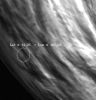
Venusian_Atmosphere-VI410_01_23_with_spot_H1.jpgThe Venusian Atmosphere under the Messenger56 visiteCaption ESA:"This grey-scale image, obtained by the VIRTIS instrument on board ESA’s Venus Express, shows the Atmospheric Region of Venus over which NASA’s MESSENGER Spacecraft passed on 5 June 2007. The Region of MESSENGER’s closest approach is in the night side (marked by a circle).
VIRTIS obtained this image at 2,3 micrometres from about 35.000 Km from the Planet, on the night side.
This wavelength makes it possible to probe the atmosphere down to about 30 Km from the surface. Much of the contrast in this image is due to the structure of the lower clouds.
The bright areas correspond to radiation from the lower atmospheric layers, indicating that the clouds are thinner in those areas. At the 2,3-micrometre wavelength it is possible to study not only the morphology of the cloud layers, but also its chemical composition (such as Carbon Monoxide - CO -, Water - H2O -, Sulphur Dioxide - SO2 -, etc)".MareKromium10/25/20 at 09:10MareKromium: Certo, correttissimo. E non serve pensare ad "...
|
|
Venusian_Atmosphere-VI410_01_23_with_spot_H1.jpgThe Venusian Atmosphere under the Messenger56 visiteCaption ESA:"This grey-scale image, obtained by the VIRTIS instrument on board ESA’s Venus Express, shows the Atmospheric Region of Venus over which NASA’s MESSENGER Spacecraft passed on 5 June 2007. The Region of MESSENGER’s closest approach is in the night side (marked by a circle).
VIRTIS obtained this image at 2,3 micrometres from about 35.000 Km from the Planet, on the night side.
This wavelength makes it possible to probe the atmosphere down to about 30 Km from the surface. Much of the contrast in this image is due to the structure of the lower clouds.
The bright areas correspond to radiation from the lower atmospheric layers, indicating that the clouds are thinner in those areas. At the 2,3-micrometre wavelength it is possible to study not only the morphology of the cloud layers, but also its chemical composition (such as Carbon Monoxide - CO -, Water - H2O -, Sulphur Dioxide - SO2 -, etc)".MareKromium10/24/20 at 19:02walthari: le forze mareali hanno la capacit? di influenzare ...
|
|
Venusian_Atmosphere-VI410_01_23_with_spot_H1.jpgThe Venusian Atmosphere under the Messenger56 visiteCaption ESA:"This grey-scale image, obtained by the VIRTIS instrument on board ESA’s Venus Express, shows the Atmospheric Region of Venus over which NASA’s MESSENGER Spacecraft passed on 5 June 2007. The Region of MESSENGER’s closest approach is in the night side (marked by a circle).
VIRTIS obtained this image at 2,3 micrometres from about 35.000 Km from the Planet, on the night side.
This wavelength makes it possible to probe the atmosphere down to about 30 Km from the surface. Much of the contrast in this image is due to the structure of the lower clouds.
The bright areas correspond to radiation from the lower atmospheric layers, indicating that the clouds are thinner in those areas. At the 2,3-micrometre wavelength it is possible to study not only the morphology of the cloud layers, but also its chemical composition (such as Carbon Monoxide - CO -, Water - H2O -, Sulphur Dioxide - SO2 -, etc)".MareKromium10/19/20 at 14:34Anakin: Ma l'eruzione dei vulcani, pu? essere stimolat...
|
|
Venusian_Atmosphere-VI410_01_23_with_spot_H1.jpgThe Venusian Atmosphere under the Messenger56 visiteCaption ESA:"This grey-scale image, obtained by the VIRTIS instrument on board ESA’s Venus Express, shows the Atmospheric Region of Venus over which NASA’s MESSENGER Spacecraft passed on 5 June 2007. The Region of MESSENGER’s closest approach is in the night side (marked by a circle).
VIRTIS obtained this image at 2,3 micrometres from about 35.000 Km from the Planet, on the night side.
This wavelength makes it possible to probe the atmosphere down to about 30 Km from the surface. Much of the contrast in this image is due to the structure of the lower clouds.
The bright areas correspond to radiation from the lower atmospheric layers, indicating that the clouds are thinner in those areas. At the 2,3-micrometre wavelength it is possible to study not only the morphology of the cloud layers, but also its chemical composition (such as Carbon Monoxide - CO -, Water - H2O -, Sulphur Dioxide - SO2 -, etc)".MareKromium10/17/20 at 13:57MareKromium: L'impossibile Walt? O l'eruzione simultane...
|
|
Venusian_Atmosphere-VI410_01_23_with_spot_H1.jpgThe Venusian Atmosphere under the Messenger56 visiteCaption ESA:"This grey-scale image, obtained by the VIRTIS instrument on board ESA’s Venus Express, shows the Atmospheric Region of Venus over which NASA’s MESSENGER Spacecraft passed on 5 June 2007. The Region of MESSENGER’s closest approach is in the night side (marked by a circle).
VIRTIS obtained this image at 2,3 micrometres from about 35.000 Km from the Planet, on the night side.
This wavelength makes it possible to probe the atmosphere down to about 30 Km from the surface. Much of the contrast in this image is due to the structure of the lower clouds.
The bright areas correspond to radiation from the lower atmospheric layers, indicating that the clouds are thinner in those areas. At the 2,3-micrometre wavelength it is possible to study not only the morphology of the cloud layers, but also its chemical composition (such as Carbon Monoxide - CO -, Water - H2O -, Sulphur Dioxide - SO2 -, etc)".MareKromium10/16/20 at 19:48walthari: mi sembra molto plausibile
|
|
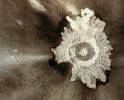
Craters-Adivar_Crater-1.jpgAdivar Crater (Natural Colors; credits: Lunar Explorer Italia)81 visitenessun commentoMareKromium10/16/20 at 12:47MareKromium: Forse. Chi "possiede" la Verit?, a parte...
|
|
Venusian_Atmosphere-VI410_01_23_with_spot_H1.jpgThe Venusian Atmosphere under the Messenger56 visiteCaption ESA:"This grey-scale image, obtained by the VIRTIS instrument on board ESA’s Venus Express, shows the Atmospheric Region of Venus over which NASA’s MESSENGER Spacecraft passed on 5 June 2007. The Region of MESSENGER’s closest approach is in the night side (marked by a circle).
VIRTIS obtained this image at 2,3 micrometres from about 35.000 Km from the Planet, on the night side.
This wavelength makes it possible to probe the atmosphere down to about 30 Km from the surface. Much of the contrast in this image is due to the structure of the lower clouds.
The bright areas correspond to radiation from the lower atmospheric layers, indicating that the clouds are thinner in those areas. At the 2,3-micrometre wavelength it is possible to study not only the morphology of the cloud layers, but also its chemical composition (such as Carbon Monoxide - CO -, Water - H2O -, Sulphur Dioxide - SO2 -, etc)".MareKromium10/16/20 at 12:43MareKromium: No Walt, non lo sappiamo e non possiamo saperlo. T...
|
|
Venusian_Atmosphere-VI410_01_23_with_spot_H1.jpgThe Venusian Atmosphere under the Messenger56 visiteCaption ESA:"This grey-scale image, obtained by the VIRTIS instrument on board ESA’s Venus Express, shows the Atmospheric Region of Venus over which NASA’s MESSENGER Spacecraft passed on 5 June 2007. The Region of MESSENGER’s closest approach is in the night side (marked by a circle).
VIRTIS obtained this image at 2,3 micrometres from about 35.000 Km from the Planet, on the night side.
This wavelength makes it possible to probe the atmosphere down to about 30 Km from the surface. Much of the contrast in this image is due to the structure of the lower clouds.
The bright areas correspond to radiation from the lower atmospheric layers, indicating that the clouds are thinner in those areas. At the 2,3-micrometre wavelength it is possible to study not only the morphology of the cloud layers, but also its chemical composition (such as Carbon Monoxide - CO -, Water - H2O -, Sulphur Dioxide - SO2 -, etc)".MareKromium10/15/20 at 20:24walthari: chiss?.....ma so che 4 miliardi di anni fa o gi? d...
|
|
| 129 immagini su 11 pagina(e) |
|
3 | |
|
|
|
|
|
|
|
|
|





