| |

| Ultimi commenti - Saturn: the "Ringed Beauty" and His Moons |

UnusualObject-N00122100-N00122130.gifUnusually-looking "Object" in the Space of Saturn - possible Gravity Waves' phenomenon (GIF-Movie; credits: Dr G. Barca)135 visiteIn questa lunga e spettacolare ricostruzione via-GIF Movie (operata dal paziente e bravissimo Dr Barca), possiamo notare un fenomeno veramente curioso che pare colpire gli Anelli di Saturno, subito dopo il passaggio di un oggetto che - onestamente - non siamo riusciti ad identificare.
Nella fattispecie noterete che, subito dopo il transito del Corpo Anomalo (visibile nel quadrante superiore Sx), gli Anelli di Saturno - riteniamo l'Anello "F" - pare "vibrare e contorcersi", in maniera tanto evidente ed eclatante, quanto (fisicamente) impossibile.
Come sapete, il fenomeno delle Gravity Waves che alterano il moto delle particelle che formano i vari Anelli di Saturno, così provocando delle Deformazioni TRANSITORIE dei medesimi - fenomeno che è possibile solo su scala locale ed in forma assai contenuta -, si verifica allorchè una Luna-Pastore attraversa un Anello, con ciò causando un evento di Influenza Mareale (o Gravitazionale), fisicamente e visivamente assimilabile al fenomeno che occorre allorchè un corpo solido attraversa un fluido (ergo: lo "taglia" e, nel farlo, genera delle onde che durano per un certo tempo e quindi si ristabilisce la quiete).
Un fenomeno eclatante come quello che si vede in questo filmato, invece, laddove fosse realmente accaduto nel modo in cui e con quel vigore con il quale SEMBRA verificarsi, avrebbe - letteralmente - sconquassato l'Anello coinvolto, possibilmente frantumandolo (tecnicamente si dice "disrupting the Ring's gravitational balance").
Il che, come ovvio, non è accaduto.
E allora? E allora, a nostro modo di vedere, l'oscillazione che pare coinvolgere l'Anello di Saturno al seguito del passaggio del Corpo Anomalo, in realtà, non si risolve in una oscillazione dell'Anello, bensì:
1) in una repentina (ed inspiegabile) oscillazione dell'Orbiter, la cui ripresa, a causa del movimento repentino al quale esso è stato sottoposto, diviene "mossa" e ci dà l'illusione di una deformazione che, in realtà, non esiste, oppure
2) nella produzione di un'Onda Gravitazionale (e questa è l'ipotesi che preferiamo) la quale NON deforma nulla SE NON la visione (rectius: percezione) dell'oggetto rispetto ad un Osservatore che si trova sulla sua linea di efficacia - ivi: l'Orbiter e la sua camera (per chiarire la situazione verificatasi pensate a questo esempio: supponete che stiate guardando la Vostra immagine riflessa nell'acqua quando, improvvisamente, arrivano nella Vostra direzione delle onde. Che cosa succede alla Vostra immagine?!?...).
Suggestivo, non credete?
Certo, esiste anche una Terza Ipotesi (e cioè che stiamo prendendo una svista di dimensioni planetarie...) ma, in fondo, delle immagini come queste non possono non spingerci a riflettere ed a porci della domande. E le domande, si sa, non sono MAI sbagliate! Le risposte - spessissimo...ahinoi! - lo sono.
E Voi? Che ne pensate?...MareKromium04/18/13 at 16:01MareKromium: Ed ecco quello che, nel 2008, scrivemmo a proposit...
|
|

Hyperion-N00063147-1.jpgHyperion and a "Bright Companion" (1 - context image)65 visiteUn'immagine bella ed ambigua: Hyperion, the "tumbling moon", sembra essere in compagnia di un altro oggetto il quale, forse perchè molto (si direbbe "troppo", a giudicare dal risultato fotografico ottenuto) luminoso, è stato "washed away".
Ma attenzione: il washing è stato solo parziale! Qualcosa, infatti, sembra che la si riesca a vedere...04/17/13 at 07:57Anakin: Io partirei dal punto che in un contesto completam...
|
|
Hyperion-N00063147-1.jpgHyperion and a "Bright Companion" (1 - context image)65 visiteUn'immagine bella ed ambigua: Hyperion, the "tumbling moon", sembra essere in compagnia di un altro oggetto il quale, forse perchè molto (si direbbe "troppo", a giudicare dal risultato fotografico ottenuto) luminoso, è stato "washed away".
Ma attenzione: il washing è stato solo parziale! Qualcosa, infatti, sembra che la si riesca a vedere...04/16/13 at 15:22paolocf1963: Vedete come Iperione, il cui bordo e la superficie...
|
|
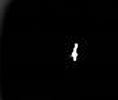
Hyperion-N00063147-2.jpgHyperion and a "Bright Companion" (2 - detail mgnf)72 visiteOsservate attentamente questo stretch estremo del frame precedente: l'effetto che osservate, a nostro avviso, è un effetto di saturazione, ossìa un artefatto che emerge quando l'oggetto fotografato (o una sua parte) é/sono troppo luminoso/i.
Su Marte, in svariati casi (dalle immagini degli Heat-Shields, a quelle di alcune componenti dei Rover illuminate direttamente dal Sole), il risultato della saturazione si esprimeva nel cd. "effetto goccia". Qui, nello spazio di Saturno, l'effetto della saturazione ci sembra molto simile a quanto si vede su Marte. Anzi: forse esso è ancora più eclatante.
Domanda: che cosa sarà mai, dunque (ed ovviamente ammettendo che la nostra costruzione sia almeno in parte esatta), quell'oggetto semi-cancellato, ma in parte ancora visibile - ad ore 9 della traccia luminosa - che si trova ad una distanza imprecisata dalla Sonda Cassini, e nelle vicinanze di Hyperion?04/16/13 at 15:18paolocf1963: Carissimo Andrea, non posso far altro che quotarti...
|
|
Hyperion-N00063147-2.jpgHyperion and a "Bright Companion" (2 - detail mgnf)72 visiteOsservate attentamente questo stretch estremo del frame precedente: l'effetto che osservate, a nostro avviso, è un effetto di saturazione, ossìa un artefatto che emerge quando l'oggetto fotografato (o una sua parte) é/sono troppo luminoso/i.
Su Marte, in svariati casi (dalle immagini degli Heat-Shields, a quelle di alcune componenti dei Rover illuminate direttamente dal Sole), il risultato della saturazione si esprimeva nel cd. "effetto goccia". Qui, nello spazio di Saturno, l'effetto della saturazione ci sembra molto simile a quanto si vede su Marte. Anzi: forse esso è ancora più eclatante.
Domanda: che cosa sarà mai, dunque (ed ovviamente ammettendo che la nostra costruzione sia almeno in parte esatta), quell'oggetto semi-cancellato, ma in parte ancora visibile - ad ore 9 della traccia luminosa - che si trova ad una distanza imprecisata dalla Sonda Cassini, e nelle vicinanze di Hyperion?04/16/13 at 11:15AndreaGG: sembra la foto ad una stella, ma venuta mossa (com...
|
|
Hyperion-N00063147-2.jpgHyperion and a "Bright Companion" (2 - detail mgnf)72 visiteOsservate attentamente questo stretch estremo del frame precedente: l'effetto che osservate, a nostro avviso, è un effetto di saturazione, ossìa un artefatto che emerge quando l'oggetto fotografato (o una sua parte) é/sono troppo luminoso/i.
Su Marte, in svariati casi (dalle immagini degli Heat-Shields, a quelle di alcune componenti dei Rover illuminate direttamente dal Sole), il risultato della saturazione si esprimeva nel cd. "effetto goccia". Qui, nello spazio di Saturno, l'effetto della saturazione ci sembra molto simile a quanto si vede su Marte. Anzi: forse esso è ancora più eclatante.
Domanda: che cosa sarà mai, dunque (ed ovviamente ammettendo che la nostra costruzione sia almeno in parte esatta), quell'oggetto semi-cancellato, ma in parte ancora visibile - ad ore 9 della traccia luminosa - che si trova ad una distanza imprecisata dalla Sonda Cassini, e nelle vicinanze di Hyperion?04/16/13 at 09:35paolocf1963: Ciao Anakin!
Allora, porta il frame a schermo p...
|
|
Hyperion-N00063147-2.jpgHyperion and a "Bright Companion" (2 - detail mgnf)72 visiteOsservate attentamente questo stretch estremo del frame precedente: l'effetto che osservate, a nostro avviso, è un effetto di saturazione, ossìa un artefatto che emerge quando l'oggetto fotografato (o una sua parte) é/sono troppo luminoso/i.
Su Marte, in svariati casi (dalle immagini degli Heat-Shields, a quelle di alcune componenti dei Rover illuminate direttamente dal Sole), il risultato della saturazione si esprimeva nel cd. "effetto goccia". Qui, nello spazio di Saturno, l'effetto della saturazione ci sembra molto simile a quanto si vede su Marte. Anzi: forse esso è ancora più eclatante.
Domanda: che cosa sarà mai, dunque (ed ovviamente ammettendo che la nostra costruzione sia almeno in parte esatta), quell'oggetto semi-cancellato, ma in parte ancora visibile - ad ore 9 della traccia luminosa - che si trova ad una distanza imprecisata dalla Sonda Cassini, e nelle vicinanze di Hyperion?04/16/13 at 08:08Anakin: scusami, non ho capito quale sarebbe "quell&#...
|
|
Hyperion-N00063147-2.jpgHyperion and a "Bright Companion" (2 - detail mgnf)72 visiteOsservate attentamente questo stretch estremo del frame precedente: l'effetto che osservate, a nostro avviso, è un effetto di saturazione, ossìa un artefatto che emerge quando l'oggetto fotografato (o una sua parte) é/sono troppo luminoso/i.
Su Marte, in svariati casi (dalle immagini degli Heat-Shields, a quelle di alcune componenti dei Rover illuminate direttamente dal Sole), il risultato della saturazione si esprimeva nel cd. "effetto goccia". Qui, nello spazio di Saturno, l'effetto della saturazione ci sembra molto simile a quanto si vede su Marte. Anzi: forse esso è ancora più eclatante.
Domanda: che cosa sarà mai, dunque (ed ovviamente ammettendo che la nostra costruzione sia almeno in parte esatta), quell'oggetto semi-cancellato, ma in parte ancora visibile - ad ore 9 della traccia luminosa - che si trova ad una distanza imprecisata dalla Sonda Cassini, e nelle vicinanze di Hyperion?04/15/13 at 15:11paolocf1963: ...e se non ? un "Mistero" questo..... M...
|
|

Telesto-PIA07702-PCF-LXTT-IPF.jpgTiny Telesto (Absolute Natural Colors; credits for the additional process. and color.: Dr Paolo C. Fienga/Lunar Explorer Italia/Italian Planetary Foundation)76 visiteThe NASA - Cassini Spacecraft passed within a cosmic "stone's throw" (---> meaning very close, in cosmic terms) from the Saturnian moon Telesto in October of the AD 2005, capturing this shot of this tiny Trojan moon. Telesto (which is approx. 24 Km, such as a little less than 15 miles across) appears to be mantled in fine, Icy (and/or "Dusty") Material, although a few shallow Impact Craters and some Rocky Outcrops (and/or large Boulders) are visible. Its smooth Surface does not appear to retain the record of intense cratering that most of Saturn's other moons possess.
The original image was taken in Polarized Green Light with the NASA - Cassini Spacecraft Narrow-Angle Camera on October 11, 2005, at a distance of approximately 14.500 Km (such as a little more than 9004 miles) from Telesto. The image scale is roughly 86 meters (283 feet) per pixel.
This picture (which is an Original NASA - CASSINI Spacecraft b/w frame published on the NASA - Planetary Photojournal with the ID n. PIA 07702) has been additionally processed and then colorized, according to an educated guess carried out by Dr Paolo C. Fienga (LXXT/IPF), in Absolute Natural Colors (such as the colors that a human eye would actually perceive if someone were onboard the NASA - CASSINI Spacecraft and then looked outside, towards the Saturnian moon, Telesto), by using an original technique created - and, in time, dramatically improved - by the Lunar Explorer Italia Team. Different colors, as well as different shades of the same color, mean, among other things, the existence of different Elements (Minerals) present on the Surface of Telesto, each having a different Albedo (---> Reflectivity) and Chemical Composition.MareKromium03/25/13 at 16:10MareKromium: "Pulizia Informatica" completata.
|
|

Japetus-PIA08384-PCF-LXTT-IPF.jpgEngelier Crater (CTX Frame and EDM in Absolute Natural Colors; credits for the additional process. and color.: Dr Paolo C. Fienga/Lunar Explorer Italia/Italian Planetary Foundation)108 visiteThe NASA - Cassini Spacecraft captured, in the month of September of the AD 2007, the first High-Resolution glimpse of the bright Trailing Hemisphere of Saturn's moon Japetus. This Absolute Natural Color image-mosaic shows the entire Hemisphere of Japetus that was visible from the NASA - Cassini Spacecraft on the outbound leg of its encounter with the two-toned moon. Also shown here is the complicated Transition Region of Japetus (meaning the Region which is located in-between its Dark Leading Hemisphere and the Bright Trailing one). This Region, visible along the right side of the image, was observed in many of the images acquired by Cassini near the closest approach of the encounter.
Revealed here for the first time in detail are the Geologic Structures that mark the Trailing Hemisphere of Japetus. The Region appears to be Heavily Cratered, particularly in the North and South Polar Regions of the moon. Near the top of the mosaic, numerous Impact Features that hade been already caught in several frames obtained by the NASA - Voyager 2 Spacecraft during the Fly-By of Japetus that took place in the AD 1981, are well visible, including the Impact Craters Ogier and Charlemagne. However, the most prominent Topographic Feature in this view, in the bottom half of the mosaic, is the approx. 450-Km (such as about 280-miles) wide Engelier Impact Basin: one of at least 9 (nine) huge Impact Basins found on Japetus. In fact, the Engelier Impact Basin overlaps an older, similar-sized Impact Basin located to its South/East.
In many places of Japetus, the Dark Material (that is thought to be composed of Nitrogen-bearing Organic Compounds - called "Cyanides" -, as well as by Hydrated Minerals and other Carbonaceous Minerals) seems to "coat" the Equator-facing Slopes as well as the Floor of the Impact Basin. The distribution of this Dark Material as well as the variations in the color of the Bright Material that is spread all across the Trailing Hemisphere, will be crucial clues to solve (or, at least, ro clarify) if we really want to get a better understanding of the origin of Japetus' extremely peculiar bright-dark dual personality.
The view was acquired with the NASA - Cassini Spacecraft Narrow-Angle Camera on September 10, 2007, at a distance of about 73.000 Km (such as approx. 45.333 miles) from Japetus. This mosaic consists of 60 images covering 15 footprints across the Surface of Japetus. The view is an Orthographic Projection of the Saturnian moon that has been centered at 10,8° South Latitude, 246,5° West Longitude and which has a resolution of 426 meters (0,26 miles) per pixel. An Orthographic Projection (like this one) is something like the view that a distant observer would get by looking at a given Celestial Object through a telescope.
This frame (which is an Original NASA - Cassini Spacecraft false-color image mosaic published on the NASA - Planetary Photojournal with the ID n. PIA 08384) has been additionally processed, contrast enhanced, and then re-colorized in Absolute Natural Colors (such as the colors that a human eye would actually perceive if someone were onboard the NASA - Cassini Spacecraft and then looked outside, towards the bright Trailing Hemisphere of the Saturnian moon Japetus), by using an original technique created - and, in time, dramatically improved - by the Lunar Explorer Italia Team. Different colors, as well as different shades of the same color, mean, among others, the existence of different Elements present on the Surface of Japetus, each having a different Albedo (---> Reflectivity) and Chemical Composition.
Note: in the EDM (upper Right Side of the image-mosaic), a view of the Terrain located in the Transition Zone of Japetus. The Bright Material visible on the frozen Surface of Japetus is, most likely, Water Ice, while the Dark Material is, probably, a Carbonaceous Mineral.MareKromium03/13/13 at 20:56paolocf1963: A Te!!! :-)
|
|
Japetus-PIA08384-PCF-LXTT-IPF.jpgEngelier Crater (CTX Frame and EDM in Absolute Natural Colors; credits for the additional process. and color.: Dr Paolo C. Fienga/Lunar Explorer Italia/Italian Planetary Foundation)108 visiteThe NASA - Cassini Spacecraft captured, in the month of September of the AD 2007, the first High-Resolution glimpse of the bright Trailing Hemisphere of Saturn's moon Japetus. This Absolute Natural Color image-mosaic shows the entire Hemisphere of Japetus that was visible from the NASA - Cassini Spacecraft on the outbound leg of its encounter with the two-toned moon. Also shown here is the complicated Transition Region of Japetus (meaning the Region which is located in-between its Dark Leading Hemisphere and the Bright Trailing one). This Region, visible along the right side of the image, was observed in many of the images acquired by Cassini near the closest approach of the encounter.
Revealed here for the first time in detail are the Geologic Structures that mark the Trailing Hemisphere of Japetus. The Region appears to be Heavily Cratered, particularly in the North and South Polar Regions of the moon. Near the top of the mosaic, numerous Impact Features that hade been already caught in several frames obtained by the NASA - Voyager 2 Spacecraft during the Fly-By of Japetus that took place in the AD 1981, are well visible, including the Impact Craters Ogier and Charlemagne. However, the most prominent Topographic Feature in this view, in the bottom half of the mosaic, is the approx. 450-Km (such as about 280-miles) wide Engelier Impact Basin: one of at least 9 (nine) huge Impact Basins found on Japetus. In fact, the Engelier Impact Basin overlaps an older, similar-sized Impact Basin located to its South/East.
In many places of Japetus, the Dark Material (that is thought to be composed of Nitrogen-bearing Organic Compounds - called "Cyanides" -, as well as by Hydrated Minerals and other Carbonaceous Minerals) seems to "coat" the Equator-facing Slopes as well as the Floor of the Impact Basin. The distribution of this Dark Material as well as the variations in the color of the Bright Material that is spread all across the Trailing Hemisphere, will be crucial clues to solve (or, at least, ro clarify) if we really want to get a better understanding of the origin of Japetus' extremely peculiar bright-dark dual personality.
The view was acquired with the NASA - Cassini Spacecraft Narrow-Angle Camera on September 10, 2007, at a distance of about 73.000 Km (such as approx. 45.333 miles) from Japetus. This mosaic consists of 60 images covering 15 footprints across the Surface of Japetus. The view is an Orthographic Projection of the Saturnian moon that has been centered at 10,8° South Latitude, 246,5° West Longitude and which has a resolution of 426 meters (0,26 miles) per pixel. An Orthographic Projection (like this one) is something like the view that a distant observer would get by looking at a given Celestial Object through a telescope.
This frame (which is an Original NASA - Cassini Spacecraft false-color image mosaic published on the NASA - Planetary Photojournal with the ID n. PIA 08384) has been additionally processed, contrast enhanced, and then re-colorized in Absolute Natural Colors (such as the colors that a human eye would actually perceive if someone were onboard the NASA - Cassini Spacecraft and then looked outside, towards the bright Trailing Hemisphere of the Saturnian moon Japetus), by using an original technique created - and, in time, dramatically improved - by the Lunar Explorer Italia Team. Different colors, as well as different shades of the same color, mean, among others, the existence of different Elements present on the Surface of Japetus, each having a different Albedo (---> Reflectivity) and Chemical Composition.
Note: in the EDM (upper Right Side of the image-mosaic), a view of the Terrain located in the Transition Zone of Japetus. The Bright Material visible on the frozen Surface of Japetus is, most likely, Water Ice, while the Dark Material is, probably, a Carbonaceous Mineral.MareKromium03/13/13 at 20:40AndreaGG: Grazie 1000!
|
|
Japetus-PIA08384-PCF-LXTT-IPF.jpgEngelier Crater (CTX Frame and EDM in Absolute Natural Colors; credits for the additional process. and color.: Dr Paolo C. Fienga/Lunar Explorer Italia/Italian Planetary Foundation)108 visiteThe NASA - Cassini Spacecraft captured, in the month of September of the AD 2007, the first High-Resolution glimpse of the bright Trailing Hemisphere of Saturn's moon Japetus. This Absolute Natural Color image-mosaic shows the entire Hemisphere of Japetus that was visible from the NASA - Cassini Spacecraft on the outbound leg of its encounter with the two-toned moon. Also shown here is the complicated Transition Region of Japetus (meaning the Region which is located in-between its Dark Leading Hemisphere and the Bright Trailing one). This Region, visible along the right side of the image, was observed in many of the images acquired by Cassini near the closest approach of the encounter.
Revealed here for the first time in detail are the Geologic Structures that mark the Trailing Hemisphere of Japetus. The Region appears to be Heavily Cratered, particularly in the North and South Polar Regions of the moon. Near the top of the mosaic, numerous Impact Features that hade been already caught in several frames obtained by the NASA - Voyager 2 Spacecraft during the Fly-By of Japetus that took place in the AD 1981, are well visible, including the Impact Craters Ogier and Charlemagne. However, the most prominent Topographic Feature in this view, in the bottom half of the mosaic, is the approx. 450-Km (such as about 280-miles) wide Engelier Impact Basin: one of at least 9 (nine) huge Impact Basins found on Japetus. In fact, the Engelier Impact Basin overlaps an older, similar-sized Impact Basin located to its South/East.
In many places of Japetus, the Dark Material (that is thought to be composed of Nitrogen-bearing Organic Compounds - called "Cyanides" -, as well as by Hydrated Minerals and other Carbonaceous Minerals) seems to "coat" the Equator-facing Slopes as well as the Floor of the Impact Basin. The distribution of this Dark Material as well as the variations in the color of the Bright Material that is spread all across the Trailing Hemisphere, will be crucial clues to solve (or, at least, ro clarify) if we really want to get a better understanding of the origin of Japetus' extremely peculiar bright-dark dual personality.
The view was acquired with the NASA - Cassini Spacecraft Narrow-Angle Camera on September 10, 2007, at a distance of about 73.000 Km (such as approx. 45.333 miles) from Japetus. This mosaic consists of 60 images covering 15 footprints across the Surface of Japetus. The view is an Orthographic Projection of the Saturnian moon that has been centered at 10,8° South Latitude, 246,5° West Longitude and which has a resolution of 426 meters (0,26 miles) per pixel. An Orthographic Projection (like this one) is something like the view that a distant observer would get by looking at a given Celestial Object through a telescope.
This frame (which is an Original NASA - Cassini Spacecraft false-color image mosaic published on the NASA - Planetary Photojournal with the ID n. PIA 08384) has been additionally processed, contrast enhanced, and then re-colorized in Absolute Natural Colors (such as the colors that a human eye would actually perceive if someone were onboard the NASA - Cassini Spacecraft and then looked outside, towards the bright Trailing Hemisphere of the Saturnian moon Japetus), by using an original technique created - and, in time, dramatically improved - by the Lunar Explorer Italia Team. Different colors, as well as different shades of the same color, mean, among others, the existence of different Elements present on the Surface of Japetus, each having a different Albedo (---> Reflectivity) and Chemical Composition.
Note: in the EDM (upper Right Side of the image-mosaic), a view of the Terrain located in the Transition Zone of Japetus. The Bright Material visible on the frozen Surface of Japetus is, most likely, Water Ice, while the Dark Material is, probably, a Carbonaceous Mineral.MareKromium03/13/13 at 15:32paolocf1963: Carissimo Andrea,
anch'io, erroneamente (?)...
|
|
| 920 immagini su 77 pagina(e) |
|
|
|
|
|
28 | |
|
|
|
|
|
|





