| |

| Ultimi commenti - Saturn: the "Ringed Beauty" and His Moons |
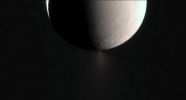
Enceladus-PIA18328-PCF-LXTT-IPF.jpgIn the Saturnshine... (Absolute Natural Colors; credits for the additional process. and color.: Dr Paolo C. Fienga/Lunar Explorer Italia/Italian Planetary Foundation)126 visiteThe Saturnian moon Enceladus looks as if it is half lit by Sunlight in this view from the NASA - Cassini Spacecraft; but looks, as you know, can be (as they often are) deceiving.
In fact, the kind of pinkish area of Enceladus visible on the right (Dx) of the frame, where MANY Surface Features can be made out (---> seen/identified), is actually illuminated by the light reflected off of Saturn (such as the so-called "Saturnshine"). On the other hand, a sliver of the Enceladian Surface that is actually illuminated by direct Sunlight is visible - and also highly overexposed! - on the left (Sx) of the picture. Images like this one are designed to capture the extended Plumes of Icy Materials spraying from huge cracks located the moon's South Polar Region. Such images need to be taken with the NASA - Cassini Spacecraft looking toward the Icy moon's Night Side, since the small particles that form the Plumes (however, just barely visible in this picture) are most easily seen when backlit by the Sun.
This view looks toward the Leading Hemisphere of Enceladus; North is up. The image was taken in Visible Light with the NASA - Cassini Spacecraft's Narrow-Angle Camera on May 10, 2015. Enceladus is roughly 313 miles (such as about 503,72 Km) across. The view was acquired at a distance of approximately 226.000 miles (such as approx. 363.7210,84 Km) from Enceladus and at a Sun-Enceladus-Cassini Spacecraft, or Phase, Angle of 152°. Image scale is roughly 1,4 miles (about 2,2530 Km) per pixel.
This frame (which is an Original NASA - CASSINI Spacecraft's b/w and NON Map-Projected image published on the NASA - Planetary Photojournal with the ID n. PIA 18328) has been additionally processed, contrast enhanced, magnified, in order to allow the vision of the slightest details of the Surface, Gamma corrected and then re-colorized - according to an educated guess (or, if you wish, an informed speculation) carried out by Dr Paolo C. Fienga - in Absolute Natural Colors (such as the colors that a human eye would actually perceive if someone were onboard the NASA - Cassini Spacecraft and then looked outside, toward the Saturnian moon "Enceladus"), by using an original technique created - and, in time, dramatically improved - by the Lunar Explorer Italia Team. Different colors, as well as different shades of the same color, mean, among other things, the existence of different Elements (Minerals) present on the Surface of Enceladus, each having a different Albedo (---> Reflectivity) and Chemical Composition.
Note: it is possible (but we, as IPF, have no way to be one-hundred-percent sure of such a circumstance), that the actual luminosity of Enceladus - as it is in this frame - would appear, to an average human eye, a little bit lower than it has been shown (or, better yet: interpreted) here.MareKromium08/25/16 at 15:06Ufologo: .. veramente ce l'avrei io; ma non so se ? anc...
|
|
Enceladus-PIA18328-PCF-LXTT-IPF.jpgIn the Saturnshine... (Absolute Natural Colors; credits for the additional process. and color.: Dr Paolo C. Fienga/Lunar Explorer Italia/Italian Planetary Foundation)126 visiteThe Saturnian moon Enceladus looks as if it is half lit by Sunlight in this view from the NASA - Cassini Spacecraft; but looks, as you know, can be (as they often are) deceiving.
In fact, the kind of pinkish area of Enceladus visible on the right (Dx) of the frame, where MANY Surface Features can be made out (---> seen/identified), is actually illuminated by the light reflected off of Saturn (such as the so-called "Saturnshine"). On the other hand, a sliver of the Enceladian Surface that is actually illuminated by direct Sunlight is visible - and also highly overexposed! - on the left (Sx) of the picture. Images like this one are designed to capture the extended Plumes of Icy Materials spraying from huge cracks located the moon's South Polar Region. Such images need to be taken with the NASA - Cassini Spacecraft looking toward the Icy moon's Night Side, since the small particles that form the Plumes (however, just barely visible in this picture) are most easily seen when backlit by the Sun.
This view looks toward the Leading Hemisphere of Enceladus; North is up. The image was taken in Visible Light with the NASA - Cassini Spacecraft's Narrow-Angle Camera on May 10, 2015. Enceladus is roughly 313 miles (such as about 503,72 Km) across. The view was acquired at a distance of approximately 226.000 miles (such as approx. 363.7210,84 Km) from Enceladus and at a Sun-Enceladus-Cassini Spacecraft, or Phase, Angle of 152°. Image scale is roughly 1,4 miles (about 2,2530 Km) per pixel.
This frame (which is an Original NASA - CASSINI Spacecraft's b/w and NON Map-Projected image published on the NASA - Planetary Photojournal with the ID n. PIA 18328) has been additionally processed, contrast enhanced, magnified, in order to allow the vision of the slightest details of the Surface, Gamma corrected and then re-colorized - according to an educated guess (or, if you wish, an informed speculation) carried out by Dr Paolo C. Fienga - in Absolute Natural Colors (such as the colors that a human eye would actually perceive if someone were onboard the NASA - Cassini Spacecraft and then looked outside, toward the Saturnian moon "Enceladus"), by using an original technique created - and, in time, dramatically improved - by the Lunar Explorer Italia Team. Different colors, as well as different shades of the same color, mean, among other things, the existence of different Elements (Minerals) present on the Surface of Enceladus, each having a different Albedo (---> Reflectivity) and Chemical Composition.
Note: it is possible (but we, as IPF, have no way to be one-hundred-percent sure of such a circumstance), that the actual luminosity of Enceladus - as it is in this frame - would appear, to an average human eye, a little bit lower than it has been shown (or, better yet: interpreted) here.MareKromium08/24/16 at 10:44Anakin: ma nessuno qui ha il suo numero che pu? fargli una...
|
|
Enceladus-PIA18328-PCF-LXTT-IPF.jpgIn the Saturnshine... (Absolute Natural Colors; credits for the additional process. and color.: Dr Paolo C. Fienga/Lunar Explorer Italia/Italian Planetary Foundation)126 visiteThe Saturnian moon Enceladus looks as if it is half lit by Sunlight in this view from the NASA - Cassini Spacecraft; but looks, as you know, can be (as they often are) deceiving.
In fact, the kind of pinkish area of Enceladus visible on the right (Dx) of the frame, where MANY Surface Features can be made out (---> seen/identified), is actually illuminated by the light reflected off of Saturn (such as the so-called "Saturnshine"). On the other hand, a sliver of the Enceladian Surface that is actually illuminated by direct Sunlight is visible - and also highly overexposed! - on the left (Sx) of the picture. Images like this one are designed to capture the extended Plumes of Icy Materials spraying from huge cracks located the moon's South Polar Region. Such images need to be taken with the NASA - Cassini Spacecraft looking toward the Icy moon's Night Side, since the small particles that form the Plumes (however, just barely visible in this picture) are most easily seen when backlit by the Sun.
This view looks toward the Leading Hemisphere of Enceladus; North is up. The image was taken in Visible Light with the NASA - Cassini Spacecraft's Narrow-Angle Camera on May 10, 2015. Enceladus is roughly 313 miles (such as about 503,72 Km) across. The view was acquired at a distance of approximately 226.000 miles (such as approx. 363.7210,84 Km) from Enceladus and at a Sun-Enceladus-Cassini Spacecraft, or Phase, Angle of 152°. Image scale is roughly 1,4 miles (about 2,2530 Km) per pixel.
This frame (which is an Original NASA - CASSINI Spacecraft's b/w and NON Map-Projected image published on the NASA - Planetary Photojournal with the ID n. PIA 18328) has been additionally processed, contrast enhanced, magnified, in order to allow the vision of the slightest details of the Surface, Gamma corrected and then re-colorized - according to an educated guess (or, if you wish, an informed speculation) carried out by Dr Paolo C. Fienga - in Absolute Natural Colors (such as the colors that a human eye would actually perceive if someone were onboard the NASA - Cassini Spacecraft and then looked outside, toward the Saturnian moon "Enceladus"), by using an original technique created - and, in time, dramatically improved - by the Lunar Explorer Italia Team. Different colors, as well as different shades of the same color, mean, among other things, the existence of different Elements (Minerals) present on the Surface of Enceladus, each having a different Albedo (---> Reflectivity) and Chemical Composition.
Note: it is possible (but we, as IPF, have no way to be one-hundred-percent sure of such a circumstance), that the actual luminosity of Enceladus - as it is in this frame - would appear, to an average human eye, a little bit lower than it has been shown (or, better yet: interpreted) here.MareKromium08/22/16 at 20:43Ivana Tognoloni: No, nessuna.
|
|
Enceladus-PIA18328-PCF-LXTT-IPF.jpgIn the Saturnshine... (Absolute Natural Colors; credits for the additional process. and color.: Dr Paolo C. Fienga/Lunar Explorer Italia/Italian Planetary Foundation)126 visiteThe Saturnian moon Enceladus looks as if it is half lit by Sunlight in this view from the NASA - Cassini Spacecraft; but looks, as you know, can be (as they often are) deceiving.
In fact, the kind of pinkish area of Enceladus visible on the right (Dx) of the frame, where MANY Surface Features can be made out (---> seen/identified), is actually illuminated by the light reflected off of Saturn (such as the so-called "Saturnshine"). On the other hand, a sliver of the Enceladian Surface that is actually illuminated by direct Sunlight is visible - and also highly overexposed! - on the left (Sx) of the picture. Images like this one are designed to capture the extended Plumes of Icy Materials spraying from huge cracks located the moon's South Polar Region. Such images need to be taken with the NASA - Cassini Spacecraft looking toward the Icy moon's Night Side, since the small particles that form the Plumes (however, just barely visible in this picture) are most easily seen when backlit by the Sun.
This view looks toward the Leading Hemisphere of Enceladus; North is up. The image was taken in Visible Light with the NASA - Cassini Spacecraft's Narrow-Angle Camera on May 10, 2015. Enceladus is roughly 313 miles (such as about 503,72 Km) across. The view was acquired at a distance of approximately 226.000 miles (such as approx. 363.7210,84 Km) from Enceladus and at a Sun-Enceladus-Cassini Spacecraft, or Phase, Angle of 152°. Image scale is roughly 1,4 miles (about 2,2530 Km) per pixel.
This frame (which is an Original NASA - CASSINI Spacecraft's b/w and NON Map-Projected image published on the NASA - Planetary Photojournal with the ID n. PIA 18328) has been additionally processed, contrast enhanced, magnified, in order to allow the vision of the slightest details of the Surface, Gamma corrected and then re-colorized - according to an educated guess (or, if you wish, an informed speculation) carried out by Dr Paolo C. Fienga - in Absolute Natural Colors (such as the colors that a human eye would actually perceive if someone were onboard the NASA - Cassini Spacecraft and then looked outside, toward the Saturnian moon "Enceladus"), by using an original technique created - and, in time, dramatically improved - by the Lunar Explorer Italia Team. Different colors, as well as different shades of the same color, mean, among other things, the existence of different Elements (Minerals) present on the Surface of Enceladus, each having a different Albedo (---> Reflectivity) and Chemical Composition.
Note: it is possible (but we, as IPF, have no way to be one-hundred-percent sure of such a circumstance), that the actual luminosity of Enceladus - as it is in this frame - would appear, to an average human eye, a little bit lower than it has been shown (or, better yet: interpreted) here.MareKromium08/17/16 at 08:19Anakin: Si hanno notizie di Paolo?
|
|

Japetus-N00022351.jpgJapetus and "something" else? (2)98 visiteUn secondo frame, consecutivo al precedente: l'oggetto (o l'artifact) sembra comunque essersi leggermente spostato. Certo è che si riesce a vedere con chiarezza una buona porzione di questo controverso "corpo scuro", qualunque cosa essa sia. Un piccolo dato (sconcertante): la porzione di sagoma che si lascia vedere sembra avvicinarsi molto al tipico "disco volante"; un disco volante molto simile a quello che un certo Robert "Bob" Lazar (uno Scienziato americano assai controverso che salì all'onore delle cronache mondiali qualche anno fa, dopo aver dichiarato di essersi occupato di alcuni studi - retroingegneria? - su un UFO precipitato a Terra e custodito in Nevada, nella "famosa" Area 51) chiamò "Sport Model", ossìa il "Modello Base" di tutta una serie di velivoli circolari di asserita origine non terrestre.
Che dire? Gli elementi che possediamo sono davanti ai Vostri occhi: provate ad elaborare l'immagine ed a farVi un'idea. Se vorrete, poi, potrete comunicarcela e noi ne parleremo.01/07/16 at 11:14KKK: Si, credo che sia solo un artifact da sovraesposiz...
|
|
Japetus-N00022351.jpgJapetus and "something" else? (2)98 visiteUn secondo frame, consecutivo al precedente: l'oggetto (o l'artifact) sembra comunque essersi leggermente spostato. Certo è che si riesce a vedere con chiarezza una buona porzione di questo controverso "corpo scuro", qualunque cosa essa sia. Un piccolo dato (sconcertante): la porzione di sagoma che si lascia vedere sembra avvicinarsi molto al tipico "disco volante"; un disco volante molto simile a quello che un certo Robert "Bob" Lazar (uno Scienziato americano assai controverso che salì all'onore delle cronache mondiali qualche anno fa, dopo aver dichiarato di essersi occupato di alcuni studi - retroingegneria? - su un UFO precipitato a Terra e custodito in Nevada, nella "famosa" Area 51) chiamò "Sport Model", ossìa il "Modello Base" di tutta una serie di velivoli circolari di asserita origine non terrestre.
Che dire? Gli elementi che possediamo sono davanti ai Vostri occhi: provate ad elaborare l'immagine ed a farVi un'idea. Se vorrete, poi, potrete comunicarcela e noi ne parleremo.01/07/16 at 10:01Anakin: Ho provato ad elaborare entrmbi i frame. La c'...
|
|

Japetus-N00022350.jpgJapetus and "something" else? (1)110 visiteGiapeto viene fotografato da una distanza di poco superiore al milione di Km. La fotografia è brutta e Giapeto, come potete vedere chiaramente, è totalmente sovraesposto. Ma quello che rileva, in questa immagine, è il "corpo scuro" che sembra volersi celare dietro al bagliore intenso (glare) di Giapeto. Di che cosa si tratta? Secondo noi potrebbe trattarsi di un artifact, ossìa di un oggetto non reale, creatosi durante la fase di sviluppo e/o di processo e/o di elaborazione/compressione e/o, come in questo caso, di trasmissione a Terra dei dati relativi all'immagine originale. Questa è l'ipotesi più probabile. Ma non ci sembra neppure da scartare a priori l'altra possibilità, decisamente più suggestiva, per cui il "corpo scuro" che intravediamo, semi-immerso nella luce sia, in realtà, un oggetto reale: un'astronave aliena che osserva la Sonda Cassini-Huygens da vicino. Molto vicino...01/05/16 at 12:16KKK: Cari Amici, io, come sapete, sono un semplice Astr...
|
|
Japetus-N00022350.jpgJapetus and "something" else? (1)110 visiteGiapeto viene fotografato da una distanza di poco superiore al milione di Km. La fotografia è brutta e Giapeto, come potete vedere chiaramente, è totalmente sovraesposto. Ma quello che rileva, in questa immagine, è il "corpo scuro" che sembra volersi celare dietro al bagliore intenso (glare) di Giapeto. Di che cosa si tratta? Secondo noi potrebbe trattarsi di un artifact, ossìa di un oggetto non reale, creatosi durante la fase di sviluppo e/o di processo e/o di elaborazione/compressione e/o, come in questo caso, di trasmissione a Terra dei dati relativi all'immagine originale. Questa è l'ipotesi più probabile. Ma non ci sembra neppure da scartare a priori l'altra possibilità, decisamente più suggestiva, per cui il "corpo scuro" che intravediamo, semi-immerso nella luce sia, in realtà, un oggetto reale: un'astronave aliena che osserva la Sonda Cassini-Huygens da vicino. Molto vicino...01/05/16 at 10:19walthari: per? non mi convince quella specie di protuberanza...
|
|
Japetus-N00022350.jpgJapetus and "something" else? (1)110 visiteGiapeto viene fotografato da una distanza di poco superiore al milione di Km. La fotografia è brutta e Giapeto, come potete vedere chiaramente, è totalmente sovraesposto. Ma quello che rileva, in questa immagine, è il "corpo scuro" che sembra volersi celare dietro al bagliore intenso (glare) di Giapeto. Di che cosa si tratta? Secondo noi potrebbe trattarsi di un artifact, ossìa di un oggetto non reale, creatosi durante la fase di sviluppo e/o di processo e/o di elaborazione/compressione e/o, come in questo caso, di trasmissione a Terra dei dati relativi all'immagine originale. Questa è l'ipotesi più probabile. Ma non ci sembra neppure da scartare a priori l'altra possibilità, decisamente più suggestiva, per cui il "corpo scuro" che intravediamo, semi-immerso nella luce sia, in realtà, un oggetto reale: un'astronave aliena che osserva la Sonda Cassini-Huygens da vicino. Molto vicino...01/05/16 at 06:39AndreaGG: Simile. Ma nell'altra foto sembra che la luce ...
|
|
Japetus-N00022350.jpgJapetus and "something" else? (1)110 visiteGiapeto viene fotografato da una distanza di poco superiore al milione di Km. La fotografia è brutta e Giapeto, come potete vedere chiaramente, è totalmente sovraesposto. Ma quello che rileva, in questa immagine, è il "corpo scuro" che sembra volersi celare dietro al bagliore intenso (glare) di Giapeto. Di che cosa si tratta? Secondo noi potrebbe trattarsi di un artifact, ossìa di un oggetto non reale, creatosi durante la fase di sviluppo e/o di processo e/o di elaborazione/compressione e/o, come in questo caso, di trasmissione a Terra dei dati relativi all'immagine originale. Questa è l'ipotesi più probabile. Ma non ci sembra neppure da scartare a priori l'altra possibilità, decisamente più suggestiva, per cui il "corpo scuro" che intravediamo, semi-immerso nella luce sia, in realtà, un oggetto reale: un'astronave aliena che osserva la Sonda Cassini-Huygens da vicino. Molto vicino...01/04/16 at 20:50KKK: ...bis in idem....
|
|
Japetus-N00022351.jpgJapetus and "something" else? (2)98 visiteUn secondo frame, consecutivo al precedente: l'oggetto (o l'artifact) sembra comunque essersi leggermente spostato. Certo è che si riesce a vedere con chiarezza una buona porzione di questo controverso "corpo scuro", qualunque cosa essa sia. Un piccolo dato (sconcertante): la porzione di sagoma che si lascia vedere sembra avvicinarsi molto al tipico "disco volante"; un disco volante molto simile a quello che un certo Robert "Bob" Lazar (uno Scienziato americano assai controverso che salì all'onore delle cronache mondiali qualche anno fa, dopo aver dichiarato di essersi occupato di alcuni studi - retroingegneria? - su un UFO precipitato a Terra e custodito in Nevada, nella "famosa" Area 51) chiamò "Sport Model", ossìa il "Modello Base" di tutta una serie di velivoli circolari di asserita origine non terrestre.
Che dire? Gli elementi che possediamo sono davanti ai Vostri occhi: provate ad elaborare l'immagine ed a farVi un'idea. Se vorrete, poi, potrete comunicarcela e noi ne parleremo.01/04/16 at 20:50KKK: Eccola!!!! Mi ricordavo bene....
|
|
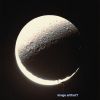
Rhea-N00084610.jpgOver-exposed Rhea61 visitenessun commentoMareKromium01/04/16 at 18:21KKK: ...No, ho gi? visto quell'Artifact (se "A...
|
|
| 920 immagini su 77 pagina(e) |
|
|
|
|
|
19 | |
|
|
|
|
|
|





