| Ultimi commenti - Deep Sky Objects |
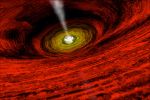
BH-Black_Hole_Storm-Chandra.jpgEvidence for a "spinning" Black Hole460 visite"...L'Orizzonte dell'Evento (parlando dei Buchi Neri) viene definito come "luogo" o "punto matematico".
In realtà questa definizione è erronea e fuorviante, poichè l'Orizzonte dell'Evento è, comunque, un "punto fisico" dell'universo, matematicamente calcolabile. Possiamo dire che esso rappresenta la linea di demarcazione fra l'Universo che noi vediamo e cerchiamo di spiegare con Leggi Fisiche e Matematiche, e l'Universo del Buco Nero.
Un Universo al quale queste Leggi, probabilmente, non si applicano..."
P.C. Floegers - "In the Paradox"12/04/12 at 17:22pierluigi: "Scientifically NON Correct", una frase ...
|
|
BH-Black_Hole_Storm-Chandra.jpgEvidence for a "spinning" Black Hole460 visite"...L'Orizzonte dell'Evento (parlando dei Buchi Neri) viene definito come "luogo" o "punto matematico".
In realtà questa definizione è erronea e fuorviante, poichè l'Orizzonte dell'Evento è, comunque, un "punto fisico" dell'universo, matematicamente calcolabile. Possiamo dire che esso rappresenta la linea di demarcazione fra l'Universo che noi vediamo e cerchiamo di spiegare con Leggi Fisiche e Matematiche, e l'Universo del Buco Nero.
Un Universo al quale queste Leggi, probabilmente, non si applicano..."
P.C. Floegers - "In the Paradox"12/04/12 at 16:44paolocf1963: ...Carissima Ivana, non ne avevi mai sentito parla...
|
|
BH-Black_Hole_Storm-Chandra.jpgEvidence for a "spinning" Black Hole460 visite"...L'Orizzonte dell'Evento (parlando dei Buchi Neri) viene definito come "luogo" o "punto matematico".
In realtà questa definizione è erronea e fuorviante, poichè l'Orizzonte dell'Evento è, comunque, un "punto fisico" dell'universo, matematicamente calcolabile. Possiamo dire che esso rappresenta la linea di demarcazione fra l'Universo che noi vediamo e cerchiamo di spiegare con Leggi Fisiche e Matematiche, e l'Universo del Buco Nero.
Un Universo al quale queste Leggi, probabilmente, non si applicano..."
P.C. Floegers - "In the Paradox"12/04/12 at 16:40Ivana Tognoloni: Non avevo mai sentito parlare di due differenti ti...
|
|
BH-Black_Hole_Storm-Chandra.jpgEvidence for a "spinning" Black Hole460 visite"...L'Orizzonte dell'Evento (parlando dei Buchi Neri) viene definito come "luogo" o "punto matematico".
In realtà questa definizione è erronea e fuorviante, poichè l'Orizzonte dell'Evento è, comunque, un "punto fisico" dell'universo, matematicamente calcolabile. Possiamo dire che esso rappresenta la linea di demarcazione fra l'Universo che noi vediamo e cerchiamo di spiegare con Leggi Fisiche e Matematiche, e l'Universo del Buco Nero.
Un Universo al quale queste Leggi, probabilmente, non si applicano..."
P.C. Floegers - "In the Paradox"12/03/12 at 18:15Omomoto: letta tutta di un fiato e senza tedio. E mi sembra...
|
|
BH-Black_Hole_Storm-Chandra.jpgEvidence for a "spinning" Black Hole460 visite"...L'Orizzonte dell'Evento (parlando dei Buchi Neri) viene definito come "luogo" o "punto matematico".
In realtà questa definizione è erronea e fuorviante, poichè l'Orizzonte dell'Evento è, comunque, un "punto fisico" dell'universo, matematicamente calcolabile. Possiamo dire che esso rappresenta la linea di demarcazione fra l'Universo che noi vediamo e cerchiamo di spiegare con Leggi Fisiche e Matematiche, e l'Universo del Buco Nero.
Un Universo al quale queste Leggi, probabilmente, non si applicano..."
P.C. Floegers - "In the Paradox"12/03/12 at 10:51paolocf1963: Cari Amici,
il punto iniziale delle riflessioni...
|
|

Gravitational_Lensing.gifGravitational Lensing134 visiteLensing by a Black Hole. This is an animated simulation of a phenomenon known as "Gravitational Lensing" and as caused by a Schwarzschild-type Black Hole moving in front of a background Galaxy. A secondary image of the Galaxy can be seen within the so-called "Einstein's Ring" of the Black Hole, on the opposite direction of the one of the Galaxy. The secondary image grows (still remaining within the Einstein's Ring) as the primary image approaches the Black Hole. The surface brightness of the two images remain constant, but their angular size varies, hence producing an amplification of the Galaxy Luminosity as seen from a distant observer. The maximum amplification occurs when the background Galaxy (or, like in the present case, a bright part of it) is exactly behind the Black Hole.MareKromium12/02/12 at 06:03AndreaGG: Mi associo al commento di Omomoto. Comunque, anche...
|
|
Gravitational_Lensing.gifGravitational Lensing134 visiteLensing by a Black Hole. This is an animated simulation of a phenomenon known as "Gravitational Lensing" and as caused by a Schwarzschild-type Black Hole moving in front of a background Galaxy. A secondary image of the Galaxy can be seen within the so-called "Einstein's Ring" of the Black Hole, on the opposite direction of the one of the Galaxy. The secondary image grows (still remaining within the Einstein's Ring) as the primary image approaches the Black Hole. The surface brightness of the two images remain constant, but their angular size varies, hence producing an amplification of the Galaxy Luminosity as seen from a distant observer. The maximum amplification occurs when the background Galaxy (or, like in the present case, a bright part of it) is exactly behind the Black Hole.MareKromium12/01/12 at 14:53Ivana Tognoloni: Grazie mille Paolo, davvero molto interessante! Su...
|
|
Gravitational_Lensing.gifGravitational Lensing134 visiteLensing by a Black Hole. This is an animated simulation of a phenomenon known as "Gravitational Lensing" and as caused by a Schwarzschild-type Black Hole moving in front of a background Galaxy. A secondary image of the Galaxy can be seen within the so-called "Einstein's Ring" of the Black Hole, on the opposite direction of the one of the Galaxy. The secondary image grows (still remaining within the Einstein's Ring) as the primary image approaches the Black Hole. The surface brightness of the two images remain constant, but their angular size varies, hence producing an amplification of the Galaxy Luminosity as seen from a distant observer. The maximum amplification occurs when the background Galaxy (or, like in the present case, a bright part of it) is exactly behind the Black Hole.MareKromium12/01/12 at 08:18Anakin: MIlle grazie per questo immenso lavoro Paolo. Ma p...
|
|
Gravitational_Lensing.gifGravitational Lensing134 visiteLensing by a Black Hole. This is an animated simulation of a phenomenon known as "Gravitational Lensing" and as caused by a Schwarzschild-type Black Hole moving in front of a background Galaxy. A secondary image of the Galaxy can be seen within the so-called "Einstein's Ring" of the Black Hole, on the opposite direction of the one of the Galaxy. The secondary image grows (still remaining within the Einstein's Ring) as the primary image approaches the Black Hole. The surface brightness of the two images remain constant, but their angular size varies, hence producing an amplification of the Galaxy Luminosity as seen from a distant observer. The maximum amplification occurs when the background Galaxy (or, like in the present case, a bright part of it) is exactly behind the Black Hole.MareKromium11/30/12 at 22:08Omomoto: una interpretazione ragionata e libera da dogmi, d...
|
|
Gravitational_Lensing.gifGravitational Lensing134 visiteLensing by a Black Hole. This is an animated simulation of a phenomenon known as "Gravitational Lensing" and as caused by a Schwarzschild-type Black Hole moving in front of a background Galaxy. A secondary image of the Galaxy can be seen within the so-called "Einstein's Ring" of the Black Hole, on the opposite direction of the one of the Galaxy. The secondary image grows (still remaining within the Einstein's Ring) as the primary image approaches the Black Hole. The surface brightness of the two images remain constant, but their angular size varies, hence producing an amplification of the Galaxy Luminosity as seen from a distant observer. The maximum amplification occurs when the background Galaxy (or, like in the present case, a bright part of it) is exactly behind the Black Hole.MareKromium11/30/12 at 18:49paolocf1963: ...io posso solo darVi una interpretazione delle &...
|
|
Gravitational_Lensing.gifGravitational Lensing134 visiteLensing by a Black Hole. This is an animated simulation of a phenomenon known as "Gravitational Lensing" and as caused by a Schwarzschild-type Black Hole moving in front of a background Galaxy. A secondary image of the Galaxy can be seen within the so-called "Einstein's Ring" of the Black Hole, on the opposite direction of the one of the Galaxy. The secondary image grows (still remaining within the Einstein's Ring) as the primary image approaches the Black Hole. The surface brightness of the two images remain constant, but their angular size varies, hence producing an amplification of the Galaxy Luminosity as seen from a distant observer. The maximum amplification occurs when the background Galaxy (or, like in the present case, a bright part of it) is exactly behind the Black Hole.MareKromium11/30/12 at 17:59pierluigi: Ciao Paolo, grazie della spiegazione, qualcosa in ...
|
|
Gravitational_Lensing.gifGravitational Lensing134 visiteLensing by a Black Hole. This is an animated simulation of a phenomenon known as "Gravitational Lensing" and as caused by a Schwarzschild-type Black Hole moving in front of a background Galaxy. A secondary image of the Galaxy can be seen within the so-called "Einstein's Ring" of the Black Hole, on the opposite direction of the one of the Galaxy. The secondary image grows (still remaining within the Einstein's Ring) as the primary image approaches the Black Hole. The surface brightness of the two images remain constant, but their angular size varies, hence producing an amplification of the Galaxy Luminosity as seen from a distant observer. The maximum amplification occurs when the background Galaxy (or, like in the present case, a bright part of it) is exactly behind the Black Hole.MareKromium11/30/12 at 17:31Omomoto: Chiara ed esaustiva versione "politically cor...
|
|
| 1154 immagini su 97 pagina(e) |
 |
|
|
|
|
72 | |
|
|
|
|








