| Ultimi commenti - Deep Sky Objects |

Einstein_s Ring-HST.jpgThe "Einstein's Ring" (Gravitational Lensing)80 visiteThe thin blue bull's-eye patterns in these 8 HST images appear like neon signs floating over reddish-white blobs. The blobs are giant elliptical galaxies roughly 2 to 4 BLY away. The bull's-eye patterns are created as the light from galaxies twice as far away is distorted into circular shapes by the gravity of the giant elliptical galaxies.
This phenomenon is called Gravitational Lensing, first predicted by Albert Einstein almost a century ago.
Gravitational Lensing occurs when the gravitational field from a massive object warps space and deflects light from a distant object behind it.
The bull's-eye patterns are so-called "Einstein rings", which are the most elegant manifestation of the "Lensing" phenomenon.
Einstein's Rings are produced when (at least) two galaxies are, from our viewpoint, almost perfectly aligned, one behind the other.12/18/13 at 06:51AndreaGG: Ma Matteo Fagone ancora ci segue? Perch? per coinc...
|
|
Einstein_s Ring-HST.jpgThe "Einstein's Ring" (Gravitational Lensing)80 visiteThe thin blue bull's-eye patterns in these 8 HST images appear like neon signs floating over reddish-white blobs. The blobs are giant elliptical galaxies roughly 2 to 4 BLY away. The bull's-eye patterns are created as the light from galaxies twice as far away is distorted into circular shapes by the gravity of the giant elliptical galaxies.
This phenomenon is called Gravitational Lensing, first predicted by Albert Einstein almost a century ago.
Gravitational Lensing occurs when the gravitational field from a massive object warps space and deflects light from a distant object behind it.
The bull's-eye patterns are so-called "Einstein rings", which are the most elegant manifestation of the "Lensing" phenomenon.
Einstein's Rings are produced when (at least) two galaxies are, from our viewpoint, almost perfectly aligned, one behind the other.12/17/13 at 11:25walthari: optime!!
|
|
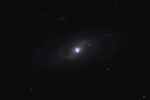
Gravitational_Lensing-00.jpgThe "Einstein Cross"120 visiteDalla Rubrica "NASA - Picture of the Day" del giorno 7 Febbraio 2010:"Most Galaxies have a single Nucleus, we know that. But does this Galaxy have four?
The strange answer leads astronomers to conclude that the Nucleus of the surrounding galaxy is not even visible in this image. The central cloverleaf is rather light emitted from a background Quasar. The Gravitational Field of the visible foreground galaxy breaks light from this distant Quasar into four distinct images.
The Quasar must be properly aligned behind the center of a massive galaxy for a mirage like this to be evident. The general effect is known as "Gravitational Lensing", and this specific case is known as the "Einstein Cross". Stranger still, the images of the Einstein Cross vary in relative brightness, enhanced occasionally by the additional gravitational microlensing effect of specific stars in the foreground galaxy".MareKromium12/17/13 at 11:24walthari: eggià.....
|
|
Gravitational_Lensing-00.jpgThe "Einstein Cross"120 visiteDalla Rubrica "NASA - Picture of the Day" del giorno 7 Febbraio 2010:"Most Galaxies have a single Nucleus, we know that. But does this Galaxy have four?
The strange answer leads astronomers to conclude that the Nucleus of the surrounding galaxy is not even visible in this image. The central cloverleaf is rather light emitted from a background Quasar. The Gravitational Field of the visible foreground galaxy breaks light from this distant Quasar into four distinct images.
The Quasar must be properly aligned behind the center of a massive galaxy for a mirage like this to be evident. The general effect is known as "Gravitational Lensing", and this specific case is known as the "Einstein Cross". Stranger still, the images of the Einstein Cross vary in relative brightness, enhanced occasionally by the additional gravitational microlensing effect of specific stars in the foreground galaxy".MareKromium12/17/13 at 10:28paolocf1963: ...il "bello" ? che la Croce di Einstein...
|
|
Einstein_s Ring-HST.jpgThe "Einstein's Ring" (Gravitational Lensing)80 visiteThe thin blue bull's-eye patterns in these 8 HST images appear like neon signs floating over reddish-white blobs. The blobs are giant elliptical galaxies roughly 2 to 4 BLY away. The bull's-eye patterns are created as the light from galaxies twice as far away is distorted into circular shapes by the gravity of the giant elliptical galaxies.
This phenomenon is called Gravitational Lensing, first predicted by Albert Einstein almost a century ago.
Gravitational Lensing occurs when the gravitational field from a massive object warps space and deflects light from a distant object behind it.
The bull's-eye patterns are so-called "Einstein rings", which are the most elegant manifestation of the "Lensing" phenomenon.
Einstein's Rings are produced when (at least) two galaxies are, from our viewpoint, almost perfectly aligned, one behind the other.12/17/13 at 10:25paolocf1963: No, non lo ?. Il "punto" ? che anche que...
|
|

NGC-3199.jpgNGC 3199 - Inside the "Carina Constellation"77 visite"...Tu, quamcumque Deus tibi fortunaverit horam,
Grata sume manu neu dubia differ in annum..."
(Orazio)
"Tu, qualunque sia l'ora (propizia) che Giove ti avrà riservato, afferrala e sii riconoscente; e (ricorda) di non posporre (mai) le cose belle che, nel corso degli anni, ti verranno offerte..."12/17/13 at 08:13walthari: già...
|
|
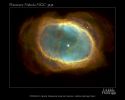
NGC-3132-HST.jpgNGC 3132 - Planetary Nebula206 visite"...L'Equazione Unificante? Ne hanno sentito parlare tutti di questa Equazione. Cos'è? E' difficile da spiegarsi in poche parole, ma ci posso provare... Direi che essa è, per gli Scienziati e gli Uomini di Scienza del XXI Sec., ciò che la Pietra Filosofale era per gli Alchimisti del Medio Evo. E' un obbiettivo reale ed è un mito. Possiamo dire che essa è la formula che riassume tutto l'Universo ed i fenomeni che lo governano (chimici e fisici; atomici e sub-atomici ecc.) in una singola Linea Esplicativa.
Si tratta di qualcosa di simile a ciò che Einstein fece per la materia e l'energia (cioè riunirle e connetterle) solo che, in questo caso, viene riunito e connesso, in modo immediato e diretto, tutto il Creato.
E questa è la teoria.
In pratica è solo una metafora. L'Equazione Unificante non è null'altro che un modo di dire che ogni elemento ed ogni fenomeno di questo Universo esiste solo in quanto "parte" di un altro elemento e di un altro fenomeno..."
P.C. Floegers - "Conversations"12/17/13 at 08:09walthari: bell'osservazione....
|
|
Einstein_s Ring-HST.jpgThe "Einstein's Ring" (Gravitational Lensing)80 visiteThe thin blue bull's-eye patterns in these 8 HST images appear like neon signs floating over reddish-white blobs. The blobs are giant elliptical galaxies roughly 2 to 4 BLY away. The bull's-eye patterns are created as the light from galaxies twice as far away is distorted into circular shapes by the gravity of the giant elliptical galaxies.
This phenomenon is called Gravitational Lensing, first predicted by Albert Einstein almost a century ago.
Gravitational Lensing occurs when the gravitational field from a massive object warps space and deflects light from a distant object behind it.
The bull's-eye patterns are so-called "Einstein rings", which are the most elegant manifestation of the "Lensing" phenomenon.
Einstein's Rings are produced when (at least) two galaxies are, from our viewpoint, almost perfectly aligned, one behind the other.12/17/13 at 08:08walthari: quindi allineate ma distanti tanto che il nucleo d...
|
|
Gravitational_Lensing-00.jpgThe "Einstein Cross"120 visiteDalla Rubrica "NASA - Picture of the Day" del giorno 7 Febbraio 2010:"Most Galaxies have a single Nucleus, we know that. But does this Galaxy have four?
The strange answer leads astronomers to conclude that the Nucleus of the surrounding galaxy is not even visible in this image. The central cloverleaf is rather light emitted from a background Quasar. The Gravitational Field of the visible foreground galaxy breaks light from this distant Quasar into four distinct images.
The Quasar must be properly aligned behind the center of a massive galaxy for a mirage like this to be evident. The general effect is known as "Gravitational Lensing", and this specific case is known as the "Einstein Cross". Stranger still, the images of the Einstein Cross vary in relative brightness, enhanced occasionally by the additional gravitational microlensing effect of specific stars in the foreground galaxy".MareKromium12/17/13 at 08:04walthari: i corpi in questione non sono omologhi se consider...
|
|
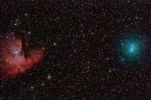
NGC-281.jpgNGC 281 - Emission Nebula (and Hartley 2 Comet)165 visite"...God is ingenious, not dishonest..."
Albert EinsteinMareKromium12/17/13 at 08:00walthari: ok, fantastico, aggiudicato!!!
|
|
Gravitational_Lensing-00.jpgThe "Einstein Cross"120 visiteDalla Rubrica "NASA - Picture of the Day" del giorno 7 Febbraio 2010:"Most Galaxies have a single Nucleus, we know that. But does this Galaxy have four?
The strange answer leads astronomers to conclude that the Nucleus of the surrounding galaxy is not even visible in this image. The central cloverleaf is rather light emitted from a background Quasar. The Gravitational Field of the visible foreground galaxy breaks light from this distant Quasar into four distinct images.
The Quasar must be properly aligned behind the center of a massive galaxy for a mirage like this to be evident. The general effect is known as "Gravitational Lensing", and this specific case is known as the "Einstein Cross". Stranger still, the images of the Einstein Cross vary in relative brightness, enhanced occasionally by the additional gravitational microlensing effect of specific stars in the foreground galaxy".MareKromium12/17/13 at 06:20AndreaGG: provo io: se fosse come descritto nella didascalia...
|
|
NGC-3199.jpgNGC 3199 - Inside the "Carina Constellation"77 visite"...Tu, quamcumque Deus tibi fortunaverit horam,
Grata sume manu neu dubia differ in annum..."
(Orazio)
"Tu, qualunque sia l'ora (propizia) che Giove ti avrà riservato, afferrala e sii riconoscente; e (ricorda) di non posporre (mai) le cose belle che, nel corso degli anni, ti verranno offerte..."12/16/13 at 21:58paolocf1963: ....e con questo intervento chiudo (per oggi): qua...
|
|
| 1154 immagini su 97 pagina(e) |
 |
|
|
|
|
59 | |
|
|
|
|








