| |

| Ultimi commenti - Curiosity and the Exploration of Gale Crater |
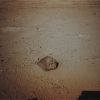
SOL0043-PIA16155.jpg'Jake Matijevic' - Sol 43 (Absolute Natural Colors; credits for the additional process. and color.: Dr Paolo C. Fienga/Lunar Explorer Italia/Italian Planetary Foundation)165 visiteCaption NASA:"The drive by NASA's Mars Exploration Rover Curiosity during the Mission's 43rd Martian Day, or Sol, (such as September 19, 2012) ended with this Rock that lies at about 8 feet (such as 2,5 meters) from the Rover. The Rock is about 10" (inches, such as approx. 25 centimeters) tall and 16" (approx. 40 centimeters) wide. The Rover Team has assessed it as a suitable target for the first use of Curiosity's Contact Instruments on a Rock. The image was taken by the left Navigation Camera (or NavCam) at the end of the drive.
The rock has been named "Jake Matijevic", and this choice was made with the aim of commemorating Jacob Matijevic (1947-2012), who was the Surface Operations Systems Chief Engineer for the Mars Science Laboratory Project and the Project's Curiosity Rover. He was also a Leading Engineer for all of the previous NASA Mars Rovers, such as Sojourner, Spirit and Opportunity.
Curiosity's Contact Instruments are on a turret at the end of the Rover's Robotic Arm; they are the Alpha Particle X-Ray Spectrometer (for reading the target's elemental composition) and the Mars Hand Lens Imager (for close-up imaging).MareKromium09/25/12 at 20:40paolocf1963: Cari Amici,
per Anakin: i residui di un bolide...
|
|
SOL0043-PIA16155.jpg'Jake Matijevic' - Sol 43 (Absolute Natural Colors; credits for the additional process. and color.: Dr Paolo C. Fienga/Lunar Explorer Italia/Italian Planetary Foundation)165 visiteCaption NASA:"The drive by NASA's Mars Exploration Rover Curiosity during the Mission's 43rd Martian Day, or Sol, (such as September 19, 2012) ended with this Rock that lies at about 8 feet (such as 2,5 meters) from the Rover. The Rock is about 10" (inches, such as approx. 25 centimeters) tall and 16" (approx. 40 centimeters) wide. The Rover Team has assessed it as a suitable target for the first use of Curiosity's Contact Instruments on a Rock. The image was taken by the left Navigation Camera (or NavCam) at the end of the drive.
The rock has been named "Jake Matijevic", and this choice was made with the aim of commemorating Jacob Matijevic (1947-2012), who was the Surface Operations Systems Chief Engineer for the Mars Science Laboratory Project and the Project's Curiosity Rover. He was also a Leading Engineer for all of the previous NASA Mars Rovers, such as Sojourner, Spirit and Opportunity.
Curiosity's Contact Instruments are on a turret at the end of the Rover's Robotic Arm; they are the Alpha Particle X-Ray Spectrometer (for reading the target's elemental composition) and the Mars Hand Lens Imager (for close-up imaging).MareKromium09/25/12 at 14:29broken: ma con tutta quella roba da vedere e fotografare s...
|
|
SOL0043-PIA16155.jpg'Jake Matijevic' - Sol 43 (Absolute Natural Colors; credits for the additional process. and color.: Dr Paolo C. Fienga/Lunar Explorer Italia/Italian Planetary Foundation)165 visiteCaption NASA:"The drive by NASA's Mars Exploration Rover Curiosity during the Mission's 43rd Martian Day, or Sol, (such as September 19, 2012) ended with this Rock that lies at about 8 feet (such as 2,5 meters) from the Rover. The Rock is about 10" (inches, such as approx. 25 centimeters) tall and 16" (approx. 40 centimeters) wide. The Rover Team has assessed it as a suitable target for the first use of Curiosity's Contact Instruments on a Rock. The image was taken by the left Navigation Camera (or NavCam) at the end of the drive.
The rock has been named "Jake Matijevic", and this choice was made with the aim of commemorating Jacob Matijevic (1947-2012), who was the Surface Operations Systems Chief Engineer for the Mars Science Laboratory Project and the Project's Curiosity Rover. He was also a Leading Engineer for all of the previous NASA Mars Rovers, such as Sojourner, Spirit and Opportunity.
Curiosity's Contact Instruments are on a turret at the end of the Rover's Robotic Arm; they are the Alpha Particle X-Ray Spectrometer (for reading the target's elemental composition) and the Mars Hand Lens Imager (for close-up imaging).MareKromium09/25/12 at 12:51Anakin: Ti sei spiegato benissimo Paolo. Grazie. Per? in u...
|
|

SOL0038MR0171000000E1_DXXX.jpgUnusually-looking Igneous Rock - Sol 38 (Absolute Natural Colors; credits for the research and the additional process.: Dr Gianluigi Barca/Lunar Explorer Italia/Italian Planetary Foundation)124 visitenessun commentoMareKromium09/25/12 at 12:45Anakin: Quindi la forma curiosa diventa tale quando ad un ...
|
|
SOL0043-PIA16155.jpg'Jake Matijevic' - Sol 43 (Absolute Natural Colors; credits for the additional process. and color.: Dr Paolo C. Fienga/Lunar Explorer Italia/Italian Planetary Foundation)165 visiteCaption NASA:"The drive by NASA's Mars Exploration Rover Curiosity during the Mission's 43rd Martian Day, or Sol, (such as September 19, 2012) ended with this Rock that lies at about 8 feet (such as 2,5 meters) from the Rover. The Rock is about 10" (inches, such as approx. 25 centimeters) tall and 16" (approx. 40 centimeters) wide. The Rover Team has assessed it as a suitable target for the first use of Curiosity's Contact Instruments on a Rock. The image was taken by the left Navigation Camera (or NavCam) at the end of the drive.
The rock has been named "Jake Matijevic", and this choice was made with the aim of commemorating Jacob Matijevic (1947-2012), who was the Surface Operations Systems Chief Engineer for the Mars Science Laboratory Project and the Project's Curiosity Rover. He was also a Leading Engineer for all of the previous NASA Mars Rovers, such as Sojourner, Spirit and Opportunity.
Curiosity's Contact Instruments are on a turret at the end of the Rover's Robotic Arm; they are the Alpha Particle X-Ray Spectrometer (for reading the target's elemental composition) and the Mars Hand Lens Imager (for close-up imaging).MareKromium09/25/12 at 11:04paolocf1963: Questo commento devo farlo, anche se potr? non pia...
|
|
SOL0043-PIA16155.jpg'Jake Matijevic' - Sol 43 (Absolute Natural Colors; credits for the additional process. and color.: Dr Paolo C. Fienga/Lunar Explorer Italia/Italian Planetary Foundation)165 visiteCaption NASA:"The drive by NASA's Mars Exploration Rover Curiosity during the Mission's 43rd Martian Day, or Sol, (such as September 19, 2012) ended with this Rock that lies at about 8 feet (such as 2,5 meters) from the Rover. The Rock is about 10" (inches, such as approx. 25 centimeters) tall and 16" (approx. 40 centimeters) wide. The Rover Team has assessed it as a suitable target for the first use of Curiosity's Contact Instruments on a Rock. The image was taken by the left Navigation Camera (or NavCam) at the end of the drive.
The rock has been named "Jake Matijevic", and this choice was made with the aim of commemorating Jacob Matijevic (1947-2012), who was the Surface Operations Systems Chief Engineer for the Mars Science Laboratory Project and the Project's Curiosity Rover. He was also a Leading Engineer for all of the previous NASA Mars Rovers, such as Sojourner, Spirit and Opportunity.
Curiosity's Contact Instruments are on a turret at the end of the Rover's Robotic Arm; they are the Alpha Particle X-Ray Spectrometer (for reading the target's elemental composition) and the Mars Hand Lens Imager (for close-up imaging).MareKromium09/25/12 at 10:54MareKromium: Per Anakin: ora la vedi la (a mio parere colossale...
|
|
SOL0038MR0171000000E1_DXXX.jpgUnusually-looking Igneous Rock - Sol 38 (Absolute Natural Colors; credits for the research and the additional process.: Dr Gianluigi Barca/Lunar Explorer Italia/Italian Planetary Foundation)124 visitenessun commentoMareKromium09/25/12 at 10:27MareKromium: Carissimo Anakin,
questa roccia ? interessante,...
|
|
SOL0038MR0171000000E1_DXXX.jpgUnusually-looking Igneous Rock - Sol 38 (Absolute Natural Colors; credits for the research and the additional process.: Dr Gianluigi Barca/Lunar Explorer Italia/Italian Planetary Foundation)124 visitenessun commentoMareKromium09/25/12 at 09:53Anakin: Questa roccia cos ha di interessante a parte la fo...
|
|

SOL0020-MR0107005000C0_DXXX.jpg"Flower" and "White-Head" - Sol 20 (Original NASA - MER Curiosity b/w frame - Credits: NASA/JPL-Caltech; credits for the Research: Dr Gianluigi Barca/Lunar Explorer Italia/Italian Planetary Foundation)146 visiteCominciando dall'immagine di Dx (CTX ed EDM): gli Amici di pasadena non hanno (che si sappia) mai commentato questo "Rocky Outcrop". Noi, grazie all'ottimo Lavoro di Ricerca del Dr Gianluigi Barca, Vi proponiamo il Frame RAW Originale in b/n. Si tratta di un "Affioramento Roccioso" o di un "Fiore Marziano"? O forse di una sorta di "nido"? O forse è il residuo di una struttura più complessa e più grande di matrice non naturale? O è solo uno "scherzo" della Natura?!?
Come sapete bene, noi non abbiamo la Verità tra le mani, e quindi Vi offriamo questa "Stranezza Marziana" affinchè possiate fare le Vostre (e SOLO Vostre) valutazioni. Noi ci limitiamo a sottolineare un curioso dettaglio (più un modo di pensare ed agire che un fatto concreto, in realtà): quante immagini di rocce più o meno insignificanti vengono commentate dagli Amici di Pasadena e poi, alle volte, divengono oggetto di veri e prori "Abstracts"? Tantissime. Da "Humphrey" (un macigno ripreso dal MER Spirit), ad "N165", ripresa proprio dal MER Curiosity (e se questa roccia del tutto insignificante la volete vedere, andate sul NASA Planetary Photojournal, scegliete la Galleria dedicata a Marte e poi digitate, nella funzione "Go directly to image (PIxxxxxx)", posizionata in alto a destra, il codice "PIA16073").
E quante rocce in equilibrio impossibile o dalle forme assurde vengono, sempre dagli Amici di Pasadena, isolate e commentate? Nessuna. Mai. E allora, delle due l'una: o noi siamo degli "specialisti" nel focalizzare il nostro interesse su dettagli insignificanti (il che può anche essere...), oppure alla NASA soffrono di una forma quasi terminale di "strabismo selettivo". E come sempre, ora decidete Voi quello che volete credere e pensare...
Per quanto attiene, poi, la Roccia visibile alla Sx del Frame (anche qui in CTX ed EDM), appuntita e dalla punta "bianca", diremmo che si tratta di una ulteriore Stranezza, ancorchè di spiegazione più agevole. Quale? Probabilmente si tratta di una roccia che giaceva infossata (parzialmente) e che poi, per qualche ragione ignota (probabilmente per motivi accidentali), è stata "estratta", "rimossa" dal suolo, in maniera tale da finire con l'esporre quella che era la porzione sepolta. Se poi ci chiedeste come mai quel colorito "bianco-latte" (o bianco-ghiaccio"?!?)...Purtroppo non sapremmo risponderVi.MareKromium09/24/12 at 16:21paolocf1963: ...e se lo sapessi.... Comunque io credo che Marte...
|
|
SOL0020-MR0107005000C0_DXXX.jpg"Flower" and "White-Head" - Sol 20 (Original NASA - MER Curiosity b/w frame - Credits: NASA/JPL-Caltech; credits for the Research: Dr Gianluigi Barca/Lunar Explorer Italia/Italian Planetary Foundation)146 visiteCominciando dall'immagine di Dx (CTX ed EDM): gli Amici di pasadena non hanno (che si sappia) mai commentato questo "Rocky Outcrop". Noi, grazie all'ottimo Lavoro di Ricerca del Dr Gianluigi Barca, Vi proponiamo il Frame RAW Originale in b/n. Si tratta di un "Affioramento Roccioso" o di un "Fiore Marziano"? O forse di una sorta di "nido"? O forse è il residuo di una struttura più complessa e più grande di matrice non naturale? O è solo uno "scherzo" della Natura?!?
Come sapete bene, noi non abbiamo la Verità tra le mani, e quindi Vi offriamo questa "Stranezza Marziana" affinchè possiate fare le Vostre (e SOLO Vostre) valutazioni. Noi ci limitiamo a sottolineare un curioso dettaglio (più un modo di pensare ed agire che un fatto concreto, in realtà): quante immagini di rocce più o meno insignificanti vengono commentate dagli Amici di Pasadena e poi, alle volte, divengono oggetto di veri e prori "Abstracts"? Tantissime. Da "Humphrey" (un macigno ripreso dal MER Spirit), ad "N165", ripresa proprio dal MER Curiosity (e se questa roccia del tutto insignificante la volete vedere, andate sul NASA Planetary Photojournal, scegliete la Galleria dedicata a Marte e poi digitate, nella funzione "Go directly to image (PIxxxxxx)", posizionata in alto a destra, il codice "PIA16073").
E quante rocce in equilibrio impossibile o dalle forme assurde vengono, sempre dagli Amici di Pasadena, isolate e commentate? Nessuna. Mai. E allora, delle due l'una: o noi siamo degli "specialisti" nel focalizzare il nostro interesse su dettagli insignificanti (il che può anche essere...), oppure alla NASA soffrono di una forma quasi terminale di "strabismo selettivo". E come sempre, ora decidete Voi quello che volete credere e pensare...
Per quanto attiene, poi, la Roccia visibile alla Sx del Frame (anche qui in CTX ed EDM), appuntita e dalla punta "bianca", diremmo che si tratta di una ulteriore Stranezza, ancorchè di spiegazione più agevole. Quale? Probabilmente si tratta di una roccia che giaceva infossata (parzialmente) e che poi, per qualche ragione ignota (probabilmente per motivi accidentali), è stata "estratta", "rimossa" dal suolo, in maniera tale da finire con l'esporre quella che era la porzione sepolta. Se poi ci chiedeste come mai quel colorito "bianco-latte" (o bianco-ghiaccio"?!?)...Purtroppo non sapremmo risponderVi.MareKromium09/24/12 at 14:40Anakin: La roccia con la testa bianca non saprei. Effettiv...
|
|
SOL0020-MR0107005000C0_DXXX.jpg"Flower" and "White-Head" - Sol 20 (Original NASA - MER Curiosity b/w frame - Credits: NASA/JPL-Caltech; credits for the Research: Dr Gianluigi Barca/Lunar Explorer Italia/Italian Planetary Foundation)146 visiteCominciando dall'immagine di Dx (CTX ed EDM): gli Amici di pasadena non hanno (che si sappia) mai commentato questo "Rocky Outcrop". Noi, grazie all'ottimo Lavoro di Ricerca del Dr Gianluigi Barca, Vi proponiamo il Frame RAW Originale in b/n. Si tratta di un "Affioramento Roccioso" o di un "Fiore Marziano"? O forse di una sorta di "nido"? O forse è il residuo di una struttura più complessa e più grande di matrice non naturale? O è solo uno "scherzo" della Natura?!?
Come sapete bene, noi non abbiamo la Verità tra le mani, e quindi Vi offriamo questa "Stranezza Marziana" affinchè possiate fare le Vostre (e SOLO Vostre) valutazioni. Noi ci limitiamo a sottolineare un curioso dettaglio (più un modo di pensare ed agire che un fatto concreto, in realtà): quante immagini di rocce più o meno insignificanti vengono commentate dagli Amici di Pasadena e poi, alle volte, divengono oggetto di veri e prori "Abstracts"? Tantissime. Da "Humphrey" (un macigno ripreso dal MER Spirit), ad "N165", ripresa proprio dal MER Curiosity (e se questa roccia del tutto insignificante la volete vedere, andate sul NASA Planetary Photojournal, scegliete la Galleria dedicata a Marte e poi digitate, nella funzione "Go directly to image (PIxxxxxx)", posizionata in alto a destra, il codice "PIA16073").
E quante rocce in equilibrio impossibile o dalle forme assurde vengono, sempre dagli Amici di Pasadena, isolate e commentate? Nessuna. Mai. E allora, delle due l'una: o noi siamo degli "specialisti" nel focalizzare il nostro interesse su dettagli insignificanti (il che può anche essere...), oppure alla NASA soffrono di una forma quasi terminale di "strabismo selettivo". E come sempre, ora decidete Voi quello che volete credere e pensare...
Per quanto attiene, poi, la Roccia visibile alla Sx del Frame (anche qui in CTX ed EDM), appuntita e dalla punta "bianca", diremmo che si tratta di una ulteriore Stranezza, ancorchè di spiegazione più agevole. Quale? Probabilmente si tratta di una roccia che giaceva infossata (parzialmente) e che poi, per qualche ragione ignota (probabilmente per motivi accidentali), è stata "estratta", "rimossa" dal suolo, in maniera tale da finire con l'esporre quella che era la porzione sepolta. Se poi ci chiedeste come mai quel colorito "bianco-latte" (o bianco-ghiaccio"?!?)...Purtroppo non sapremmo risponderVi.MareKromium09/24/12 at 14:11paolocf1963: Pu? essere, Anakin, pu? essere.
Ma il gelo estr...
|
|

SOL0037MR0156001000E1_DXXX.jpgExtremely unusually-looking Rock: "Mid-Air" - Sol 37 (Credits: NASA/JPL-Caltech; Research: Dr Gianluigi Barca - Lunexit Team/Italian Planetary Foundation)124 visiteTanto affascinante, la "postura" di questo "sasso", quanto inusuale e, chissà..., "Anomalo". Un Grande abbraccio al Dr barca (Big "G") per la continua - e sempre proficua! - ricerca del "dettaglio impossibile". Si, impossibile. Perchè questo "sasso" poggia ESATTAMENTE su un impossibile equilibrio (a meno che quanto vediamo non sia altro che la porzione superiore di un macigno più grande ed infossato - ma, onestamente, questa ipotesi non ci pare molto valida). E comunque sia, pensiamoci sopra...MareKromium09/24/12 at 14:08paolocf1963: Eheheheheheheh! :-)
|
|
| 1143 immagini su 96 pagina(e) |
|
|
|
|
|
81 | |
|
|
|
|
|
|








