| Ultimi commenti - Curiosity and the Exploration of Gale Crater |

SOL0044-EB-MF-LXTT-IPF.jpg'Jake Matijevic' - Sol 44 (Natural Colors; credits for the additional process. and color.: Elisabetta Bonora and Marco Faccin/Lunar Explorer Italia/Italian Planetary Foundation)133 visitenessun commentoMareKromium10/23/12 at 08:47walthari: l'aspetto irregolare della porzione di roccia ...
|
|
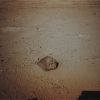
SOL0043-PIA16155.jpg'Jake Matijevic' - Sol 43 (Absolute Natural Colors; credits for the additional process. and color.: Dr Paolo C. Fienga/Lunar Explorer Italia/Italian Planetary Foundation)165 visiteCaption NASA:"The drive by NASA's Mars Exploration Rover Curiosity during the Mission's 43rd Martian Day, or Sol, (such as September 19, 2012) ended with this Rock that lies at about 8 feet (such as 2,5 meters) from the Rover. The Rock is about 10" (inches, such as approx. 25 centimeters) tall and 16" (approx. 40 centimeters) wide. The Rover Team has assessed it as a suitable target for the first use of Curiosity's Contact Instruments on a Rock. The image was taken by the left Navigation Camera (or NavCam) at the end of the drive.
The rock has been named "Jake Matijevic", and this choice was made with the aim of commemorating Jacob Matijevic (1947-2012), who was the Surface Operations Systems Chief Engineer for the Mars Science Laboratory Project and the Project's Curiosity Rover. He was also a Leading Engineer for all of the previous NASA Mars Rovers, such as Sojourner, Spirit and Opportunity.
Curiosity's Contact Instruments are on a turret at the end of the Rover's Robotic Arm; they are the Alpha Particle X-Ray Spectrometer (for reading the target's elemental composition) and the Mars Hand Lens Imager (for close-up imaging).MareKromium10/23/12 at 08:37walthari: non necessariamente.......una lunghissima esposizi...
|
|

SOL0063-PIA16194-PCF-LXTT-IPF.jpgAnother "Scoop" at Gale - Sol 63 (Absolute Natural Colors; credits for the additional process. and color.: Dr Paolo C. Fienga/Lunar Explorer Italia/Italian Planetary Foundation)117 visiteCaption NASA:"In this image, the Scoop on NASA's Curiosity Mars Exploration Rover shows the larger Soil Particles that were too big to filter through a sample-processing "Sieve" that is porous only to Particles less than 0,006" (i.e.: about 150 microns) across. After a full-scoop sample had been vibrated over the Sieve, this held-back portion was returned to the Scoop to be accessible for inspection by the Rover's Mast Camera. The image is part of the first "decontamination" exercise by the Collection and Handling for "In-Situ" Martian Rock Analysis (CHIMRA) tool on the end of the Rover's Robotic Arm, which includes the Scoop, the Sieve and other minor components.
The decontamination exercise involved scooping some Soil, shaking it thoroughly inside the Sample-processing Chambers to scrub the internal surfaces, putting it through a Sieve, dividing it into the appropriate portions and then discarding the sample. This process will be repeated 3 (three) times. The rinse-and-discard cycles serve a quality-assurance purpose similar to a common practice in geochemical laboratory analysis on Earth.
This image was taken by Curiosity's right Mast Camera (Mastcam-100) on October, 10, 2012, such as the 64th Sol, or Martian Day, of operations".MareKromium10/17/12 at 08:09paolocf1963: Anche la "paletta" di Phoenix era concep...
|
|
SOL0063-PIA16194-PCF-LXTT-IPF.jpgAnother "Scoop" at Gale - Sol 63 (Absolute Natural Colors; credits for the additional process. and color.: Dr Paolo C. Fienga/Lunar Explorer Italia/Italian Planetary Foundation)117 visiteCaption NASA:"In this image, the Scoop on NASA's Curiosity Mars Exploration Rover shows the larger Soil Particles that were too big to filter through a sample-processing "Sieve" that is porous only to Particles less than 0,006" (i.e.: about 150 microns) across. After a full-scoop sample had been vibrated over the Sieve, this held-back portion was returned to the Scoop to be accessible for inspection by the Rover's Mast Camera. The image is part of the first "decontamination" exercise by the Collection and Handling for "In-Situ" Martian Rock Analysis (CHIMRA) tool on the end of the Rover's Robotic Arm, which includes the Scoop, the Sieve and other minor components.
The decontamination exercise involved scooping some Soil, shaking it thoroughly inside the Sample-processing Chambers to scrub the internal surfaces, putting it through a Sieve, dividing it into the appropriate portions and then discarding the sample. This process will be repeated 3 (three) times. The rinse-and-discard cycles serve a quality-assurance purpose similar to a common practice in geochemical laboratory analysis on Earth.
This image was taken by Curiosity's right Mast Camera (Mastcam-100) on October, 10, 2012, such as the 64th Sol, or Martian Day, of operations".MareKromium10/17/12 at 06:18AndreaGG: Dalle mie parti le palette hanno un lato pi? sotti...
|
|

SOL0052-PIA16204-PCF-LXTT-IPF.jpg"Rocknest" Site - Sol 52 (Absolute Natural Colors; credits for the additional process. and color.: Dr Paolo C. Fienga - Lunar Explorer Italia/Italian Planetary Foundation)115 visiteCaption NASA:"This patch of windblown Sand and Dust downhill from a cluster of Dark Rocks is the so-called "Rocknest" Site, which has been selected as the likely location for first use of the scoop on the Robotic Arm of NASA's Mars Exploration Rover Curiosity. This view is a mosaic of images taken by the telephoto right-eye camera of the Mast Camera (Mastcam) during the 52nd Martian Day, or Sol, of the mission (such as September, 28, 2012). Just 4 (four) Soles before, the Rover arrived at Rocknest. The "Rocknest" patch is about 8 by 16 feet (such as approx. 1,5 by 5 meters)".MareKromium10/15/12 at 16:04MareKromium: Ed ? (anche) per questo che io sto sulle balle ad ...
|
|
SOL0052-PIA16204-PCF-LXTT-IPF.jpg"Rocknest" Site - Sol 52 (Absolute Natural Colors; credits for the additional process. and color.: Dr Paolo C. Fienga - Lunar Explorer Italia/Italian Planetary Foundation)115 visiteCaption NASA:"This patch of windblown Sand and Dust downhill from a cluster of Dark Rocks is the so-called "Rocknest" Site, which has been selected as the likely location for first use of the scoop on the Robotic Arm of NASA's Mars Exploration Rover Curiosity. This view is a mosaic of images taken by the telephoto right-eye camera of the Mast Camera (Mastcam) during the 52nd Martian Day, or Sol, of the mission (such as September, 28, 2012). Just 4 (four) Soles before, the Rover arrived at Rocknest. The "Rocknest" patch is about 8 by 16 feet (such as approx. 1,5 by 5 meters)".MareKromium10/15/12 at 15:43Anakin: Ovviamente no. Questa cosa la facevo gi? quando er...
|
|
SOL0052-PIA16204-PCF-LXTT-IPF.jpg"Rocknest" Site - Sol 52 (Absolute Natural Colors; credits for the additional process. and color.: Dr Paolo C. Fienga - Lunar Explorer Italia/Italian Planetary Foundation)115 visiteCaption NASA:"This patch of windblown Sand and Dust downhill from a cluster of Dark Rocks is the so-called "Rocknest" Site, which has been selected as the likely location for first use of the scoop on the Robotic Arm of NASA's Mars Exploration Rover Curiosity. This view is a mosaic of images taken by the telephoto right-eye camera of the Mast Camera (Mastcam) during the 52nd Martian Day, or Sol, of the mission (such as September, 28, 2012). Just 4 (four) Soles before, the Rover arrived at Rocknest. The "Rocknest" patch is about 8 by 16 feet (such as approx. 1,5 by 5 meters)".MareKromium10/15/12 at 14:57paolocf1963: Per una questione - chiamiamola cos? - "didat...
|
|
SOL0052-PIA16204-PCF-LXTT-IPF.jpg"Rocknest" Site - Sol 52 (Absolute Natural Colors; credits for the additional process. and color.: Dr Paolo C. Fienga - Lunar Explorer Italia/Italian Planetary Foundation)115 visiteCaption NASA:"This patch of windblown Sand and Dust downhill from a cluster of Dark Rocks is the so-called "Rocknest" Site, which has been selected as the likely location for first use of the scoop on the Robotic Arm of NASA's Mars Exploration Rover Curiosity. This view is a mosaic of images taken by the telephoto right-eye camera of the Mast Camera (Mastcam) during the 52nd Martian Day, or Sol, of the mission (such as September, 28, 2012). Just 4 (four) Soles before, the Rover arrived at Rocknest. The "Rocknest" patch is about 8 by 16 feet (such as approx. 1,5 by 5 meters)".MareKromium10/15/12 at 14:14Anakin: E perchè questa precisazione Mare?
|
|

SOL0050-MR0229011000E1_DXXX-2-GB-LXTT-IPF.jpgUnusually-looking bright Object near Curiosity - Sol 50 (Natural Colors; credits for the research and the additional process.: Dr Gianluigi Barca/Lunar Explorer Italia/Italian Planetary Foundation)159 visiteSi è parlato tanto, tantissimo (forse anche un tantino troppo ed anche un pò a sproposito - secondo noi) dell'oggetto "anomalo" ripreso dal Rover Curiosity nei suoi pressi durante i Soles andanti da 61 a 65, ma nulla è stato detto a proposito di quest'altro "oggetto anomalo" e ad "Albedo Elevata" che giace ad un 5/6 metri da Curiosity e che è stato immortalato durante il Sol 50 della Missione del nuovo Super-Rover a Gale Crater.
Si tratta dello stesso oggetto?
Diremmo proprio di no: questo è nettamente più grande e luccicante.
Si tratta di un pezzo del Rover o dei suoi rivestimenti? Può darsi, ma come potremmo mai esserne certi? Noi ricordiamo di un altro oggetto luccicante e dall'apparenza metallica che venne ripreso dal Rover Spirit durante i primi Soles della sua Missione a Gusev. Lo segnalammo alla NASA e, come ovvio, non ottenemmo risposte.
Ora, dopo la Scoperta fatta dai nostri Senior Partner, Elisabetta Bonora e Marco Faccin, della possibile Anomalia dei Soles 61-63, la NASA si è pronunciata ed ha detto: "Nulla di grave, nulla di preoccupante: la natura dell'oggetto è benigna. Si tratta, probabilmente, di un pezzo del rivestimento del Rover o del suo Robotic Arm".
Va bene. E di questo altro oggetto, che mi dite? Da dove si è staccato questo "frammento" di qualcosa? Viene dal Rover? Viene dallo Sky-Crane? Oppure è quelcosa che è sempre stata lì?
Purtroppo abbiamo un solo frame che lo riprende: questo. E non abbiamo risposte da darVi (solo la NASA sa rispondere sempre a tutto ed ha una risposta per tutto). Noi abbiamo solo domande. E dubbi.
Le Vostre opinioni su questa nuova Anomalia Marziana saranno apprezzate.MareKromium10/15/12 at 11:34paolocf1963: Esatto Anakin: qualcosa non torna. Qualcosa, comun...
|
|
SOL0052-PIA16204-PCF-LXTT-IPF.jpg"Rocknest" Site - Sol 52 (Absolute Natural Colors; credits for the additional process. and color.: Dr Paolo C. Fienga - Lunar Explorer Italia/Italian Planetary Foundation)115 visiteCaption NASA:"This patch of windblown Sand and Dust downhill from a cluster of Dark Rocks is the so-called "Rocknest" Site, which has been selected as the likely location for first use of the scoop on the Robotic Arm of NASA's Mars Exploration Rover Curiosity. This view is a mosaic of images taken by the telephoto right-eye camera of the Mast Camera (Mastcam) during the 52nd Martian Day, or Sol, of the mission (such as September, 28, 2012). Just 4 (four) Soles before, the Rover arrived at Rocknest. The "Rocknest" patch is about 8 by 16 feet (such as approx. 1,5 by 5 meters)".MareKromium10/15/12 at 11:09MareKromium: Allora: il mio Inglese (scritto e orale), non foss...
|
|
SOL0050-MR0229011000E1_DXXX-2-GB-LXTT-IPF.jpgUnusually-looking bright Object near Curiosity - Sol 50 (Natural Colors; credits for the research and the additional process.: Dr Gianluigi Barca/Lunar Explorer Italia/Italian Planetary Foundation)159 visiteSi è parlato tanto, tantissimo (forse anche un tantino troppo ed anche un pò a sproposito - secondo noi) dell'oggetto "anomalo" ripreso dal Rover Curiosity nei suoi pressi durante i Soles andanti da 61 a 65, ma nulla è stato detto a proposito di quest'altro "oggetto anomalo" e ad "Albedo Elevata" che giace ad un 5/6 metri da Curiosity e che è stato immortalato durante il Sol 50 della Missione del nuovo Super-Rover a Gale Crater.
Si tratta dello stesso oggetto?
Diremmo proprio di no: questo è nettamente più grande e luccicante.
Si tratta di un pezzo del Rover o dei suoi rivestimenti? Può darsi, ma come potremmo mai esserne certi? Noi ricordiamo di un altro oggetto luccicante e dall'apparenza metallica che venne ripreso dal Rover Spirit durante i primi Soles della sua Missione a Gusev. Lo segnalammo alla NASA e, come ovvio, non ottenemmo risposte.
Ora, dopo la Scoperta fatta dai nostri Senior Partner, Elisabetta Bonora e Marco Faccin, della possibile Anomalia dei Soles 61-63, la NASA si è pronunciata ed ha detto: "Nulla di grave, nulla di preoccupante: la natura dell'oggetto è benigna. Si tratta, probabilmente, di un pezzo del rivestimento del Rover o del suo Robotic Arm".
Va bene. E di questo altro oggetto, che mi dite? Da dove si è staccato questo "frammento" di qualcosa? Viene dal Rover? Viene dallo Sky-Crane? Oppure è quelcosa che è sempre stata lì?
Purtroppo abbiamo un solo frame che lo riprende: questo. E non abbiamo risposte da darVi (solo la NASA sa rispondere sempre a tutto ed ha una risposta per tutto). Noi abbiamo solo domande. E dubbi.
Le Vostre opinioni su questa nuova Anomalia Marziana saranno apprezzate.MareKromium10/15/12 at 11:03Anakin: il miracolo ? quando un solo Rover pu? "viver...
|
|

SOL0065-EB-MF-LXTT-IPF-01.jpgUnusually-looking bright Object near Curiosity - Sol 65 (EDM; credits for the research and the additional process. and color.: Elisabetta Bonora and Marco Faccin/Lunar Explorer Italia/Italian Planetary Foundation)168 visitenessun commentoMareKromium10/14/12 at 14:00paolocf1963: A me sembra un pezzetto di quello che gli America...
|
|
| 1143 immagini su 96 pagina(e) |
 |
|
|
|
|
72 | |
|
|
|
|








