| Ultimi commenti - Mars from Orbit (from July 2009) |

North_Polar_Features-PIA13250.jpgLow Altitude North Polar Clouds (Natural Colors; credits for the additional process. and color.: Dr Paolo C. Fienga - Lunexit Team)62 visiteNorth Polar Troughs are the typical location to see evidence of strong Polar Surface Winds. This VIS image shows 'streamers' of clouds created by Catabatic Winds.
Catabatic Winds are created by cold air sinking at the Pole and then speeding along the surface towards the edge of the Polar Cap. When the Wind enters in the Troughs, the wind regime changes from "Laminar Flow" to "Choatic" and clouds of ice particles and/or dust become visible.
Orbit Number: 37.100; Latitude: 82,9725°; Longitude: 97,2613°; Instrument: VIS.
MareKromium07/11/10 at 16:49MareKromium: Un vento catabatico (dal greco "katabatikos&q...
|
|
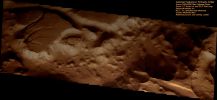
Craters-Timbuktu_Crater-20080101a-PCF-LXTT.jpgFeatures of Timbuktu Crater (Absolute Natural Colors; credits for the additional process. and color.: Dr Paolo C. Fienga - Lunexit Team)63 visitenessun commentoMareKromium06/24/10 at 18:29MareKromium: ...sinceramente, no.... Ma forse ? perch? sono saz...
|
|
Craters-Timbuktu_Crater-20080101a-PCF-LXTT.jpgFeatures of Timbuktu Crater (Absolute Natural Colors; credits for the additional process. and color.: Dr Paolo C. Fienga - Lunexit Team)63 visitenessun commentoMareKromium06/24/10 at 15:42John Koenig: Non sembra di vedere una focaccia, o un trancio di...
|
|
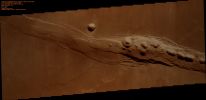
Volcanoes-AlbaMons-20100108a-1.jpgFlows and Collapse Pits on the S/W Flank of Alba Mons (Strongly Enhanced Natural Colors; credits: Dr Paolo C. Fienga - Lunexit Team)57 visitenessun commentoMareKromium01/27/10 at 07:43walthari: la collinetta in questione potrebbe essere un edif...
|
|
Volcanoes-AlbaMons-20100108a-1.jpgFlows and Collapse Pits on the S/W Flank of Alba Mons (Strongly Enhanced Natural Colors; credits: Dr Paolo C. Fienga - Lunexit Team)57 visitenessun commentoMareKromium01/26/10 at 10:19MareKromium: Si, li ho visti. Credo - sinceramente - che si tra...
|
|
Volcanoes-AlbaMons-20100108a-1.jpgFlows and Collapse Pits on the S/W Flank of Alba Mons (Strongly Enhanced Natural Colors; credits: Dr Paolo C. Fienga - Lunexit Team)57 visitenessun commentoMareKromium01/26/10 at 09:12cano00: Sempre affascinanti queste immagini,riservono semp...
|
|
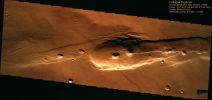
Volcanic_Features-Collapse_Pits-Alba_Patera-20080618a-PCF-LXTT-00.jpgCollapse Features near Alba Patera (Enhanced and Saturated Natural Colors; credits for the additional process. and color.: Dr Paolo C. Fienga - Lunexit Team)65 visiteCaption NASA:"Alba Patera is a very large old volcano on the surface of Mars. While still impressive in height, it no longer towers over the surrounding plains.
It is thought that after a major eruption that emptied the magma chamber beneath Alba Patera the entire volcano collapsed into the empty space below.
This collapse is marked by extensive fracturing. This VIS image shows collapse features on a much smaller scale".MareKromium01/17/10 at 22:14MareKromium: Un "prodotto" del 2008. Non male, ora ch...
|
|

Channel-CoracisFossae-BosporusPlanum-20091106b.jpgDry Riverbed and a possible Skylight (or an EXTREMELY fresh Impact Crater) between Coracis Fossae and Bosporos Planum (EDM - credits: Lunexit)60 visiteIl rilievo ambiguo è sostanzialmente indefinibile a questa risoluzione, ma la sua colorazione "pitch black" e l'apparente assenza di rim ci fa pensare ad un Pozzo Verticale da Collasso.
Le "sbavature" scure che caratterizzano l'intero versante Nord della Surface Feature e, in parte, il lato Est-Sud/Est (senza interessamento della sua zona Ovest ed Ovest-Sud/Ovest), invece, potrebbero anche far pensare ad un impatto il quale, oltre che essere occorso assai di recente, potrebbe - se non altro parzialmente - essere ricondotto alla Classe dei "Mid-Air Impact" (ossia il bolide generatore del dettaglio si sarebbe, in questo caso, parzialmente disintegrato - esploso - in prossimità del suolo, mentre una sua parte avrebbe comunque raggiunto la superficie, così creando un cratere).
L'ipotesi del Vertical Collapse Pit, comunque, ci sembra preferibile (anche se una ragionevole spiegazione delle "sbavature" scure, in questo scenario, non siamo in grado di poterla fornire).MareKromium11/08/09 at 20:01george_p: Eheheh ma Qin Shi Huangdi ? riuscito ad arrivare f...
|
|
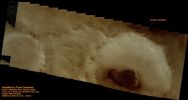
Craters-Unnamed_Crater-Terra_Sirenum-20090901a.jpgUnnamed Crater with Dunefield in Terra Cimmeria (Natural Colors; credits: Lunar Explorer Italia)56 visitenessun commentoMareKromium09/02/09 at 18:08MareKromium: Bravo Walt, sempre attento e puntuale! PCF
|
|
Craters-Unnamed_Crater-Terra_Sirenum-20090901a.jpgUnnamed Crater with Dunefield in Terra Cimmeria (Natural Colors; credits: Lunar Explorer Italia)56 visitenessun commentoMareKromium09/02/09 at 12:52walthari: decisamente interessante;si direbbe che ci sia, ne...
|
|
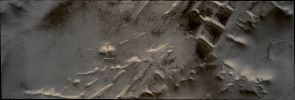
South_Polar_Features-Inca_City-MO-20090414a.jpgAngustus Labyrintus - a.k.a.: Inca City (Natural Colors; credits for the additional process. and color.: Dr Paolo C. Fienga - Lunar Explorer Italia)58 visiteCaption NASA:"This VIS image shows a portion of Angustus Labyrinthus, a Region of Intersecting Linear Ridges near the South Pole of Mars".
Coord.: 81,7° South Lat. and 296,8° East Long.MareKromium04/15/09 at 18:37Ivana Tognoloni: Sembra una meringa spruzzata con polvere di ciocco...
|
|
South_Polar_Features-Inca_City-MO-20090414a.jpgAngustus Labyrintus - a.k.a.: Inca City (Natural Colors; credits for the additional process. and color.: Dr Paolo C. Fienga - Lunar Explorer Italia)58 visiteCaption NASA:"This VIS image shows a portion of Angustus Labyrinthus, a Region of Intersecting Linear Ridges near the South Pole of Mars".
Coord.: 81,7° South Lat. and 296,8° East Long.MareKromium04/15/09 at 16:18MareKromium: Sembra...Ed ? questo il motivo per cui questi rili...
|
|
| 309 immagini su 26 pagina(e) |
 |
|
|
|
|
18 | |
|
|
|
|





