| |

| Ultimi commenti - 433-Eros: Pictures, Facts and Legends |
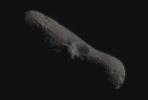
20000217a-PCF-LXTT-IPF.jpgOrbiting 433-Eros (Absolute Natural Colors; credits for the additional process. and color: Dr Paolo C. Fienga/Lunar Explorer Italia/Italian Planetary Foundation)148 visiteCaption NASA:"This picture of 433-Eros, the first of an Asteroid taken from an orbiting spacecraft, is a mosaic of 4 images obtained by NEAR on February 14, 2000, immediately after the Spacecraft's insertion into orbit. We are looking down over the North Pole of Eros at one of the largest craters on the surface, which measures 4 miles (about 6 Km) across. Inside the crater walls are subtle variations in brightness that hint at some layering of the rock in which the crater formed. Narrow grooves that run parallel to the long axis of Eros cut through the South-Eastern part of the crater rim. A house-sized boulder is present near the floor of the crater; it appears to have rolled down the bowl-shaped crater wall. A large number of boulders is also present on other parts of the Asteroid's surface. The surface of the Asteroid is heavily cratered, indicating that 433-Eros is relatively old.
(Mosaic of images 0125956839, 0125957025, 0125957087, 0125957273)MareKromium10/23/20 at 07:24Anakin: Nel momento in cui si riesce a piegare lo spazio e...
|
|
20000217a-PCF-LXTT-IPF.jpgOrbiting 433-Eros (Absolute Natural Colors; credits for the additional process. and color: Dr Paolo C. Fienga/Lunar Explorer Italia/Italian Planetary Foundation)148 visiteCaption NASA:"This picture of 433-Eros, the first of an Asteroid taken from an orbiting spacecraft, is a mosaic of 4 images obtained by NEAR on February 14, 2000, immediately after the Spacecraft's insertion into orbit. We are looking down over the North Pole of Eros at one of the largest craters on the surface, which measures 4 miles (about 6 Km) across. Inside the crater walls are subtle variations in brightness that hint at some layering of the rock in which the crater formed. Narrow grooves that run parallel to the long axis of Eros cut through the South-Eastern part of the crater rim. A house-sized boulder is present near the floor of the crater; it appears to have rolled down the bowl-shaped crater wall. A large number of boulders is also present on other parts of the Asteroid's surface. The surface of the Asteroid is heavily cratered, indicating that 433-Eros is relatively old.
(Mosaic of images 0125956839, 0125957025, 0125957087, 0125957273)MareKromium10/19/20 at 18:38MareKromium: I "Visitatori", secondo me, ci sono da s...
|
|
20000217a-PCF-LXTT-IPF.jpgOrbiting 433-Eros (Absolute Natural Colors; credits for the additional process. and color: Dr Paolo C. Fienga/Lunar Explorer Italia/Italian Planetary Foundation)148 visiteCaption NASA:"This picture of 433-Eros, the first of an Asteroid taken from an orbiting spacecraft, is a mosaic of 4 images obtained by NEAR on February 14, 2000, immediately after the Spacecraft's insertion into orbit. We are looking down over the North Pole of Eros at one of the largest craters on the surface, which measures 4 miles (about 6 Km) across. Inside the crater walls are subtle variations in brightness that hint at some layering of the rock in which the crater formed. Narrow grooves that run parallel to the long axis of Eros cut through the South-Eastern part of the crater rim. A house-sized boulder is present near the floor of the crater; it appears to have rolled down the bowl-shaped crater wall. A large number of boulders is also present on other parts of the Asteroid's surface. The surface of the Asteroid is heavily cratered, indicating that 433-Eros is relatively old.
(Mosaic of images 0125956839, 0125957025, 0125957087, 0125957273)MareKromium10/19/20 at 15:50Ufologo: All thing is possible (come si dice).
Personalmen...
|
|
20000217a-PCF-LXTT-IPF.jpgOrbiting 433-Eros (Absolute Natural Colors; credits for the additional process. and color: Dr Paolo C. Fienga/Lunar Explorer Italia/Italian Planetary Foundation)148 visiteCaption NASA:"This picture of 433-Eros, the first of an Asteroid taken from an orbiting spacecraft, is a mosaic of 4 images obtained by NEAR on February 14, 2000, immediately after the Spacecraft's insertion into orbit. We are looking down over the North Pole of Eros at one of the largest craters on the surface, which measures 4 miles (about 6 Km) across. Inside the crater walls are subtle variations in brightness that hint at some layering of the rock in which the crater formed. Narrow grooves that run parallel to the long axis of Eros cut through the South-Eastern part of the crater rim. A house-sized boulder is present near the floor of the crater; it appears to have rolled down the bowl-shaped crater wall. A large number of boulders is also present on other parts of the Asteroid's surface. The surface of the Asteroid is heavily cratered, indicating that 433-Eros is relatively old.
(Mosaic of images 0125956839, 0125957025, 0125957087, 0125957273)MareKromium10/19/20 at 14:39Anakin: Allora, prendiamo una frase di Mare, che suona ass...
|
|
20000217a-PCF-LXTT-IPF.jpgOrbiting 433-Eros (Absolute Natural Colors; credits for the additional process. and color: Dr Paolo C. Fienga/Lunar Explorer Italia/Italian Planetary Foundation)148 visiteCaption NASA:"This picture of 433-Eros, the first of an Asteroid taken from an orbiting spacecraft, is a mosaic of 4 images obtained by NEAR on February 14, 2000, immediately after the Spacecraft's insertion into orbit. We are looking down over the North Pole of Eros at one of the largest craters on the surface, which measures 4 miles (about 6 Km) across. Inside the crater walls are subtle variations in brightness that hint at some layering of the rock in which the crater formed. Narrow grooves that run parallel to the long axis of Eros cut through the South-Eastern part of the crater rim. A house-sized boulder is present near the floor of the crater; it appears to have rolled down the bowl-shaped crater wall. A large number of boulders is also present on other parts of the Asteroid's surface. The surface of the Asteroid is heavily cratered, indicating that 433-Eros is relatively old.
(Mosaic of images 0125956839, 0125957025, 0125957087, 0125957273)MareKromium10/16/20 at 16:33MareKromium: Ed io lo sono. Da molto tempo.
|
|
20000217a-PCF-LXTT-IPF.jpgOrbiting 433-Eros (Absolute Natural Colors; credits for the additional process. and color: Dr Paolo C. Fienga/Lunar Explorer Italia/Italian Planetary Foundation)148 visiteCaption NASA:"This picture of 433-Eros, the first of an Asteroid taken from an orbiting spacecraft, is a mosaic of 4 images obtained by NEAR on February 14, 2000, immediately after the Spacecraft's insertion into orbit. We are looking down over the North Pole of Eros at one of the largest craters on the surface, which measures 4 miles (about 6 Km) across. Inside the crater walls are subtle variations in brightness that hint at some layering of the rock in which the crater formed. Narrow grooves that run parallel to the long axis of Eros cut through the South-Eastern part of the crater rim. A house-sized boulder is present near the floor of the crater; it appears to have rolled down the bowl-shaped crater wall. A large number of boulders is also present on other parts of the Asteroid's surface. The surface of the Asteroid is heavily cratered, indicating that 433-Eros is relatively old.
(Mosaic of images 0125956839, 0125957025, 0125957087, 0125957273)MareKromium10/16/20 at 15:16Ufologo: Di solito chi ha ragione è quasi sempre solo ...!
|
|
20000217a-PCF-LXTT-IPF.jpgOrbiting 433-Eros (Absolute Natural Colors; credits for the additional process. and color: Dr Paolo C. Fienga/Lunar Explorer Italia/Italian Planetary Foundation)148 visiteCaption NASA:"This picture of 433-Eros, the first of an Asteroid taken from an orbiting spacecraft, is a mosaic of 4 images obtained by NEAR on February 14, 2000, immediately after the Spacecraft's insertion into orbit. We are looking down over the North Pole of Eros at one of the largest craters on the surface, which measures 4 miles (about 6 Km) across. Inside the crater walls are subtle variations in brightness that hint at some layering of the rock in which the crater formed. Narrow grooves that run parallel to the long axis of Eros cut through the South-Eastern part of the crater rim. A house-sized boulder is present near the floor of the crater; it appears to have rolled down the bowl-shaped crater wall. A large number of boulders is also present on other parts of the Asteroid's surface. The surface of the Asteroid is heavily cratered, indicating that 433-Eros is relatively old.
(Mosaic of images 0125956839, 0125957025, 0125957087, 0125957273)MareKromium10/16/20 at 12:55MareKromium: Grazie Max, ma le pubblicher? qui. Prima o poi... ...
|
|
20000217a-PCF-LXTT-IPF.jpgOrbiting 433-Eros (Absolute Natural Colors; credits for the additional process. and color: Dr Paolo C. Fienga/Lunar Explorer Italia/Italian Planetary Foundation)148 visiteCaption NASA:"This picture of 433-Eros, the first of an Asteroid taken from an orbiting spacecraft, is a mosaic of 4 images obtained by NEAR on February 14, 2000, immediately after the Spacecraft's insertion into orbit. We are looking down over the North Pole of Eros at one of the largest craters on the surface, which measures 4 miles (about 6 Km) across. Inside the crater walls are subtle variations in brightness that hint at some layering of the rock in which the crater formed. Narrow grooves that run parallel to the long axis of Eros cut through the South-Eastern part of the crater rim. A house-sized boulder is present near the floor of the crater; it appears to have rolled down the bowl-shaped crater wall. A large number of boulders is also present on other parts of the Asteroid's surface. The surface of the Asteroid is heavily cratered, indicating that 433-Eros is relatively old.
(Mosaic of images 0125956839, 0125957025, 0125957087, 0125957273)MareKromium10/14/20 at 12:21Ufologo: Amico mio carissimo, non dubito affatto di ci? che...
|
|
20000217a-PCF-LXTT-IPF.jpgOrbiting 433-Eros (Absolute Natural Colors; credits for the additional process. and color: Dr Paolo C. Fienga/Lunar Explorer Italia/Italian Planetary Foundation)148 visiteCaption NASA:"This picture of 433-Eros, the first of an Asteroid taken from an orbiting spacecraft, is a mosaic of 4 images obtained by NEAR on February 14, 2000, immediately after the Spacecraft's insertion into orbit. We are looking down over the North Pole of Eros at one of the largest craters on the surface, which measures 4 miles (about 6 Km) across. Inside the crater walls are subtle variations in brightness that hint at some layering of the rock in which the crater formed. Narrow grooves that run parallel to the long axis of Eros cut through the South-Eastern part of the crater rim. A house-sized boulder is present near the floor of the crater; it appears to have rolled down the bowl-shaped crater wall. A large number of boulders is also present on other parts of the Asteroid's surface. The surface of the Asteroid is heavily cratered, indicating that 433-Eros is relatively old.
(Mosaic of images 0125956839, 0125957025, 0125957087, 0125957273)MareKromium10/14/20 at 12:04MareKromium: Hai ragione Max. Il nostro Cielo non ? pi? pulito....
|
|
20000217a-PCF-LXTT-IPF.jpgOrbiting 433-Eros (Absolute Natural Colors; credits for the additional process. and color: Dr Paolo C. Fienga/Lunar Explorer Italia/Italian Planetary Foundation)148 visiteCaption NASA:"This picture of 433-Eros, the first of an Asteroid taken from an orbiting spacecraft, is a mosaic of 4 images obtained by NEAR on February 14, 2000, immediately after the Spacecraft's insertion into orbit. We are looking down over the North Pole of Eros at one of the largest craters on the surface, which measures 4 miles (about 6 Km) across. Inside the crater walls are subtle variations in brightness that hint at some layering of the rock in which the crater formed. Narrow grooves that run parallel to the long axis of Eros cut through the South-Eastern part of the crater rim. A house-sized boulder is present near the floor of the crater; it appears to have rolled down the bowl-shaped crater wall. A large number of boulders is also present on other parts of the Asteroid's surface. The surface of the Asteroid is heavily cratered, indicating that 433-Eros is relatively old.
(Mosaic of images 0125956839, 0125957025, 0125957087, 0125957273)MareKromium10/14/20 at 06:56Ufologo: Mai visto niente di significativo (tra telescopio ...
|
|
20000217a-PCF-LXTT-IPF.jpgOrbiting 433-Eros (Absolute Natural Colors; credits for the additional process. and color: Dr Paolo C. Fienga/Lunar Explorer Italia/Italian Planetary Foundation)148 visiteCaption NASA:"This picture of 433-Eros, the first of an Asteroid taken from an orbiting spacecraft, is a mosaic of 4 images obtained by NEAR on February 14, 2000, immediately after the Spacecraft's insertion into orbit. We are looking down over the North Pole of Eros at one of the largest craters on the surface, which measures 4 miles (about 6 Km) across. Inside the crater walls are subtle variations in brightness that hint at some layering of the rock in which the crater formed. Narrow grooves that run parallel to the long axis of Eros cut through the South-Eastern part of the crater rim. A house-sized boulder is present near the floor of the crater; it appears to have rolled down the bowl-shaped crater wall. A large number of boulders is also present on other parts of the Asteroid's surface. The surface of the Asteroid is heavily cratered, indicating that 433-Eros is relatively old.
(Mosaic of images 0125956839, 0125957025, 0125957087, 0125957273)MareKromium10/13/20 at 17:43MareKromium: Fatal Error accade ogni tanto. Sono errori tecnici...
|
|
20000217a-PCF-LXTT-IPF.jpgOrbiting 433-Eros (Absolute Natural Colors; credits for the additional process. and color: Dr Paolo C. Fienga/Lunar Explorer Italia/Italian Planetary Foundation)148 visiteCaption NASA:"This picture of 433-Eros, the first of an Asteroid taken from an orbiting spacecraft, is a mosaic of 4 images obtained by NEAR on February 14, 2000, immediately after the Spacecraft's insertion into orbit. We are looking down over the North Pole of Eros at one of the largest craters on the surface, which measures 4 miles (about 6 Km) across. Inside the crater walls are subtle variations in brightness that hint at some layering of the rock in which the crater formed. Narrow grooves that run parallel to the long axis of Eros cut through the South-Eastern part of the crater rim. A house-sized boulder is present near the floor of the crater; it appears to have rolled down the bowl-shaped crater wall. A large number of boulders is also present on other parts of the Asteroid's surface. The surface of the Asteroid is heavily cratered, indicating that 433-Eros is relatively old.
(Mosaic of images 0125956839, 0125957025, 0125957087, 0125957273)MareKromium10/13/20 at 09:51Anakin: Due cose.
La prima ? tecnica: spesso io visualiz...
|
|
| 134 immagini su 12 pagina(e) |
|
3 | |
|
|
|
|
|
|
|
|
|
|





