| |

| Ultimi commenti - Mars, Deimos and Phobos: Maps |
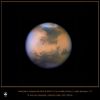
MARS-008.jpgGreen Patches on Mars (Earth View, from Pic-du-Midi)146 visiteLa NASA può, giustamente, sostenere quello che vuole (o, come ha fatto oggi, nella caption dedicata a questo frame, può non dire assolutamente nulla), ma le "macchie di verde" che si vedono con estrema chiarezza sulla Superficie di Marte in questa recentissima immagine ottenuta dall'Osservatorio Astronomico Francese "Midi-Pyrénées" NON SONO, a nostro modo di vedere e di interpretare, il prodotto di una semplice - ancorchè curiosa - aberrazione cromatica.
Anche nei nostri (certo non "fantascientifici", ma sicuramente accurati e professionali) color-processing il "verde" appare, su Marte, sempre più spesso: sia nei frames superficiali, sia nei frames orbitali.
Forse sarebbe il caso di fare, ai livelli di competenza più opportuni, qualche seria riflessione sulla Natura ed, eventualmente, la portata di questo fenomeno...
Caption NASA:"It's Spring for the Northern Hemisphere of Mars and Spring on Mars usually means Dust Storms. So the dramatic brown swath of dust (top) marking the otherwise white North Polar Cap in this picture of the Red Planet is not really surprising.
Taking advantage of the good views of Mars currently possible near opposition and its closest approach to planet Earth in 2010, this sharp image shows the evolving Dust Storm extending from the large dark region known as Mare Acidalium below the Polar Cap. It was recorded on February 2nd, 2010, with the 1 meter telescope at Pic Du Midi, a mountain top observatory in the French Pyrenees".
Nota Lunexit: BIZZARRO! Gli Amici di Pasadena hanno visto la "Striscia Marrone" che taglia la Calotta Nord Polare (marrone che poi è, secondo noi, un bel color arancione vivace...), ma non vedono il Verde che si stende, dalla Pianura di Acidalia, sino alla Regione di Vastitas Borealis e poi "scende", attraversando le Regioni Equatoriali (con una parte di Meridiani Planum), per quindi giungere sino alle porte della Terra di Noachis, nelle profondità dell'Emisfero Australe di Marte.
Certo, è possibile che il Verde che vediamo sia il prodotto - comunque - di un'aberrazione di un qualche tipo: noi ne siamo PERFETTAMENTE consapevoli. Ma, alle volte, quello che ci lascia perplessi, è il silenzio da parte di Coloro che sanno (o che dovrebbero sapere), anche davanti a fenomenologie di indubbia curiosità, se non di "interesse scientifico" in senso stretto.
Insomma: il brown (marrone) è una cosa, il green (che si vede qui), un'altra.
Perchè si sceglie DELIBERATAMENTE di ignorare SEMPRE l'eventualità che "qualcosa di nuovo e di inatteso", su Marte, come forse su Plutone o - chissà - su Titano ed Encelado, stia realmente accadendo?
Ma di che cosa hanno paura "Coloro che sanno"? Forse di dover riscrivere qualche libro?
O forse di dover pubblicamente riconoscere la loro COLOSSALE ignoranza ed arroganza intellettuale?
... Pensateci sopra...MareKromium02/05/10 at 19:05Ivana Tognoloni: Il marrone io non lo vedo, vedo una predominante c...
|
|
MARS-008.jpgGreen Patches on Mars (Earth View, from Pic-du-Midi)146 visiteLa NASA può, giustamente, sostenere quello che vuole (o, come ha fatto oggi, nella caption dedicata a questo frame, può non dire assolutamente nulla), ma le "macchie di verde" che si vedono con estrema chiarezza sulla Superficie di Marte in questa recentissima immagine ottenuta dall'Osservatorio Astronomico Francese "Midi-Pyrénées" NON SONO, a nostro modo di vedere e di interpretare, il prodotto di una semplice - ancorchè curiosa - aberrazione cromatica.
Anche nei nostri (certo non "fantascientifici", ma sicuramente accurati e professionali) color-processing il "verde" appare, su Marte, sempre più spesso: sia nei frames superficiali, sia nei frames orbitali.
Forse sarebbe il caso di fare, ai livelli di competenza più opportuni, qualche seria riflessione sulla Natura ed, eventualmente, la portata di questo fenomeno...
Caption NASA:"It's Spring for the Northern Hemisphere of Mars and Spring on Mars usually means Dust Storms. So the dramatic brown swath of dust (top) marking the otherwise white North Polar Cap in this picture of the Red Planet is not really surprising.
Taking advantage of the good views of Mars currently possible near opposition and its closest approach to planet Earth in 2010, this sharp image shows the evolving Dust Storm extending from the large dark region known as Mare Acidalium below the Polar Cap. It was recorded on February 2nd, 2010, with the 1 meter telescope at Pic Du Midi, a mountain top observatory in the French Pyrenees".
Nota Lunexit: BIZZARRO! Gli Amici di Pasadena hanno visto la "Striscia Marrone" che taglia la Calotta Nord Polare (marrone che poi è, secondo noi, un bel color arancione vivace...), ma non vedono il Verde che si stende, dalla Pianura di Acidalia, sino alla Regione di Vastitas Borealis e poi "scende", attraversando le Regioni Equatoriali (con una parte di Meridiani Planum), per quindi giungere sino alle porte della Terra di Noachis, nelle profondità dell'Emisfero Australe di Marte.
Certo, è possibile che il Verde che vediamo sia il prodotto - comunque - di un'aberrazione di un qualche tipo: noi ne siamo PERFETTAMENTE consapevoli. Ma, alle volte, quello che ci lascia perplessi, è il silenzio da parte di Coloro che sanno (o che dovrebbero sapere), anche davanti a fenomenologie di indubbia curiosità, se non di "interesse scientifico" in senso stretto.
Insomma: il brown (marrone) è una cosa, il green (che si vede qui), un'altra.
Perchè si sceglie DELIBERATAMENTE di ignorare SEMPRE l'eventualità che "qualcosa di nuovo e di inatteso", su Marte, come forse su Plutone o - chissà - su Titano ed Encelado, stia realmente accadendo?
Ma di che cosa hanno paura "Coloro che sanno"? Forse di dover riscrivere qualche libro?
O forse di dover pubblicamente riconoscere la loro COLOSSALE ignoranza ed arroganza intellettuale?
... Pensateci sopra...MareKromium02/05/10 at 16:28george_p: AHAHAHAH Grande Matteo!!! LOL...Comunque io vedo i...
|
|
MARS-008.jpgGreen Patches on Mars (Earth View, from Pic-du-Midi)146 visiteLa NASA può, giustamente, sostenere quello che vuole (o, come ha fatto oggi, nella caption dedicata a questo frame, può non dire assolutamente nulla), ma le "macchie di verde" che si vedono con estrema chiarezza sulla Superficie di Marte in questa recentissima immagine ottenuta dall'Osservatorio Astronomico Francese "Midi-Pyrénées" NON SONO, a nostro modo di vedere e di interpretare, il prodotto di una semplice - ancorchè curiosa - aberrazione cromatica.
Anche nei nostri (certo non "fantascientifici", ma sicuramente accurati e professionali) color-processing il "verde" appare, su Marte, sempre più spesso: sia nei frames superficiali, sia nei frames orbitali.
Forse sarebbe il caso di fare, ai livelli di competenza più opportuni, qualche seria riflessione sulla Natura ed, eventualmente, la portata di questo fenomeno...
Caption NASA:"It's Spring for the Northern Hemisphere of Mars and Spring on Mars usually means Dust Storms. So the dramatic brown swath of dust (top) marking the otherwise white North Polar Cap in this picture of the Red Planet is not really surprising.
Taking advantage of the good views of Mars currently possible near opposition and its closest approach to planet Earth in 2010, this sharp image shows the evolving Dust Storm extending from the large dark region known as Mare Acidalium below the Polar Cap. It was recorded on February 2nd, 2010, with the 1 meter telescope at Pic Du Midi, a mountain top observatory in the French Pyrenees".
Nota Lunexit: BIZZARRO! Gli Amici di Pasadena hanno visto la "Striscia Marrone" che taglia la Calotta Nord Polare (marrone che poi è, secondo noi, un bel color arancione vivace...), ma non vedono il Verde che si stende, dalla Pianura di Acidalia, sino alla Regione di Vastitas Borealis e poi "scende", attraversando le Regioni Equatoriali (con una parte di Meridiani Planum), per quindi giungere sino alle porte della Terra di Noachis, nelle profondità dell'Emisfero Australe di Marte.
Certo, è possibile che il Verde che vediamo sia il prodotto - comunque - di un'aberrazione di un qualche tipo: noi ne siamo PERFETTAMENTE consapevoli. Ma, alle volte, quello che ci lascia perplessi, è il silenzio da parte di Coloro che sanno (o che dovrebbero sapere), anche davanti a fenomenologie di indubbia curiosità, se non di "interesse scientifico" in senso stretto.
Insomma: il brown (marrone) è una cosa, il green (che si vede qui), un'altra.
Perchè si sceglie DELIBERATAMENTE di ignorare SEMPRE l'eventualità che "qualcosa di nuovo e di inatteso", su Marte, come forse su Plutone o - chissà - su Titano ed Encelado, stia realmente accadendo?
Ma di che cosa hanno paura "Coloro che sanno"? Forse di dover riscrivere qualche libro?
O forse di dover pubblicamente riconoscere la loro COLOSSALE ignoranza ed arroganza intellettuale?
... Pensateci sopra...MareKromium02/05/10 at 15:29John Koenig: Ciao doc. Forse i nostri Amici d'Oltreoceano s...
|
|
MARS-008.jpgGreen Patches on Mars (Earth View, from Pic-du-Midi)146 visiteLa NASA può, giustamente, sostenere quello che vuole (o, come ha fatto oggi, nella caption dedicata a questo frame, può non dire assolutamente nulla), ma le "macchie di verde" che si vedono con estrema chiarezza sulla Superficie di Marte in questa recentissima immagine ottenuta dall'Osservatorio Astronomico Francese "Midi-Pyrénées" NON SONO, a nostro modo di vedere e di interpretare, il prodotto di una semplice - ancorchè curiosa - aberrazione cromatica.
Anche nei nostri (certo non "fantascientifici", ma sicuramente accurati e professionali) color-processing il "verde" appare, su Marte, sempre più spesso: sia nei frames superficiali, sia nei frames orbitali.
Forse sarebbe il caso di fare, ai livelli di competenza più opportuni, qualche seria riflessione sulla Natura ed, eventualmente, la portata di questo fenomeno...
Caption NASA:"It's Spring for the Northern Hemisphere of Mars and Spring on Mars usually means Dust Storms. So the dramatic brown swath of dust (top) marking the otherwise white North Polar Cap in this picture of the Red Planet is not really surprising.
Taking advantage of the good views of Mars currently possible near opposition and its closest approach to planet Earth in 2010, this sharp image shows the evolving Dust Storm extending from the large dark region known as Mare Acidalium below the Polar Cap. It was recorded on February 2nd, 2010, with the 1 meter telescope at Pic Du Midi, a mountain top observatory in the French Pyrenees".
Nota Lunexit: BIZZARRO! Gli Amici di Pasadena hanno visto la "Striscia Marrone" che taglia la Calotta Nord Polare (marrone che poi è, secondo noi, un bel color arancione vivace...), ma non vedono il Verde che si stende, dalla Pianura di Acidalia, sino alla Regione di Vastitas Borealis e poi "scende", attraversando le Regioni Equatoriali (con una parte di Meridiani Planum), per quindi giungere sino alle porte della Terra di Noachis, nelle profondità dell'Emisfero Australe di Marte.
Certo, è possibile che il Verde che vediamo sia il prodotto - comunque - di un'aberrazione di un qualche tipo: noi ne siamo PERFETTAMENTE consapevoli. Ma, alle volte, quello che ci lascia perplessi, è il silenzio da parte di Coloro che sanno (o che dovrebbero sapere), anche davanti a fenomenologie di indubbia curiosità, se non di "interesse scientifico" in senso stretto.
Insomma: il brown (marrone) è una cosa, il green (che si vede qui), un'altra.
Perchè si sceglie DELIBERATAMENTE di ignorare SEMPRE l'eventualità che "qualcosa di nuovo e di inatteso", su Marte, come forse su Plutone o - chissà - su Titano ed Encelado, stia realmente accadendo?
Ma di che cosa hanno paura "Coloro che sanno"? Forse di dover riscrivere qualche libro?
O forse di dover pubblicamente riconoscere la loro COLOSSALE ignoranza ed arroganza intellettuale?
... Pensateci sopra...MareKromium02/05/10 at 14:02MareKromium: Dai, su: commentate questo frame! Chi vede il &quo...
|
|

034-Methane_of_Mars.jpgMap of the "Martian Methane"85 visiteCaption NASA:"Why is there Methane on Mars? No one is sure.
An important confirmation that Methane exists in the Atmosphere of Mars occurred last week, bolstering previous controversial claims made as early as 2003. The confirmation was made spectroscopically using large ground-based telescopes by finding precise colors absorbed on Mars that match those absorbed by Methane on Earth.
Given that Methane is destroyed in the open martian air in a matter of years, the present existence of the fragile gas indicates that it is currently being released, somehow, from the Surface of Mars.
One prospect is that microbes living underground are creating it, or created in the past. If true, this opens the exciting possibility that life might be present under the Surface of Mars even today. Given the present data, however, it is also possible that a purely geologic process, potentially involving volcanism or rust and not involving any life forms, is the Methane creator.
Pictured above is an image of Mars superposed with a map of the recent Methane detection".
Nota Lunexit: se la Mappa NASA è realmente accurata ed il quantitativo di Metano presente in Atmosfera è quello "suggerito" dalla Mappa stessa, allora - sempre seguendo la "Logica NASA" - ci troveremmo davanti a due possibili scenari:
1) Scenario Geologico (Metano come prodotto di processi geologici): Marte è ancora soggetto attivo di fenomeni vulcanici tutt'altro che minori e residuali, visti i quantitativi e la distribuzione del Metano nell'Atmosfera del Pianeta Rosso, oppure
2) Scenario Biologico (Metano come sottoprodotto di attività biologiche attuali): Marte è, letteralmente, "brulicante di Vita" - altro che batteri e micro-organismi - visti, come sopra, i quantitativi e la distribuzione del Metano nell'Atmosfera del Pianeta Rosso.
SOTTOLINEIAMO che queste nostre congetture DERIVANO LOGICAMENTE DALL'ANALISI DEI DATI NASA e NON da nostre speculazioni!
Vi suggeriamo, inoltre, di notare la posizione dei maggiori quantitativi di Metano nell'Atmosfera Marziana...MareKromium01/20/09 at 18:28MareKromium: ...Direi di si... :-)
|
|
034-Methane_of_Mars.jpgMap of the "Martian Methane"85 visiteCaption NASA:"Why is there Methane on Mars? No one is sure.
An important confirmation that Methane exists in the Atmosphere of Mars occurred last week, bolstering previous controversial claims made as early as 2003. The confirmation was made spectroscopically using large ground-based telescopes by finding precise colors absorbed on Mars that match those absorbed by Methane on Earth.
Given that Methane is destroyed in the open martian air in a matter of years, the present existence of the fragile gas indicates that it is currently being released, somehow, from the Surface of Mars.
One prospect is that microbes living underground are creating it, or created in the past. If true, this opens the exciting possibility that life might be present under the Surface of Mars even today. Given the present data, however, it is also possible that a purely geologic process, potentially involving volcanism or rust and not involving any life forms, is the Methane creator.
Pictured above is an image of Mars superposed with a map of the recent Methane detection".
Nota Lunexit: se la Mappa NASA è realmente accurata ed il quantitativo di Metano presente in Atmosfera è quello "suggerito" dalla Mappa stessa, allora - sempre seguendo la "Logica NASA" - ci troveremmo davanti a due possibili scenari:
1) Scenario Geologico (Metano come prodotto di processi geologici): Marte è ancora soggetto attivo di fenomeni vulcanici tutt'altro che minori e residuali, visti i quantitativi e la distribuzione del Metano nell'Atmosfera del Pianeta Rosso, oppure
2) Scenario Biologico (Metano come sottoprodotto di attività biologiche attuali): Marte è, letteralmente, "brulicante di Vita" - altro che batteri e micro-organismi - visti, come sopra, i quantitativi e la distribuzione del Metano nell'Atmosfera del Pianeta Rosso.
SOTTOLINEIAMO che queste nostre congetture DERIVANO LOGICAMENTE DALL'ANALISI DEI DATI NASA e NON da nostre speculazioni!
Vi suggeriamo, inoltre, di notare la posizione dei maggiori quantitativi di Metano nell'Atmosfera Marziana...MareKromium01/20/09 at 17:27charlie64: Ciao Paolo, ti è arrivato il frame spirit 549?
|
|
034-Methane_of_Mars.jpgMap of the "Martian Methane"85 visiteCaption NASA:"Why is there Methane on Mars? No one is sure.
An important confirmation that Methane exists in the Atmosphere of Mars occurred last week, bolstering previous controversial claims made as early as 2003. The confirmation was made spectroscopically using large ground-based telescopes by finding precise colors absorbed on Mars that match those absorbed by Methane on Earth.
Given that Methane is destroyed in the open martian air in a matter of years, the present existence of the fragile gas indicates that it is currently being released, somehow, from the Surface of Mars.
One prospect is that microbes living underground are creating it, or created in the past. If true, this opens the exciting possibility that life might be present under the Surface of Mars even today. Given the present data, however, it is also possible that a purely geologic process, potentially involving volcanism or rust and not involving any life forms, is the Methane creator.
Pictured above is an image of Mars superposed with a map of the recent Methane detection".
Nota Lunexit: se la Mappa NASA è realmente accurata ed il quantitativo di Metano presente in Atmosfera è quello "suggerito" dalla Mappa stessa, allora - sempre seguendo la "Logica NASA" - ci troveremmo davanti a due possibili scenari:
1) Scenario Geologico (Metano come prodotto di processi geologici): Marte è ancora soggetto attivo di fenomeni vulcanici tutt'altro che minori e residuali, visti i quantitativi e la distribuzione del Metano nell'Atmosfera del Pianeta Rosso, oppure
2) Scenario Biologico (Metano come sottoprodotto di attività biologiche attuali): Marte è, letteralmente, "brulicante di Vita" - altro che batteri e micro-organismi - visti, come sopra, i quantitativi e la distribuzione del Metano nell'Atmosfera del Pianeta Rosso.
SOTTOLINEIAMO che queste nostre congetture DERIVANO LOGICAMENTE DALL'ANALISI DEI DATI NASA e NON da nostre speculazioni!
Vi suggeriamo, inoltre, di notare la posizione dei maggiori quantitativi di Metano nell'Atmosfera Marziana...MareKromium01/20/09 at 16:45MareKromium: Dipende da noi, John: dipende SOLO da noi. Ed a Bu...
|
|
034-Methane_of_Mars.jpgMap of the "Martian Methane"85 visiteCaption NASA:"Why is there Methane on Mars? No one is sure.
An important confirmation that Methane exists in the Atmosphere of Mars occurred last week, bolstering previous controversial claims made as early as 2003. The confirmation was made spectroscopically using large ground-based telescopes by finding precise colors absorbed on Mars that match those absorbed by Methane on Earth.
Given that Methane is destroyed in the open martian air in a matter of years, the present existence of the fragile gas indicates that it is currently being released, somehow, from the Surface of Mars.
One prospect is that microbes living underground are creating it, or created in the past. If true, this opens the exciting possibility that life might be present under the Surface of Mars even today. Given the present data, however, it is also possible that a purely geologic process, potentially involving volcanism or rust and not involving any life forms, is the Methane creator.
Pictured above is an image of Mars superposed with a map of the recent Methane detection".
Nota Lunexit: se la Mappa NASA è realmente accurata ed il quantitativo di Metano presente in Atmosfera è quello "suggerito" dalla Mappa stessa, allora - sempre seguendo la "Logica NASA" - ci troveremmo davanti a due possibili scenari:
1) Scenario Geologico (Metano come prodotto di processi geologici): Marte è ancora soggetto attivo di fenomeni vulcanici tutt'altro che minori e residuali, visti i quantitativi e la distribuzione del Metano nell'Atmosfera del Pianeta Rosso, oppure
2) Scenario Biologico (Metano come sottoprodotto di attività biologiche attuali): Marte è, letteralmente, "brulicante di Vita" - altro che batteri e micro-organismi - visti, come sopra, i quantitativi e la distribuzione del Metano nell'Atmosfera del Pianeta Rosso.
SOTTOLINEIAMO che queste nostre congetture DERIVANO LOGICAMENTE DALL'ANALISI DEI DATI NASA e NON da nostre speculazioni!
Vi suggeriamo, inoltre, di notare la posizione dei maggiori quantitativi di Metano nell'Atmosfera Marziana...MareKromium01/20/09 at 16:41John Koenig: Il mio era un discorso relativo alla quantit? di d...
|
|
034-Methane_of_Mars.jpgMap of the "Martian Methane"85 visiteCaption NASA:"Why is there Methane on Mars? No one is sure.
An important confirmation that Methane exists in the Atmosphere of Mars occurred last week, bolstering previous controversial claims made as early as 2003. The confirmation was made spectroscopically using large ground-based telescopes by finding precise colors absorbed on Mars that match those absorbed by Methane on Earth.
Given that Methane is destroyed in the open martian air in a matter of years, the present existence of the fragile gas indicates that it is currently being released, somehow, from the Surface of Mars.
One prospect is that microbes living underground are creating it, or created in the past. If true, this opens the exciting possibility that life might be present under the Surface of Mars even today. Given the present data, however, it is also possible that a purely geologic process, potentially involving volcanism or rust and not involving any life forms, is the Methane creator.
Pictured above is an image of Mars superposed with a map of the recent Methane detection".
Nota Lunexit: se la Mappa NASA è realmente accurata ed il quantitativo di Metano presente in Atmosfera è quello "suggerito" dalla Mappa stessa, allora - sempre seguendo la "Logica NASA" - ci troveremmo davanti a due possibili scenari:
1) Scenario Geologico (Metano come prodotto di processi geologici): Marte è ancora soggetto attivo di fenomeni vulcanici tutt'altro che minori e residuali, visti i quantitativi e la distribuzione del Metano nell'Atmosfera del Pianeta Rosso, oppure
2) Scenario Biologico (Metano come sottoprodotto di attività biologiche attuali): Marte è, letteralmente, "brulicante di Vita" - altro che batteri e micro-organismi - visti, come sopra, i quantitativi e la distribuzione del Metano nell'Atmosfera del Pianeta Rosso.
SOTTOLINEIAMO che queste nostre congetture DERIVANO LOGICAMENTE DALL'ANALISI DEI DATI NASA e NON da nostre speculazioni!
Vi suggeriamo, inoltre, di notare la posizione dei maggiori quantitativi di Metano nell'Atmosfera Marziana...MareKromium01/20/09 at 16:16Paolo C. Fienga: Carissimo John, per avere la "certezza",...
|
|
034-Methane_of_Mars.jpgMap of the "Martian Methane"85 visiteCaption NASA:"Why is there Methane on Mars? No one is sure.
An important confirmation that Methane exists in the Atmosphere of Mars occurred last week, bolstering previous controversial claims made as early as 2003. The confirmation was made spectroscopically using large ground-based telescopes by finding precise colors absorbed on Mars that match those absorbed by Methane on Earth.
Given that Methane is destroyed in the open martian air in a matter of years, the present existence of the fragile gas indicates that it is currently being released, somehow, from the Surface of Mars.
One prospect is that microbes living underground are creating it, or created in the past. If true, this opens the exciting possibility that life might be present under the Surface of Mars even today. Given the present data, however, it is also possible that a purely geologic process, potentially involving volcanism or rust and not involving any life forms, is the Methane creator.
Pictured above is an image of Mars superposed with a map of the recent Methane detection".
Nota Lunexit: se la Mappa NASA è realmente accurata ed il quantitativo di Metano presente in Atmosfera è quello "suggerito" dalla Mappa stessa, allora - sempre seguendo la "Logica NASA" - ci troveremmo davanti a due possibili scenari:
1) Scenario Geologico (Metano come prodotto di processi geologici): Marte è ancora soggetto attivo di fenomeni vulcanici tutt'altro che minori e residuali, visti i quantitativi e la distribuzione del Metano nell'Atmosfera del Pianeta Rosso, oppure
2) Scenario Biologico (Metano come sottoprodotto di attività biologiche attuali): Marte è, letteralmente, "brulicante di Vita" - altro che batteri e micro-organismi - visti, come sopra, i quantitativi e la distribuzione del Metano nell'Atmosfera del Pianeta Rosso.
SOTTOLINEIAMO che queste nostre congetture DERIVANO LOGICAMENTE DALL'ANALISI DEI DATI NASA e NON da nostre speculazioni!
Vi suggeriamo, inoltre, di notare la posizione dei maggiori quantitativi di Metano nell'Atmosfera Marziana...MareKromium01/19/09 at 20:21John Koenig: Scusa Paolo, noi con dati frammentari dobbiamo azz...
|
|
034-Methane_of_Mars.jpgMap of the "Martian Methane"85 visiteCaption NASA:"Why is there Methane on Mars? No one is sure.
An important confirmation that Methane exists in the Atmosphere of Mars occurred last week, bolstering previous controversial claims made as early as 2003. The confirmation was made spectroscopically using large ground-based telescopes by finding precise colors absorbed on Mars that match those absorbed by Methane on Earth.
Given that Methane is destroyed in the open martian air in a matter of years, the present existence of the fragile gas indicates that it is currently being released, somehow, from the Surface of Mars.
One prospect is that microbes living underground are creating it, or created in the past. If true, this opens the exciting possibility that life might be present under the Surface of Mars even today. Given the present data, however, it is also possible that a purely geologic process, potentially involving volcanism or rust and not involving any life forms, is the Methane creator.
Pictured above is an image of Mars superposed with a map of the recent Methane detection".
Nota Lunexit: se la Mappa NASA è realmente accurata ed il quantitativo di Metano presente in Atmosfera è quello "suggerito" dalla Mappa stessa, allora - sempre seguendo la "Logica NASA" - ci troveremmo davanti a due possibili scenari:
1) Scenario Geologico (Metano come prodotto di processi geologici): Marte è ancora soggetto attivo di fenomeni vulcanici tutt'altro che minori e residuali, visti i quantitativi e la distribuzione del Metano nell'Atmosfera del Pianeta Rosso, oppure
2) Scenario Biologico (Metano come sottoprodotto di attività biologiche attuali): Marte è, letteralmente, "brulicante di Vita" - altro che batteri e micro-organismi - visti, come sopra, i quantitativi e la distribuzione del Metano nell'Atmosfera del Pianeta Rosso.
SOTTOLINEIAMO che queste nostre congetture DERIVANO LOGICAMENTE DALL'ANALISI DEI DATI NASA e NON da nostre speculazioni!
Vi suggeriamo, inoltre, di notare la posizione dei maggiori quantitativi di Metano nell'Atmosfera Marziana...MareKromium01/19/09 at 18:16Paolo C. Fienga: Allora, premesso che io non credo (ma lo dico isti...
|
|
034-Methane_of_Mars.jpgMap of the "Martian Methane"85 visiteCaption NASA:"Why is there Methane on Mars? No one is sure.
An important confirmation that Methane exists in the Atmosphere of Mars occurred last week, bolstering previous controversial claims made as early as 2003. The confirmation was made spectroscopically using large ground-based telescopes by finding precise colors absorbed on Mars that match those absorbed by Methane on Earth.
Given that Methane is destroyed in the open martian air in a matter of years, the present existence of the fragile gas indicates that it is currently being released, somehow, from the Surface of Mars.
One prospect is that microbes living underground are creating it, or created in the past. If true, this opens the exciting possibility that life might be present under the Surface of Mars even today. Given the present data, however, it is also possible that a purely geologic process, potentially involving volcanism or rust and not involving any life forms, is the Methane creator.
Pictured above is an image of Mars superposed with a map of the recent Methane detection".
Nota Lunexit: se la Mappa NASA è realmente accurata ed il quantitativo di Metano presente in Atmosfera è quello "suggerito" dalla Mappa stessa, allora - sempre seguendo la "Logica NASA" - ci troveremmo davanti a due possibili scenari:
1) Scenario Geologico (Metano come prodotto di processi geologici): Marte è ancora soggetto attivo di fenomeni vulcanici tutt'altro che minori e residuali, visti i quantitativi e la distribuzione del Metano nell'Atmosfera del Pianeta Rosso, oppure
2) Scenario Biologico (Metano come sottoprodotto di attività biologiche attuali): Marte è, letteralmente, "brulicante di Vita" - altro che batteri e micro-organismi - visti, come sopra, i quantitativi e la distribuzione del Metano nell'Atmosfera del Pianeta Rosso.
SOTTOLINEIAMO che queste nostre congetture DERIVANO LOGICAMENTE DALL'ANALISI DEI DATI NASA e NON da nostre speculazioni!
Vi suggeriamo, inoltre, di notare la posizione dei maggiori quantitativi di Metano nell'Atmosfera Marziana...MareKromium01/19/09 at 15:43Anakin: Si nella zona equatoriale...... dove sono i Rover....
|
|
| 174 immagini su 15 pagina(e) |
|
|
|
|
|
|
|
|
13 | |
|
|
|








