| |

| Ultimi commenti - From Ashes to Eternity: the Phoenix Mars Mission |

PHOE-SOL150-PIA12105-LXT.jpgVastitas' Horizon (color composite - Sx credits: Lunexit; Dx credits: NASA)70 visiteCaption NASA:"This mosaic of images from the Surface Stereo Imager camera on NASA's Phoenix Mars Lander shows several trenches dug by Phoenix, plus a corner of the Spacecraft's Deck and the Martian Arctic Plain stretching to the horizon.
The footpad at the bottom center is about 1 meter (3 feet) below the Spacecraft Deck seen at the lower left. Overlaid images show trenches dug to either nearly pure water ice or ice-cemented soil.
Analyses of samples taken from these trenches give clues to the history of the Region.
This Approximately True Color view combines images taken on several dates during the five months Phoenix studied its surroundings after landing on May 25, 2008".
Nota Lunexit: come questo frame mostra e dimostra chiaramente, dall'Equatore alle Pianure Artiche, Marte - secondo la NASA - NON SOLO E' MONOCRMATICO, MA HA SEMPRE LO STESSO colore!
Una posizione, questa, tanto estrema ed indifendibile - avendo Natura, Logica ed Esperienza alla mano - quanto, incredibile dictu, quietamente ed acriticamente accettata dal Gotha degli Scienziati più quotati del Mondo in tema di Scienze Planetarie. E questa situazione, a nostro umile avviso, è assolutamente assurda ed incommentabile.MareKromium07/05/09 at 10:42MareKromium: Carissimo Broken, ho capito quello che intendevi e...
|
|
PHOE-SOL150-PIA12105-LXT.jpgVastitas' Horizon (color composite - Sx credits: Lunexit; Dx credits: NASA)70 visiteCaption NASA:"This mosaic of images from the Surface Stereo Imager camera on NASA's Phoenix Mars Lander shows several trenches dug by Phoenix, plus a corner of the Spacecraft's Deck and the Martian Arctic Plain stretching to the horizon.
The footpad at the bottom center is about 1 meter (3 feet) below the Spacecraft Deck seen at the lower left. Overlaid images show trenches dug to either nearly pure water ice or ice-cemented soil.
Analyses of samples taken from these trenches give clues to the history of the Region.
This Approximately True Color view combines images taken on several dates during the five months Phoenix studied its surroundings after landing on May 25, 2008".
Nota Lunexit: come questo frame mostra e dimostra chiaramente, dall'Equatore alle Pianure Artiche, Marte - secondo la NASA - NON SOLO E' MONOCRMATICO, MA HA SEMPRE LO STESSO colore!
Una posizione, questa, tanto estrema ed indifendibile - avendo Natura, Logica ed Esperienza alla mano - quanto, incredibile dictu, quietamente ed acriticamente accettata dal Gotha degli Scienziati più quotati del Mondo in tema di Scienze Planetarie. E questa situazione, a nostro umile avviso, è assolutamente assurda ed incommentabile.MareKromium07/05/09 at 04:43broken: salve, ho scritto "nostra" nn perche vog...
|
|
PHOE-SOL150-PIA12105-LXT.jpgVastitas' Horizon (color composite - Sx credits: Lunexit; Dx credits: NASA)70 visiteCaption NASA:"This mosaic of images from the Surface Stereo Imager camera on NASA's Phoenix Mars Lander shows several trenches dug by Phoenix, plus a corner of the Spacecraft's Deck and the Martian Arctic Plain stretching to the horizon.
The footpad at the bottom center is about 1 meter (3 feet) below the Spacecraft Deck seen at the lower left. Overlaid images show trenches dug to either nearly pure water ice or ice-cemented soil.
Analyses of samples taken from these trenches give clues to the history of the Region.
This Approximately True Color view combines images taken on several dates during the five months Phoenix studied its surroundings after landing on May 25, 2008".
Nota Lunexit: come questo frame mostra e dimostra chiaramente, dall'Equatore alle Pianure Artiche, Marte - secondo la NASA - NON SOLO E' MONOCRMATICO, MA HA SEMPRE LO STESSO colore!
Una posizione, questa, tanto estrema ed indifendibile - avendo Natura, Logica ed Esperienza alla mano - quanto, incredibile dictu, quietamente ed acriticamente accettata dal Gotha degli Scienziati più quotati del Mondo in tema di Scienze Planetarie. E questa situazione, a nostro umile avviso, è assolutamente assurda ed incommentabile.MareKromium07/04/09 at 20:51MareKromium: Buonasera Broken,
innanzitutto, grazie - di Cuo...
|
|
PHOE-SOL150-PIA12105-LXT.jpgVastitas' Horizon (color composite - Sx credits: Lunexit; Dx credits: NASA)70 visiteCaption NASA:"This mosaic of images from the Surface Stereo Imager camera on NASA's Phoenix Mars Lander shows several trenches dug by Phoenix, plus a corner of the Spacecraft's Deck and the Martian Arctic Plain stretching to the horizon.
The footpad at the bottom center is about 1 meter (3 feet) below the Spacecraft Deck seen at the lower left. Overlaid images show trenches dug to either nearly pure water ice or ice-cemented soil.
Analyses of samples taken from these trenches give clues to the history of the Region.
This Approximately True Color view combines images taken on several dates during the five months Phoenix studied its surroundings after landing on May 25, 2008".
Nota Lunexit: come questo frame mostra e dimostra chiaramente, dall'Equatore alle Pianure Artiche, Marte - secondo la NASA - NON SOLO E' MONOCRMATICO, MA HA SEMPRE LO STESSO colore!
Una posizione, questa, tanto estrema ed indifendibile - avendo Natura, Logica ed Esperienza alla mano - quanto, incredibile dictu, quietamente ed acriticamente accettata dal Gotha degli Scienziati più quotati del Mondo in tema di Scienze Planetarie. E questa situazione, a nostro umile avviso, è assolutamente assurda ed incommentabile.MareKromium07/04/09 at 20:10broken: nella " nostra " versione, quello che si...
|
|
PHOE-SOL150-PIA12105-LXT.jpgVastitas' Horizon (color composite - Sx credits: Lunexit; Dx credits: NASA)70 visiteCaption NASA:"This mosaic of images from the Surface Stereo Imager camera on NASA's Phoenix Mars Lander shows several trenches dug by Phoenix, plus a corner of the Spacecraft's Deck and the Martian Arctic Plain stretching to the horizon.
The footpad at the bottom center is about 1 meter (3 feet) below the Spacecraft Deck seen at the lower left. Overlaid images show trenches dug to either nearly pure water ice or ice-cemented soil.
Analyses of samples taken from these trenches give clues to the history of the Region.
This Approximately True Color view combines images taken on several dates during the five months Phoenix studied its surroundings after landing on May 25, 2008".
Nota Lunexit: come questo frame mostra e dimostra chiaramente, dall'Equatore alle Pianure Artiche, Marte - secondo la NASA - NON SOLO E' MONOCRMATICO, MA HA SEMPRE LO STESSO colore!
Una posizione, questa, tanto estrema ed indifendibile - avendo Natura, Logica ed Esperienza alla mano - quanto, incredibile dictu, quietamente ed acriticamente accettata dal Gotha degli Scienziati più quotati del Mondo in tema di Scienze Planetarie. E questa situazione, a nostro umile avviso, è assolutamente assurda ed incommentabile.MareKromium07/04/09 at 18:20John Koenig: Giusto, ma quando arriva lo stipendio... tutto va ...
|
|
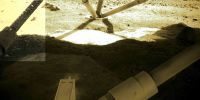
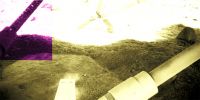
PHOE-SOL007-lg_2274-A.jpgIce on the Lander - Sol 7 (false colors; credits: Dr M. Faccin)69 visiteEsiste del "ghiaccio superficiale" (e frammisto a terriccio) sull'area di Landing della Sonda Phoenix? Beh, a giudicare da quanto si vede in questo frame e nei due detail mgnf che seguono (tutti realizzati dal Dr Faccin), la risposta non può che essere "SI". Certo che c'è ghiaccio.
I retrorazzi che hanno regalato una quieta discesa ed un soft-landing alla Sonda Phoenix hanno - a quanto pare - liquefatto un grande quantitativo di ghiaccio superficiale; lo hanno trasformato in vapore acqueo e questo, dopo aver "accarezzato" alcune componenti situate nella porzione inferiore del Lander, si è poi rapidamente ricongelato, lasciando quelle "bollicine" (una sorta di mini-escrescenze) che tanto bene si vedono in questi frames.
Dunque, se il discorso delle "Evidenze Oggettive" ha un senso, qui abbiamo un'altra Evidenza Oggettiva del fatto che la superficie di Vastitas (o, se non altro, quella della zona in cui è avvenuto il Landing di Phoenix) è effettivamente ricca di ghiaccio ANCHE superficiale. E perchè non lo si vede nei frames panoramici? Perchè è FRAMMISTO al terriccio di Vastitas!
Che dite? Vi piace la "teoria"? Chissà quanto ci metteranno gli Amici di Pasadena prima di avanzare questa ipotesi...
Complimenti e CONGRATULAZIONI, ancora una volta, al Dr Faccin!MareKromium02/23/09 at 00:07george_p: Il Pensiero anticipa l'azione sempre, comporta...
|
|
PHOE-SOL007-lg_2274-A.jpgIce on the Lander - Sol 7 (false colors; credits: Dr M. Faccin)69 visiteEsiste del "ghiaccio superficiale" (e frammisto a terriccio) sull'area di Landing della Sonda Phoenix? Beh, a giudicare da quanto si vede in questo frame e nei due detail mgnf che seguono (tutti realizzati dal Dr Faccin), la risposta non può che essere "SI". Certo che c'è ghiaccio.
I retrorazzi che hanno regalato una quieta discesa ed un soft-landing alla Sonda Phoenix hanno - a quanto pare - liquefatto un grande quantitativo di ghiaccio superficiale; lo hanno trasformato in vapore acqueo e questo, dopo aver "accarezzato" alcune componenti situate nella porzione inferiore del Lander, si è poi rapidamente ricongelato, lasciando quelle "bollicine" (una sorta di mini-escrescenze) che tanto bene si vedono in questi frames.
Dunque, se il discorso delle "Evidenze Oggettive" ha un senso, qui abbiamo un'altra Evidenza Oggettiva del fatto che la superficie di Vastitas (o, se non altro, quella della zona in cui è avvenuto il Landing di Phoenix) è effettivamente ricca di ghiaccio ANCHE superficiale. E perchè non lo si vede nei frames panoramici? Perchè è FRAMMISTO al terriccio di Vastitas!
Che dite? Vi piace la "teoria"? Chissà quanto ci metteranno gli Amici di Pasadena prima di avanzare questa ipotesi...
Complimenti e CONGRATULAZIONI, ancora una volta, al Dr Faccin!MareKromium02/22/09 at 17:42MareKromium: Carissimo Giorgio, io spero sempre nel Futuro ma, ...
|
|
PHOE-SOL007-lg_2274-A.jpgIce on the Lander - Sol 7 (false colors; credits: Dr M. Faccin)69 visiteEsiste del "ghiaccio superficiale" (e frammisto a terriccio) sull'area di Landing della Sonda Phoenix? Beh, a giudicare da quanto si vede in questo frame e nei due detail mgnf che seguono (tutti realizzati dal Dr Faccin), la risposta non può che essere "SI". Certo che c'è ghiaccio.
I retrorazzi che hanno regalato una quieta discesa ed un soft-landing alla Sonda Phoenix hanno - a quanto pare - liquefatto un grande quantitativo di ghiaccio superficiale; lo hanno trasformato in vapore acqueo e questo, dopo aver "accarezzato" alcune componenti situate nella porzione inferiore del Lander, si è poi rapidamente ricongelato, lasciando quelle "bollicine" (una sorta di mini-escrescenze) che tanto bene si vedono in questi frames.
Dunque, se il discorso delle "Evidenze Oggettive" ha un senso, qui abbiamo un'altra Evidenza Oggettiva del fatto che la superficie di Vastitas (o, se non altro, quella della zona in cui è avvenuto il Landing di Phoenix) è effettivamente ricca di ghiaccio ANCHE superficiale. E perchè non lo si vede nei frames panoramici? Perchè è FRAMMISTO al terriccio di Vastitas!
Che dite? Vi piace la "teoria"? Chissà quanto ci metteranno gli Amici di Pasadena prima di avanzare questa ipotesi...
Complimenti e CONGRATULAZIONI, ancora una volta, al Dr Faccin!MareKromium02/22/09 at 12:31george_p: Scrivo solo: Il Futuro ?, come sempre, completamen...
|
|

PHOE-SOL007-lg_2274-B.jpgIce on the Lander - Sol 7 (false colors; credits: Dr M. Faccin)64 visiteUn frame bellissimo, un detail mgnf quasi inequivocabile, un grandissimo Lavoro del Dr Faccin. Tutto qui. E scusate se è poco...MareKromium02/22/09 at 08:45MareKromium: Guardare il frame, leggere la data di inserimento ...
|
|
PHOE-SOL007-lg_2289.jpgIce on the Lander - Sol 7 (false colors; credits: Dr M. Faccin)63 visitenessun commentoMareKromium02/22/09 at 08:44MareKromium: Guardare il frame, leggere la data di inserimento ...
|
|
PHOE-SOL007-lg_2274-A.jpgIce on the Lander - Sol 7 (false colors; credits: Dr M. Faccin)69 visiteEsiste del "ghiaccio superficiale" (e frammisto a terriccio) sull'area di Landing della Sonda Phoenix? Beh, a giudicare da quanto si vede in questo frame e nei due detail mgnf che seguono (tutti realizzati dal Dr Faccin), la risposta non può che essere "SI". Certo che c'è ghiaccio.
I retrorazzi che hanno regalato una quieta discesa ed un soft-landing alla Sonda Phoenix hanno - a quanto pare - liquefatto un grande quantitativo di ghiaccio superficiale; lo hanno trasformato in vapore acqueo e questo, dopo aver "accarezzato" alcune componenti situate nella porzione inferiore del Lander, si è poi rapidamente ricongelato, lasciando quelle "bollicine" (una sorta di mini-escrescenze) che tanto bene si vedono in questi frames.
Dunque, se il discorso delle "Evidenze Oggettive" ha un senso, qui abbiamo un'altra Evidenza Oggettiva del fatto che la superficie di Vastitas (o, se non altro, quella della zona in cui è avvenuto il Landing di Phoenix) è effettivamente ricca di ghiaccio ANCHE superficiale. E perchè non lo si vede nei frames panoramici? Perchè è FRAMMISTO al terriccio di Vastitas!
Che dite? Vi piace la "teoria"? Chissà quanto ci metteranno gli Amici di Pasadena prima di avanzare questa ipotesi...
Complimenti e CONGRATULAZIONI, ancora una volta, al Dr Faccin!MareKromium02/22/09 at 08:18MareKromium: A Cesare quel che ? di Cesare, a Dio quel che ? di...
|
|
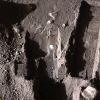
PHOE-SOL145-PIA11383.jpgThe "Trenches" - Sol 145 (False Colors; credits: NASA)63 visite...Tanto per far vedere la "differenza" fra il processing NASA e quello Lunexit...
Caption NASA:"The Surface Stereo Imager on NASA's Phoenix Mars Lander took this false color image on Oct. 21, 2008, during the 145th Martian Day, or Sol, since landing. The bluish-white areas seen in these trenches are part of an ice layer beneath the soil.
The trench on the upper left, called "Dodo-Goldilocks", is about 38 cm (15") long and 4 cm (1,5") deep.
The trench on the right, called "Upper Cupboard", is about 60 cm (24") long and 3 cm (1") deep. The trench in the lower middle is called "Stone Soup".MareKromium11/11/08 at 12:43Paolo C. Fienga: ...L'ho pensato anch'io...Ma, dato che noi...
|
|
| 486 immagini su 41 pagina(e) |
|
|
|
|
6 | |
|
|
|
|
|
|
|








