| |

| Ultimi commenti - From Ashes to Eternity: the Phoenix Mars Mission |
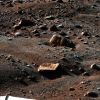
PHOE-SOL079-lg_21574.jpgMorning "Water Frost" on Vastitas - Sol 79 (false (?) colors; credits: NASA)63 visiteCaption NASA:"A thin layer of water frost is visible on the ground around NASA's Phoenix Mars Lander in this image taken by the Surface Stereo Imager at 06:00 a.m. on Sol 79 (August 14, 2008), the 79th Martian day after landing. The frost begins to disappear shortly after 6 a.m. as the sun rises on the Phoenix Landing Site. The Sun was about 22° above the horizon when the image was taken, enhancing the detail of the polygons, troughs and rocks around the Landing Site.
This view is looking east South-East with the Lander's eastern Solar Panel visible in the bottom lefthand corner of the image. The rock in the foreground is informally named "Quadlings" and the rock near center is informally called "Winkies". This false color image has been enhanced to show color variations".
Nota Lunexit: come direbbe Mr Spock "...la NASA, negli anni, non cambia mai, e la sua predilezione per l'irrilevante lo conferma ampiamente...". Già: ci dicono i nomi che hanno dato ai sassi, ma non ci spiegano perchè, a loro modo di vedere, questo frame sarebbe a falsi colori...MareKromium08/18/08 at 22:51John Koenig: Su questo io non avevo dubbi... Per? avere un'...
|
|
PHOE-SOL079-lg_21574.jpgMorning "Water Frost" on Vastitas - Sol 79 (false (?) colors; credits: NASA)63 visiteCaption NASA:"A thin layer of water frost is visible on the ground around NASA's Phoenix Mars Lander in this image taken by the Surface Stereo Imager at 06:00 a.m. on Sol 79 (August 14, 2008), the 79th Martian day after landing. The frost begins to disappear shortly after 6 a.m. as the sun rises on the Phoenix Landing Site. The Sun was about 22° above the horizon when the image was taken, enhancing the detail of the polygons, troughs and rocks around the Landing Site.
This view is looking east South-East with the Lander's eastern Solar Panel visible in the bottom lefthand corner of the image. The rock in the foreground is informally named "Quadlings" and the rock near center is informally called "Winkies". This false color image has been enhanced to show color variations".
Nota Lunexit: come direbbe Mr Spock "...la NASA, negli anni, non cambia mai, e la sua predilezione per l'irrilevante lo conferma ampiamente...". Già: ci dicono i nomi che hanno dato ai sassi, ma non ci spiegano perchè, a loro modo di vedere, questo frame sarebbe a falsi colori...MareKromium08/18/08 at 19:08Paolo C. Fienga: Ed ovviamente, carissimo Titanio44, le Tue Opinion...
|
|
PHOE-SOL079-lg_21574.jpgMorning "Water Frost" on Vastitas - Sol 79 (false (?) colors; credits: NASA)63 visiteCaption NASA:"A thin layer of water frost is visible on the ground around NASA's Phoenix Mars Lander in this image taken by the Surface Stereo Imager at 06:00 a.m. on Sol 79 (August 14, 2008), the 79th Martian day after landing. The frost begins to disappear shortly after 6 a.m. as the sun rises on the Phoenix Landing Site. The Sun was about 22° above the horizon when the image was taken, enhancing the detail of the polygons, troughs and rocks around the Landing Site.
This view is looking east South-East with the Lander's eastern Solar Panel visible in the bottom lefthand corner of the image. The rock in the foreground is informally named "Quadlings" and the rock near center is informally called "Winkies". This false color image has been enhanced to show color variations".
Nota Lunexit: come direbbe Mr Spock "...la NASA, negli anni, non cambia mai, e la sua predilezione per l'irrilevante lo conferma ampiamente...". Già: ci dicono i nomi che hanno dato ai sassi, ma non ci spiegano perchè, a loro modo di vedere, questo frame sarebbe a falsi colori...MareKromium08/18/08 at 16:53titanio44: vorrei aggiungere che questa immagine composta in ...
|
|
PHOE-SOL079-lg_21574.jpgMorning "Water Frost" on Vastitas - Sol 79 (false (?) colors; credits: NASA)63 visiteCaption NASA:"A thin layer of water frost is visible on the ground around NASA's Phoenix Mars Lander in this image taken by the Surface Stereo Imager at 06:00 a.m. on Sol 79 (August 14, 2008), the 79th Martian day after landing. The frost begins to disappear shortly after 6 a.m. as the sun rises on the Phoenix Landing Site. The Sun was about 22° above the horizon when the image was taken, enhancing the detail of the polygons, troughs and rocks around the Landing Site.
This view is looking east South-East with the Lander's eastern Solar Panel visible in the bottom lefthand corner of the image. The rock in the foreground is informally named "Quadlings" and the rock near center is informally called "Winkies". This false color image has been enhanced to show color variations".
Nota Lunexit: come direbbe Mr Spock "...la NASA, negli anni, non cambia mai, e la sua predilezione per l'irrilevante lo conferma ampiamente...". Già: ci dicono i nomi che hanno dato ai sassi, ma non ci spiegano perchè, a loro modo di vedere, questo frame sarebbe a falsi colori...MareKromium08/18/08 at 15:44Paolo C. Fienga: Certo ? che "La Vita dell'Anomaly Hunter&...
|
|
PHOE-SOL079-lg_21574.jpgMorning "Water Frost" on Vastitas - Sol 79 (false (?) colors; credits: NASA)63 visiteCaption NASA:"A thin layer of water frost is visible on the ground around NASA's Phoenix Mars Lander in this image taken by the Surface Stereo Imager at 06:00 a.m. on Sol 79 (August 14, 2008), the 79th Martian day after landing. The frost begins to disappear shortly after 6 a.m. as the sun rises on the Phoenix Landing Site. The Sun was about 22° above the horizon when the image was taken, enhancing the detail of the polygons, troughs and rocks around the Landing Site.
This view is looking east South-East with the Lander's eastern Solar Panel visible in the bottom lefthand corner of the image. The rock in the foreground is informally named "Quadlings" and the rock near center is informally called "Winkies". This false color image has been enhanced to show color variations".
Nota Lunexit: come direbbe Mr Spock "...la NASA, negli anni, non cambia mai, e la sua predilezione per l'irrilevante lo conferma ampiamente...". Già: ci dicono i nomi che hanno dato ai sassi, ma non ci spiegano perchè, a loro modo di vedere, questo frame sarebbe a falsi colori...MareKromium08/18/08 at 13:59John Koenig: Mah... magari ci arriverà
|
|
PHOE-SOL079-lg_21574.jpgMorning "Water Frost" on Vastitas - Sol 79 (false (?) colors; credits: NASA)63 visiteCaption NASA:"A thin layer of water frost is visible on the ground around NASA's Phoenix Mars Lander in this image taken by the Surface Stereo Imager at 06:00 a.m. on Sol 79 (August 14, 2008), the 79th Martian day after landing. The frost begins to disappear shortly after 6 a.m. as the sun rises on the Phoenix Landing Site. The Sun was about 22° above the horizon when the image was taken, enhancing the detail of the polygons, troughs and rocks around the Landing Site.
This view is looking east South-East with the Lander's eastern Solar Panel visible in the bottom lefthand corner of the image. The rock in the foreground is informally named "Quadlings" and the rock near center is informally called "Winkies". This false color image has been enhanced to show color variations".
Nota Lunexit: come direbbe Mr Spock "...la NASA, negli anni, non cambia mai, e la sua predilezione per l'irrilevante lo conferma ampiamente...". Già: ci dicono i nomi che hanno dato ai sassi, ma non ci spiegano perchè, a loro modo di vedere, questo frame sarebbe a falsi colori...MareKromium08/18/08 at 13:24MareKromium: Mistake!
|
|
PHOE-SOL079-lg_21574.jpgMorning "Water Frost" on Vastitas - Sol 79 (false (?) colors; credits: NASA)63 visiteCaption NASA:"A thin layer of water frost is visible on the ground around NASA's Phoenix Mars Lander in this image taken by the Surface Stereo Imager at 06:00 a.m. on Sol 79 (August 14, 2008), the 79th Martian day after landing. The frost begins to disappear shortly after 6 a.m. as the sun rises on the Phoenix Landing Site. The Sun was about 22° above the horizon when the image was taken, enhancing the detail of the polygons, troughs and rocks around the Landing Site.
This view is looking east South-East with the Lander's eastern Solar Panel visible in the bottom lefthand corner of the image. The rock in the foreground is informally named "Quadlings" and the rock near center is informally called "Winkies". This false color image has been enhanced to show color variations".
Nota Lunexit: come direbbe Mr Spock "...la NASA, negli anni, non cambia mai, e la sua predilezione per l'irrilevante lo conferma ampiamente...". Già: ci dicono i nomi che hanno dato ai sassi, ma non ci spiegano perchè, a loro modo di vedere, questo frame sarebbe a falsi colori...MareKromium08/18/08 at 12:54John Koenig: Dunque la Phoenix sarebbe arrivata al sol 1147????...
|
|

PHOE-SOL017-Panorama-1.jpgVastitas Borealis - Sol 17 (Superdefinition and Natural Colors; credits: Dr Marco Faccin)67 visitenessun commentoMareKromium08/17/08 at 15:15MareKromium: Perfetto Titanio44!!! ...E comunque, per me sono g...
|
|
PHOE-SOL017-Panorama-1.jpgVastitas Borealis - Sol 17 (Superdefinition and Natural Colors; credits: Dr Marco Faccin)67 visitenessun commentoMareKromium08/17/08 at 15:09titanio44: Gi? da sol 17 l'asta presenta gli stessi segni...
|
|

PHOE-SOL078-lg21184-21185-21186.jpgVastitas' Panorama - Sol 78 (Superdefinition and natural colors; credits: Dr G. Barca)63 visiteNotate, sulla parte superiore dell'Antenna Mast, dei "segni" (graffi? Aggregazioni di materiale trasportato dal vento?) che, onestamente, non riusciamo a spiegarci e sui quali non abbiamo trovato cenno nelle captions NASA.
Potrebbe non essere nulla di importante - tipo "graffi" del metallo -, così come si potrebbe trattare di ghiaccio e/o di brina gelata oppure di qualche altro tipo di materiale che è stato trasportato dal vento (attenzione: se si trattasse di ghiaccio, però, questa immagine potrebbe costituire una importante evidenza del fatto che nell'atmosfera di Marte esistono e si verificano, se non altro in alcune ore del giorno, dei fenomeni di condensazione di umidità la quale, poi, ghiaccia allorchè la temperatura scende).
Voi che ne pensate? Metallo graffiato o altro?!?MareKromium08/17/08 at 06:46John Koenig: Gigetto... sei proprio sicuro? Guarda bene il tubo...
|
|
PHOE-SOL078-lg21184-21185-21186.jpgVastitas' Panorama - Sol 78 (Superdefinition and natural colors; credits: Dr G. Barca)63 visiteNotate, sulla parte superiore dell'Antenna Mast, dei "segni" (graffi? Aggregazioni di materiale trasportato dal vento?) che, onestamente, non riusciamo a spiegarci e sui quali non abbiamo trovato cenno nelle captions NASA.
Potrebbe non essere nulla di importante - tipo "graffi" del metallo -, così come si potrebbe trattare di ghiaccio e/o di brina gelata oppure di qualche altro tipo di materiale che è stato trasportato dal vento (attenzione: se si trattasse di ghiaccio, però, questa immagine potrebbe costituire una importante evidenza del fatto che nell'atmosfera di Marte esistono e si verificano, se non altro in alcune ore del giorno, dei fenomeni di condensazione di umidità la quale, poi, ghiaccia allorchè la temperatura scende).
Voi che ne pensate? Metallo graffiato o altro?!?MareKromium08/16/08 at 22:28Gianluigi: Carissimo! Scusa il ritardo ma ero sui monti a gua...
|
|
PHOE-SOL078-lg21184-21185-21186.jpgVastitas' Panorama - Sol 78 (Superdefinition and natural colors; credits: Dr G. Barca)63 visiteNotate, sulla parte superiore dell'Antenna Mast, dei "segni" (graffi? Aggregazioni di materiale trasportato dal vento?) che, onestamente, non riusciamo a spiegarci e sui quali non abbiamo trovato cenno nelle captions NASA.
Potrebbe non essere nulla di importante - tipo "graffi" del metallo -, così come si potrebbe trattare di ghiaccio e/o di brina gelata oppure di qualche altro tipo di materiale che è stato trasportato dal vento (attenzione: se si trattasse di ghiaccio, però, questa immagine potrebbe costituire una importante evidenza del fatto che nell'atmosfera di Marte esistono e si verificano, se non altro in alcune ore del giorno, dei fenomeni di condensazione di umidità la quale, poi, ghiaccia allorchè la temperatura scende).
Voi che ne pensate? Metallo graffiato o altro?!?MareKromium08/16/08 at 22:05alby56: Concordo anch'io sull'umidit? dell'ari...
|
|
| 486 immagini su 41 pagina(e) |
|
|
|
|
|
11 | |
|
|
|
|
|
|








