| |

| Ultimi commenti - Mars in JPEG2000 |

PSP_009342_1725_RED_abrowse-1.jpgAnother "Martian Monolith"? (bird's eye view - credits: Dr M. Faccin)130 visiteSu suggerimento della nostra Amica Lettrice Elisabetta Bonora, abbiamo recuperato le immagini di un nuovo - possibile - "Enigma Marziano" (o, se vogliamo essere più tecnici, di una evidente Singolarità - possibile Anomalìa - di Superficie) e quindi, dopo aver ottenuto le migliori e le più dettagliate magnificazioni possibili (migliori, come ovvio, in rapporto ai nostri mezzi ed alle nostre capacità) del dettaglio, riteniamo che sia possibile ESCLUDERE la matrice "artificiale" del rilievo controverso.
Una premessa.
L'istinto dell'Osservatore (di QUALSIASI Osservatore!), come tutti ormai sanno perfettamente, costituisce una "guida", più o meno (in)conscia, verso quella interpretazione della realtà che più "soddisfa" e meglio "risponde", in fondo, alla Cultura, alla Sensibilità e, ovviamente, anche all'Immaginazione dell'Interprete.
Non è un caso, infatti ed a nostro modo di vedere, che una ricorrente (e possibile) Anomalìa Spaziale, alla fine, vada ad identificarsi in rilievi colonnari, pseudo colonnari e/o comunque simili ai terrestri Menhir, o Dolmen, o Monoliti, appunto.
Abbiamo Monoliti su Marte, sulla Luna (le "Cuspidi di Blair"), su Phobos, su Giapeto, forse anche su Encelado e chissà dove ancora ne troveremo.
Ma perchè sempre dei Monoliti? Forse perchè sono strutture rappresentative di un "qualcosa" di importante nell'Immaginario Collettivo Terrestre? O forse perchè siamo rimasti tutti un pò colpiti dall'immortale Monolito del film "2001 - A Space Odyssey"?
O forse perchè il Monolito, con la sua geometria essenziale ma imponente, costituisce - ad occhi e per occhi umani - un'adeguata rappresentazione di qualcosa di trascendente, di concettualmente elevato, forse addirittura di mistico, sino al punto di apparire come un Elemento Prossimo e/o Tendente a Dio e quindi - ed ovviamente a questo punto - un qualcosa di "artificiale"?
Andiamo a vedere bene l'immagine e, soprattutto, caliamo la possibile Anomalìa nel suo contesto.
Questo Metodo/Processo (la Contestualizzazione, appunto), sebbene possa apparire "dissacrante" - e forse può anche esserlo, in un certo senso - dobbiamo SEMPRE adottarlo poichè esso - a nostro parere - è l'UNICO METODO per non lasciarsi ingannare da fattezze le quali, in fondo, proprio perchè "lontane e suggestive", rischiano di confondere gli occhi e la mente di chi le osserva e le studia.
Andiamo quindi a guardare (ed a "vedere") meglio il tutto, calando il panorama nelle sue fattezze reali ed il nostro "Monolito" nel suo ambiente naturale...MareKromium03/06/14 at 16:25KKK: For Dr Majumi: a True Monolith on Mars.
|
|

PSP_009342_1725_RED_abrowse-06.jpgExtremely Unusual Surface Feature: "The Worm" (EDM n. 2; credits: Dr M. Faccin)4656 visiteNon è nostra intenzione assolutizzare il "potere" delle immagini poichè, come sappiamo tutti, le immagini, spesso, sono ingannevoli.
Ma non ci è possibile neppure ignorare gli elementi che sono ricavabili dall'analisi visuale di un frame, sebbene questi elementi, a volte (come questa volta!) sembrano schiudere le porte ad una realtà tanto oggettiva, quanto - come detto - "esotica ed inquietante".
Il rilievo superficiale a forma di "verme", infatti, è di color grigio-azzurro pallido (come ben si vede nel perspective detail mgnf che trovate a Dx del frame, ben colorizzato in Colori Naturali), in nettissimo contrasto rispetto al resto del paesaggio, che è bianco-giallastro (diremmo una "Dominante Ocra"): il tipico colore della polvere Marziana.
Il nostro "dettaglio controverso", inoltre, mostra di possedere una texture che è completamente diversa/incongrua rispetto alla texture del suolo che lo circonda e sembra anche mostrare un'albedo leggermente superiore.
Il fatto, poi, che la sua forma assecondi l'apparente conformazione e configurazione del suolo circostante e che esso sembri altresì "scivolare" fuori da quella sorta di tana/tunnel che potrebbe ancora contenerne una porzione dimensionalmente assai significativa, sono elementi ulteriori di analisi i quali, anche volendo assecondare un approccio severo e distaccato, unito ad una Contestualizzazione rigida e pragmatica, restano - a nostro parere ed almeno per adesso - senza una risposta valida.
Conclusioni (interlocutorie): si tratta di una Feature indefinibile la quale concreta e si sostanzia in una fattispecie tipica di Anomalìa Superficiale. Se possedessimo altre immagini del medesimo dettaglio, potremmo - forse - provare a sbilanciarci un pò sulla effettiva origine del rilievo, muovendoci dallo scenario più razionale per arrivare ad ipotesi esotiche (ergo: potremmo partire dall'estrusione di "fanghi" colorati, passando dal possibile manufatto alieno e poi arrivare sino alla Forma Vitale Indigena).
Una sola cosa ci sembra certa e difficilmente questionabile: il Dettaglio Controverso NON CONDIVIDE AFFATTO le caratteristiche superficiali del paesaggio al quale esso accede: nè per texture, nè per colore e nè per albedo.
E questo, Cari Amici, è già un complesso di fattori ed elementi che DEVE FARCI RIFLETTERE.
Che cosa stiamo guardando?MareKromium03/06/14 at 16:23KKK: For Dr Majumi: another extremely unusually-looking...
|
|
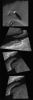
PSP_008338_1525_Erratic_Boulder-EB-LXTT-2.jpgLayers and "Monolith-like" Erratic Boulder in Uzboi Vallis (an Image-Mosaic by Elisabetta Bonora - Lunexit Team)102 visitenessun commentoMareKromium03/06/14 at 16:19MareKromium: For Dr Majumi: another True Monolith on Mars.
|
|

PSP_007820_1505_RED_abrowse-08.jpgThe "Altar" (by Dr Marco Faccin)270 visiteSempre a proposito di rilievi affascinanti ed inesplicabili VERI (e cioè che non sono frutto di chiaro-scuri ingannevoli, aberrazioni ottiche, vizi di trasmissione dati e/o di elaborazione dei frames nonchè, ovviamente, di sviste vere e proprie), il Grande Dr Marco Faccin è riuscito ad individuare, sempre nella medesima zona in cui aveva già trovato altre due incredibili Anomalìe di Superficie - al riguardo si veda il quadro "This IS SOMETHING!" - questa struttura realmente intrigante, a forma rettangolare, sulla cui origine potremmo agevolmente discutere per un buon secolo senza arrivare a nulla.
Che sarà mai? La porzione superiore di una struttura semisepolta? Il residuo di una costruzione che è ormai andata distrutta quasi nella sua interezza? E' un rilievo tanto incredibilmente simmetrico quanto naturale?
Ebbene, Cari Amici, noi NON Vi diciamo che si tratta di un rilievo "artificiale" nel senso Hoaglandiano del termine così come non Vi diciamo che si tratta di un rilievo creato dalla sola Madre Natura.
Ma attenzione: noi non diciamo quanto sopra solamente perchè, al momento, NON siamo in grado di fare una simile valutazione usando termini definitivi; noi Vi invitiamo a guardare e riflettere, con serenità, competenza, buon senso e pacatezza.
Provate anche a "contestualizzare", se volete; ma ricordate che la Verità sulla REALE Natura di questo rilievo, se non andremo in loco a verificare, non la conosceremo mai.
Congratulazioni (GRANDI) al Dr Faccin!MareKromium03/06/14 at 16:17MareKromium: For Dr Majumi: another True Monolith on Mars.
|
|
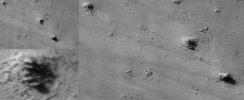
PSP_006737_1265-Square07.jpgThe immediate surroundings of the Monolith (photo-composite; credits: Dr M. Faccin)148 visitenessun commentoMareKromium03/06/14 at 16:09KKK: For Dr Mayumi: the immediate surroundings of the M...
|
|

PSP_006737_1265-Square04.jpgUnbelievable: a TRUE Martian Monolith! (edm n. 3 - credits: Dr M. Faccin)354 visiteOltre questo livello di ingrandimento - senza poi distruggere la ancora eccellente qualità del frame - non si può andare. Ma quanto ci mostra questa straordinaria iper-magnificazione (realizzata dal nostro eccezionale Dr Faccin) è più che sufficiente per formulare delle ipotesi credibili.
Una su tutte: l'oggetto anomalo è effettivamente una sorta di parallelepipedo (circa 1,8 x 2,4 mt), a pianta quadrata, apparentemente abbastanza liscio e regolare e dall'albedo particolarmente alta (nettamente più alta di quella del resto del paesaggio).MareKromium03/06/14 at 16:09KKK: For Dr Mayumi: a True Monolith on Mars.
|
|

PSP_006737_1265-Square01.jpgUnbelievable: a TRUE Martian Monolith! (edm n. 1 - Natural Colors; credits: Dr G. Barca & Lunexit)105 visitenessun commentoMareKromium03/06/14 at 16:08MareKromium: For Dr Mayumi: a True Monolith on Mars.
|
|

PSP_006737_1265-Square00.jpgUnbelievable: a TRUE Martian Monolith! (photo-mosaic; credits: Dr G. Barca)143 visiteUna nuova e, potenzialmente, Straordinaria possibile Scoperta da parte del nostro Dr Gianluigi Barca: dopo le Cuspidi di Blair, il Monolito di Phobos e la Torre di Mimas, ecco una nuova e, se guarderete tutte le immagini che Vi proponiamo con ESTREMA CURA e ATTENZIONE, davvero bizzarra e suggestiva "Struttura Colonnare a Pianta Quadrata e Regolare".
Il pensiero e l'immaginazione volano subito all'immortale "2001 - A Space Odyssey" oppure, per gli Appassionati di Eso-Archeografia, alla possibile porzione affiorante di una struttura assai più complessa, rimasta sepolta (chissà) per ere ed ere, ed ora riportata parzialmente alla luce dall'azione dei Venti e dei minicicloni (noti come Dust-Devils) che battono costantemente questa Regione Marziana (Terra Promethei).
Nei prossimi giorni, dopo aver meglio analizzato il ctx frame e, spanna dopo spanna, i dintorni del Monolito, Vi diremo qualcosa di più.
Per adesso, vogliamo solo fare - nella maniera più sobria, ma anche più "pubblica" possibile -, i nostri GRANDI COMPLIMENTI al Dr Gianluigi Barca, Ricercatore Senior, nonchè Presidente della Sez. Liguria e Piemonte di Lunar Explorer Italia: Bravissimo!MareKromium03/06/14 at 16:08MareKromium: For Dr Mayumi: a True Monolith on Mars.
|
|

PSP_007820_1505_RED_abrowse-07.jpgThis IS SOMETHING! (extra-detail mgnfs - credits: Dr M. Faccin)137 visitenessun commentoMareKromium03/06/14 at 13:37MareKromium: For Dr Majumi: another extremely unusually-looking...
|
|

ESP_023024_1010-GB-PCF-LXTT-IPF-Possible_Paleo-Lake-01.jpgPossible Paleo-Lake near the South Pole of Mars (EDM; Absolute Natural Colors - credits for the Research, additional process. and color.: Drr Gianluigi Barca and Paolo C. Fienga/Lunar Explorer Italia/Italian Planetary Foundation)139 visiteThis Surface Feature, now pictured by the NASA - Mars Reconnaissance Orbiter, but already known to Planetary Researchers (since it had already been photographed by the NASA - Mars Global Surveyor Orbiter a few years ago - see the MGS-MOC Image identified by the serial n. M09-01354), it is certainly very intriguing and highly suggestive. The NASA People, however, called this Surface Feature (that, in our humble opinion, as IPF, looks like a frozen Lake and it is also well characterized by the presence, on its Eastern Side, of a long line of almost perfectly lined-up and unusually-looking - "oblong" - Impact Craters) "Smooth South Polar Region".
This Surface Feature (as you will better see in the next few days, when we shall show you its smallest details) is (or "looks", if you prefer) very peculiar, and that is a fact that can hardly be disputed. Said that, we, as IPF, expected that NASA told us something more about this Smooth South Polar Region. We honestly thought that NASA would (and should) have showed us soon enough this intriguing Surface Feature from other visual angles, maybe (if possible) from a lower altitude, certainly during other seasons/periods of the Martian Year and, last but not least, under different Illumination Geometries, but...Nothing happened. Not a word of explanation was ever said or written (as far as we know) and not an "official" comment whatsoever was ever released.
Now, in the light of the aformentioned considerations, we decided to draw to your attention - through our Daily APOD - this "Smooth South Polar Region" and ask you a couple of simple questions: what do you really think or believe that this Surface Feature could be representing? Do you think that it could actually be the frozen remnant of an ancient (and once much bigger) Martian Lake or it is just a flat area surrounded by the typical Polar Terrain? If you wish to express your opinion, please write us at Alphacentauri@intercom.it . The most interesting and well substantiated ideas and theories that we hope to receive, shall be published here (giving to the Writer/s all the due credits), as additional comments to other (VERY detailed) orbital views of this very same Smooth South Polar Region. Thanks, as usual, for you interest and support!
Dr Paolo C. Fienga/LXTT/IPF
Mars Local Time: 14:56 (Early Afternoon)
Coord. (centered): 78,638° South Lat. and 68,111° East Long.
Spacecraft altitude: 248,0 Km (such as about 154,008 miles)
Original image scale range: 49,6 cm/pixel (with 2 x 2 binning) so objects ~ 1 mt and 49 cm across are resolved
Map projected scale: 50 cm/pixel
Map projection: POLAR STEREOGRAPHIC
Emission Angle: 4,5°
Sun-Martian Surface-MRO Spacecraft (or Phase) Angle: 67,9°
Solar Incidence Angle: 65° (meaning that the Sun was about 25° above the Local Horizon at the time the picture was taken)
Solar Longitude: 317,2° (Northern Winter - Southern Summer)
Credits: NASA/JPL/University of Arizona
Additional process. and coloring: Lunar Explorer Italia
This picture (which is a cropped and NON-Map Projected NASA - Original Mars Reconnaissance Orbiter CTX b/w frame, identified by the serial n. ESP_023024_1010) has been additionally processed and then colorized in Absolute Natural Colors (such as the colors that a human eye would actually perceive if someone were onboard the NASA - Mars Reconnaissance Orbiter and then looked down, towards the Surface of Mars), by using an original technique created - and, in time, dramatically improved - by the Lunar Explorer Italia Team.MareKromium02/27/13 at 17:29paolocf1963: Bravissimo ancora una volta Andrea, ed ovviamente ...
|
|
ESP_023024_1010-GB-PCF-LXTT-IPF-Possible_Paleo-Lake-01.jpgPossible Paleo-Lake near the South Pole of Mars (EDM; Absolute Natural Colors - credits for the Research, additional process. and color.: Drr Gianluigi Barca and Paolo C. Fienga/Lunar Explorer Italia/Italian Planetary Foundation)139 visiteThis Surface Feature, now pictured by the NASA - Mars Reconnaissance Orbiter, but already known to Planetary Researchers (since it had already been photographed by the NASA - Mars Global Surveyor Orbiter a few years ago - see the MGS-MOC Image identified by the serial n. M09-01354), it is certainly very intriguing and highly suggestive. The NASA People, however, called this Surface Feature (that, in our humble opinion, as IPF, looks like a frozen Lake and it is also well characterized by the presence, on its Eastern Side, of a long line of almost perfectly lined-up and unusually-looking - "oblong" - Impact Craters) "Smooth South Polar Region".
This Surface Feature (as you will better see in the next few days, when we shall show you its smallest details) is (or "looks", if you prefer) very peculiar, and that is a fact that can hardly be disputed. Said that, we, as IPF, expected that NASA told us something more about this Smooth South Polar Region. We honestly thought that NASA would (and should) have showed us soon enough this intriguing Surface Feature from other visual angles, maybe (if possible) from a lower altitude, certainly during other seasons/periods of the Martian Year and, last but not least, under different Illumination Geometries, but...Nothing happened. Not a word of explanation was ever said or written (as far as we know) and not an "official" comment whatsoever was ever released.
Now, in the light of the aformentioned considerations, we decided to draw to your attention - through our Daily APOD - this "Smooth South Polar Region" and ask you a couple of simple questions: what do you really think or believe that this Surface Feature could be representing? Do you think that it could actually be the frozen remnant of an ancient (and once much bigger) Martian Lake or it is just a flat area surrounded by the typical Polar Terrain? If you wish to express your opinion, please write us at Alphacentauri@intercom.it . The most interesting and well substantiated ideas and theories that we hope to receive, shall be published here (giving to the Writer/s all the due credits), as additional comments to other (VERY detailed) orbital views of this very same Smooth South Polar Region. Thanks, as usual, for you interest and support!
Dr Paolo C. Fienga/LXTT/IPF
Mars Local Time: 14:56 (Early Afternoon)
Coord. (centered): 78,638° South Lat. and 68,111° East Long.
Spacecraft altitude: 248,0 Km (such as about 154,008 miles)
Original image scale range: 49,6 cm/pixel (with 2 x 2 binning) so objects ~ 1 mt and 49 cm across are resolved
Map projected scale: 50 cm/pixel
Map projection: POLAR STEREOGRAPHIC
Emission Angle: 4,5°
Sun-Martian Surface-MRO Spacecraft (or Phase) Angle: 67,9°
Solar Incidence Angle: 65° (meaning that the Sun was about 25° above the Local Horizon at the time the picture was taken)
Solar Longitude: 317,2° (Northern Winter - Southern Summer)
Credits: NASA/JPL/University of Arizona
Additional process. and coloring: Lunar Explorer Italia
This picture (which is a cropped and NON-Map Projected NASA - Original Mars Reconnaissance Orbiter CTX b/w frame, identified by the serial n. ESP_023024_1010) has been additionally processed and then colorized in Absolute Natural Colors (such as the colors that a human eye would actually perceive if someone were onboard the NASA - Mars Reconnaissance Orbiter and then looked down, towards the Surface of Mars), by using an original technique created - and, in time, dramatically improved - by the Lunar Explorer Italia Team.MareKromium02/27/13 at 16:35AndreaGG: Per spiegare cosa intendevo ho fatto un disegnino:...
|
|
ESP_023024_1010-GB-PCF-LXTT-IPF-Possible_Paleo-Lake-01.jpgPossible Paleo-Lake near the South Pole of Mars (EDM; Absolute Natural Colors - credits for the Research, additional process. and color.: Drr Gianluigi Barca and Paolo C. Fienga/Lunar Explorer Italia/Italian Planetary Foundation)139 visiteThis Surface Feature, now pictured by the NASA - Mars Reconnaissance Orbiter, but already known to Planetary Researchers (since it had already been photographed by the NASA - Mars Global Surveyor Orbiter a few years ago - see the MGS-MOC Image identified by the serial n. M09-01354), it is certainly very intriguing and highly suggestive. The NASA People, however, called this Surface Feature (that, in our humble opinion, as IPF, looks like a frozen Lake and it is also well characterized by the presence, on its Eastern Side, of a long line of almost perfectly lined-up and unusually-looking - "oblong" - Impact Craters) "Smooth South Polar Region".
This Surface Feature (as you will better see in the next few days, when we shall show you its smallest details) is (or "looks", if you prefer) very peculiar, and that is a fact that can hardly be disputed. Said that, we, as IPF, expected that NASA told us something more about this Smooth South Polar Region. We honestly thought that NASA would (and should) have showed us soon enough this intriguing Surface Feature from other visual angles, maybe (if possible) from a lower altitude, certainly during other seasons/periods of the Martian Year and, last but not least, under different Illumination Geometries, but...Nothing happened. Not a word of explanation was ever said or written (as far as we know) and not an "official" comment whatsoever was ever released.
Now, in the light of the aformentioned considerations, we decided to draw to your attention - through our Daily APOD - this "Smooth South Polar Region" and ask you a couple of simple questions: what do you really think or believe that this Surface Feature could be representing? Do you think that it could actually be the frozen remnant of an ancient (and once much bigger) Martian Lake or it is just a flat area surrounded by the typical Polar Terrain? If you wish to express your opinion, please write us at Alphacentauri@intercom.it . The most interesting and well substantiated ideas and theories that we hope to receive, shall be published here (giving to the Writer/s all the due credits), as additional comments to other (VERY detailed) orbital views of this very same Smooth South Polar Region. Thanks, as usual, for you interest and support!
Dr Paolo C. Fienga/LXTT/IPF
Mars Local Time: 14:56 (Early Afternoon)
Coord. (centered): 78,638° South Lat. and 68,111° East Long.
Spacecraft altitude: 248,0 Km (such as about 154,008 miles)
Original image scale range: 49,6 cm/pixel (with 2 x 2 binning) so objects ~ 1 mt and 49 cm across are resolved
Map projected scale: 50 cm/pixel
Map projection: POLAR STEREOGRAPHIC
Emission Angle: 4,5°
Sun-Martian Surface-MRO Spacecraft (or Phase) Angle: 67,9°
Solar Incidence Angle: 65° (meaning that the Sun was about 25° above the Local Horizon at the time the picture was taken)
Solar Longitude: 317,2° (Northern Winter - Southern Summer)
Credits: NASA/JPL/University of Arizona
Additional process. and coloring: Lunar Explorer Italia
This picture (which is a cropped and NON-Map Projected NASA - Original Mars Reconnaissance Orbiter CTX b/w frame, identified by the serial n. ESP_023024_1010) has been additionally processed and then colorized in Absolute Natural Colors (such as the colors that a human eye would actually perceive if someone were onboard the NASA - Mars Reconnaissance Orbiter and then looked down, towards the Surface of Mars), by using an original technique created - and, in time, dramatically improved - by the Lunar Explorer Italia Team.MareKromium02/27/13 at 15:49paolocf1963: ...e la cosa, onestamente, non mi sorprende affatt...
|
|
| 672 immagini su 56 pagina(e) |
|
|
|
|
|
9 | |
|
|
|
|
|
|








