Original NASA Frames - Jupiter and the "Jupiter System" through Voyager 1 and 2
|
|
|

40-vg1_p21227c.jpgClosing-up on a "Restless World" (1 - Natural Colors; credits: NASA/JPL-Caltech)60 visitenessun commento
|
|

41-vg1_p21286.jpgClosing-up on the restless World (Extremely Enhanced Natural Colors; credits: NASA/JPL-Caltech)63 visitenessun commento
|
|
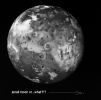
42-vg1_1636836.jpgIo: the "restless moon" and a "strange companion" (b/w)57 visiteIl vantaggio fondamentale (per i Cacciatori di Anomalìe) dei frames NASA originali ed in HR è che il livello di image-artifacts (o photo-artifacts) è tendente a zero. Abbiamo, con i mezzi a nostra disposizione, analizzato a lungo il dettagli che vedete in basso a Dx e l'unica conclusione affidabile che abbiamo raggiunto è che NON si tratta di un image-artifact.
Il resto...Decidetelo Voi.
|
|

43-vg1_1636836.jpgThe "Strange Companion" of Io (extreme detail mgnf)57 visiteForma irregolare, ma rotondeggiante; albedo elevata; nessun segno di rilievi superficiali.
Allora: una piccola "luna di Io", un "corpo vagante", una "cometa in divenire" oppure...una Alien Probe.
Decidete Voi.
|
|

43-vg1_1637750.jpgIo: the "restless moon" and a "strange companion" (b/w)61 visiteIndubitabile: qualsiasi cosa esso sia, l'oggetto (il "Transient", come abbiamo deciso di identificare questi corpi erranti e dalla natura imprecisata) si è mosso, e per giunta MOLTO rapidamente...
|
|

44-vg1_1637750.jpgThe "Strange Companion" of Io (extreme detail mgnf)54 visiteL'oggetto a noi pare lo stesso (a tutti gli effetti) del frame VG1-1636836: il super-stretching ne evidenzia alcune, minime, caratteristiche superficiali e la sua dimensione apparente, a parità di stretching, suggerisce che esso si stia allontanando dalla Sonda Voyager.
Incredibile, vero?!?
Un vero peccato che, anche in questo caso, la NASA non abbia MAI speso una parola (se non altro per dire, ad esempio, "è solo un image artifact"...).
Mai.
|
|
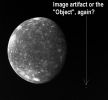
45-vg1_1639948.jpgCallistus: the "dark moon" and another (?) "strange companion" (b/w)57 visiteCome segnalatoci dal nostro Ricercatore Esterno, Dr G. Barca, anche nelle prossimità di Callisto sembra esserci uno "strano compagno". Che sia lo stesso oggetto che avevamo incontrato nei pressi di "Io"?
Le porte della Fantasia sono aperte: allora, escludendo (con riserva e sino a prova contraria) l'ipotesi per cui il "puntino bianco" sia un image-artifact, che cosa potrà mai essere? Un'altra "luna provvisoria", questa volta di Callisto? Un altro "corpo vagante" - magari una "futura cometa"?
O forse si tratta di un qualcosa di Alieno che sta osservando (e seguendo?) la Sonda Voyager 1?
Come sempre, noi Vi diamo tutti gli elementi disponibili: al resto provate a rispondere Voi stessi...
|
|

49-vg1_visualcmp.jpgThe "Object" near Io and the one near Callistus: visual comparison (extreme detail mgnf)72 visiteNon servono ulteriori commenti...
|
|
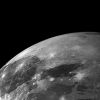
500-PIA02233.jpgGanymede (HR)54 visiteCaption NASA originale:"This picture of Ganymede was taken from a range of about 272.000 Km. The center of the picture lies at 13° Latitude and 359° Longitude. Many bright impact craters are shown that have radial ejecta patterns. These rays lie across and therefore are younger than the bright and dark background material. Many older impact craters are shown that have lost their rays probably by impact erosion. The bright background areas contain grooves and ridges that may be caused by faulting of the surface materials".
|
|
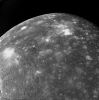
501-vg1_1641854.jpgGanymede (HR)54 visitenessun commento
|
|

502-PIA01515.jpgGanymede (natural colors and HR)62 visiteCaption NASA originale:"This color picture was acquired by Voyager 1 during its approach to Ganymede. At ranges between about 230 to 250.000 Km. The images show detail on the surface with a resolution of 4,5 Km/px. This picture is relevant to a region in the Northern Hemisphere, near the terminator. It shows a variety of impact structures, including both razed and unrazed craters, and the odd, groove-like structures discovered by Voyager in the lighter regions. The most striking features are the bright ray craters which have a distinctly 'bluer' color appearing white against the redder background. Ganymede's surface is known to contain large amounts of surface ice and it appears that these relatively young craters have spread bright fresh ice materials over the surface. Likewise, the lighter color and reflectivity of the grooved areas suggests that here, too, there is cleaner ice".
|
|

504-PIA01516.jpgGanymede (natural colors and HR)54 visiteCaption NASA originale:"This color picture as acquired by Voyager 1 during its approach to Ganymede, at ranges between about 230 to 250.000 Km. The image shows detail on the surface with a resolution of 4,5 Km/px.
This picture shows the two distinctive types of terrain found by Voyager: the darker ungrooved regions and the lighter areas which show the grooves or fractures in abundance. The most striking features are the bright ray craters which have a distinctly "bluer" color appearing white against the redder background. Ganymede's surface is known to contain large amounts of surface ice and it appears that these relatively young craters have spread bright fresh ice materials over the surface. Likewise, the lighter color and reflectivity of the grooved areas suggests that here too, there is cleaner ice. We see ray craters with all sizes of ray patterns, ranging from extensive systems of the crater in the northern part of this picture, which has rays at least 300-500 kilometers long, down to craters which have only faint remnants of bright ejecta patterns".
|
|
| 39 immagini su 4 pagina(e) |
 |
3 |
|





